

Walk into a German-built kitchen and you notice it before you can name it. A tall pantry door swings shut and stops with a quiet cushion instead of a clack. A 90-centimetre drawer rolls all the way out, loaded with cast iron, and never sags or sticks. The gaps between fronts are even down to the millimetre, top to bottom, like the cabinets were cut from a single piece. That precision is not decoration. It is the result of more than a century of doing one thing carefully.
Bauformat has been making kitchens in Lohne, Germany since 1917. Every cabinet that ends up in a Yaletown condo or a West Vancouver family home is still built there, then measured, planned, and installed by the local Vancouver team. For a Metro Vancouver homeowner weighing a renovation, the question is simple: what does German craftsmanship actually buy you, and why does it hold up here? This article answers that honestly.
Key Takeaways
- Bauformat has built kitchens in Lohne, Germany since 1917, and every cabinet is still made in Germany before the local Vancouver team measures, plans, and installs it.
- German craftsmanship shows up in three places you can verify yourself: the board and edge materials, the build tolerances, and the hardware.
- Three collections cover the full range. Baulux for ceramic, glass, and ultra-matte fronts, Bauformat for the widest choice of colours and finishes, and Burger for the best value with a full German build.
- Full-extension soft-close runners and 3D-adjustable concealed hinges are standard, not upgrades, which matters in humid coastal homes that move with the seasons.
- A focused kitchen renovation remains one of the strongest returns in home improvement, and build quality is what protects that value over fifteen and twenty years.
Made in Lohne since 1917, fitted in Vancouver
Lohne sits in Lower Saxony, in a region of northern Germany that has produced furniture for generations. Bauformat started there in 1917 and never left. That continuity matters more than a marketing line suggests. A factory that has refined the same craft across more than a hundred years has had time to standardise the things that go wrong in cheaper kitchens: edges that peel, hinges that drift, fronts that no longer line up after a few winters.
The German furniture industry as a whole turned over roughly 15.8 billion euros in 2025 (VDM, 2025), and the kitchen-furniture segment alone accounted for just under 5.6 billion euros (VDM, 2025), with close to 46 percent of that sold for export. Those numbers tell you something useful. Germany did not become the reference point for kitchen manufacturing by accident. It built an industry on engineering discipline, and the homes that import those kitchens, including here in Metro Vancouver, are buying into that discipline.
What does not get shipped from Germany is the fit. A cabinet built to a tenth of a millimetre still has to land in a real room with walls that lean, floors that slope, and a heritage ceiling that drops two centimetres over three metres. That is where the local Vancouver team comes in. They measure the actual space, plan the layout around your plumbing and your sightlines, and install with the German hardware doing exactly what it was designed to do. Factory precision and local fit are two different skills, and you need both.
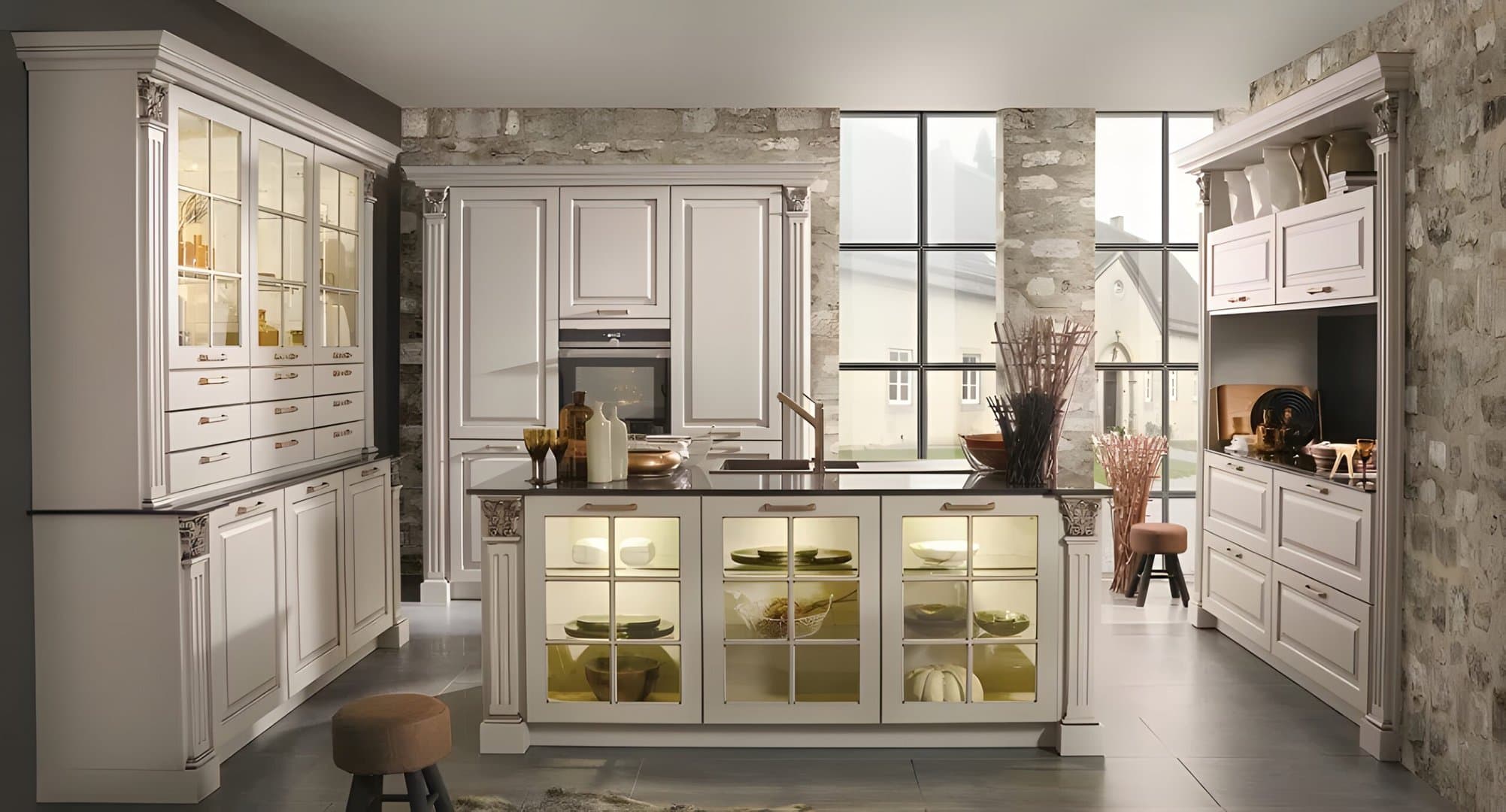
What German craftsmanship actually means
The phrase gets used loosely, so here is the specific version. Three things separate a genuinely well-built cabinet from one that only photographs well.
Materials you can rely on
It starts with the carcass, the box behind the door. German kitchen cabinets use dense, moisture-resistant board with edges banded under heat and pressure so tightly that the seam disappears and water cannot creep in. That edge banding is the first thing to fail in a low-cost kitchen. Near a sink or a dishwasher, a poorly bonded edge swells within a couple of years. A properly banded one does not. The fronts themselves run from real lacquered surfaces to ceramic and glass, each chosen to wear evenly and hold colour rather than yellow or chalk over time.
Tolerances measured in millimetres
Tolerance is the quiet hero of a good kitchen. It means how close every part lands to its intended size and position. German lines are cut and assembled to tolerances so tight that a run of twelve cabinets reads as one continuous surface, with reveal lines that stay even from the first door to the last. You feel this every day. Drawers that align, doors that sit flush, a worktop that meets the cabinet without a gap to trap crumbs. Loose tolerances are why budget kitchens look slightly off in a way most people sense but cannot articulate.
Hardware that earns its keep
Open and close a kitchen drawer a few thousand times a year and the hardware becomes the whole experience. Bauformat fits full-extension, soft-close runners as standard, so the drawer pulls all the way out and you reach the back without crouching, then closes itself the last few centimetres without a slam. The doors run on 3D-adjustable concealed hinges, which let an installer fine-tune a door in three directions long after the kitchen is in. That adjustability is exactly what you want in a coastal climate, where wood and walls move with the seasons and a door that was perfect in June may need a quarter-turn by January.
Three collections, one standard of build
One of the more practical things about Bauformat is that the engineering does not change between price levels. The carcass, the runners, and the hinges are built to the same standard across the range. What changes is the front, the finish, and the breadth of choice. There are three collections, and most Metro Vancouver projects find their home in one of them.
Baulux, the top tier
Baulux is where the most advanced surfaces live: ceramic, glass, and ultra-matte fronts. Ceramic and glass resist heat, scratches, and fingerprints in a way painted fronts cannot match, which suits a high-use family kitchen or a design-forward downtown condo where the kitchen is on permanent display in an open-plan space. Ultra-matte fronts give that deep, soft, light-absorbing finish that has become the signature of contemporary German design.
Bauformat, the widest choice
The core Bauformat collection offers the broadest range of finishes and colours of the three. This is the one for homeowners who have a specific palette in mind, whether that is a warm muted green for a Kitsilano character home, a crisp handleless white for a North Shore new build, or a wood-grain front that picks up the tone of an oak floor. The range is wide enough that you rarely have to compromise the colour to get the build quality.
Burger, the value collection
Burger is the best-value line, and the important word is value rather than cheap. It carries the full German build, the same dense carcass and quality hardware, at a more accessible price. For a rental suite, a secondary kitchen, or a first renovation on a tighter budget, Burger lets you put a genuinely German-engineered kitchen in the room without stretching past what the project can carry.
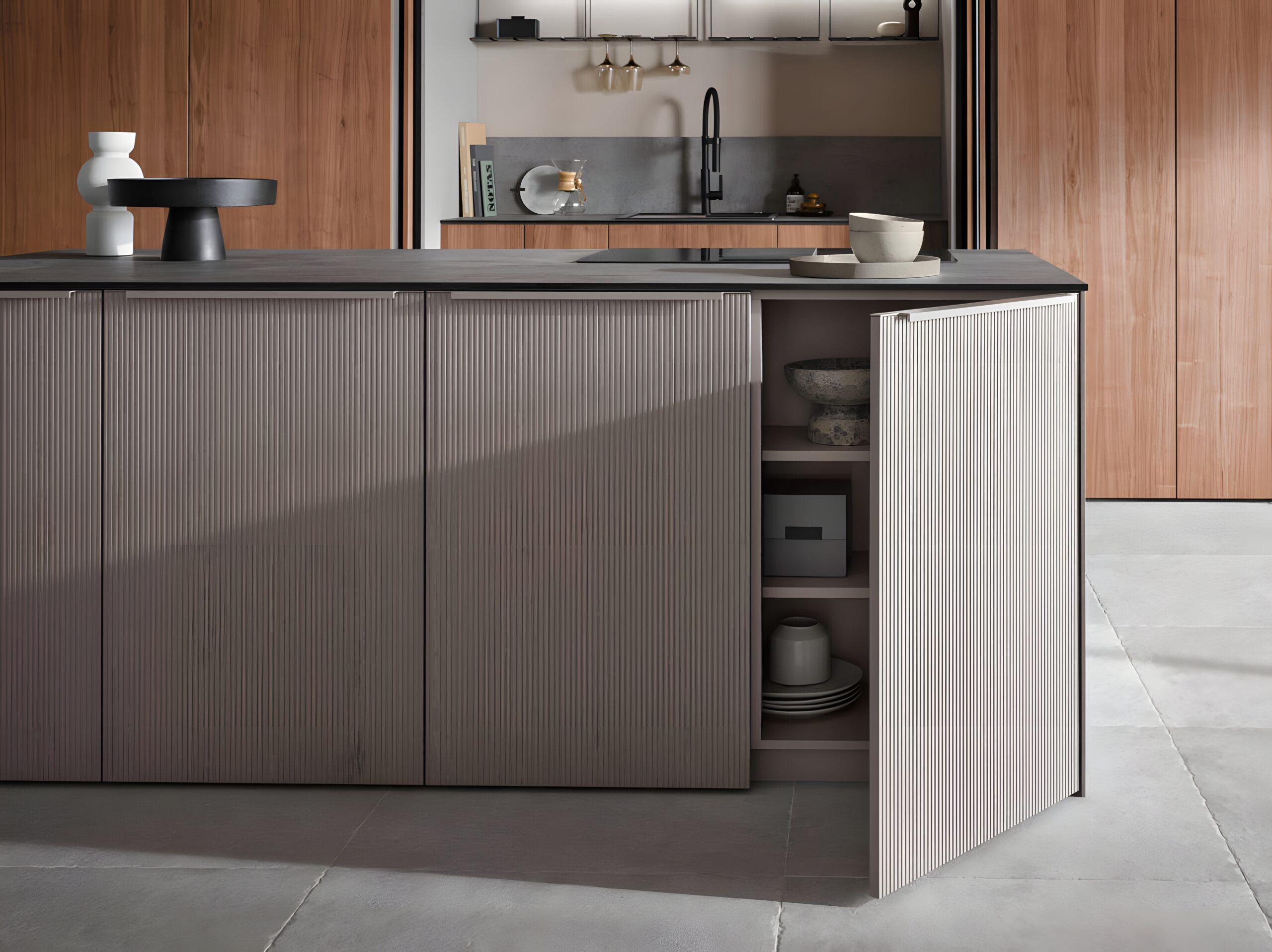
Why this matters for a Metro Vancouver home
Vancouver is a demanding place to own a kitchen. The coastal air is humid, homes swing between damp winters and dry, heated interiors, and a lot of the housing stock, from Yaletown towers to East Van character houses, has the kind of imperfect walls and tight footprints that punish a poorly built kitchen. German cabinets are engineered for exactly these conditions. Moisture-resistant boards shrug off the humidity, and 3D-adjustable hinges let the installer keep every door true as the house moves through the year.
There is a money argument too, and it is a strong one. Kitchen work remains one of the best returns in home improvement. The 2025 Cost vs. Value Report put the national return on a minor kitchen remodel at roughly 96 percent of cost recovered at resale (2025 Cost vs. Value Report), the leading interior project in the study. Build quality is what protects that figure over the long run. A kitchen that still closes softly and lines up cleanly after twenty years reads as an asset to a buyer. One that has started to sag and peel reads as a future expense.
The local cost picture sharpens the point. A standard Metro Vancouver kitchen renovation generally lands somewhere between 40,000 and 70,000 dollars (Quay Construction, 2025), and downtown and west-side projects often sit at the higher end because of labour and logistics. At that level of investment, the difference between a cabinet that lasts a decade and one that lasts two or three is not a luxury detail. It is the core of whether the money was well spent.
The quiet details that separate a kitchen that lasts
Beyond the headline features, German manufacturing shows up in the interior fittings most people never think about until they live with them. Smart interior storage turns a deep corner cabinet from dead space into usable shelving that swings out to meet you. Drawer organisers hold cutlery and utensils so nothing rattles loose. Internal drawers within a deep pan drawer give you a second tier of storage without a second cabinet.
These are not gimmicks. They are the result of a manufacturer that has spent a century watching how people actually cook and storing the lessons in the product. A well-planned German interior means you use more of the kitchen you paid for, and you reach what you need without bending, digging, or shifting three pots to find the fourth. When the local team plans your layout, this is the layer of detail that turns a good-looking kitchen into one that works hard every single day.
Frequently Asked Questions
Are Bauformat cabinets really still made in Germany?
Yes. Every Bauformat cabinet is built in Lohne, Germany, where the company has manufactured kitchens since 1917. The cabinets are then measured, planned, and installed by the local Vancouver team, so you get German factory precision with a fit tailored to your actual room.
Which collection is right for my kitchen?
It depends on your finish and budget rather than the build, because the engineering is consistent across all three. Choose Baulux for ceramic, glass, and ultra-matte fronts, the core Bauformat collection for the widest range of colours and finishes, and Burger when you want the full German build at the best value. The local team can walk you through samples to match your home.
How long should a German kitchen last in Vancouver’s climate?
A properly built and installed German kitchen is designed to perform for decades, not years. Moisture-resistant boards and sealed edges handle the coastal humidity, while 3D-adjustable hinges and full-extension runners can be tuned and maintained as the home settles, which means the kitchen keeps working and looking right well beyond the typical renovation cycle.
Does German engineering really make a noticeable difference day to day?
It does, mostly in small ways that add up. Drawers that glide fully open and close softly, doors that stay aligned through every season, surfaces that resist scratches and fingerprints, and interiors organised so you reach what you need without digging. None of it shouts, which is exactly the point.
Kitchen design keeps moving toward calmer surfaces, smarter storage, and finishes that handle real life rather than just looking good on day one. A manufacturer that has been refining the same craft since 1917 is built to keep pace with that, and a Metro Vancouver homeowner planning a renovation today is buying into a standard of engineering that will still feel current, and still work properly, long after the trends of this year have passed.
Explore more from Bauformat BC
- Decoding German Kitchen Cabinets Vs. Italian Kitchen Cabinets
- Why Choose Long-Lasting Materials for Your Kitchen Cabinets
- Modern Kitchen Design
German cabinetry, planned and built for Metro Vancouver
The kitchen is one of the highest-return rooms in a home: the 2025 Cost vs. Value Report found a minor kitchen remodel recoups roughly 96% of its cost at resale. Choosing cabinetry that lasts is central to that return, which is where German engineering earns its place. Every Bauformat kitchen is manufactured in Germany, then measured, planned, and installed by our Vancouver team, built to fit your room to the millimetre.
See the Baulux, Bauformat, and Burger collections in person at our North Vancouver showroom at 1410 Marine Dr Unit 205, learn more about the manufacturer at bauformat.de.
Book a 30-minute consultation with our Metro Vancouver kitchen designers to plan a kitchen built to last.
