

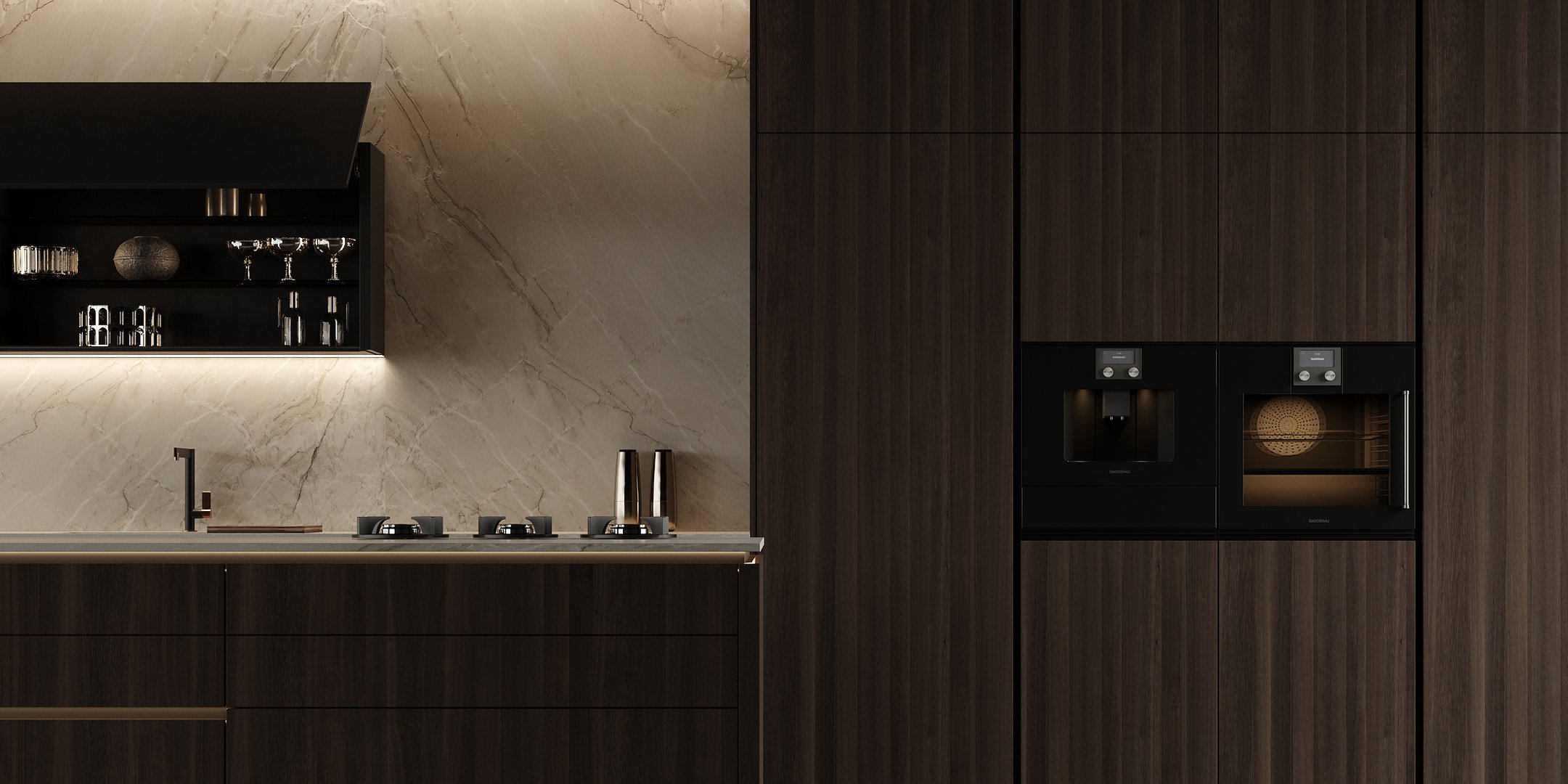
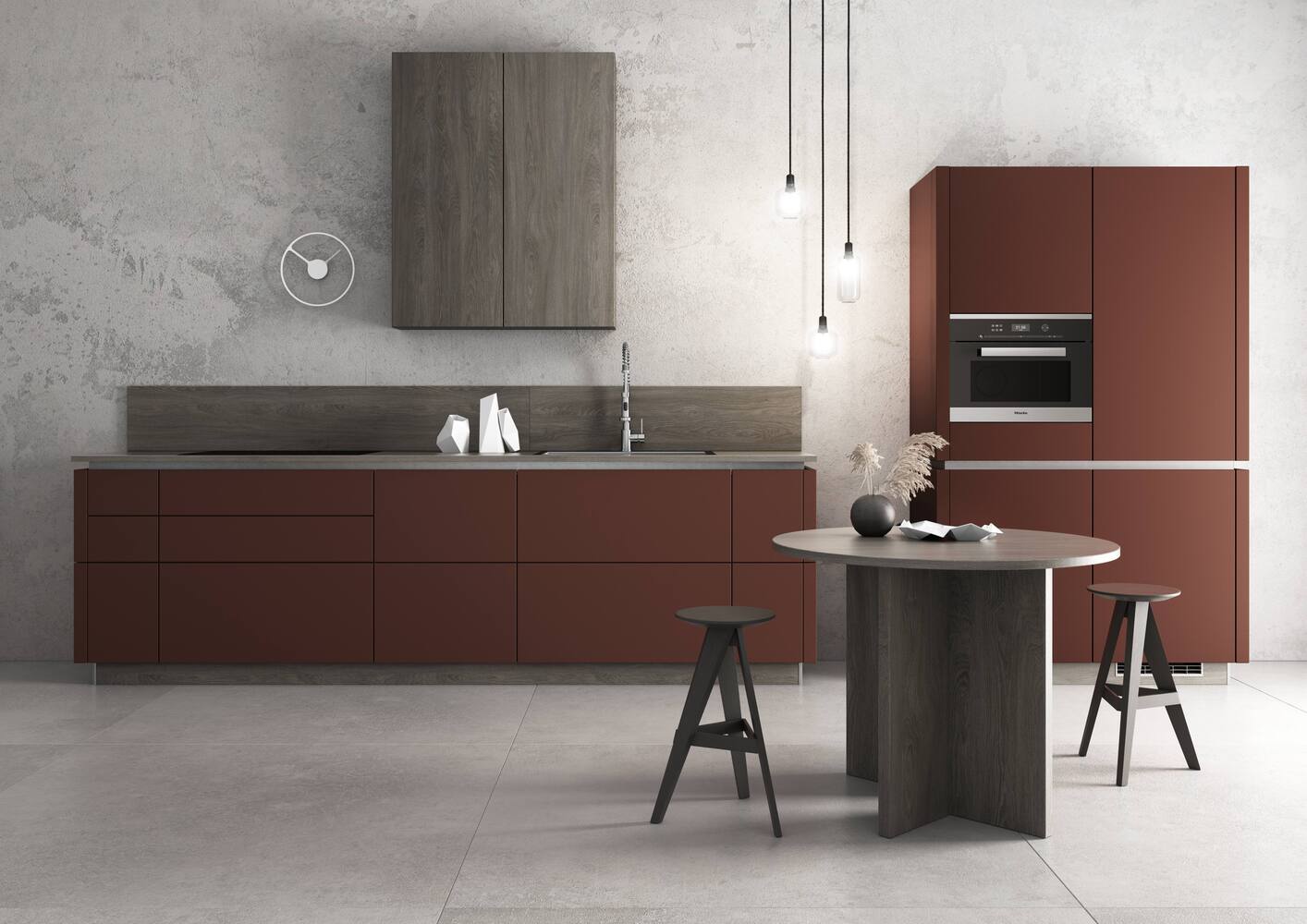
Stand in two different kitchen showrooms on the same afternoon and you can feel the difference before anyone says a word. One room is quiet and exact, with drawers that close like they were measured to the millimetre. The other is warm and theatrical, full of bold colour, sculptural shapes, and finishes that look like they belong in a fashion magazine. Both are beautiful. They are just chasing different things.
That contrast is the heart of the German versus Italian kitchen cabinet question. It is less a fight over quality and more a difference in temperament. German cabinetry leans on precision engineering, function, and durability built to last decades. Italian cabinetry leans on expressive style and finishes that move with fashion. If you are renovating a home anywhere across Metro Vancouver, understanding that split helps you choose with confidence instead of guessing. Here is a fair, useful look at both, and an honest note on why German engineering tends to fit our coast.
Key Takeaways
- Two philosophies, not two quality tiers. German cabinetry prioritizes engineering, modular systems, and longevity. Italian cabinetry prioritizes expressive, fashion-led design.
- Germany leads the world in kitchen furniture exports, a reputation built on standardized precision and durability rather than seasonal trend.
- Italy leads Europe in overall furniture and design revenue, with real strength in the high-end, style-driven kitchen segment.
- Climate matters here. Metro Vancouver’s damp, humid winters reward moisture-resistant construction and hardware that stays aligned for years.
- Bauformat is made in Germany and fitted locally, so you get German engineering measured, planned, and installed by a Vancouver team that knows our homes.
Two Design Philosophies, Side by Side
The simplest way to understand the difference is to think about what each tradition treats as the starting point. German design starts with the system. Everything is built on standardized dimensions, repeatable construction, and components that fit together with very little tolerance for error. The look follows the function. Clean lines, handleless fronts, and restrained colour palettes are not just a style choice, they are what happens when engineering leads.
Italian design starts with the statement. The question is how the kitchen will make you feel and how it will read as a piece of design in the room. Finish, texture, and proportion carry the project. Italian makers are famous for finishes that feel current and daring, the kind of surfaces and colours that show up in interiors coverage first and in mainstream kitchens a few years later.
Where German cabinetry shines
- Engineering and tolerances. Tight, consistent build quality across every unit, so the whole run looks even and aligned.
- Durability. Construction and hardware designed to survive decades of daily use.
- Modular flexibility. Standardized systems make planning, expanding, and replacing parts straightforward.
- Hardware quietly doing its job. Soft-close runners and adjustable hinges that keep working long after install day.
Where Italian cabinetry shines
- Expressive finishes. Adventurous colours, lacquers, and textures that feel like fashion.
- Sculptural design. Strong shapes and statement pieces that anchor a room.
- Trend leadership. Often first to a new look, which appeals if you want something striking right now.
- Material drama. Bold pairings of stone, metal, and wood used as visual centrepieces.
What the Numbers Say About Each Tradition
The reputations are not just marketing. They show up in trade data. Germany remains the undisputed leading exporter of kitchen furniture worldwide, according to a 2024 ResearchAndMarkets world market outlook, a position it has held consistently within a global kitchen furniture sector worth roughly USD 59 billion. That export dominance is the practical result of an industry organized around precision and repeatable quality, the qualities that travel well across borders and survive long after a trend fades.
Italy, meanwhile, leads Europe in furniture and design overall. The Italian furniture and design sector reached 26.7 billion euros in revenue in 2025, consolidating its leadership ahead of Germany, per FIRSTonline reporting on 2025 figures. Italy’s strength is concentrated at the top of the market. Its high-end positioning peaks near a 25 percent share in the kitchen segment, one of the most strategic globally. In plain terms, when people pay a premium for kitchen as fashion, Italy captures a large slice of that spending. Both countries are leaders. They simply lead in different lanes, Germany in engineering and export reliability, Italy in design prestige.
Durability and Daily Life
A kitchen is the hardest-working room in any home. Doors open and shut thousands of times a year, drawers carry real weight, and hinges take constant small stresses. This is where the German emphasis on engineering earns its keep. The value of tight tolerances is not visible on day one when both kitchens look flawless. It shows up in year eight, when one set of doors still sits perfectly flush and the other has started to drift.
Good hardware is the quiet hero here. Full-extension soft-close runners let a drawer pull all the way out so nothing gets lost at the back, then glide shut without a slam. Concealed hinges with 3D adjustment can be nudged in three directions, which means a door that shifts slightly over time can be brought back into perfect alignment in minutes rather than replaced. These are the details that separate a kitchen that ages gracefully from one that starts to feel tired. Italian cabinetry can absolutely be built to last, and plenty of it is, but durability is the headline of the German philosophy rather than a supporting act.
Why German Engineering Suits Metro Vancouver
Style preferences are personal, but our climate is not. Metro Vancouver gives cabinetry a specific challenge. Long, wet winters and high humidity put stress on materials, joints, and finishes, especially in kitchens where steam and temperature swings are constant. Moisture is the enemy of cabinetry that was not built to handle it. Edges can swell, finishes can lift, and doors can shift as materials react to damp air.
This is where engineering-first construction quietly pays off. Cabinetry built to tight, consistent standards, with hardware designed to stay aligned, copes better with the daily expansion and contraction that our climate brings. A handleless German kitchen in a Yaletown condo is not just a clean look. It is also fewer crevices for moisture and grease to collect, and a build designed to keep performing through years of coastal winters. When you are investing in a room you will use every single day, construction that respects the local environment is worth as much as the finish on the doors.
The Investment Picture for Vancouver Homes
Kitchens are expensive here, so it is worth knowing where the money goes and what it returns. A kitchen renovation in Metro Vancouver typically runs between 45,000 and 75,000 dollars for a detached home or townhouse, with condo kitchens often landing between 28,000 and 55,000 dollars, according to 2025 to 2026 figures from Delana Interiors. High-end projects can climb well past 100,000 dollars depending on finishes and layout.
The good news is that kitchens reward the investment. A kitchen renovation has the potential to increase a home’s value by up to 20 percent, according to a Royal LePage survey of Canadian agents cited by Morningstar Canada in 2025. The smart move is to spend where the return lives. Cabinetry you will open every day for the next twenty years is exactly the kind of long-life component worth doing once and doing well, rather than refinishing in a decade when a trend-led finish has dated. That logic favours the German approach, durable construction that holds its look and function long after the renovation is done.
How Bauformat fits into this
Bauformat has been made in Germany since 1917, in the town of Lohne, which gives it more than a century of refinement in exactly the engineering tradition described above. The range is built to suit different goals and budgets without leaving the German philosophy behind:
- Baulux for ceramic, glass, and ultra-matte luxury finishes when you want a statement surface.
- Bauformat for the widest choice across styles, colours, and configurations.
- Burger for the best value when budget is the priority and you still want German build quality.
Across all three, the hardware is consistent, full-extension soft-close runners and 3D-adjustable concealed hinges. And because the kitchens are measured, planned, and installed by the local Vancouver team, the German engineering is matched to the realities of your actual space, whether that is a heritage home on the east side or a high-rise condo near the water.
So Which Philosophy Is Right for You?
There is no wrong answer, only the right fit for how you live. If you want your kitchen to be a bold, of-the-moment design statement and you love the idea of leading the trend, the Italian philosophy speaks that language fluently. If you want a kitchen that looks clean and current, works flawlessly for decades, and quietly handles the demands of coastal living, the German philosophy is built for exactly that.
For most Metro Vancouver homeowners weighing a major investment in a room they use constantly, the case for German engineering is strong. You are buying durability, precision, and a finish that ages well, in a climate that punishes anything less. The expressive beauty is still there. It just sits on top of construction designed to outlast the trends.
Frequently Asked Questions
Are German kitchen cabinets better than Italian ones?
Neither is simply better. They are built around different goals. German cabinetry prioritizes engineering, durability, and modular precision, while Italian cabinetry prioritizes expressive, fashion-led style. Germany leads the world in kitchen furniture exports, and Italy leads Europe in design revenue, so both traditions are genuinely world class. The right choice depends on whether you value long-term function and longevity or a bold, trend-leading look.
Do German cabinets handle Vancouver’s damp climate better?
Construction quality matters more than nationality, but the engineering-first approach common in German cabinetry tends to handle humidity and temperature swings well. Tight tolerances, durable materials, and hardware that stays aligned all help cabinetry cope with the moisture stresses of long coastal winters. That is a meaningful advantage in Metro Vancouver, where kitchens deal with steam and damp air for much of the year.
Is German cabinetry more expensive than Italian?
Price overlaps heavily, and both traditions span value to luxury tiers. Italy is especially dominant in the very high end of the kitchen market, where price reflects design prestige. German ranges often span a wide spread, from best-value lines to luxury collections, so you can find German engineering at several price points rather than only at the top.
What hardware should I look for in a quality kitchen?
Two details tell you a lot. Full-extension soft-close runners let drawers open completely and close gently, which protects both the contents and the cabinet over years of use. Concealed hinges with 3D adjustment let you realign doors in three directions, so a kitchen can be fine-tuned over time instead of replaced. These are standard in well-engineered German cabinetry and a reliable sign of a build meant to last.
Choosing between German and Italian cabinetry is really about choosing what you want your kitchen to be, a piece of expressive design or a precisely engineered tool that stays beautiful for the long haul. Both traditions are worthy. For a home that has to stand up to Metro Vancouver winters and decades of daily use, German engineering makes a quietly compelling case, and that is the thinking behind every Bauformat kitchen we design.
Explore more from Bauformat BC
- Bauformat: Germany’s Elite Kitchen Cabinet Craftsmen
- Why Choose Long-Lasting Materials for Your Kitchen Cabinets
- Kitchen Cabinet Hardware
German cabinetry, planned and built for Metro Vancouver
The kitchen is one of the highest-return rooms in a home: the 2025 Cost vs. Value Report found a minor kitchen remodel recoups roughly 96% of its cost at resale. Choosing cabinetry that lasts is central to that return, which is where German engineering earns its place. Every Bauformat kitchen is manufactured in Germany, then measured, planned, and installed by our Vancouver team, built to fit your room to the millimetre.
See the Baulux, Bauformat, and Burger collections in person at our North Vancouver showroom at 1410 Marine Dr Unit 205, learn more about the manufacturer at bauformat.de.
Book a 30-minute consultation with our Metro Vancouver kitchen designers to plan a kitchen built to last.
