
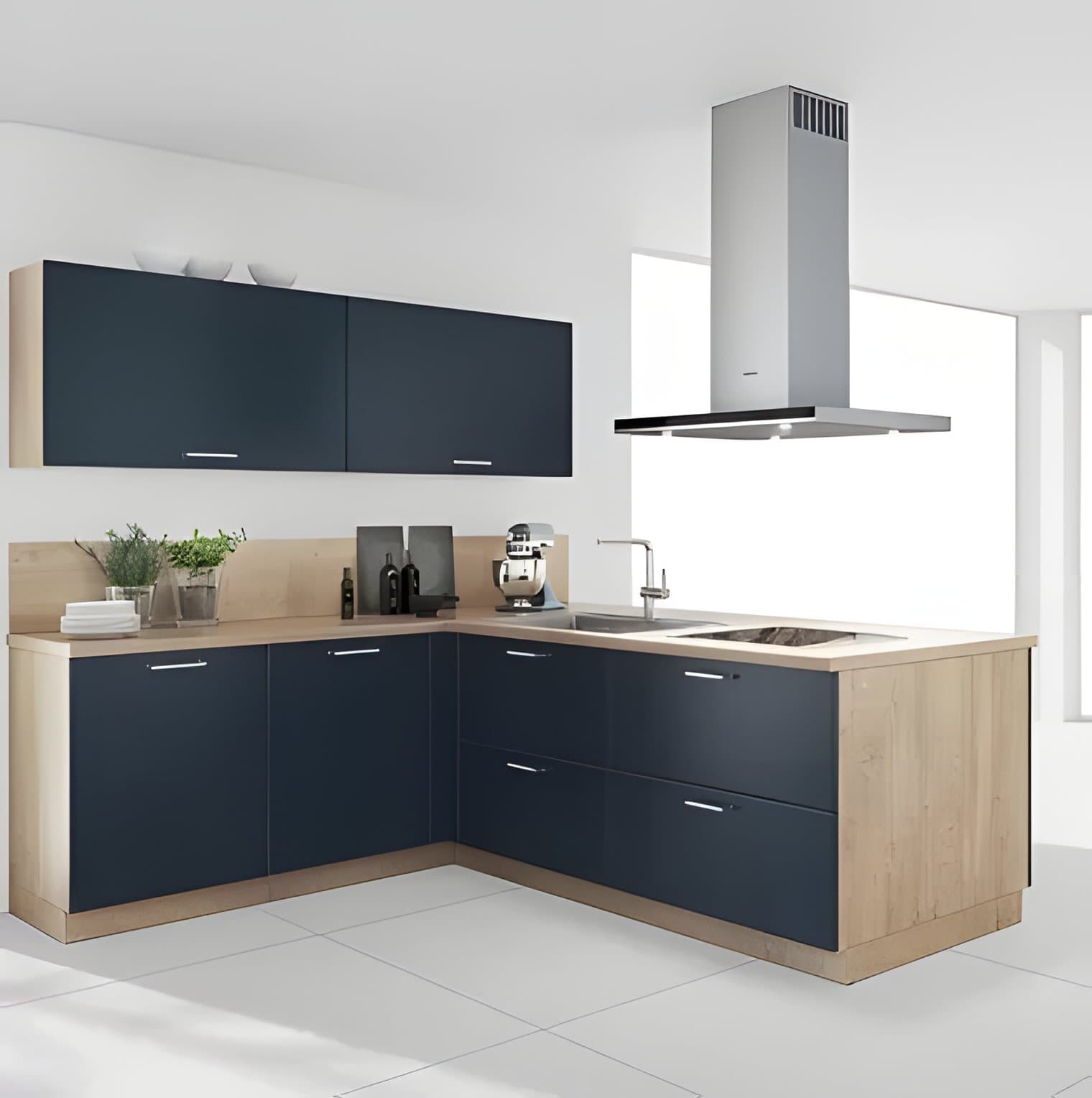
Minimalist kitchens get a reputation for being expensive, all hidden appliances and slabs of imported stone. The truth is gentler than that. A pared-back kitchen is mostly about restraint, clean fronts, a tight colour story, and hardware that disappears, and restraint is something you can afford. The look comes from what you leave out as much as what you put in.
If you live in a Metro Vancouver condo, where the kitchen is often the first thing you see when you walk through the door, a clean minimalist design can make a compact space feel calmer and larger. Below are three distinct budget minimalist kitchen looks, each with a clear palette, a recommended Bauformat front, and one or two tactics to keep the cost sensible. Pick the one that suits your light, your floor, and your nerves.
Key Takeaways
- A budget minimalist kitchen is built on three things: flat or handleless fronts, a tight colour palette, and quiet hardware. None of those have to be costly.
- Flat and slab door styles are now the clear preference, with 69 percent of respondents favouring them in NKBA survey data, so a minimalist look is squarely on trend rather than a risk.
- The three looks: Warm Scandi Minimalist (pale wood and white), Monochrome Matte Minimalist (one muted colour, handleless), and Natural Material Minimalist (wood-grain and stone-look).
- Spend on the fronts and the runners you touch daily; save on the colour scheme, the backsplash, and decorative extras.
- Burger gives you Bauformat’s German build at the best value, which is where most budget condo kitchens should start.
Look One: Warm Scandi Minimalist
This is the most forgiving of the three and the easiest to live with long term. Think pale wood paired with soft white, flat fronts, and an open, airy feel that suits the grey light we get for half the year on the coast. It reads as friendly rather than clinical, which matters in a small condo where the kitchen and living space often share one room.
Palette: a light oak or ash wood-grain on the lower run, with a warm off-white above. Keep it to two tones. The contrast does the decorating for you, so you do not need a feature wall or a busy backsplash.
Fronts: flat slab fronts from the Bauformat collection, which carries the widest choice of wood-grain finishes. A pale wood-look front on the base cabinets and a matte white on the uppers keeps the recipe simple and the cost down, since you are not specifying a single premium finish across the whole kitchen.
Hardware: slim bar pulls in brushed steel, or a single handleless run if your budget stretches. Inside, the full-extension soft-close runners mean drawers glide out completely and close without a slam, which is the quiet luxury you notice every day. The 3D-adjustable concealed hinges keep doors aligned even after years of use.
Budget tactic: wood beat white for the first time since 2016 in the 2026 Houzz Kitchen Trends Study, with wood at 29 percent, so a pale wood-grain front is both current and far cheaper than real timber. Use the wood-look only where it shows, on the base run and any island face, and keep the uppers in plain white to stretch the effect.
Look Two: Monochrome Matte Minimalist
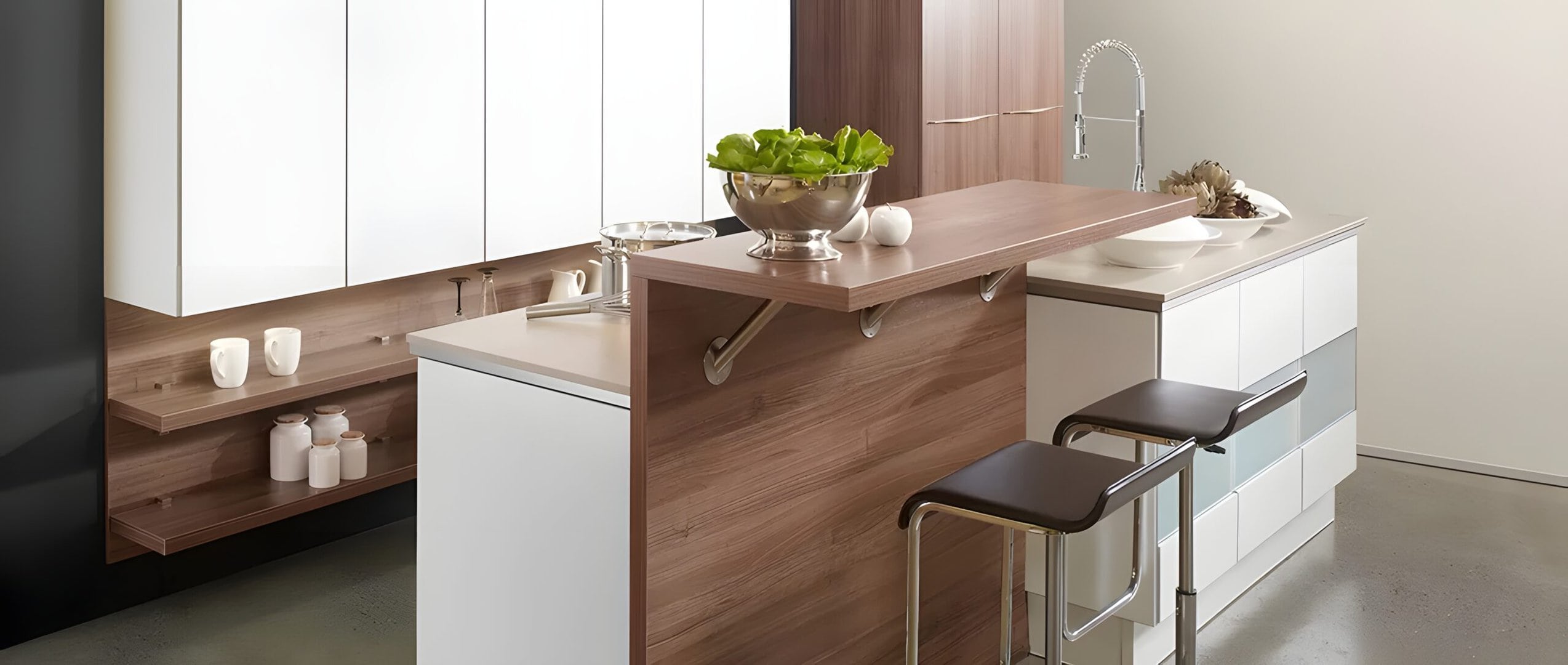
This is the most dramatic look, and oddly one of the most budget-friendly, because a single colour means a single decision. One muted shade across every cabinet, matte fronts, and a handleless key run. The result is architectural and quiet, the kind of kitchen that almost reads as furniture rather than cabinetry.
Palette: one muted colour, top to bottom. A soft clay, a deep sage, a warm greige, or a charcoal if your space gets good light. Matte finishes absorb light rather than bounce it, which hides fingerprints and the small chaos of daily life better than gloss.
Fronts: the Baulux collection is built for exactly this, ultra-matte and handleless. A handleless front removes every knob and pull, so the eye runs along an unbroken surface. Running it across one continuous wall, your main galley or the island, gives you the high-design effect where it counts.
Hardware: here the hardware is the absence of hardware. Handleless fronts open on a recessed channel or push mechanism, and behind them the same soft-close runners and concealed hinges do the work. Because there are no handles to buy or fit, you trim a line item without trimming the look.
Budget tactic: you do not have to go handleless everywhere. Put the handleless treatment on the one run people see first, then use a simple matte front with a discreet edge pull on the pantry wall they do not. The eye reads the kitchen as fully handleless. With 60 percent of NKBA respondents preferring minimal styles, this restraint is exactly what most buyers now want, which helps at resale in a competitive Metro Vancouver market.
Look Three: Natural Material Minimalist
If the first look is soft and the second is bold, this one is grounded. It leans on the materials themselves, a wood-grain front against a stone-look counter, with the simplest possible lines so the textures carry the room. No fuss, no decorative profiles, just honest surfaces.
Palette: a mid-tone wood-grain, walnut-look or smoked oak, paired with a pale stone-look worktop and splash. Two natural materials, nothing competing. The grain and the stone veining give you all the visual interest a minimalist room needs.
Fronts: wood-grain slab fronts from the Bauformat collection, which offers the broadest wood-look range, including handleless options if you want the lines even cleaner. A flat front lets the grain run uninterrupted, so each door looks like a single piece of material.
Hardware: keep it nearly invisible. A long, thin pull in a finish that matches the grain undertone, or a handleless edge. The full-extension runners matter more here than ever, because a natural-material kitchen tends to mean fewer, larger drawers, and you want every one to open to the back.
Budget tactic: the wood revival is real, with the NKBA 2026 report finding 59 percent of design professionals named wood grain as a growing trend and white oak as the top species. A wood-grain laminate or melamine front gives you that warmth at a fraction of solid timber, and a stone-look quartz or laminate worktop does the same for the counter. Spend the saving on one genuinely nice element, a good tap or an honest stone splash, and let it anchor the room.
What All Three Looks Share
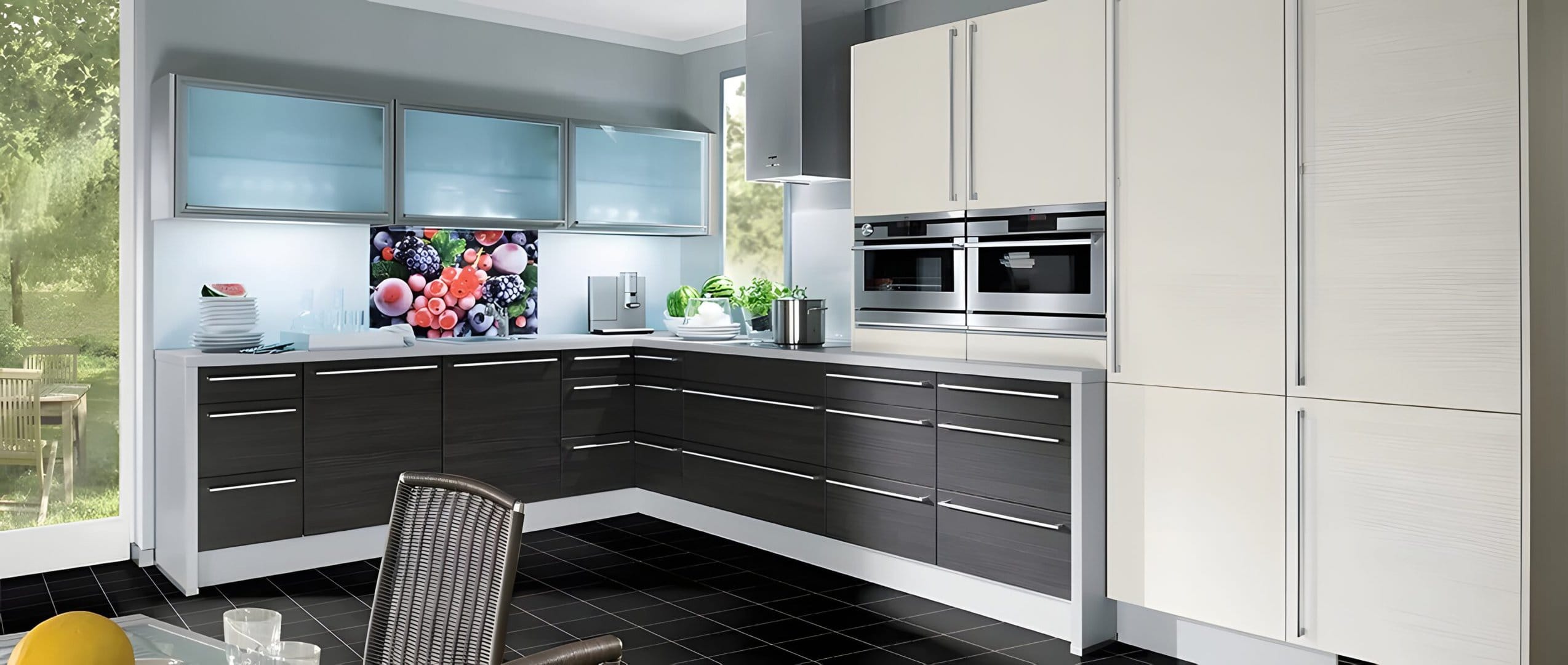
Underneath the different palettes, these three kitchens are built the same way, and that is the point. All of them use flat or handleless fronts, a two-tone or single-tone colour story, and quiet hardware. None of them rely on expensive detailing, ornate mouldings, or a long shopping list of finishes. Minimalism is naturally cheaper to specify because every decision you skip is a decision you do not pay for.
They also share the same engineering. Every Bauformat kitchen is made in Germany, where the company has built cabinets in Lohne since 1917, then measured, planned, and installed by the local Vancouver team. The full-extension soft-close runners and 3D-adjustable concealed hinges are standard across the collections, so the quiet, smooth feel of a minimalist kitchen is built in rather than an upgrade. That consistency is what lets a budget look feel considered instead of cheap.
For a Metro Vancouver condo specifically, the case is even stronger. Condo kitchens here typically run lower than detached homes, with several local renovation guides putting them in the range of roughly 28,000 to 55,000 dollars depending on scope, and minimalist design helps you land at the right end of that. Strata rules, elevator bookings, and tight downtown access already add cost and time, so a kitchen with fewer parts and a simpler install works in your favour.
Where to Spend and Where to Save
The honest way to keep a minimalist kitchen affordable is to be deliberate about the split. A few things you touch every single day deserve the money. Most of the rest does not.
Spend on: the fronts and the runners. The fronts are the entire look in a minimalist kitchen, since there is nothing else to hide behind, so a quality matte or wood-grain front is worth it. The runners and hinges are what you feel every time you open a drawer, and Bauformat’s soft-close, full-extension hardware is where the daily pleasure lives.
Save on: the colour scheme and the extras. A single muted colour or a simple two-tone palette costs no more than a complicated one and often less. Skip the feature backsplash, the under-cabinet drama, and the decorative open shelving. A clean run of cabinets needs none of it, and leaving it out is the whole aesthetic.
Starting with the Burger collection is the smartest move for most budget condo kitchens. It carries the same German build and the same hardware, at the best value of the three collections, which means your money goes into the fronts and the fit rather than into a premium badge. The minor-remodel maths backs this up: the 2025 Cost vs. Value Report from Zonda found a minor kitchen remodel returns about 96 percent of its cost nationally, far ahead of major upscale projects, so a tighter, well-chosen kitchen is also the financially sensible one.
Frequently Asked Questions
Which of the three looks is cheapest to build?
Usually the Monochrome Matte Minimalist, because a single colour across every cabinet is one decision and one finish to specify, and a handleless run removes the cost of buying and fitting handles. The Warm Scandi look is close behind if you keep the wood-grain only on the lower cabinets. The Natural Material look can creep up if you choose a real stone counter, so a stone-look quartz or laminate keeps it in budget.
Do handleless fronts cost more than fronts with handles?
Not necessarily. You remove the cost of the handles themselves, which offsets the recessed channel or push mechanism. On the Baulux handleless system the clean look is part of the design rather than a pricey add-on. If budget is tight, run handleless on the one wall people see first and use a simple edge pull elsewhere.
Will a minimalist kitchen feel cold in a small condo?
Only if you let it. The Warm Scandi and Natural Material looks both build in warmth through pale or mid-tone wood-grain, which is exactly why wood-grain fronts are trending so strongly. Even the Monochrome look stays warm if you choose a soft clay, greige, or sage rather than a stark white or hard grey. Matte finishes also feel softer to the eye than gloss.
Are flat slab fronts a passing trend?
The data suggests not. Flat and slab door styles are now the majority preference in NKBA survey results, well ahead of raised-panel styles, and minimal styles overall are favoured by most respondents. A clean front is more likely to age well than a heavily detailed one, which is reassuring if you plan to stay or to sell in Metro Vancouver’s value-conscious market.
A budget minimalist kitchen is less about spending and more about choosing well, then stopping. Pick the look that fits your light and your floor, keep the palette tight, put the money into the fronts and the runners you touch every day, and let the German engineering inside a Bauformat kitchen carry the rest. In a Yaletown condo or anywhere across Metro Vancouver, restraint turns out to be one of the most affordable design moves you can make.
Explore more from Bauformat BC
- crafting the perfect minimalist dream kitchen a design guide
- The Minimalist Kitchen: A Step-by-Step Design Guide
- Budget-Friendly Guide to Achieving a Streamlined Kitchen Makeover
German cabinetry, planned and built for Metro Vancouver
The kitchen is one of the highest-return rooms in a home: the 2025 Cost vs. Value Report found a minor kitchen remodel recoups roughly 96% of its cost at resale. Choosing cabinetry that lasts is central to that return, which is where German engineering earns its place. Every Bauformat kitchen is manufactured in Germany, then measured, planned, and installed by our Vancouver team, built to fit your room to the millimetre.
See the Baulux, Bauformat, and Burger collections in person at our Yaletown showroom at 1420 Marine Drive, learn more about the manufacturer at bauformat.de, and meet our local team at The Bau Team.
Book a 30-minute consultation with our Metro Vancouver kitchen designers to plan a kitchen built to last.
