
A kitchen is one of the few rooms you use every single day, often before your first coffee and again long after dinner. Drawers get yanked open with wet hands, doors get bumped by hips and grocery bags, and the cabinet under the sink quietly lives in a damp little microclimate of its own. After a few years, the difference between a kitchen that still feels solid and one that feels tired comes down to something most people never see when they sign off on a design: the materials underneath the finish.
In Metro Vancouver, where the air sits above 70 per cent relative humidity on average for much of the year (Weather and Climate, 2025), that difference shows up faster. Moisture is patient. It finds the weak edge, the cheap board, the hinge that was never built to be adjusted. So before you fall for a colour or a handle, it is worth understanding what actually makes a cabinet last, and how to tell good construction from a good photograph.
Key Takeaways
- The carcass board is the foundation. A dense, moisture-resistant board (EN 312 P3 grade or better) is what keeps a cabinet square and swelling-free in a coastal climate.
- Edges and fronts do the visible work. Tightly bonded edge banding and well-built door fronts, whether lacquer, ceramic, glass or real wood, are where wear and moisture try to get in first.
- Hardware decides the daily feel. Full-extension soft-close runners and adjustable concealed hinges are the parts you touch thousands of times a year, so they have to be engineered, not afterthoughts.
- Durability is a value and sustainability decision. With Vancouver kitchen renovations commonly running 35,000 to 85,000 dollars (Quay Construction, 2025), a cabinet that lasts 25 years instead of 12 is both cheaper per year and far kinder to the landfill.
- German engineering is built around longevity. Bauformat has been made in Lohne, Germany since 1917, with construction standards aimed at decades of use rather than a single trend cycle.
Start with the Carcass: the Board Nobody Sees
The carcass, or cabinet box, is the structural skeleton of every unit. It carries the weight of your dishes, holds the hinges and runners in place, and keeps everything square so doors close flush years from now. Yet it is the one component buyers almost never inspect, because it disappears the moment the doors go on.
Most quality cabinet boxes are made from engineered wood panels rather than solid timber, and that is not a compromise. Solid wood expands and contracts with humidity, which can crack panels and throw doors out of alignment. A well-made engineered board stays dimensionally stable. The key is density and moisture resistance.
What to look for in a carcass board
- Moisture resistance: Look for board rated to the European EN 312 P3 standard, which is designed for non-load-bearing use in humid areas and resists swelling when exposed to temporary higher humidity (Pfleiderer, 2025). In a Vancouver kitchen, that rating is not a luxury, it is the baseline.
- Density: A denser board holds screws and hinge mounts more firmly, so hardware does not loosen and sag over time. Lift a sample drawer if you can. Quality construction has a reassuring heft.
- Thickness: Sturdier side panels and backs resist racking, the slow twisting that makes old cabinets feel loose.
Plywood and MDF carcasses typically last 20 to 30 years depending on moisture exposure and daily use, while cheaper untreated particleboard can break down in a fraction of that time once water finds its way in (Coohom, 2025). The board is invisible, but it sets the ceiling on how long the whole kitchen can last.
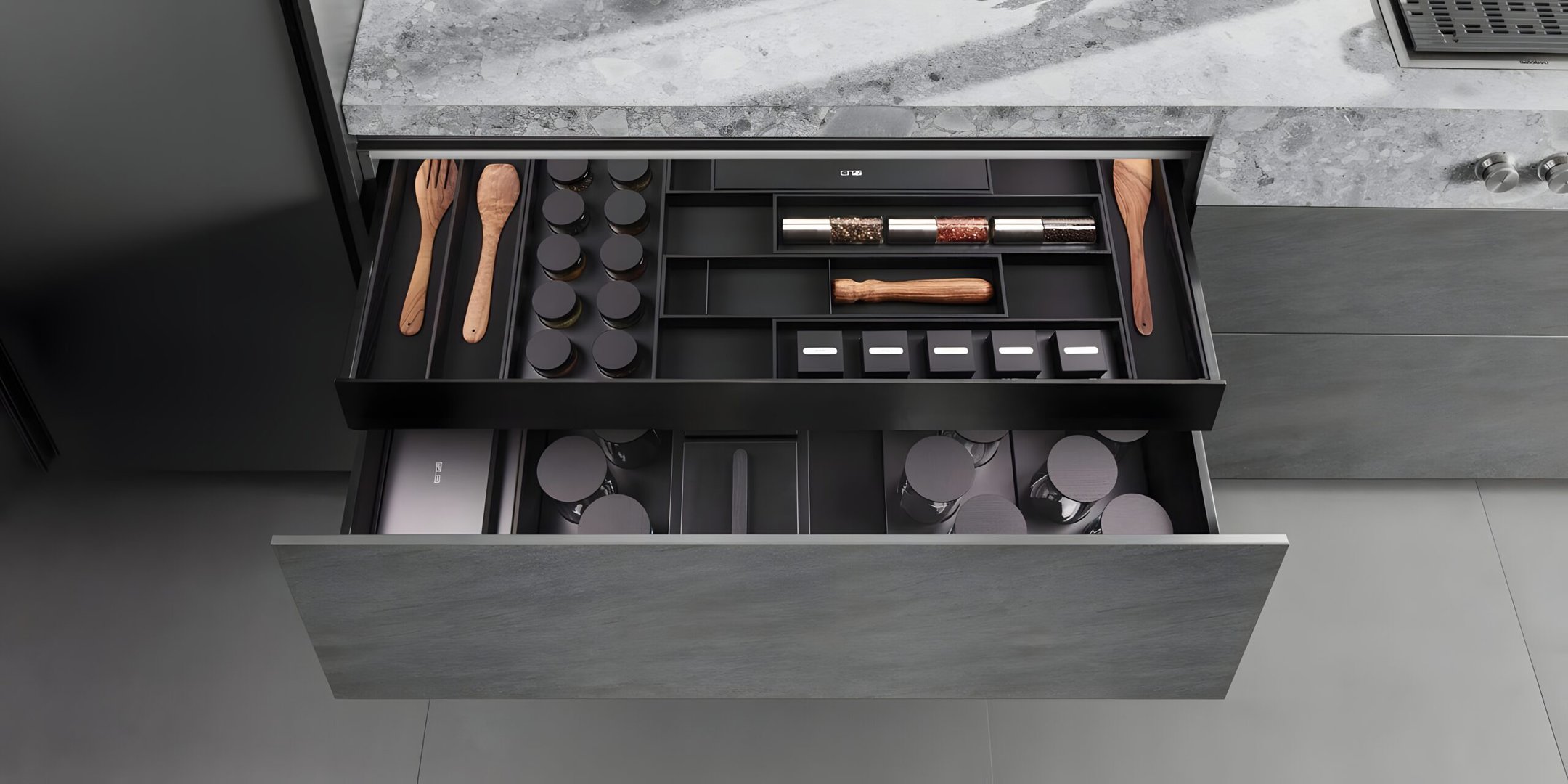
Edge Banding: the Detail That Quietly Decides Everything
If the carcass is the skeleton, edge banding is the skin that protects it. Engineered boards are vulnerable along their cut edges, where the core is exposed. Edge banding seals those edges so moisture, steam and spills cannot soak in. It is a small strip of material, and it is one of the most reliable ways to judge a cabinet’s real quality.
Cheap edge banding is glued on with ordinary adhesive that, over years of humidity and dishwasher steam, lets go at the corners. Once an edge lifts, water wicks into the board and the swelling begins. Better cabinets use thicker, tightly bonded banding, often laser or hot-air applied, so the seam between band and surface is nearly invisible and far more durable.
How to test it in a showroom
- Run a fingernail along the top edge of a door and drawer. You should feel a smooth, continuous surface, not a ridge or a gap.
- Check the inside corners of cabinet boxes, especially near the sink base, the wettest spot in any kitchen.
- Ask what the banding is made of and how it is bonded. A confident answer is a good sign.
Door Fronts: Where Style Meets Longevity
Fronts are what you see, touch and clean every day, so they take the most visible abuse. Each material ages differently, and the right choice depends partly on how you cook and live.
Lacquer
Multi-coat lacquer, whether high-gloss or ultra-matte, gives a deep, even finish that resists moisture and cleans easily. Quality matters here: the number of coats and the curing process determine how well the surface resists scratching and yellowing. Ultra-matte lacquers, like those in the Baulux collection, also use anti-fingerprint technology so the surface does not show every touch in a busy family kitchen.
Ceramic and Glass
Ceramic and glass fronts are about as durable as kitchen surfaces get. They shrug off heat, moisture, UV fading and most scratches, and they wipe clean with a cloth. They carry a more premium feel and price, which is why they anchor the Baulux range. In a damp climate, their imperviousness to moisture is a genuine practical advantage, not just a design statement.
Real Wood
Solid wood and veneer fronts bring warmth and natural grain that engineered surfaces cannot fully imitate. They can last for decades and can often be refinished. They do ask for a little more care around moisture and direct sun, but a properly sealed wood front in a well-ventilated kitchen ages beautifully.
Across all of these, the lesson is the same: the surface you choose should match your life. Custom and premium fronts can stay functional for 30 years or more, while thinner laminate and foil fronts tend to show wear in the 10 to 20 year range (Coohom, 2025). The Bauformat collection offers the widest spread of fronts, and the Burger collection delivers durable construction at the best value, so longevity is available at more than one budget.
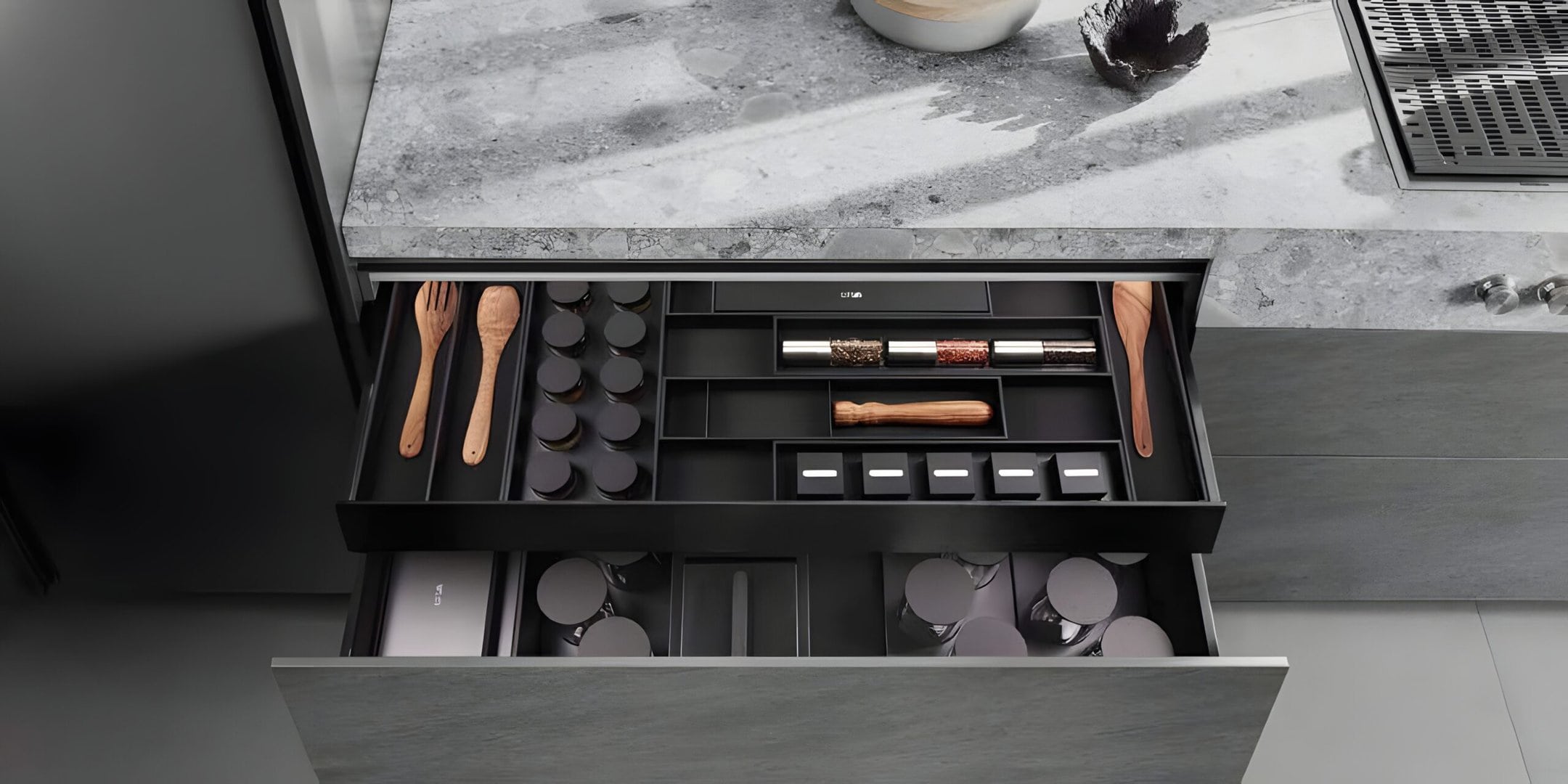
Hardware: the Parts You Touch Thousands of Times
You open a kitchen drawer several times a day without thinking about it. Multiply that over years and the hardware quietly becomes the hardest-working component in the room. It is also the first thing to fail in a poorly built kitchen: drawers that scrape, doors that drop, runners that stick.
Good hardware is engineered to absorb that repetition. The features that matter most:
- Full-extension soft-close runners: Full extension means you can reach the very back of a deep drawer, so no storage is wasted. Soft-close means the drawer pulls itself shut gently instead of slamming, which protects both the contents and the cabinet over the long run. Bauformat fits these as standard.
- 3D-adjustable concealed hinges: Concealed hinges keep clean lines, but the real advantage is adjustability. A 3D-adjustable hinge lets your installer fine-tune each door in three directions, so the gaps stay even and the doors keep closing perfectly years after install, even as a house settles. In an older Vancouver home that shifts with the seasons, that adjustability is a quiet form of insurance.
Hardware quality is hard to fake and easy to test. Open and close. A well-made runner feels smooth and weighted. A cheap one tells you everything in the first inch of travel.
Durability and the Coastal Climate Factor
Everything above matters more here than it would in a dry interior climate. Metro Vancouver’s average relative humidity runs around 70 per cent and climbs past 80 per cent in the wettest winter months (Weather and Climate, 2025). That constant moisture in the air, combined with steam from cooking and dishwashing, is exactly what untreated boards and weak edges cannot handle.
In practice, the damp coast punishes shortcuts. A standard particleboard carcass with thin, lightly glued edge banding may look identical to a premium cabinet on day one. Two or three winters later, the difference is obvious: swollen edges near the sink, doors that no longer line up, a faint musty note under the counter. Moisture-resistant board, sealed edges and adjustable hardware are not upgrades in this region. They are what keeps a kitchen looking new through a decade of West Coast winters.
There is also a ventilation lesson worth noting. Even the best materials last longer with a good range hood and the occasional open window. Materials do the heavy lifting, but habits help them.
Durability as a Value and Sustainability Decision
It is tempting to treat durability as a quality preference, the sort of thing that is nice if you can afford it. The numbers tell a more practical story.
A full kitchen renovation in Vancouver commonly runs between 35,000 and 85,000 dollars, with high-end projects passing 100,000 dollars, and cabinets alone often account for 30 to 40 per cent of the total budget (Quay Construction, 2025; Magic Window, 2025). Spread that over the life of the cabinets and the math becomes clear. A cabinet that genuinely lasts 25 years costs far less per year than one that needs replacing at 12, even if the upfront price is higher. Durability is not the expensive choice, it is usually the economical one over time.
Then there is what gets thrown away. Canada’s construction, renovation and demolition sector generates roughly 4 million tonnes of waste a year, and a single kitchen remodel can produce 1 to 2 tonnes of material waste on its own (Miller Waste Systems, 2025). Replacing a kitchen twice instead of once doubles that footprint. The most sustainable kitchen is simply the one you do not have to tear out and rebuild.
This is where engineering and longevity meet. Bauformat has been built in Lohne, Germany since 1917, with construction standards aimed at decades of daily use, and in Metro Vancouver it is measured, planned and installed by a local team that understands how these materials behave in our climate. Buying once and buying well is the version of this decision that is easiest on both your budget and the landfill.
Frequently Asked Questions
How long should a quality kitchen last?
Well-built cabinets made from dense, moisture-resistant materials commonly last 20 to 30 years, and premium fronts and solid construction can stay functional for 30 years or more (Coohom, 2025). Many kitchens get replaced earlier for style reasons rather than failure, which is an argument for choosing timeless finishes alongside durable materials.
Are engineered boards worse than solid wood for cabinets?
No. For cabinet boxes, a quality moisture-resistant engineered board is often more stable than solid wood, because it does not expand and contract with humidity the way solid timber does. The grade of the board matters far more than the label. Look for moisture resistance to the EN 312 P3 standard or better (Pfleiderer, 2025).
Does Vancouver’s damp climate really affect cabinet life?
Yes. With average humidity around 70 per cent and winter levels above 80 per cent (Weather and Climate, 2025), moisture is a constant. Untreated boards and weakly bonded edges swell and fail faster here than in drier regions, which is why moisture-resistant construction and sealed edge banding are worth prioritizing on the coast.
What is the single best indicator of a durable cabinet?
If you can only check one thing, check the edges and the hardware together. Smooth, tightly bonded edge banding signals a sealed, moisture-protected box, and smooth, weighted soft-close runners signal engineering that will hold up. Both are easy to test by hand and hard to fake.
Choosing long-lasting kitchen cabinet materials is really a series of small, informed decisions: a denser board, a better-sealed edge, a front matched to how you cook, hardware built to be adjusted rather than replaced. Made individually, each feels minor. Added together, they are the difference between a kitchen that survives a decade of damp Vancouver winters and one that quietly looks great for a generation.
Explore more from Bauformat BC
- Kitchen Cabinet Hardware
- Why Opt for Economical Kitchen Cabinet Materials?
- Bauformat: Germany’s Elite Kitchen Cabinet Craftsmen
German cabinetry, planned and built for Metro Vancouver
The kitchen is one of the highest-return rooms in a home: the 2025 Cost vs. Value Report found a minor kitchen remodel recoups roughly 96% of its cost at resale. Choosing cabinetry that lasts is central to that return, which is where German engineering earns its place. Every Bauformat kitchen is built to order in Germany to fit your room to the millimetre.
See the Baulux, Bauformat, and Burger collections in person at our North Vancouver showroom at 1410 Marine Dr Unit 205, learn more about the manufacturer at bauformat.de.
Book a 30-minute consultation with our Metro Vancouver kitchen designers to plan a kitchen built to last.
Open a drawer. Close a cabinet door. You probably do this a few hundred times a day without thinking about it, which is exactly the point. The hardware inside a kitchen is the part you touch more than any other, and yet it is the part most people never see. A door that drifts shut without a slam, a heavy pan drawer that glides out to its full length and stops gently, a corner cabinet that actually gives up the pot hiding at the back. These small moments add up to whether a kitchen feels good to live in.
They also decide how long that kitchen lasts. Countertops and door fronts get the attention in a showroom, but it is the hinges and runners doing the quiet work for fifteen, twenty, thirty years. In a region like Metro Vancouver, where a renovation is a serious investment and homes are held for the long term, the hardware is where good engineering pays you back every single day. Here is what to look for, and why the difference is bigger than it first appears.
Key Takeaways
- Hardware is the part you use most. Hinges and runners get opened and closed hundreds of times daily, so their quality shapes daily life more than any finish.
- Soft-close is now a baseline expectation, not a luxury. The mechanism protects doors, drawers, and your patience for decades.
- 3D-adjustable hinges keep doors aligned over time, which matters in homes that settle and in our humid coastal climate.
- Full-extension runners earn their keep by giving you the whole drawer, including the back, with no reaching or guessing.
- Interior organization is where ergonomics lives: pan drawers, pull-outs, and corner solutions turn dead space into usable storage.
Why Hardware Quality Decides How Long a Kitchen Lasts
Cabinet performance is measurable, and the standards are stricter than most people realize. Under the ANSI/KCMA A161.1 certification, doors are swung open and closed through a full ninety degrees for 25,000 cycles, and drawers are loaded and operated 25,000 times, all without failure or loosening (KCMA, 2025). That is the floor, not the ceiling. Better hardware is engineered well beyond it, which is why a quality kitchen still feels tight and quiet long after a budget one has started to sag and rattle.
This matters financially too. A focused, well-built kitchen update returns roughly 96.1 percent of its cost at resale, the strongest payback of any common renovation according to the 2025 Cost vs. Value Report (Zonda Media, 2025). Hardware is a big part of why. Buyers and appraisers notice when drawers glide and doors sit perfectly square, even if they cannot name what they are reacting to. In Metro Vancouver, where a mid-range kitchen renovation commonly runs from 35,000 to 90,000 dollars (180 Kitchens, 2026), protecting that investment with hardware built to outlast the trends is simply sound math.
Bauformat has been made in Germany since 1917, and that long manufacturing history shows up most clearly in the parts you cannot see. The hinges, runners, and storage systems are specified to perform for the life of the kitchen, not just to pass inspection on installation day.

Concealed Soft-Close Hinges, and Why 3D Adjustment Matters
The hinge is the hardest-working joint in your kitchen. A good one disappears completely. Concealed hinges sit fully inside the cabinet when the door is closed, so you see a clean run of fronts with no metal interrupting the line. That clean look is the easy part. The engineering is what keeps it that way.
Soft-close, explained simply
A soft-close hinge has a small damper built in. As the door approaches the frame, the mechanism catches it and eases it shut over the last few centimetres. No bang, no bounce, no pinched fingers. Beyond the obvious comfort, this protects the door front and the cabinet box from thousands of small impacts over the years. A door that is slammed shut a dozen times a day ages quickly. A door that is guided shut does not.
What 3D adjustability buys you
Houses move. Wood expands and contracts, foundations settle, and Metro Vancouver’s damp coastal air adds its own seasonal swing. A 3D-adjustable hinge lets the installer fine-tune a door on three axes: side to side, up and down, and in and out. The practical result is that every door sits perfectly aligned, with consistent gaps, and stays that way. If a door drifts out of line a year or two down the road, it can be brought back true with a turn of a screwdriver rather than a service call and replacement parts. Bauformat’s 3D-adjustable concealed hinges are standard across the Baulux, Bauformat, and Burger collections for exactly this reason.
Full-Extension Soft-Close Drawer Runners
Here is a test worth doing in any showroom. Open a drawer all the way and look at how much of it you can actually reach. With a partial-extension runner, the back several inches stay hidden inside the cabinet, which is where forgotten lids and spare batteries go to disappear. A full-extension runner pulls the entire drawer clear of the cabinet, so the back of the drawer is as usable as the front.
Combine that with a soft-close damper and load it with a stack of plates, and the difference in daily life is hard to overstate. The drawer glides out smoothly under weight, then closes itself the last bit of the way without a slam, no matter how full it is or how distracted you are. The best runners are rated to carry serious loads, which is what makes deep pan drawers practical instead of a strain to open.
What good runners feel like
- Smooth under load. A heavy drawer should move with one finger, not a tug.
- Quiet. No metallic scraping, no rattle when you close the drawer next to it.
- Consistent. The soft-close should engage every time, whether the drawer is empty or packed.
- Stable when fully open. No tipping, no sag at the front, even at full extension.
Bauformat fits full-extension soft-close runners as standard, so the deep drawers that do the real storage work in a modern kitchen are genuinely pleasant to use.

Handles or Handleless: A Real Choice, Not Just a Look
How you open a cabinet is a design decision and an ergonomic one. Both approaches work beautifully when the hardware behind them is right.
Handles and knobs
A handle gives you something definite to grip, which many people prefer, especially on heavy drawers and for anyone who finds a flat front harder to manage. Handles are also a quick way to change a kitchen’s character. A slim bar reads modern, a rounded knob reads softer and more classic. Because they are easy to swap, handles let you refresh the look years later without touching the cabinets.
Handleless
Handleless designs remove the hardware from the equation entirely, leaving an uninterrupted run of fronts. There are two common ways to achieve it: a continuous recessed channel along the top edge of the drawer or door that your fingers tuck into, or a push-to-open mechanism that releases the door with a light press. The look is calm and architectural, and it suits the clean lines of a lot of Vancouver condos and contemporary homes. It also means no handles to catch a sleeve or a hip in a tight galley kitchen. Bauformat offers both handle and handleless options across its collections, so the choice can follow your space and how you cook rather than being dictated by the cabinets.
Interior Organization: Where Ergonomics Actually Live
A kitchen is only as good as how easily you can get to your things. This is the part of the hardware story that quietly transforms how a space works, and it is where thoughtful planning separates a kitchen that looks good from one that lives well.
Pan drawers
Deep drawers under the hob hold pots, pans, and lids far better than a low cabinet with a single shelf. You see everything from above, you lift nothing out of the way to reach the back, and full-extension runners mean the whole drawer comes to you. For most cooks this single change is the biggest day-to-day upgrade in a new kitchen.
Pull-outs
Tall, narrow pull-outs make use of slivers of space that would otherwise be wasted, and they bring the contents out to where you can see and reach them. They are ideal for oils and bottles beside the hob, or for a slim larder of dry goods. Under-sink pull-outs tame the most chaotic cabinet in any kitchen.
Corner solutions
The corner cabinet is the classic problem: a deep, awkward cavity where things vanish. Modern corner systems solve it with shelves that swing or pull fully out of the cabinet, bringing the back corner into the open. Instead of crawling halfway into a cupboard, you pull the contents toward you. In smaller Metro Vancouver kitchens, where every cubic inch counts, reclaiming the corner is often the difference between cramped and comfortable.
What to Look For When You Compare Hardware
Door fronts and finishes are easy to judge by eye. Hardware takes a little more attention, because the qualities that matter are about how it works over time. Use this as your checklist.
- Soft-close on everything. Doors and drawers should all close themselves gently. Test a few and listen.
- Full extension on drawers. Confirm you can reach the very back, then load one and feel how it moves.
- 3D-adjustable hinges. Ask whether doors can be realigned later. The answer tells you how the kitchen will age.
- Load ratings that match real life. Pan drawers carry weight. The runners need to be specified for it.
- Certified construction. Standards like ANSI/KCMA A161.1 confirm the cabinets and hardware have been cycle-tested, not just assembled to look right.
- Local measuring and installation. Even excellent hardware underperforms if it is fitted poorly. A kitchen measured, planned, and installed by a local team is set up correctly from the start.
This last point is easy to overlook. Bauformat kitchens in our region are measured, planned, and installed by the local Vancouver team, which means the 3D hinges are dialled in, the runners are level, and the soft-close behaves as engineered on day one. Hardware quality and installation quality are two halves of the same result.
Frequently Asked Questions
Is soft-close hardware worth the extra cost?
For most people, yes, and increasingly it is simply standard on quality cabinetry rather than an upgrade. Beyond the comfort of no slamming, the damper protects doors and drawer boxes from thousands of small impacts over the years, which extends the life of the kitchen. Given that a well-built kitchen update returns roughly 96.1 percent of its cost at resale (Zonda Media, 2025), the small premium for hardware that lasts is easy to justify.
How long should good cabinet hardware last?
Certified cabinet hardware is tested to survive at least 25,000 open-and-close cycles under load without failing (KCMA, 2025), and premium German hardware is engineered well beyond that threshold. In practice, quality hinges and runners are built to perform for the full life of the kitchen, often two to three decades, provided they are installed correctly.
Should I choose handles or go handleless?
Both work well. Choose handles if you like a definite grip, want easy changes to the look later, or have heavy drawers that benefit from a solid pull. Choose handleless for a clean, architectural front and for tight kitchens where protruding handles get in the way. It is genuinely a preference, so it helps to try both in person and see which suits how you cook.
Can cabinet doors be realigned if they drift over time?
With 3D-adjustable concealed hinges, yes, and easily. The door can be fine-tuned side to side, up and down, and in and out with a screwdriver. This matters in Metro Vancouver, where seasonal humidity and normal house movement can shift things slightly. Adjustable hinges mean a small tweak rather than a replacement.
The hardware is the part of a kitchen you never compliment out loud and never stop relying on. Get it right and you stop noticing it entirely, which is the highest praise a hinge can earn. Choose soft-close throughout, full-extension runners on the drawers that carry weight, adjustable hinges that keep everything square, and interior storage planned around the way you actually cook. Done well, and fitted carefully by a team who knows the homes here, it is the difference between a kitchen that looks new and one that keeps feeling new for decades.
Explore more from Bauformat BC
- Why Choose Long-Lasting Materials for Your Kitchen Cabinets
- Why Opt for Economical Kitchen Cabinet Materials?
- Bauformat: Germany’s Elite Kitchen Cabinet Craftsmen
German cabinetry, planned and built for Metro Vancouver
The kitchen is one of the highest-return rooms in a home: the 2025 Cost vs. Value Report found a minor kitchen remodel recoups roughly 96% of its cost at resale. Choosing cabinetry that lasts is central to that return, which is where German engineering earns its place. Every Bauformat kitchen is built to order in Germany to fit your room to the millimetre.
See the Baulux, Bauformat, and Burger collections in person at our North Vancouver showroom at 1410 Marine Dr Unit 205, learn more about the manufacturer at bauformat.de.
Book a 30-minute consultation with our Metro Vancouver kitchen designers to plan a kitchen built to last.
Modern does not mean cold. The kitchens that stop people in their tracks right now are the ones that look effortless, where the eye runs along an unbroken row of fronts without snagging on a single handle, and where the toaster, the recycling, and the spice jars have all quietly disappeared into the cabinetry. That calm is the whole point. A modern kitchen is less about chrome and gloss for its own sake and more about removing visual noise so the room can breathe.
In Metro Vancouver, that idea has to survive real life. A downtown condo measures every centimetre. A North Shore house wants its kitchen to flow into the living room and out toward the trees. An open-concept main floor in Burnaby or Richmond needs a kitchen that looks finished from the sofa, not just from the cook’s side of the island. The good news is that the modern look and genuine, everyday function are not in tension. Done with the right engineering, they are the same thing.
Key Takeaways
- Modern kitchen design is built on clean lines, handleless or low-profile fronts, integrated appliances, and storage that hides clutter rather than displaying it.
- A focused, mid-range kitchen update returns its cost better than a full gut renovation. Zonda’s 2025 Cost vs. Value Report put a minor kitchen remodel at roughly 113% recouped nationally, up from 96.1% the year before.
- Handleless fronts are now treated as a design standard in contemporary kitchens, not a passing trend, with consistency (one handle strategy throughout) being the key rule.
- Metro Vancouver renovations run roughly 20 to 30% above the national Canadian average, so material durability and a layout that lasts matter more here than almost anywhere in the country.
- The modern look only ages well when the hardware underneath, runners, hinges, and adjustment, holds its alignment over years of daily use.
Start With the Layout, Not the Finishes
Every modern kitchen worth living in starts as a circulation problem before it becomes a beauty problem. The classic work triangle, sink to cooktop to fridge, still holds, but in open-concept Metro Vancouver homes the island has become a fourth point that does most of the heavy lifting: prep, casual seating, and a buffer between cooking mess and the people you are cooking for.
A few principles keep a modern layout from feeling like a showroom that nobody can use:
- Keep runs long and unbroken. A continuous bank of base cabinets reads as calm. Break it only where function demands it.
- Push tall storage to one wall. Floor-to-ceiling pantry and appliance towers grouped together free the rest of the room for clean horizontal lines.
- Let the island do the work. In a condo, a slim island or a peninsula can hold the sink or cooktop and reclaim a whole wall for storage.
- Plan the sightline from the living room. In an open plan, the back of the island and the tall wall are what guests actually see, so they deserve the most considered finishes.
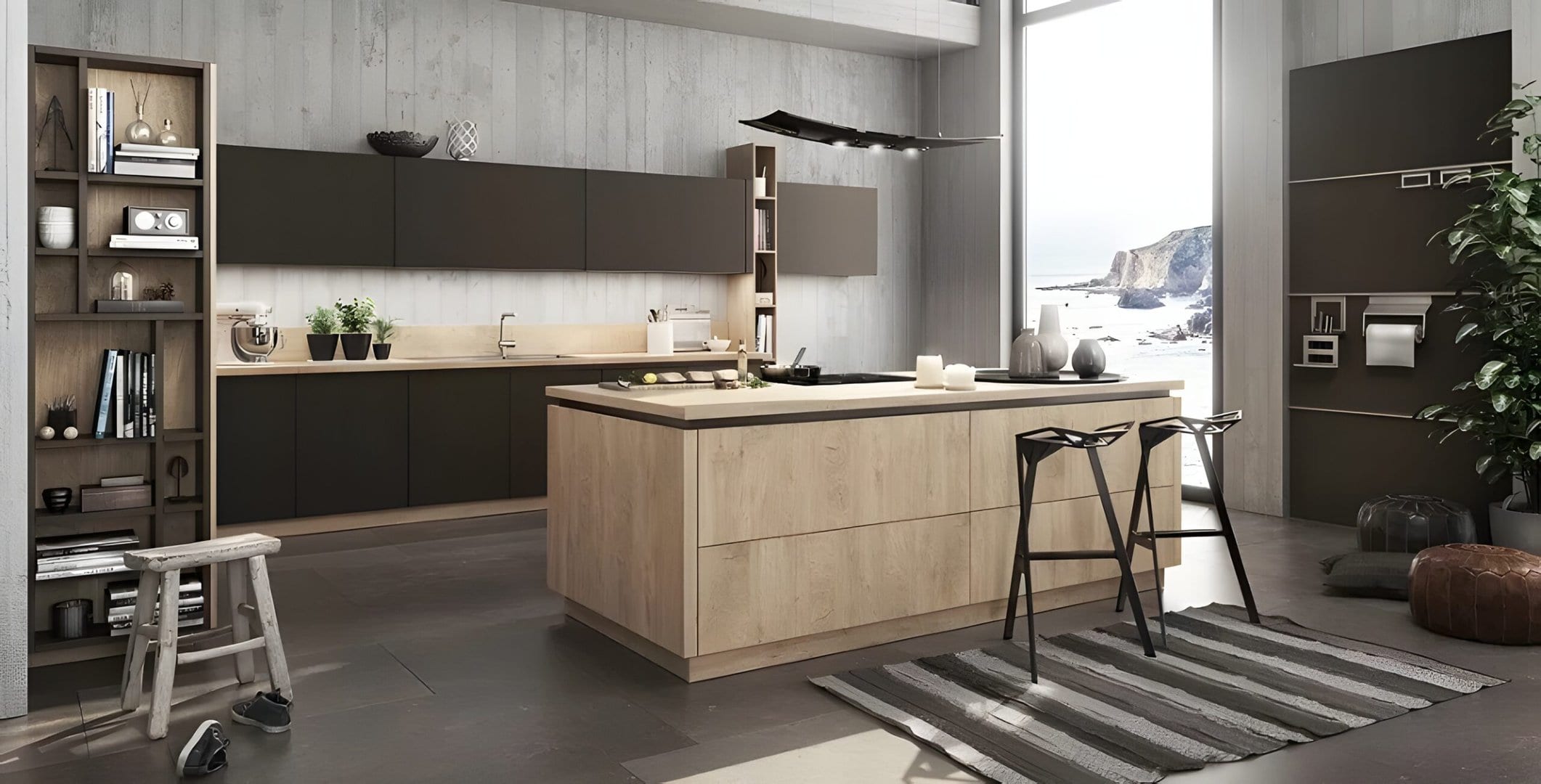
Handleless and Minimalist Fronts
If one detail defines the modern kitchen, it is the absence of the handle. Designers now describe handleless cabinetry as a standard for contemporary kitchens rather than a trend, achieved through integrated grip channels, push-to-open mechanisms, or slim recessed pulls. The practical bonus is real: nothing to catch a hip or a tea towel as you move through a busy room.
The single most important rule is consistency. Pick one handle strategy and carry it across the entire kitchen rather than mixing several. That discipline is what separates a coherent modern look from a busy one.
Ways to go handleless or low-profile
- Continuous grip rail. A recessed channel runs along the top edge of base cabinets, giving a finger pull without any visible hardware.
- Push-to-open. A light press releases the door or drawer, ideal for tall units and uppers where a grip rail would interrupt the line.
- Slim profile pulls. For homeowners who want a tactile handle, a fine edge pull in a matte finish keeps things quiet.
Our Bauformat collection carries the widest range here, including handleless fronts in both high-gloss and matte. For the most pared-back look, the Baulux line leans into ceramic, glass, and ultra-matte surfaces that suit a minimalist front beautifully, since the material itself becomes the detail.
Fronts, Materials, and Finishes
Finish is where a modern kitchen declares its personality. The current direction is warm minimalism: clean forms softened by natural-feeling materials, rather than the stark white-on-white of a decade ago. The choice usually comes down to how much light and reflection you want in the room.
Matte versus gloss
- Ultra-matte and ceramic fronts absorb light, hide fingerprints well, and give a soft, architectural feel. They suit North Shore houses where the cabinetry should recede and let the view lead.
- High-gloss fronts bounce light around and make compact spaces feel larger, which is why they remain popular in downtown condos with limited natural light.
For surfaces, premium countertop materials such as quartz and engineered stone continue to earn their keep, delivering strong per-dollar returns within a renovation while standing up to daily wear. In a coastal climate, durability is not a luxury. Cabinet fronts and surfaces in a Vancouver kitchen contend with humidity, so the stability of the material and the quality of the edge banding matter as much as the colour.
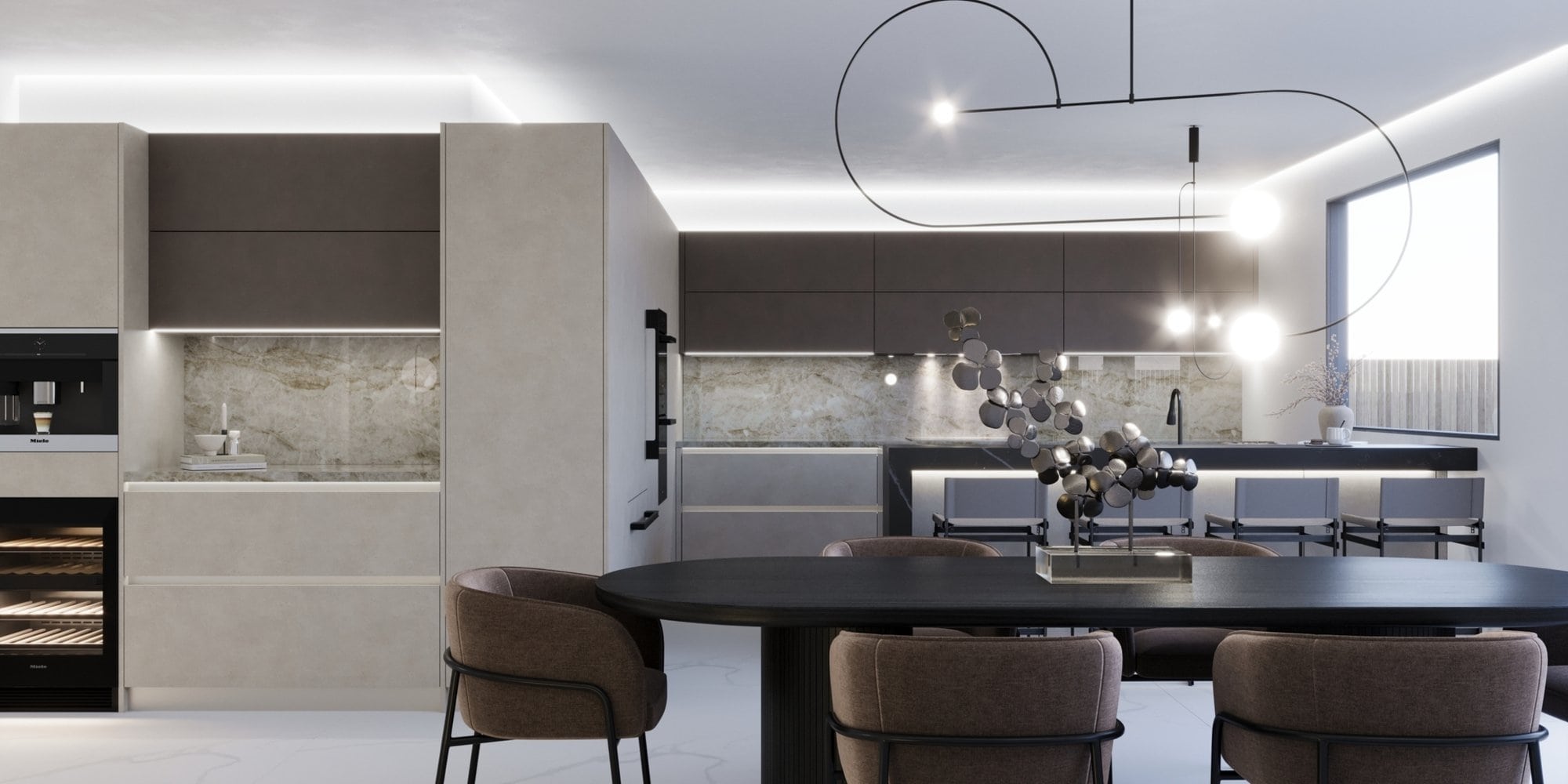
Smart Storage That Stays Hidden
Minimalism on the outside only works if the inside is ruthlessly organized. The modern trend toward hidden function means the clutter goes somewhere, and that somewhere is engineered drawer and pantry systems that use every cubic centimetre.
- Deep pot drawers on full-extension runners replace the old reach-in base cupboard, so nothing gets lost at the back.
- Tall pull-out pantries bring the whole shelf to you, a serious advantage in a narrow condo galley.
- Corner solutions turn the dead corner into usable, swing-out storage.
- Appliance garages and integrated bins keep the kettle, the small appliances, and the recycling off the counter and out of sight.
This is where engineering quietly decides whether a kitchen feels modern in year one and year ten. Full-extension, soft-close runners let a heavy drawer glide all the way out and close without a slam. The 3D-adjustable concealed hinge is the unsung hero of the handleless look, because perfectly even gaps between doors are what make a long run of fronts read as one clean plane. When a door drifts out of line over time, that adjustability lets the local team bring it back true.
Lighting the Modern Kitchen
Lighting is what makes clean lines look intentional rather than flat. A modern scheme works in layers, and skipping any one of them tends to be what makes a beautiful kitchen feel a little lifeless after dark.
- Task lighting under the upper cabinets puts light directly on the counter where you prep, with no shadow from your own hands.
- Ambient lighting from recessed ceiling fixtures fills the room evenly.
- Accent lighting inside glass cabinets or along a grip channel adds depth and shows off the materials.
- Feature lighting, usually pendants over the island, anchors the room and marks the social centre.
Vancouver’s grey winters make this layered approach more than decorative. With short days from November through February, a kitchen that relies on a single overhead fixture feels gloomy for half the year. Warm, dimmable layers let the same room shift from a bright morning workspace to a softer evening gathering place.
Making Modern Work in Small and Open Spaces
The two most common Metro Vancouver scenarios pull modern design in opposite directions, and each has its own playbook.
The downtown condo
In a compact condo, modern design is mostly about visual tricks that buy back space. Handleless fronts keep walls flat and uninterrupted. A consistent, light or reflective finish makes the room feel larger. Integrated appliances, the dishwasher and fridge hidden behind matching fronts, stop the eye from counting separate objects and reading the kitchen as cramped. Tall storage on one wall does the heavy lifting so the rest can stay open.
The open-concept main floor
In a North Shore house or a Surrey new build with an open main floor, the kitchen is furniture as much as it is a workspace. Here the island becomes a design statement, often in a contrasting finish, and the goal is for the kitchen to look as composed from the dining table as it does from the sink. Integrated appliances and hidden storage matter for the same reason: from across an open room, every visible handle and exposed appliance adds clutter to the scene.
Because Metro Vancouver renovation costs track meaningfully above the national average, getting the layout and the durable elements right the first time is where the budget is best spent. A focused, well-planned update consistently returns more of its cost than a sprawling gut job, which is an argument for spending on the cabinetry and engineering that last rather than on moving walls and plumbing you will rarely recover.
Why German Engineering Holds the Look
A modern kitchen lives or dies on its lines. Even gaps, doors that hang true, drawers that close softly and squarely, this is what reads as quality, and it is entirely a function of the hardware behind the fronts. Bauformat has built cabinets in Germany since 1917, and that long manufacturing discipline is what keeps a handleless run looking precise after years of daily use.
The three collections give Metro Vancouver homeowners a clear path. Baulux is the most overtly modern, with ceramic, glass, and ultra-matte fronts for a minimalist statement. The Bauformat collection offers the widest choice, including handleless high-gloss and matte. Burger delivers the best value without giving up the soft-close runners and adjustable hinges that make the difference. Whichever line fits, the local Vancouver team measures, plans, and installs, so the engineering that looks effortless in a brochure actually lands square in your room.
Frequently Asked Questions
Are handleless kitchens practical for everyday use?
Yes. With nothing protruding from the fronts, there is nothing to catch on as you move around a busy kitchen, which is one reason designers now treat handleless cabinetry as a standard rather than a novelty. The grip channel or push-to-open mechanism does the work of a handle without interrupting the clean line. The main thing is to choose one approach and use it consistently throughout the kitchen.
Does a modern kitchen renovation add resale value in Metro Vancouver?
A focused, mid-range kitchen update tends to recoup its cost well. Zonda’s 2025 Cost vs. Value Report placed a minor kitchen remodel at roughly 113% recouped nationally, the strongest of any interior project, up from 96.1% the previous year. Larger gut renovations return a much smaller share, so the value is in a smart, contained update rather than tearing everything out.
Is high-gloss or matte better for a condo kitchen?
Both work, and the choice depends on light. High-gloss fronts reflect light and can make a compact, dim downtown condo feel larger and brighter. Ultra-matte and ceramic fronts hide fingerprints and give a softer, more architectural look. In a small space with limited natural light, many people lean toward the reflective option.
How do I keep a modern look from feeling cold?
Warm minimalism is the current answer. Pair clean, handleless cabinetry with natural-feeling materials, a warmer finish on the island, layered and dimmable lighting, and a few open or glass-fronted sections to break up the flat planes. The structure stays modern while the materials and light bring warmth.
Modern kitchen design, at its best, is quiet confidence. It is the run of fronts with no handle to interrupt them, the drawer that glides shut without a sound, the appliances you forget are there until you need them, and the light that makes all of it look considered on a dark Vancouver evening. Get the layout and the engineering right, choose finishes that suit your space and your light, and a modern kitchen stops looking like a trend and starts looking like the way your home was always meant to work.
Explore more from Bauformat BC
- How would Bauformat Matte Black Cabinets Change the Mood of a Kitchen?
- German Kitchen Design Inspiration for 2026
- Mastering the Art of Kitchen Space Optimization
German cabinetry, planned and built for Metro Vancouver
The kitchen is one of the highest-return rooms in a home: the 2025 Cost vs. Value Report found a minor kitchen remodel recoups roughly 96% of its cost at resale. Choosing cabinetry that lasts is central to that return, which is where German engineering earns its place. Every Bauformat kitchen is built to order in Germany to fit your room to the millimetre.
See the Baulux, Bauformat, and Burger collections in person at our North Vancouver showroom at 1410 Marine Dr Unit 205, learn more about the manufacturer at bauformat.de.
Book a 30-minute consultation with our Metro Vancouver kitchen designers to plan a kitchen built to last.
Stand in two different kitchen showrooms on the same afternoon and you can feel the difference before anyone says a word. One room is quiet and exact, with drawers that close like they were measured to the millimetre. The other is warm and theatrical, full of bold colour, sculptural shapes, and finishes that look like they belong in a fashion magazine. Both are beautiful. They are just chasing different things.
That contrast is the heart of the German versus Italian kitchen cabinet question. It is less a fight over quality and more a difference in temperament. German cabinetry leans on precision engineering, function, and durability built to last decades. Italian cabinetry leans on expressive style and finishes that move with fashion. If you are renovating a home anywhere across Metro Vancouver, understanding that split helps you choose with confidence instead of guessing. Here is a fair, useful look at both, and an honest note on why German engineering tends to fit our coast.
Key Takeaways
- Two philosophies, not two quality tiers. German cabinetry prioritizes engineering, modular systems, and longevity. Italian cabinetry prioritizes expressive, fashion-led design.
- Germany leads the world in kitchen furniture exports, a reputation built on standardized precision and durability rather than seasonal trend.
- Italy leads Europe in overall furniture and design revenue, with real strength in the high-end, style-driven kitchen segment.
- Climate matters here. Metro Vancouver’s damp, humid winters reward moisture-resistant construction and hardware that stays aligned for years.
- Bauformat is made in Germany and fitted locally, so you get German engineering measured, planned, and installed by a Vancouver team that knows our homes.
Two Design Philosophies, Side by Side
The simplest way to understand the difference is to think about what each tradition treats as the starting point. German design starts with the system. Everything is built on standardized dimensions, repeatable construction, and components that fit together with very little tolerance for error. The look follows the function. Clean lines, handleless fronts, and restrained colour palettes are not just a style choice, they are what happens when engineering leads.
Italian design starts with the statement. The question is how the kitchen will make you feel and how it will read as a piece of design in the room. Finish, texture, and proportion carry the project. Italian makers are famous for finishes that feel current and daring, the kind of surfaces and colours that show up in interiors coverage first and in mainstream kitchens a few years later.
Where German cabinetry shines
- Engineering and tolerances. Tight, consistent build quality across every unit, so the whole run looks even and aligned.
- Durability. Construction and hardware designed to survive decades of daily use.
- Modular flexibility. Standardized systems make planning, expanding, and replacing parts straightforward.
- Hardware quietly doing its job. Soft-close runners and adjustable hinges that keep working long after install day.
Where Italian cabinetry shines
- Expressive finishes. Adventurous colours, lacquers, and textures that feel like fashion.
- Sculptural design. Strong shapes and statement pieces that anchor a room.
- Trend leadership. Often first to a new look, which appeals if you want something striking right now.
- Material drama. Bold pairings of stone, metal, and wood used as visual centrepieces.
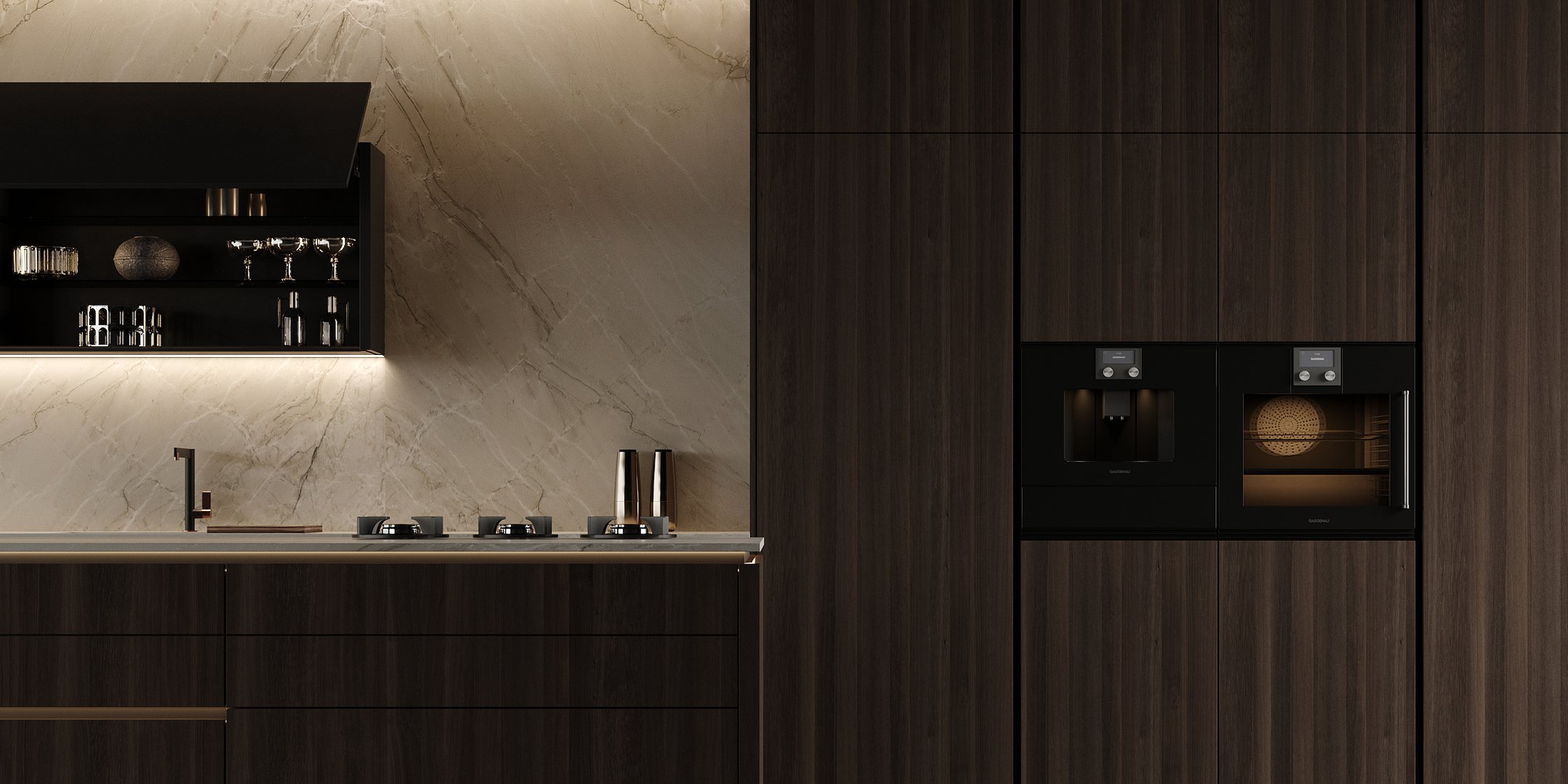
What the Numbers Say About Each Tradition
The reputations are not just marketing. They show up in trade data. Germany remains the undisputed leading exporter of kitchen furniture worldwide, according to a 2024 ResearchAndMarkets world market outlook, a position it has held consistently within a global kitchen furniture sector worth roughly USD 59 billion. That export dominance is the practical result of an industry organized around precision and repeatable quality, the qualities that travel well across borders and survive long after a trend fades.
Italy, meanwhile, leads Europe in furniture and design overall. The Italian furniture and design sector reached 26.7 billion euros in revenue in 2025, consolidating its leadership ahead of Germany, per FIRSTonline reporting on 2025 figures. Italy’s strength is concentrated at the top of the market. Its high-end positioning peaks near a 25 percent share in the kitchen segment, one of the most strategic globally. In plain terms, when people pay a premium for kitchen as fashion, Italy captures a large slice of that spending. Both countries are leaders. They simply lead in different lanes, Germany in engineering and export reliability, Italy in design prestige.
Durability and Daily Life
A kitchen is the hardest-working room in any home. Doors open and shut thousands of times a year, drawers carry real weight, and hinges take constant small stresses. This is where the German emphasis on engineering earns its keep. The value of tight tolerances is not visible on day one when both kitchens look flawless. It shows up in year eight, when one set of doors still sits perfectly flush and the other has started to drift.
Good hardware is the quiet hero here. Full-extension soft-close runners let a drawer pull all the way out so nothing gets lost at the back, then glide shut without a slam. Concealed hinges with 3D adjustment can be nudged in three directions, which means a door that shifts slightly over time can be brought back into perfect alignment in minutes rather than replaced. These are the details that separate a kitchen that ages gracefully from one that starts to feel tired. Italian cabinetry can absolutely be built to last, and plenty of it is, but durability is the headline of the German philosophy rather than a supporting act.
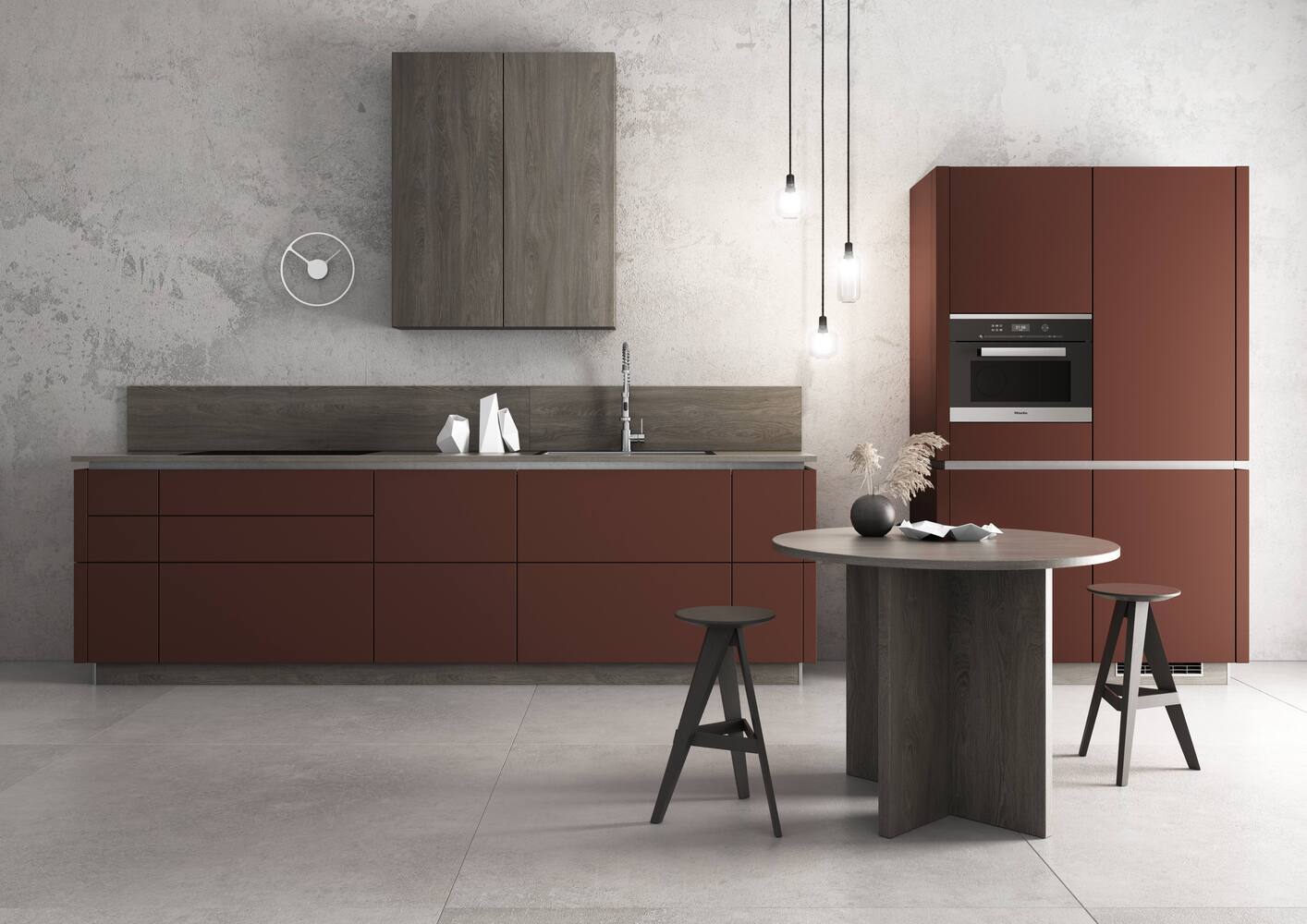
Why German Engineering Suits Metro Vancouver
Style preferences are personal, but our climate is not. Metro Vancouver gives cabinetry a specific challenge. Long, wet winters and high humidity put stress on materials, joints, and finishes, especially in kitchens where steam and temperature swings are constant. Moisture is the enemy of cabinetry that was not built to handle it. Edges can swell, finishes can lift, and doors can shift as materials react to damp air.
This is where engineering-first construction quietly pays off. Cabinetry built to tight, consistent standards, with hardware designed to stay aligned, copes better with the daily expansion and contraction that our climate brings. A handleless German kitchen in a Yaletown condo is not just a clean look. It is also fewer crevices for moisture and grease to collect, and a build designed to keep performing through years of coastal winters. When you are investing in a room you will use every single day, construction that respects the local environment is worth as much as the finish on the doors.
The Investment Picture for Vancouver Homes
Kitchens are expensive here, so it is worth knowing where the money goes and what it returns. A kitchen renovation in Metro Vancouver typically runs between 45,000 and 75,000 dollars for a detached home or townhouse, with condo kitchens often landing between 28,000 and 55,000 dollars, according to 2025 to 2026 figures from Delana Interiors. High-end projects can climb well past 100,000 dollars depending on finishes and layout.
The good news is that kitchens reward the investment. A kitchen renovation has the potential to increase a home’s value by up to 20 percent, according to a Royal LePage survey of Canadian agents cited by Morningstar Canada in 2025. The smart move is to spend where the return lives. Cabinetry you will open every day for the next twenty years is exactly the kind of long-life component worth doing once and doing well, rather than refinishing in a decade when a trend-led finish has dated. That logic favours the German approach, durable construction that holds its look and function long after the renovation is done.
How Bauformat fits into this
Bauformat has been made in Germany since 1917, in the town of Lohne, which gives it more than a century of refinement in exactly the engineering tradition described above. The range is built to suit different goals and budgets without leaving the German philosophy behind:
- Baulux for ceramic, glass, and ultra-matte luxury finishes when you want a statement surface.
- Bauformat for the widest choice across styles, colours, and configurations.
- Burger for the best value when budget is the priority and you still want German build quality.
Across all three, the hardware is consistent, full-extension soft-close runners and 3D-adjustable concealed hinges. And because the kitchens are measured, planned, and installed by the local Vancouver team, the German engineering is matched to the realities of your actual space, whether that is a heritage home on the east side or a high-rise condo near the water.
So Which Philosophy Is Right for You?
There is no wrong answer, only the right fit for how you live. If you want your kitchen to be a bold, of-the-moment design statement and you love the idea of leading the trend, the Italian philosophy speaks that language fluently. If you want a kitchen that looks clean and current, works flawlessly for decades, and quietly handles the demands of coastal living, the German philosophy is built for exactly that.
For most Metro Vancouver homeowners weighing a major investment in a room they use constantly, the case for German engineering is strong. You are buying durability, precision, and a finish that ages well, in a climate that punishes anything less. The expressive beauty is still there. It just sits on top of construction designed to outlast the trends.
Frequently Asked Questions
Are German kitchen cabinets better than Italian ones?
Neither is simply better. They are built around different goals. German cabinetry prioritizes engineering, durability, and modular precision, while Italian cabinetry prioritizes expressive, fashion-led style. Germany leads the world in kitchen furniture exports, and Italy leads Europe in design revenue, so both traditions are genuinely world class. The right choice depends on whether you value long-term function and longevity or a bold, trend-leading look.
Do German cabinets handle Vancouver’s damp climate better?
Construction quality matters more than nationality, but the engineering-first approach common in German cabinetry tends to handle humidity and temperature swings well. Tight tolerances, durable materials, and hardware that stays aligned all help cabinetry cope with the moisture stresses of long coastal winters. That is a meaningful advantage in Metro Vancouver, where kitchens deal with steam and damp air for much of the year.
Is German cabinetry more expensive than Italian?
Price overlaps heavily, and both traditions span value to luxury tiers. Italy is especially dominant in the very high end of the kitchen market, where price reflects design prestige. German ranges often span a wide spread, from best-value lines to luxury collections, so you can find German engineering at several price points rather than only at the top.
What hardware should I look for in a quality kitchen?
Two details tell you a lot. Full-extension soft-close runners let drawers open completely and close gently, which protects both the contents and the cabinet over years of use. Concealed hinges with 3D adjustment let you realign doors in three directions, so a kitchen can be fine-tuned over time instead of replaced. These are standard in well-engineered German cabinetry and a reliable sign of a build meant to last.
Choosing between German and Italian cabinetry is really about choosing what you want your kitchen to be, a piece of expressive design or a precisely engineered tool that stays beautiful for the long haul. Both traditions are worthy. For a home that has to stand up to Metro Vancouver winters and decades of daily use, German engineering makes a quietly compelling case, and that is the thinking behind every Bauformat kitchen we design.
Explore more from Bauformat BC
- Bauformat: Germany’s Elite Kitchen Cabinet Craftsmen
- Why Choose Long-Lasting Materials for Your Kitchen Cabinets
- Kitchen Cabinet Hardware
German cabinetry, planned and built for Metro Vancouver
The kitchen is one of the highest-return rooms in a home: the 2025 Cost vs. Value Report found a minor kitchen remodel recoups roughly 96% of its cost at resale. Choosing cabinetry that lasts is central to that return, which is where German engineering earns its place. Every Bauformat kitchen is built to order in Germany to fit your room to the millimetre.
See the Baulux, Bauformat, and Burger collections in person at our North Vancouver showroom at 1410 Marine Dr Unit 205, learn more about the manufacturer at bauformat.de.
Book a 30-minute consultation with our Metro Vancouver kitchen designers to plan a kitchen built to last.
Walk into a German-built kitchen and you notice it before you can name it. A tall pantry door swings shut and stops with a quiet cushion instead of a clack. A 90-centimetre drawer rolls all the way out, loaded with cast iron, and never sags or sticks. The gaps between fronts are even down to the millimetre, top to bottom, like the cabinets were cut from a single piece. That precision is not decoration. It is the result of more than a century of doing one thing carefully.
Bauformat has been making kitchens in Lohne, Germany since 1917. Every cabinet that ends up in a Yaletown condo or a West Vancouver family home is still built there, then measured, planned, and installed by the local Vancouver team. For a Metro Vancouver homeowner weighing a renovation, the question is simple: what does German craftsmanship actually buy you, and why does it hold up here? This article answers that honestly.
Key Takeaways
- Bauformat has built kitchens in Lohne, Germany since 1917, and every cabinet is still made in Germany before the local Vancouver team measures, plans, and installs it.
- German craftsmanship shows up in three places you can verify yourself: the board and edge materials, the build tolerances, and the hardware.
- Three collections cover the full range. Baulux for ceramic, glass, and ultra-matte fronts, Bauformat for the widest choice of colours and finishes, and Burger for the best value with a full German build.
- Full-extension soft-close runners and 3D-adjustable concealed hinges are standard, not upgrades, which matters in humid coastal homes that move with the seasons.
- A focused kitchen renovation remains one of the strongest returns in home improvement, and build quality is what protects that value over fifteen and twenty years.
Made in Lohne since 1917, fitted in Vancouver
Lohne sits in Lower Saxony, in a region of northern Germany that has produced furniture for generations. Bauformat started there in 1917 and never left. That continuity matters more than a marketing line suggests. A factory that has refined the same craft across more than a hundred years has had time to standardise the things that go wrong in cheaper kitchens: edges that peel, hinges that drift, fronts that no longer line up after a few winters.
The German furniture industry as a whole turned over roughly 15.8 billion euros in 2025 (VDM, 2025), and the kitchen-furniture segment alone accounted for just under 5.6 billion euros (VDM, 2025), with close to 46 percent of that sold for export. Those numbers tell you something useful. Germany did not become the reference point for kitchen manufacturing by accident. It built an industry on engineering discipline, and the homes that import those kitchens, including here in Metro Vancouver, are buying into that discipline.
What does not get shipped from Germany is the fit. A cabinet built to a tenth of a millimetre still has to land in a real room with walls that lean, floors that slope, and a heritage ceiling that drops two centimetres over three metres. That is where the local Vancouver team comes in. They measure the actual space, plan the layout around your plumbing and your sightlines, and install with the German hardware doing exactly what it was designed to do. Factory precision and local fit are two different skills, and you need both.
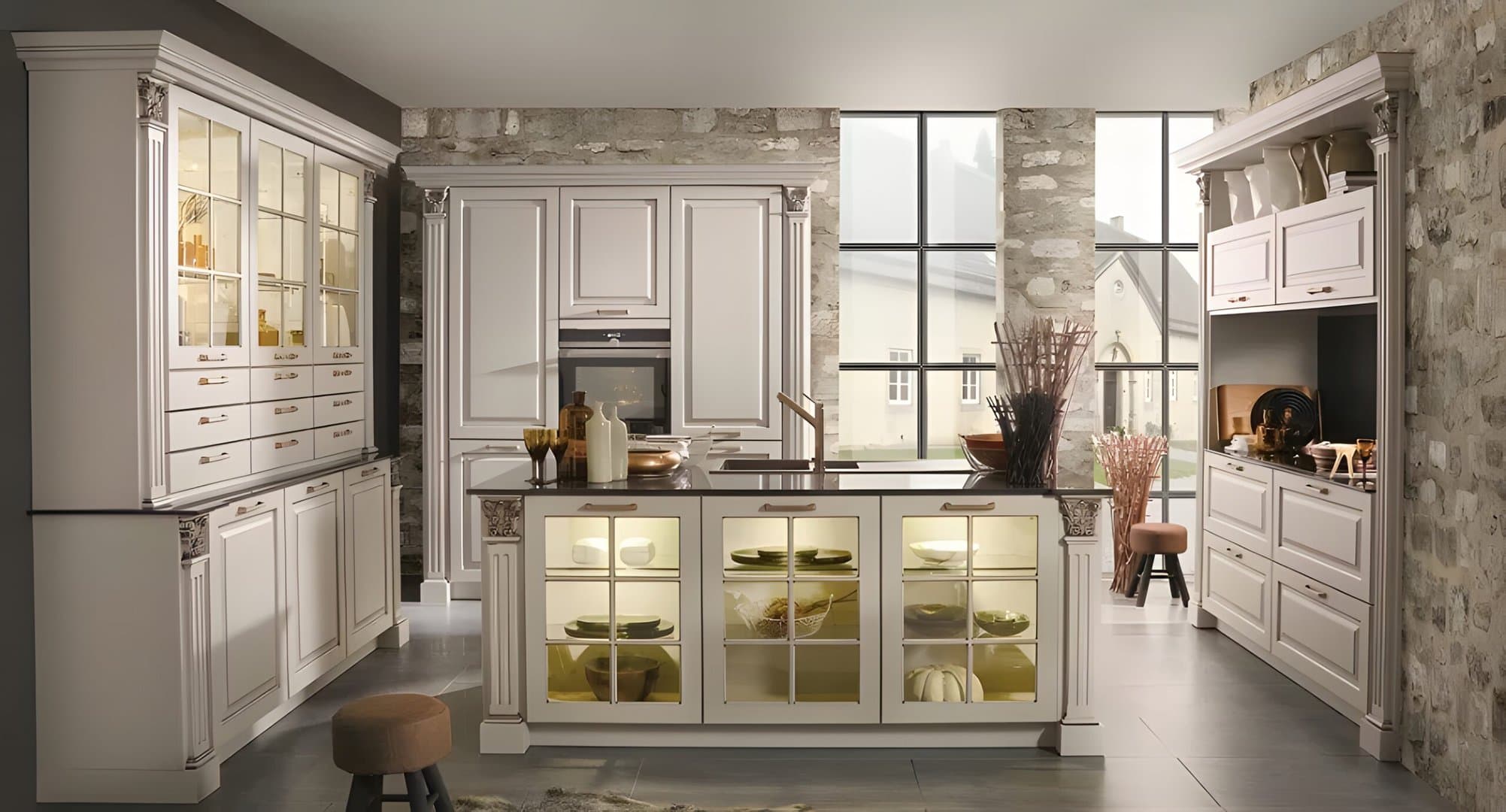
What German craftsmanship actually means
The phrase gets used loosely, so here is the specific version. Three things separate a genuinely well-built cabinet from one that only photographs well.
Materials you can rely on
It starts with the carcass, the box behind the door. German kitchen cabinets use dense, moisture-resistant board with edges banded under heat and pressure so tightly that the seam disappears and water cannot creep in. That edge banding is the first thing to fail in a low-cost kitchen. Near a sink or a dishwasher, a poorly bonded edge swells within a couple of years. A properly banded one does not. The fronts themselves run from real lacquered surfaces to ceramic and glass, each chosen to wear evenly and hold colour rather than yellow or chalk over time.
Tolerances measured in millimetres
Tolerance is the quiet hero of a good kitchen. It means how close every part lands to its intended size and position. German lines are cut and assembled to tolerances so tight that a run of twelve cabinets reads as one continuous surface, with reveal lines that stay even from the first door to the last. You feel this every day. Drawers that align, doors that sit flush, a worktop that meets the cabinet without a gap to trap crumbs. Loose tolerances are why budget kitchens look slightly off in a way most people sense but cannot articulate.
Hardware that earns its keep
Open and close a kitchen drawer a few thousand times a year and the hardware becomes the whole experience. Bauformat fits full-extension, soft-close runners as standard, so the drawer pulls all the way out and you reach the back without crouching, then closes itself the last few centimetres without a slam. The doors run on 3D-adjustable concealed hinges, which let an installer fine-tune a door in three directions long after the kitchen is in. That adjustability is exactly what you want in a coastal climate, where wood and walls move with the seasons and a door that was perfect in June may need a quarter-turn by January.
Three collections, one standard of build
One of the more practical things about Bauformat is that the engineering does not change between price levels. The carcass, the runners, and the hinges are built to the same standard across the range. What changes is the front, the finish, and the breadth of choice. There are three collections, and most Metro Vancouver projects find their home in one of them.
Baulux, the top tier
Baulux is where the most advanced surfaces live: ceramic, glass, and ultra-matte fronts. Ceramic and glass resist heat, scratches, and fingerprints in a way painted fronts cannot match, which suits a high-use family kitchen or a design-forward downtown condo where the kitchen is on permanent display in an open-plan space. Ultra-matte fronts give that deep, soft, light-absorbing finish that has become the signature of contemporary German design.
Bauformat, the widest choice
The core Bauformat collection offers the broadest range of finishes and colours of the three. This is the one for homeowners who have a specific palette in mind, whether that is a warm muted green for a Kitsilano character home, a crisp handleless white for a North Shore new build, or a wood-grain front that picks up the tone of an oak floor. The range is wide enough that you rarely have to compromise the colour to get the build quality.
Burger, the value collection
Burger is the best-value line, and the important word is value rather than cheap. It carries the full German build, the same dense carcass and quality hardware, at a more accessible price. For a rental suite, a secondary kitchen, or a first renovation on a tighter budget, Burger lets you put a genuinely German-engineered kitchen in the room without stretching past what the project can carry.
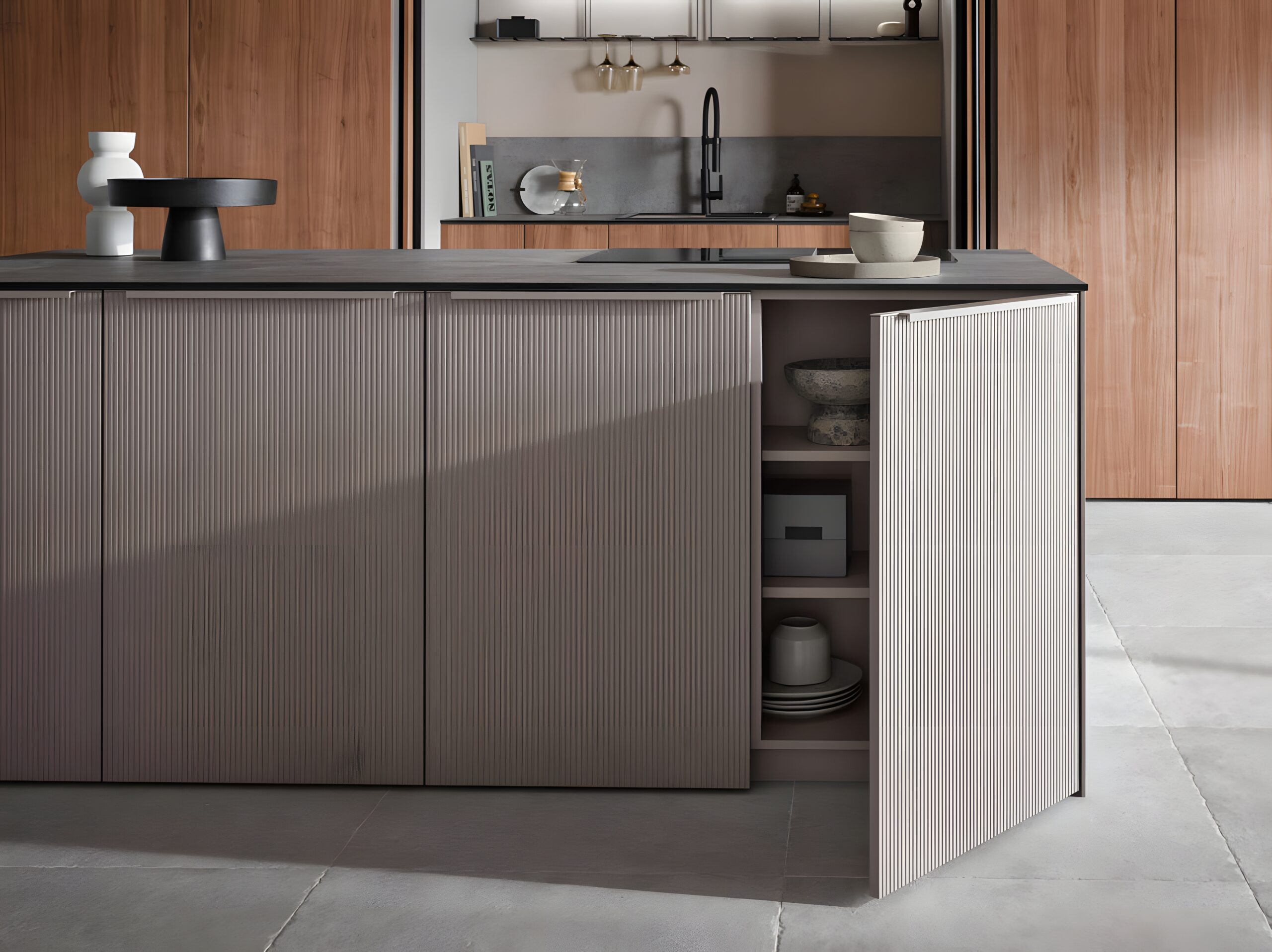
Why this matters for a Metro Vancouver home
Vancouver is a demanding place to own a kitchen. The coastal air is humid, homes swing between damp winters and dry, heated interiors, and a lot of the housing stock, from Yaletown towers to East Van character houses, has the kind of imperfect walls and tight footprints that punish a poorly built kitchen. German cabinets are engineered for exactly these conditions. Moisture-resistant boards shrug off the humidity, and 3D-adjustable hinges let the installer keep every door true as the house moves through the year.
There is a money argument too, and it is a strong one. Kitchen work remains one of the best returns in home improvement. The 2025 Cost vs. Value Report put the national return on a minor kitchen remodel at roughly 96 percent of cost recovered at resale (2025 Cost vs. Value Report), the leading interior project in the study. Build quality is what protects that figure over the long run. A kitchen that still closes softly and lines up cleanly after twenty years reads as an asset to a buyer. One that has started to sag and peel reads as a future expense.
The local cost picture sharpens the point. A standard Metro Vancouver kitchen renovation generally lands somewhere between 40,000 and 70,000 dollars (Quay Construction, 2025), and downtown and west-side projects often sit at the higher end because of labour and logistics. At that level of investment, the difference between a cabinet that lasts a decade and one that lasts two or three is not a luxury detail. It is the core of whether the money was well spent.
The quiet details that separate a kitchen that lasts
Beyond the headline features, German manufacturing shows up in the interior fittings most people never think about until they live with them. Smart interior storage turns a deep corner cabinet from dead space into usable shelving that swings out to meet you. Drawer organisers hold cutlery and utensils so nothing rattles loose. Internal drawers within a deep pan drawer give you a second tier of storage without a second cabinet.
These are not gimmicks. They are the result of a manufacturer that has spent a century watching how people actually cook and storing the lessons in the product. A well-planned German interior means you use more of the kitchen you paid for, and you reach what you need without bending, digging, or shifting three pots to find the fourth. When the local team plans your layout, this is the layer of detail that turns a good-looking kitchen into one that works hard every single day.
Frequently Asked Questions
Are Bauformat cabinets really still made in Germany?
Yes. Every Bauformat cabinet is built in Lohne, Germany, where the company has manufactured kitchens since 1917. The cabinets are then measured, planned, and installed by the local Vancouver team, so you get German factory precision with a fit tailored to your actual room.
Which collection is right for my kitchen?
It depends on your finish and budget rather than the build, because the engineering is consistent across all three. Choose Baulux for ceramic, glass, and ultra-matte fronts, the core Bauformat collection for the widest range of colours and finishes, and Burger when you want the full German build at the best value. The local team can walk you through samples to match your home.
How long should a German kitchen last in Vancouver’s climate?
A properly built and installed German kitchen is designed to perform for decades, not years. Moisture-resistant boards and sealed edges handle the coastal humidity, while 3D-adjustable hinges and full-extension runners can be tuned and maintained as the home settles, which means the kitchen keeps working and looking right well beyond the typical renovation cycle.
Does German engineering really make a noticeable difference day to day?
It does, mostly in small ways that add up. Drawers that glide fully open and close softly, doors that stay aligned through every season, surfaces that resist scratches and fingerprints, and interiors organised so you reach what you need without digging. None of it shouts, which is exactly the point.
Kitchen design keeps moving toward calmer surfaces, smarter storage, and finishes that handle real life rather than just looking good on day one. A manufacturer that has been refining the same craft since 1917 is built to keep pace with that, and a Metro Vancouver homeowner planning a renovation today is buying into a standard of engineering that will still feel current, and still work properly, long after the trends of this year have passed.
Explore more from Bauformat BC
- Decoding German Kitchen Cabinets Vs. Italian Kitchen Cabinets
- Why Choose Long-Lasting Materials for Your Kitchen Cabinets
- Modern Kitchen Design
German cabinetry, planned and built for Metro Vancouver
The kitchen is one of the highest-return rooms in a home: the 2025 Cost vs. Value Report found a minor kitchen remodel recoups roughly 96% of its cost at resale. Choosing cabinetry that lasts is central to that return, which is where German engineering earns its place. Every Bauformat kitchen is built to order in Germany to fit your room to the millimetre.
See the Baulux, Bauformat, and Burger collections in person at our North Vancouver showroom at 1410 Marine Dr Unit 205, learn more about the manufacturer at bauformat.de.
Book a 30-minute consultation with our Metro Vancouver kitchen designers to plan a kitchen built to last.
A German kitchen is not a collection of cabinets; it is a system: a coordinated grammar of base, wall, and tall units built on shared dimensions, shared construction, and shared hardware, so that any plan a designer can draw, the factory can build to ±0.1mm. Understanding the system is the single most useful preparation a buyer can make: it explains what you are paying for, what can be configured, and why a German kitchen installs and ages the way it does.
This guide maps the complete territory: the three cabinet families and what each does, frameless full-access construction, the handleless question, the modular dimensional logic, carcase engineering, the interior organization systems that do the daily work, the full range of door and front types, and how the Bauformat group’s three tiers (Baulux, Bauformat, and Burger) put the system within reach of different budgets.
Key Takeaways
- German kitchens are organized into three cabinet families (base, wall, and tall units) planned as one dimensional system.
- Frameless (full-access) construction is the European standard: no face frame, roughly ten percent more usable interior volume, and a flush plane of fronts.
- Handleless channel systems and conventional handles are both legitimate German choices; the channel demands, and demonstrates, higher manufacturing precision.
- Carcases are moisture-resistant engineered board, edge-sealed, machined to ±0.1mm, with boards meeting the 0.05 ppm CARB2/US TSCA Title VI formaldehyde ceiling.
- Front options run from laminate through lacquer and matte lacquer to real-wood veneer and glass, with white oak the NKBA’s leading wood for 2026, cited by 51% of professionals.
- The Bauformat group maps the system to three honest tiers: Baulux (uncompromising luxury), Bauformat (everyday excellence), Burger (smart budgets).
The Three Cabinet Families: Base, Wall, and Tall Units
Every German kitchen, however sculptural, resolves into three families of cabinet. The art of planning is in how the families are balanced. The 2026 direction is unmistakable: more tall storage, larger islands, and wall cabinetry used sparingly as composition rather than reflex.
Base Cabinets: The Working Foundation
Base units carry the worktop and the bulk of daily activity: sink runs, cooktop housings, drawer banks, and the island. The defining German preference here is the drawer over the door: full-extension drawers bring contents to the user rather than sending the user to the floor of a dark cupboard, and they have become the ergonomic default for pots, pans, and provisions. Islands deserve particular planning attention; roughly half of new kitchen islands now exceed seven feet, and a monolithic island built from coordinated base units is the centrepiece of the contemporary open plan.
Wall Cabinets: Composition at Eye Level
Wall units store the light and the frequent (glassware, crockery, dry goods) at eye level. The German treatments are distinctive: lift-up fronts that rise overhead and hold at any angle rather than swinging into the room, glass-front cabinets with interior lighting, and open shelving used as deliberate negative space within a run. The current design tendency is restraint: fewer wall cabinets, more breathing room, with the storage burden shifted to tall units where ergonomics are better.
Tall Cabinets: The Storage Architecture
Tall units are where German kitchens quietly win the storage argument. Floor-to-ceiling larder cabinets with internal pull-outs, appliance towers that lift ovens to eye level, and integrated refrigeration columns turn an entire wall into continuous storage architecture. Houzz’s 2026 research finds 76% of renovating homeowners adding built-ins, with pantry storage the most requested at 47%, demand the tall-unit family was engineered to answer. Planned as a continuous bank, tall cabinetry reads as wall rather than furniture, which is precisely the intent.
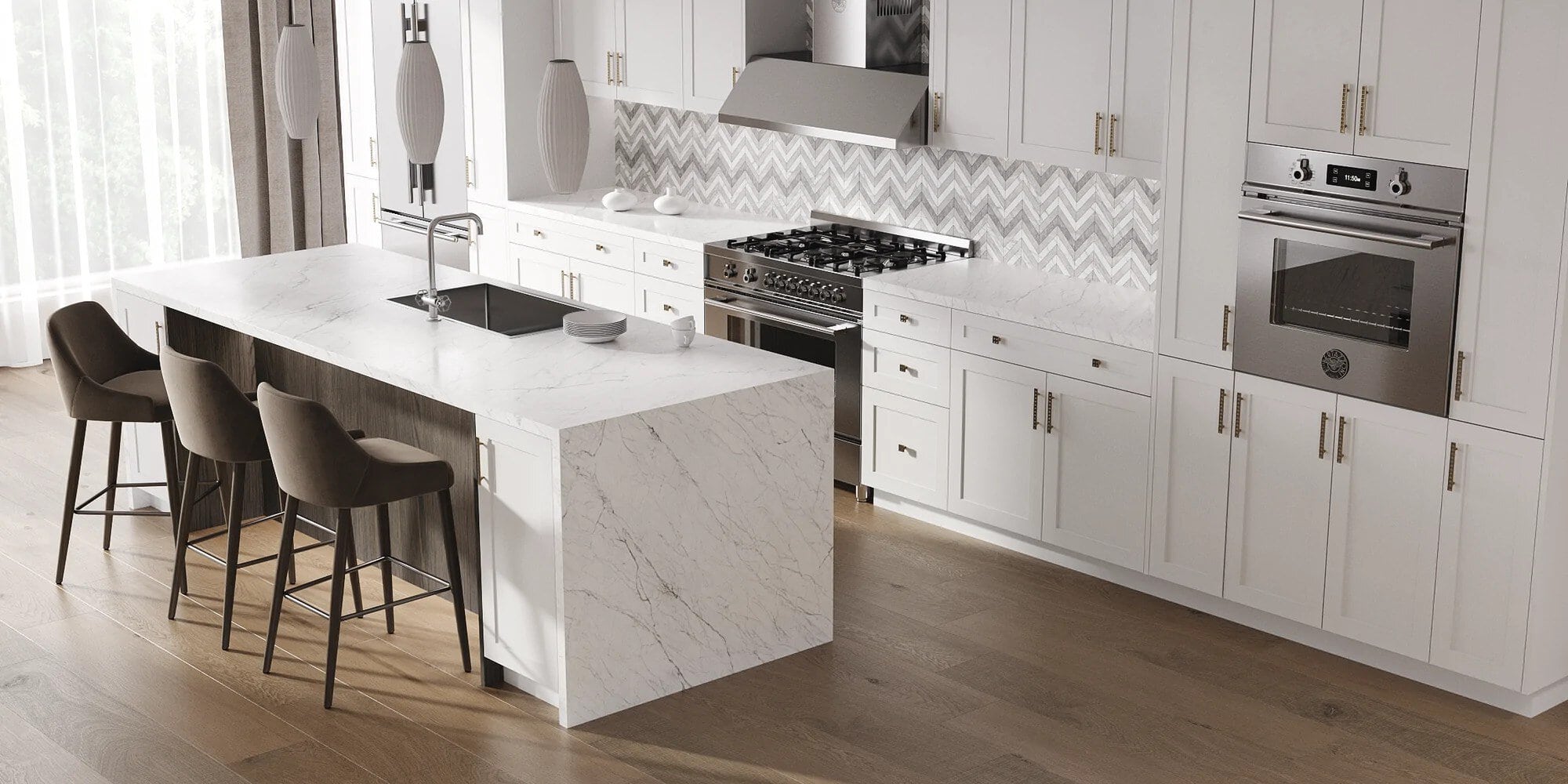
Frameless Full-Access Construction: The European Standard
The structural idea beneath every German cabinet is frameless (also called full-access or European) construction. Where North American framed cabinets attach doors and hardware to a face frame fixed over the carcase opening, the frameless cabinet is a precise box with doors and drawers mounted directly to its sides. The consequences are practical and visible. Practically, eliminating the frame yields roughly ten percent more usable interior volume and unobstructed access: no centre stiles interrupting a drawer, no frame lip catching a pull-out. Visibly, frameless construction produces the flush, continuous plane of fronts with consistent narrow reveals that defines the German aesthetic. The trade-off is tolerance: without a frame to mask irregularity, the box itself must be perfect, which is why frameless construction at scale belongs to factories that can hold ±0.1mm, and why the style is difficult to imitate convincingly with looser methods.
Handleless Channel Systems vs. Handles
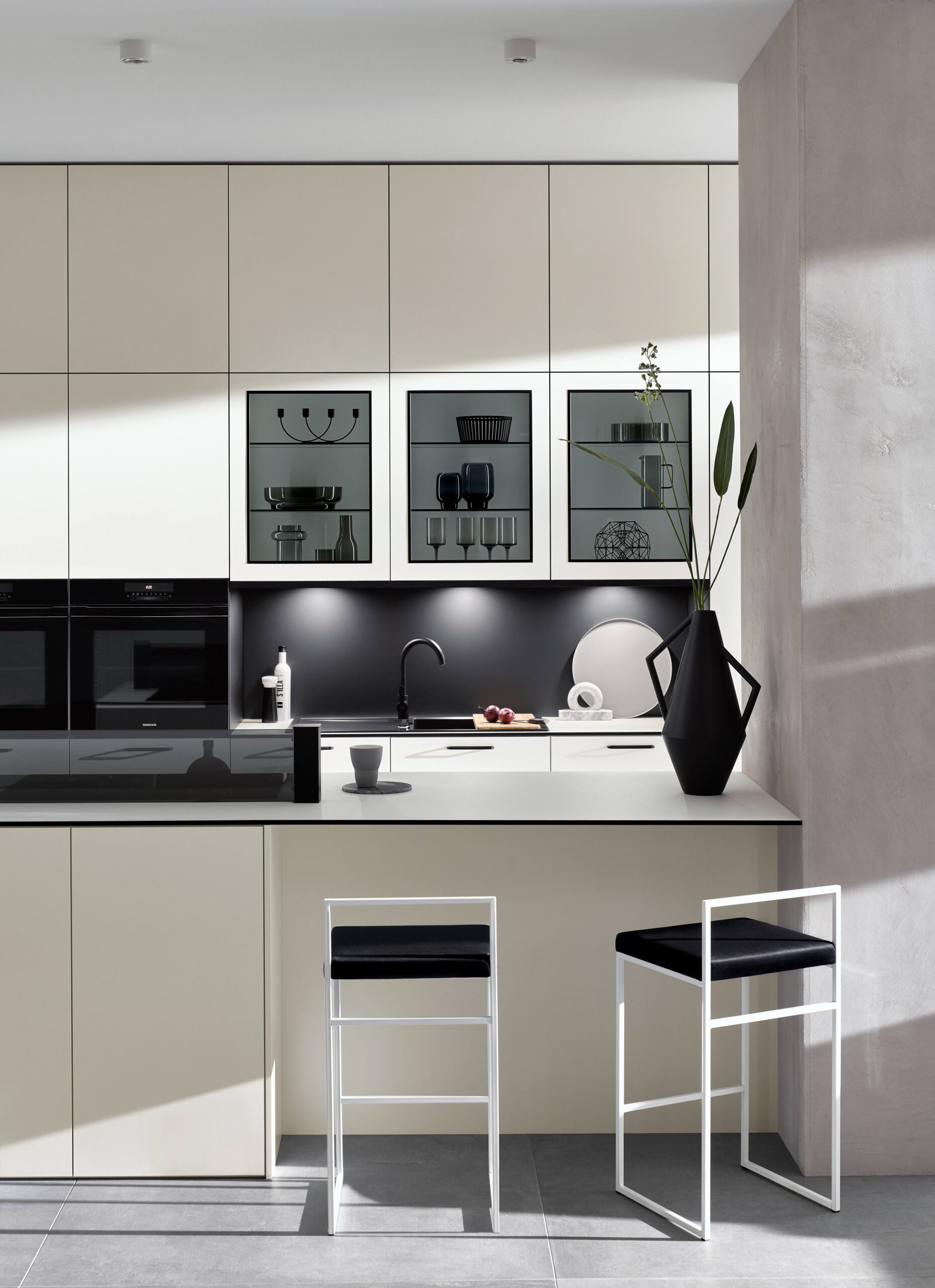
No question comes up more often in our North Vancouver showroom. The handleless kitchen replaces hardware with a continuous machined channel, a recessed grip profile running along the top of base units and the bottom of wall units, producing an uninterrupted elevation. Its appeal is architectural purity; its demands are mechanical. The channel must align perfectly across every cabinet junction, the fronts must sit dead flush, and the system often pairs with push-to-open or servo-assisted mechanisms. A well-executed handleless kitchen is therefore a public demonstration of manufacturing precision, which is much of why it became the signature of German design.
Handles remain a fully legitimate, and currently resurgent, choice. A bar pull in brushed steel or black, or a discreet edge-pull profile, adds tactility and suits the transitional direction that now leads homeowner preference. The honest guidance: choose handleless for the purest modern elevation and easy cleaning; choose handles for grip, character, and a softer register. Many of the best current kitchens mix the two (handleless tall banks with handled drawer runs, for instance) within the same system.
The Modular Dimensional System
What makes all of this configurable is the German modular grid. Cabinets are built in standardized width increments (typically from 15cm up to 120cm) against coordinated heights and depths, so that base runs, wall runs, and tall banks resolve into aligned horizontal datum lines across the room. Plinth heights adjust the working level to the cook; carcase heights and depths flex for tasks and for architecture. The grid is why a German kitchen can be planned filler-free, why fronts align across a twenty-cabinet elevation, and why made-to-measure exceptions (a reduced-depth run, a custom-height unit beneath a Vancouver condominium window) integrate without disturbing the composition. Modularity here is not a limitation; it is the precision vocabulary that makes mass customization possible: industrial accuracy, individual result.
Carcase Construction: The Engineering Inside
The carcase (the cabinet body) is where quality is decided, long before a front is chosen. German carcases are made from moisture-resistant engineered board, edge-sealed on all sides against the humidity of a working kitchen, and machined to ±0.1mm so hardware seats identically in every unit. Boards meet the CARB2 and US TSCA Title VI formaldehyde ceiling of 0.05 ppm, stricter than the EU’s own requirement. Backs are solid and housed, not stapled hardboard; shelves are rated and pinned against tipping; adjustable legs level the system on imperfect floors before the plinth conceals them.
Hardware completes the engineering. Soft-close hinges adjustable in three dimensions allow every door to be trued after installation; undermount full-extension glides carry drawers on concealed, damped steel runners rated for decades of cycles. Independent verification closes the argument: Bauformat’s cabinetry carries the Golden M (RAL-GZ 430), Europe’s strictest furniture quality mark, with laboratory testing of stability, surface durability, hardware endurance, and emissions, alongside GS tested safety and the “Furniture Made in Germany” seal.
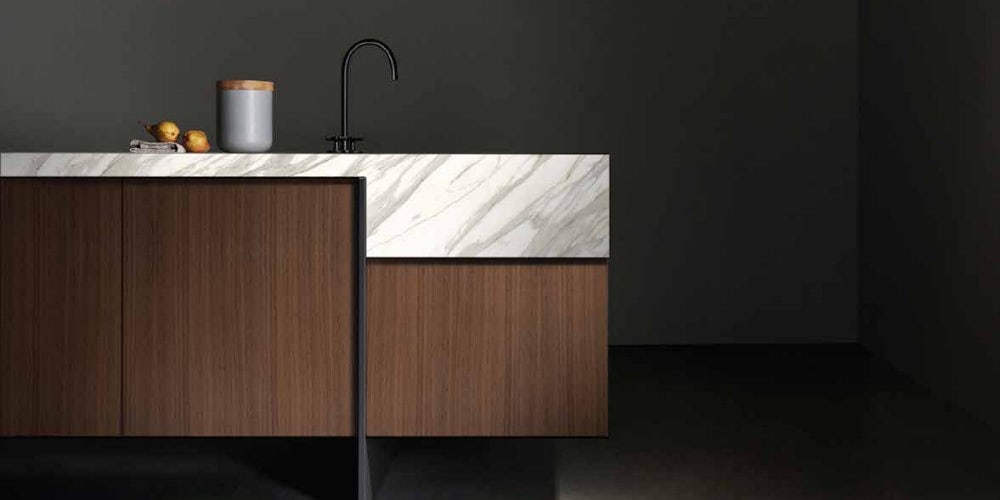
Interior Organization Systems
Open a German drawer and the philosophy is visible: the inside is designed as deliberately as the outside. Drawer interiors take partition systems in wood or anthracite steel: fitted compartments for cutlery, knives, spices, and utensils that keep contents ordered and visible. Deep pot drawers carry plate holders and adjustable dividers. Larder pull-outs bring the full contents of a tall cabinet out into the light on both sides; corner mechanisms swing otherwise dead storage into reach; waste and recycling sort behind the sink front, sized for Vancouver’s multi-stream collection.
Lighting and power are planned as interior infrastructure: LED layers under wall units and inside glass and drawer cabinets, with in-cabinet charging and sensor switching increasingly standard, the cabinetry’s quiet answer to the NKBA’s “increasing kitchen IQ” theme for 2026, and to a smart-home ecosystem unified across brands by Matter 1.5. None of it shows when the doors are closed. All of it works every day.
Door and Front Types: Lacquer, Laminate, Veneer, and Glass
The front is the kitchen’s face, and the German range is organized less by fashion than by material logic.
Lacquer Fronts
Lacquer is the premium painted finish: multiple sprayed and cured coats (increasingly low-VOC systems) on an engineered substrate, in high-gloss, satin, or the matte that currently defines the contemporary register. Matte lacquer with anti-fingerprint surfacing has become the signature German front: deep, uniform colour with no glare and a soft touch. Lacquer offers the widest colour freedom, which matters in a year when the colour conversation spans espresso brown, khaki, jade, and soft white among the colours of the year, with aubergine searches up 495% and butter yellow emerging.
Laminate and Synthetic Fronts
Laminate is the workhorse, and modern German laminates deserve the name only technically. High-pressure surfaces with synchronized texture reproduce timber grain down to the pore, edges are laser-bonded so the joint effectively disappears, and durability against scratching, moisture, and UV is excellent. Laminate fronts carry the accessible end of the range, which is much of how the Burger tier delivers a German system at entry budgets without touching carcase or hardware quality.
Wood and Veneer Fronts
Real-wood veneer delivers the material of the moment. Veneers sliced from a single log are sequenced so grain flows continuously across doors and drawers: the grain-matched front that marks a considered kitchen. White oak leads decisively: the NKBA names it the top cabinet wood for 2026, cited by 51% of professionals, with 59% reporting growing demand for visible grain, and Houzz recording wood-tone cabinetry overtaking white for the first time, 29% to 28%. Pinterest’s data adds the pairing of the year: “white oak and black kitchen” searches up 625%. Timber-drenching (one wood tone carried across fronts, panelling, and shelving) is the fullest expression.
Glass and Framed Fronts
Glass fronts (satin, smoked, clear, or fluted, usually within slim aluminium frames) introduce display and depth, almost always with interior lighting. They are best deployed sparingly, as punctuation within a composed elevation: a lit glass bank between matte runs, a fluted sideboard in the dining zone. Sustainability threads through all front families: certified wood supply chains ahead of the EU Deforestation Regulation taking effect December 30, 2026, FSC-certified forests now exceeding 171 million hectares, and energy-efficient German production behind every finish.
How the Bauformat Tiers Map the System
The Bauformat group (family-owned since 1917, 650 kitchens a day from Löhne, among Europe’s top ten manufacturers) offers the entire system described above through three honestly differentiated brands. Burger, for smart budgets, delivers the core grammar: frameless carcases, the modular grid, soft-close hardware, and strong laminate and lacquer programs. Bauformat, for everyday excellence, opens the full depth: matte lacquers, veneers, handleless channel systems, and the complete interior range. Baulux, for uncompromising luxury, adds the flagship specification: grain-matched fronts, bespoke dimensions, and architectural detailing without compromise. The construction standards, quality marks, and made-to-order production are common to all three; a buyer chooses a specification depth, never a different standard of engineering.
Frequently Asked Questions
What are the main types of German kitchen cabinets?
Three families: base cabinets (worktop level: drawers, sink and cooktop units, islands), wall cabinets (eye-level storage with lift-up or glass fronts), and tall cabinets (larders, appliance towers, integrated refrigeration). They share one modular dimensional system.
What does frameless or full-access construction mean?
The cabinet is a precision box without a face frame; doors and drawers mount directly to the carcase. It yields about ten percent more usable volume, unobstructed access, and the flush front plane characteristic of German design.
Are handleless kitchens practical?
Yes. The machined channel provides a continuous, comfortable grip and removes hardware that catches clothing and collects grime. The prerequisite is precision manufacturing; the channel exposes any misalignment, which is why it is a German specialty.
Which front material should I choose?
Laminate for durable value, lacquer (especially matte) for colour and the purest contemporary surface, real-wood veneer for warmth and the leading 2026 direction, glass for lit display moments. All mount on the same carcase and hardware standard.
Can a modular German system fit an awkward Vancouver floor plan?
That is what the grid is for. Standardized increments plus made-to-measure exceptions resolve angled walls, low sills, and concrete columns filler-free, a regular exercise in Vancouver condominium projects.
What distinguishes the Baulux, Bauformat, and Burger tiers?
Specification depth, not build quality. Burger serves smart budgets, Bauformat everyday excellence, Baulux uncompromising luxury, all built in the same German factories to the same tested standards, including the Golden M (RAL-GZ 430).
The System Is the Product
Choose a German kitchen and you are choosing the system: three cabinet families on one dimensional grammar, frameless construction held to ±0.1mm, interiors engineered as carefully as elevations, and a front range that runs from workhorse laminate to grain-matched white oak. The types are not a catalogue to memorize but a vocabulary a good planner speaks fluently on your behalf, and the fastest way to learn it is to stand in front of the real thing and open everything.
See every cabinet type in person. Book a private showroom tour at Bauformat BC, 1410 Marine Dr Unit 205, North Vancouver, +1-604-770-1284.
Kitchen design in Metro Vancouver is shifting in 2026, away from cold, all-white minimalism and toward warmer, calmer, more tactile spaces. Here are the trends we’re seeing most in Vancouver homes this year, and how to get the look with German-engineered cabinetry.
1. Quiet luxury over flashy design
“Quiet luxury” is the defining look of 2026: understated, high-quality materials, clean lines, and finishes that feel expensive without shouting. Think seamless cabinet runs, hidden hardware, and a restrained palette, the opposite of trend-chasing. German cabinetry suits this perfectly because the quality is in the build, not the bling.
2. Warm wood tones make a comeback
Wood has overtaken plain white as the most-requested cabinet finish. Medium-toned woods lead the way, white oak, walnut, and rift-cut oak, often paired with stone or matte surfaces for contrast. The Bauformat series offers wood-veneer fronts that bring this warmth into a Vancouver kitchen while keeping German durability.
3. Handleless, flat-front cabinets
Flat-front, handleless doors with push-to-open or recessed grip rails continue to dominate. They create the seamless, uncluttered look that defines modern European kitchens and make a smaller Vancouver kitchen feel larger and calmer.
4. Deep, moody colours
Alongside warm woods, rich hues are having a moment, navy, graphite, forest green, and deep charcoal, often on islands or lower cabinets. These pair beautifully with brass or matte-black accents. The Baulux series offers ceramic and tempered-glass fronts that hold these deep tones with a premium finish.
5. Seamless, integrated kitchens
Panel-ready appliances, full-height cabinetry, and continuous surfaces are in demand as homeowners look for a clean, built-in feel. German modular systems are designed for exactly this kind of millimetre-precise integration.
6. Tactile, mixed materials
2026 is about texture: hand-finished cement, fluted wood, matte lacquer, and natural stone combined in one space. Mixing two or three complementary finishes, for example a wood-tone perimeter with a contrasting island, adds depth without clutter.
Bringing 2026 trends into your Vancouver kitchen
The good news: every one of these looks is achievable with German cabinetry built to last. Whether you want the practical Burger series, the versatile Bauformat range, or the luxury Baulux line, every kitchen is supplied through our North Vancouver showroom.
Browse our 2026 catalogues for finish inspiration, then book a consultation at 1410 Marine Dr Unit 205, North Vancouver, to see the materials in person.
Frequently asked questions
What is the biggest kitchen trend for 2026?
Quiet luxury, warm, high-quality, understated kitchens with natural wood tones, seamless cabinetry, and restrained colour palettes.
Are white kitchens out of style in 2026?
Not entirely, but warm woods and deeper tones have overtaken stark all-white as the most-requested look in Vancouver.
Which cabinet colour is most popular in 2026?
Medium wood tones like white oak and walnut, often paired with a deep accent colour such as navy or charcoal on the island.
If you’re planning a kitchen renovation in Metro Vancouver, the first question is almost always the same: how much do German kitchen cabinets cost? The honest answer is that it depends on the size of your kitchen, the door fronts and materials you choose, and how custom the layout needs to be, but this 2026 guide gives you realistic Vancouver ranges so you can budget with confidence.
German kitchen cabinet costs in Vancouver (2026)
Across Metro Vancouver, cabinetry typically accounts for 40–50% of a full kitchen renovation budget. As a rough 2026 guide for the cabinetry portion alone:
- Semi-custom German cabinets: roughly $10,000–$30,000 for an average kitchen.
- Fully custom / luxury German cabinets: roughly $25,000–$100,000+, depending on fronts and size.
For context, most Vancouver homeowners spend between $50,000 and $120,000 on a complete mid-range kitchen renovation once countertops, appliances, and installation are included. Vancouver labour costs run well above the national average, so local pricing is usually higher than U.S. or national estimates you may find online.
The three Bauformat BC series, and where they fit your budget
At Bauformat BC we carry three German-engineered series so there’s a fit for most budgets, from practical to fully bespoke:
- Burger, entry tier. German build quality at the most practical price, with soft-close hardware standard. The best starting point if you want German engineering on a tighter budget.
- Bauformat, mid tier. The widest choice of front materials and finishes, with storage planned around how you cook. The most popular pick for Vancouver renovations.
- Baulux, luxury tier. Our top series, with ceramic, tempered glass, hand-finished cement, and Dekton fronts for a true high-end kitchen.
What’s included in a German cabinet price
German cabinets cost more upfront than flat-pack alternatives, but the price reflects what you actually get:
- Cabinets engineered and built in Germany to tight tolerances.
- Soft-close drawers and doors as standard.
- Durable, moisture-resistant cabinet boxes designed to last decades.
- Planning and installation by our Vancouver team, built to fit your room to the millimetre.
What drives the cost up or down
- Kitchen size and cabinet count, more linear footage means more cabinets.
- Front material, laminate and melamine are the most affordable; lacquer, wood veneer, glass, ceramic, and Dekton sit higher.
- Layout complexity, islands, tall pantry units, and custom interior fittings add cost.
- Hardware and accessories, specialty pull-outs, lighting, and organizers.
How to get an accurate Vancouver quote
Every kitchen is different, so the most reliable way to know your number is a real quote. You can browse our catalogues to compare series and fronts, then contact us at 1410 Marine Dr Unit 205 or book a 30-minute consultation. A designer will measure your space, plan the layout around how you live, and give you a clear, itemized price.
Frequently asked questions
Are German kitchen cabinets worth the cost?
For most homeowners, yes, the build quality, soft-close hardware, and longevity mean fewer replacements and a kitchen that still looks and works well a decade later. German cabinetry also tends to protect resale value.
What’s the cheapest way to get German cabinets in Vancouver?
The Burger series is our most practical price point while keeping genuine German construction and soft-close hardware.
How long does a kitchen take?
Because German cabinets use pre-engineered modular components, installation is efficient, but plan to be without your kitchen for roughly 4–8 weeks across the full renovation.
Do you handle design and installation?
Yes. Bauformat kitchens are built to order in Germany and supplied through our North Vancouver showroom.
Ready to price your kitchen? Get in touch with Bauformat BC for a personalized quote on Burger, Bauformat, or Baulux cabinets.
German kitchen cabinet materials are a study in restraint and rigour. High-quality woods, metals, and engineered materials are selected for verifiable durability before they are considered for beauty, and every board entering a German factory is now measured against some of the strictest environmental standards in the world. The craftsmanship that shapes these materials (manufacturing tolerances of ±0.1mm, grain-matched fronts, moisture-resistant carcases) is what separates a German kitchen from cabinetry that merely photographs well.
This guide examines the materials and craftsmanship behind German kitchen cabinets: where the tradition comes from, how the materials are chosen and certified, what precision engineering actually means at the bench, and where the discipline is heading in 2026. Throughout, we draw on Bauformat, a fourth-generation family business in Löhne, East Westphalia, producing 650 kitchens a day, as a working example of the standard.
Key Takeaways
- German kitchen cabinets are built around frameless (full-access) construction, moisture-resistant carcases, and manufacturing tolerances of ±0.1mm.
- Materials range from solid and veneered wood to advanced lacquers and laminates, all governed by formaldehyde limits of 0.05 ppm under CARB2 and US TSCA Title VI, stricter than the EU requirement.
- The Golden M (RAL-GZ 430), Europe’s strictest furniture quality mark, independently tests stability, durability, and emissions; Bauformat holds it.
- Craftsmanship shows in the details: soft-close undermount full-extension glides, handleless channel systems, and grain-matched fronts.
- For 2026, wood-tone cabinetry has overtaken white for the first time (29% versus 28% in Houzz’s study of 1,780 homeowners), with white oak named the leading wood by 51% of NKBA professionals.
- The EU Deforestation Regulation applies from December 30, 2026, requiring deforestation-free wood supply chains, a standard German manufacturers have been preparing for years.
The Rich History of German Kitchen Cabinet Craftsmanship
German cabinetmaking did not arrive at its reputation by accident. It is the product of a guild tradition that treated joinery as a discipline to be examined and certified, refined over the twentieth century into an industrial culture where the word Wertarbeit (work of value) still carries weight. The Bauformat story is typical of the region: a family business founded in 1917, with the Baumann brothers’ joinery established in Löhne in 1929, in the East Westphalian district that remains the centre of the German kitchen industry today. More than 105 years later the company is still family-owned, led by Delf Baumann since 1996, and ranks among Europe’s top ten kitchen manufacturers.
Evolution of German Kitchen Cabinets: Merging Tradition with European Elegance
The early decades of German kitchen furniture were defined by solid-wood carcases and regional workshop traditions. What changed everything was the systematic study of the kitchen as a workplace, most famously the 1926 Frankfurt Kitchen, which applied time-and-motion research to domestic space. From that point, German cabinetry evolved as a system rather than a collection of furniture: standardized modular dimensions, interchangeable fronts, and carcases engineered for repeatable precision. The elegance came not from ornament but from proportion: consistent reveals, aligned gaps, and fronts that read as a single composed surface.
Modernism’s Mark on German Kitchen Design: A Fusion of Form and Function
The Bauhaus principle that form follows function remains the operating logic of German kitchen design. Modernism stripped the kitchen of decorative cabinetry conventions and asked instead what the room had to do: store, prepare, clean, gather. The answer produced the frameless cabinet, the handleless front, and the monolithic island, forms in which the engineering is invisible and the function is total. Today’s German kitchens still measure themselves against that standard. Decoration is permitted; arbitrariness is not.
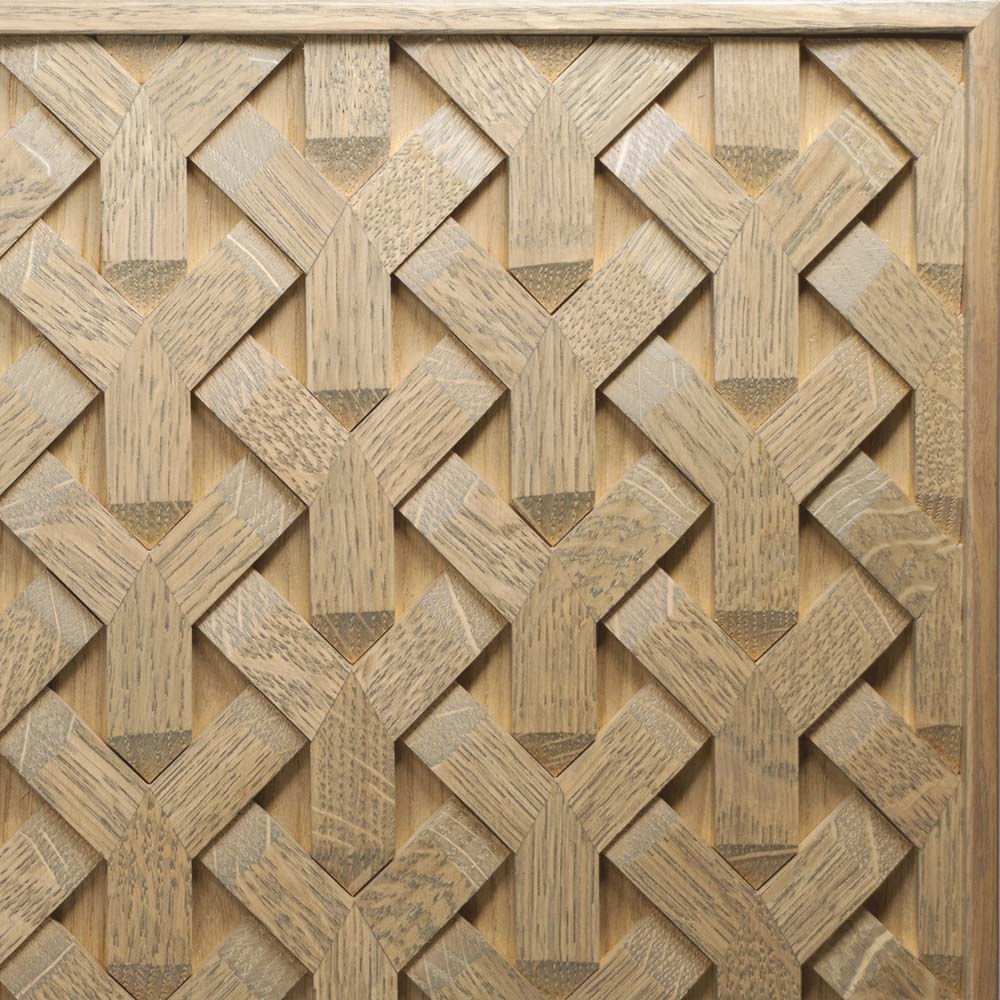
Selecting Superior Materials for German Kitchen Cabinetry: Tradition Meets Innovation
Material selection in a German factory begins with certification, not appearance. Boards must meet the CARB2 and US TSCA Title VI formaldehyde limit of 0.05 ppm (a threshold stricter than the EU’s own requirement) before any discussion of finish. Suppliers are audited for chain of custody, a discipline that matters more than ever as the EU Deforestation Regulation takes effect on December 30, 2026, requiring proof that wood entering the supply chain is deforestation-free, with a cutoff date of December 31, 2020. Globally, FSC-certified forest area now exceeds 171 million hectares, and German manufacturers draw heavily on it.
The Essence of Wood in German Kitchen Cabinets: Durability Meets Aesthetics
Wood remains the emotional centre of the German kitchen, and in 2026 it is also the commercial centre. The National Kitchen & Bath Association names white oak the leading cabinet wood, cited by 51% of design professionals, and 59% of pros report growing demand for visible wood grain. Houzz’s 2026 study of 1,780 renovating homeowners found wood-tone cabinetry chosen by 29%, overtaking white, at 28%, for the first time on record.
German manufacturers treat wood with characteristic discipline. Veneers are sliced from a single log and sequenced so that grain flows continuously across a run of doors and drawers: the grain-matched front that distinguishes a considered kitchen from an assembled one. Solid wood is reserved for elements where its movement can be controlled; elsewhere, real-wood veneer over an engineered substrate delivers the warmth of timber with the dimensional stability a precision kitchen demands.
Engineered Materials in German Kitchens: Practicality and Style
The carcase of a German cabinet is almost always engineered board, and deliberately so. Moisture-resistant particleboard and MDF, edge-sealed on all sides, outperform solid wood in the humid, hardworking environment of a kitchen. They hold screws consistently, stay flat across decades, and accept machining to tolerances of ±0.1mm. Fronts in matte and high-gloss lacquer, through-coloured laminate, and synchronized-texture surfaces that reproduce timber down to the pore have made engineered materials a first choice rather than a compromise. Low-VOC lacquer systems, cured in energy-efficient German production lines, complete the picture.
Metal and More: Diverse Materials Elevating German Kitchen Design
Beyond wood and board, German kitchens deploy a quiet inventory of supporting materials. Aluminium frames carry glass fronts with minimal sightlines. Steel drawer systems (soft-close, undermount, full-extension) bear the daily mechanical load. Glass appears in satin, smoked, and fluted treatments; ceramic and ultra-compact surfaces extend onto fronts and worktops. Each material is specified for a measured property (scratch resistance, load rating, light transmission) and only then for its contribution to the composition.
Craftsmanship in German Kitchen Cabinets
Craftsmanship in the German sense is not nostalgia for hand tools. It is the insistence that every repeatable operation be done to the same exacting standard, whether by a master joiner or a CNC line producing hundreds of kitchens a day. At Bauformat’s Löhne facilities, 1,200 staff produce 650 kitchens daily under the maxim “Made in Germany”, and the output is verified rather than asserted. The company holds the Golden M (RAL-GZ 430), Europe’s strictest furniture quality mark, alongside the “Furniture Made in Germany” seal and GS tested-safety certification, and was named a TOP 100 German innovation leader in 2025.
Precision Engineering: The Hallmark of German Kitchen Cabinet Craftsmanship
Precision is the visible difference. German lines machine carcase components to ±0.1mm, which is why a wall of cabinetry presents perfectly consistent reveals and why doors close with the same damped action on day one and year fifteen. Frameless, full-access construction (the European standard) eliminates the face frame entirely, yielding roughly ten percent more usable interior volume and a flush plane of fronts that frame construction cannot achieve. Edges are laser-sealed or zero-joint bonded so that the line between front and edge effectively disappears.
Revolutionary Hinges and Fittings: The Secrets Behind Bauformat’s Customizable Cabinetry
The fittings are where engineering meets daily life. Soft-close hinges adjustable in three dimensions allow installers to true every door to a fraction of a millimetre. Undermount full-extension glides carry heavily loaded drawers on concealed steel runners, closing with a damped, near-silent action. Lift systems hold wall-cabinet fronts at any opening angle. Handleless channel systems (a continuous machined groove in place of hardware) depend entirely on the precision of the carcase behind them; a channel that is even slightly out of line announces itself across the whole kitchen, which is precisely why so few manufacturers outside Germany attempt it at scale.
Customization and Flexibility in German Kitchen Design: Adapting to Every Kitchen Space
The German modular system is often misread as rigidity. In practice the opposite is true: a deep grid of carcase widths, heights, and depths, combined with hundreds of front finishes and interior fittings, lets a planner resolve nearly any floor plan without resorting to one-off carpentry. Within the Bauformat group the range is tiered honestly: Baulux for uncompromising luxury, Bauformat for everyday excellence, and Burger for smart budgets, so the same engineering culture is accessible at more than one price point. Filler-free planning, custom-height plinths, and made-to-measure tall units handle the irregularities of real architecture, including the concrete realities of Vancouver condominiums.
Design Principles of German Kitchen Cabinets: Where Functionality Marries Minimalism
German kitchen design rests on a small set of principles applied without exception: every element earns its place by function, proportion governs the composition, and the material is allowed to speak without ornament. The result reads as minimalism, but it is better understood as completeness: nothing missing, nothing extra.
Form Follows Function
Ergonomics is the unglamorous foundation. Worktop heights are matched to the cook, not to convention. Heavy storage lives in full-extension drawers at waist height rather than blind base cabinets. Tall units place ovens at eye level. The working triangle (and its modern successor, the zone plan) determines where every cabinet goes before any aesthetic decision is made. When the function is fully resolved, the form that results needs no justification.
The Aesthetics of Minimalism and Elegance in German Kitchen Cabinets
The aesthetic vocabulary is architectural: negative space treated as a material, shadow gaps in place of mouldings, a monolithic island anchoring the room, fronts composed as a single elevation. Matte surfaces and handleless lines remain the contemporary register, and timber-drenching (carrying one wood tone across fronts, panelling, and shelving) has emerged as the warm counterpoint to the all-white kitchens of the last decade. Elegance, in this tradition, is what remains when everything arbitrary has been removed.
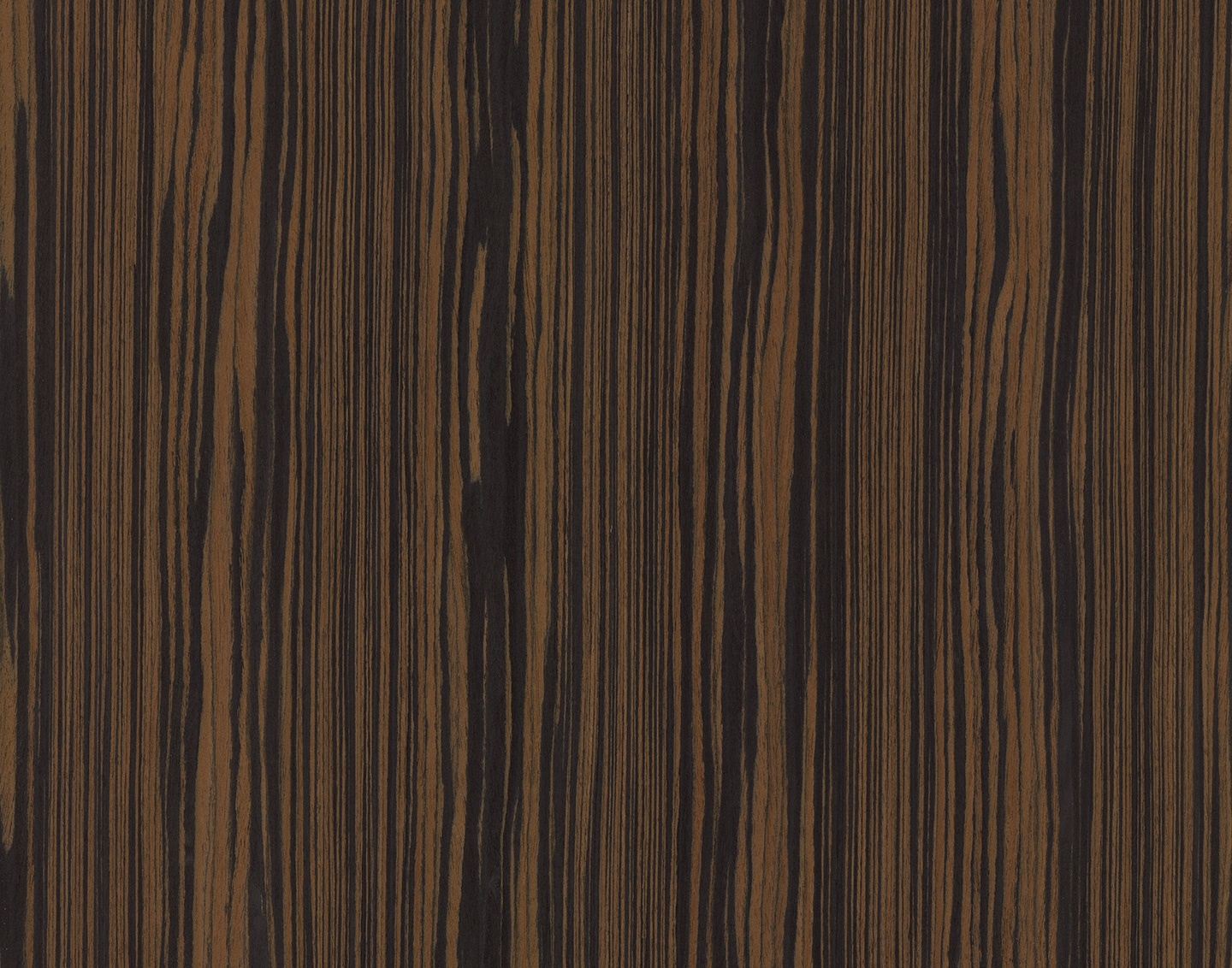
Crafting Aesthetic and Practical European Kitchen Cabinets with Bauformat Principles
Turning a design into 650 finished kitchens a day requires a manufacturing culture in which aesthetics and logistics are engineered together. Every kitchen is produced to order (carcases, fronts, and fittings batched, machined, and sequenced for a single project) which is how a factory achieves both industrial consistency and genuine individuality.
The Art of Manufacturing German Kitchen Cabinets: From Sketch to Production
The process begins in planning software that carries the designer’s drawing directly into machine code: no re-measurement, no transcription, no drift between intent and output. Boards are cut, edged, and bored on lines calibrated to ±0.1mm; veneer sequences are tracked so grain-matched fronts leave the factory in the order they will hang on the wall. Hardware is inserted and tested before packing. A kitchen arrives in Vancouver as a kit of parts machined an ocean away that fits together on site as if the room had been built around it, because dimensionally it was.
Ensuring Excellence: The Rigorous Quality Control and Testing of German Kitchen Cabinets
Quality in German manufacturing is externally policed. The Golden M (RAL-GZ 430) subjects furniture to independent laboratory testing for stability, surface durability, hinge and drawer endurance, and emissions, the strictest such regime in Europe, and one Bauformat passes as a condition of carrying the mark. GS tested-safety certification and the “Furniture Made in Germany” seal add further independent verification, while board stock is held to the 0.05 ppm formaldehyde ceiling of CARB2 and TSCA Title VI. The point of all this testing is simple: the buyer should never have to take craftsmanship on faith.
Emerging Trends in German Kitchen Cabinet Design: Smart Solutions and Sustainability
The German industry enters 2026 in recovering health: revenue just under €5.6 billion in 2025 with an export quota of roughly 46%, and order intake up 2.6% through the first eight months of 2025. Its design direction is unusually clear: warmer materials, more intelligence, and demonstrable sustainability.
Smart Kitchens: Integrating Technology with German Kitchen Cabinetry for Ultimate Functionality
The arrival of Matter 1.5 in late 2025 finally unified smart appliances across brands, and cabinetry is adapting accordingly: servo-assisted opening, in-cabinet charging, sensor-driven lighting, and tall units planned around connected ovens and refrigeration. The NKBA identifies “increasing kitchen IQ” as a defining 2026 theme, and Pinterest reports searches for “kitchen lighting plan” up 165%, a sign that buyers now treat integrated cabinet lighting as infrastructure rather than accessory. The German approach keeps the technology invisible: intelligence in the cabinet, never on it.
Eco-friendly German Kitchen Designs: Embracing Sustainability Without Compromising Style
Sustainability has moved from marketing to regulation. The EU Deforestation Regulation applies from December 30, 2026, requiring documented deforestation-free timber, and the FSC-certified base it draws on now exceeds 171 million hectares worldwide. German factories add low-VOC lacquer systems, energy-efficient production, and board recycling to the equation. The deeper sustainability argument, though, is longevity: a cabinet engineered and tested to last decades is the most resource-efficient cabinet there is.
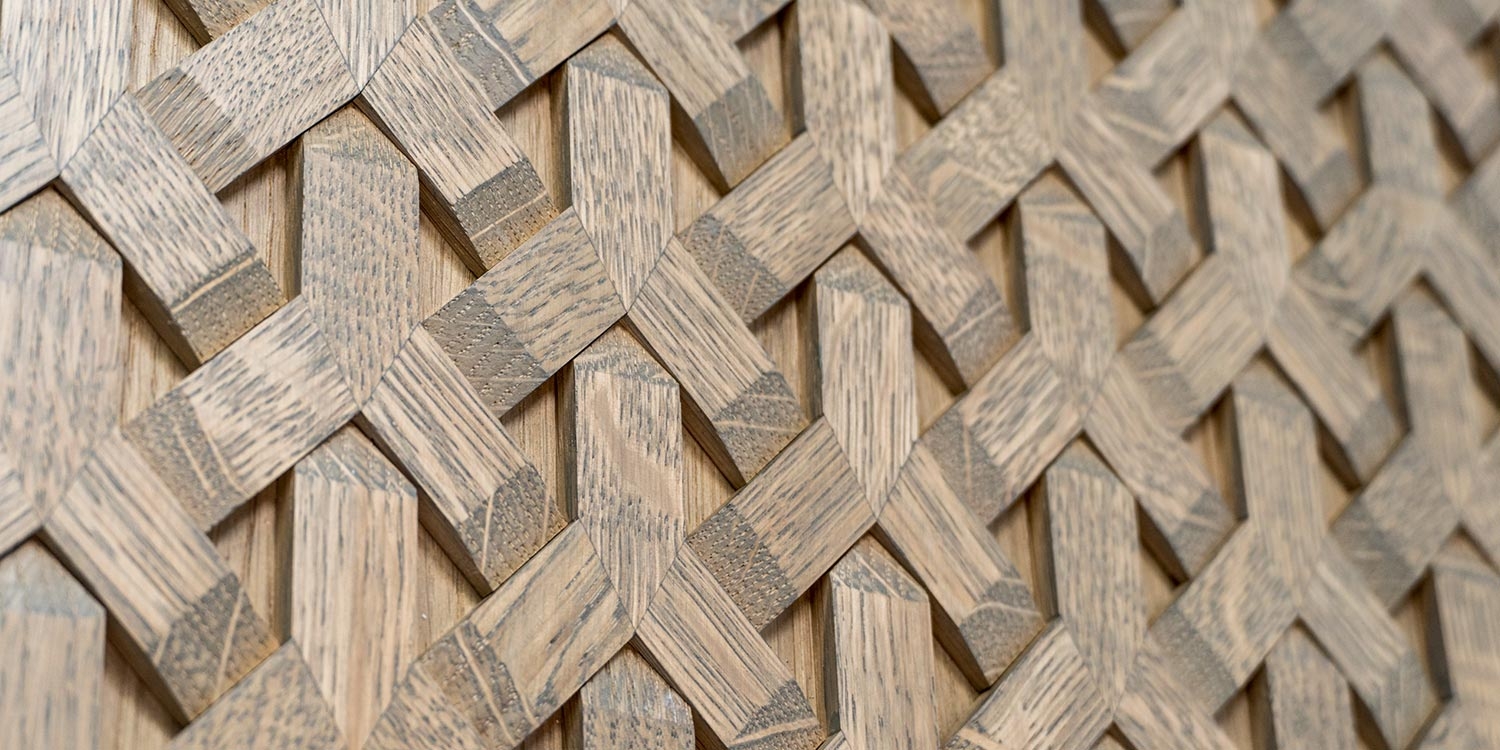
Frequently Asked Questions
What makes German kitchens stand out in terms of materials and craftsmanship?
Independent verification. German kitchens combine certified low-emission materials, frameless precision construction at ±0.1mm tolerances, and externally tested quality marks such as the Golden M (RAL-GZ 430). The standard is measured, not claimed.
Why should I consider investing in German kitchen cabinets?
Because the cost is amortized over decades of daily use. Tested hinge and drawer endurance, moisture-resistant carcases, and durable surfaces mean a German kitchen typically outlasts two or three conventional replacements, and kitchens remain the highest-joy, highest-demand renovation a homeowner can make.
What are some of the critical features of German kitchen furniture?
Frameless full-access carcases, soft-close undermount full-extension glides, handleless channel systems, grain-matched fronts, modular planning dimensions, and integrated lighting and technology, all assembled to consistent, verifiable tolerances.
Are there entry-level German kitchen options available for more affordable kitchen ranges?
Yes. Within the Bauformat group, Burger serves smart budgets with the same German factory standards, Bauformat delivers everyday excellence, and Baulux occupies the uncompromising luxury tier. The engineering culture is shared; the specification depth differs.
How can German kitchens help create a modern look for my kitchen?
Handleless fronts, matte surfaces, and architectural proportion produce the clean elevation modern design depends on. For 2026, pairings such as white oak with black (a Pinterest search term up 625%) show how the German palette stays current without chasing fashion.
What sets German kitchen cabinets apart from other kitchen furniture?
System thinking. A German kitchen is engineered as one coordinated system (carcase, front, fitting, and installation tolerance) rather than as separate pieces of furniture, which is why the finished room reads as architecture.
Why are German kitchens worth the investment?
Durability you can verify, ergonomics you feel daily, and design that does not date. Industry data consistently places kitchen renovation among the best-returning home investments, and a kitchen built to German standards protects that return for decades.
Embracing the Future with German Kitchen Cabinet Craftsmanship
The materials are certified, the tolerances are measured, and the tradition is more than a century deep. What German kitchen craftsmanship offers in 2026 is what it has always offered: cabinetry in which every decision, from the formaldehyde content of a board to the grain sequence of a veneer, has been made deliberately and can be defended. For Vancouver homeowners weighing wood-tone fronts, handleless lines, or a monolithic island, the surest way to understand the difference is to open a drawer and feel it close.
Experience German materials and craftsmanship first-hand. Book a private showroom tour at Bauformat BC, 1410 Marine Dr Unit 205, North Vancouver, +1-604-770-1284.
Some kitchen brands sell a look. Bauformat kitchen cabinets sell a standard: one set in a century-old family company in Löhne, Germany, held to tolerances of a tenth of a millimetre, and certified by the most demanding quality marks in the furniture industry. This page is the complete introduction: who Bauformat is, what makes the cabinetry materially different, how the three product lines compare, and what a project looks like with Bauformat BC, the brand’s showroom in North Vancouver.
Key Takeaways
- Bauformat is a fourth-generation, family-owned German manufacturer with roots reaching back to 1917, producing 650 kitchens per day with 1,200 staff, one of Europe’s ten largest kitchen makers.
- Bauformat kitchen cabinets are built to ±0.1mm tolerances and carry the Golden M (RAL-GZ 430) quality mark, GS safety certification, and CARB2/TSCA Title VI low-emission compliance.
- Three lines ladder honestly across budgets: Baulux (luxury), Bauformat (everyday excellence), and Burger (smart budgets), plus closet systems (Space, Trend, Eco) and bathroom vanities on the same platform.
- A Vancouver project follows a defined arc: showroom consultation, detailed design, German manufacture, ocean freight, and installation by trained crews.
- Installed German kitchens in North America typically begin around $25,000–$30,000, with premium specifications above $100,000.
Who Bauformat Is: A Century of German Kitchen Manufacturing
The Bauformat story begins in 1917, and takes its decisive turn in 1929 when the Baumann brothers established their joinery in Löhne, East Westphalia, the region that would become the centre of the global kitchen industry. Nearly a century later, the baumann group remains family-owned in its fourth generation, employing around 1,200 people across four brands and ranking among Europe’s ten largest kitchen manufacturers.
The scale is worth pausing on: 650 kitchens leave the factories every day. Yet the company’s maxim has stayed deliberately narrow: Made in Germany, without qualification. Design, engineering, and manufacture remain in Löhne, which is what allows the company to certify what it builds rather than merely describe it. In 2025 the group was named a TOP 100 innovation award winner, a German distinction for innovation management in the Mittelstand, recognition that a century-old family firm continues to engineer ahead of its market.
That longevity matters to buyers in a practical way. A kitchen is a twenty-year purchase, and warranties, spare fronts, and replacement hardware are only as durable as the company behind them. Few cabinet brands anywhere can point to four generations of the same family honouring that obligation.
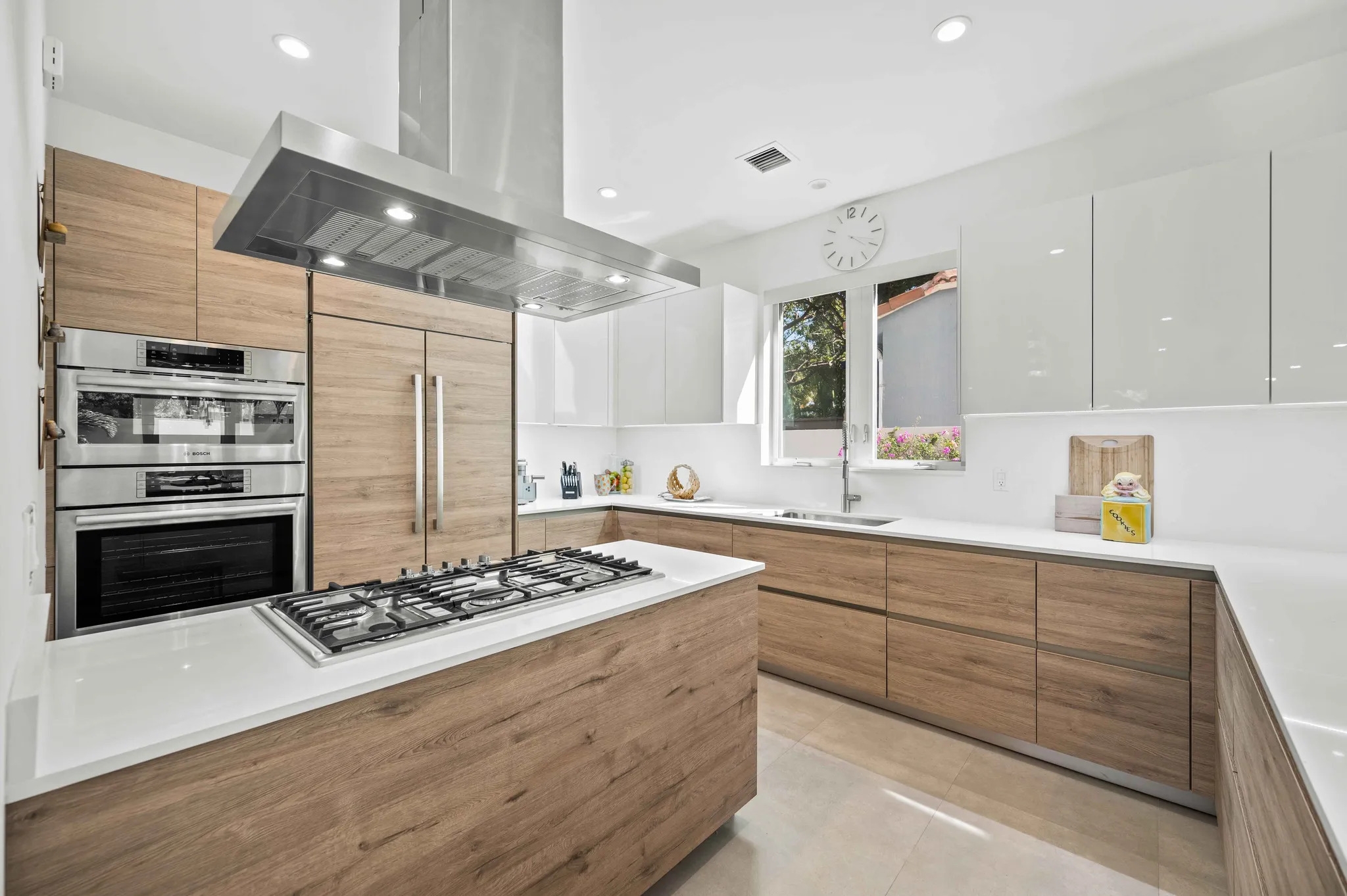
What Makes Bauformat Kitchen Cabinets Different
Strip away the showroom finish and the difference between cabinet brands comes down to verifiable engineering. Bauformat kitchen cabinets differ from North American stock and semi-custom cabinetry in four measurable respects.
Manufacturing precision. CNC machining at the Löhne factories holds tolerances of ±0.1 millimetres. The number becomes visible in the finished kitchen: handleless fronts with perfectly even reveals, six-metre runs with unbroken horizontal lines, doors that close with the same damped weight in every cabinet. Precision is not a luxury flourish. It is what makes the minimal German aesthetic physically possible.
Certified quality. Bauformat carries the Golden M (RAL-GZ 430), the German furniture industry’s independent quality mark, which tests carcase stability, hinge and runner endurance, surface durability, and safety. GS certification adds independently tested product safety. These are pass-or-fail examinations conducted by external institutes, not marketing language.
Healthy materials. All boards comply with CARB2/TSCA Title VI, the strictest widely adopted formaldehyde standard, limiting emissions to 0.05 ppm, finished with low-VOC lacquers. For airtight Vancouver condominiums and energy-efficient new builds, indoor air quality is not an abstraction.
Systemic design. A Bauformat kitchen is configured, not assembled: carcase heights and depths in fine increments, hundreds of front finishes, and interior organization specified drawer by drawer. The system absorbs awkward architecture (sloped ceilings, bulkheads, narrow galley plans) without filler-panel compromises.
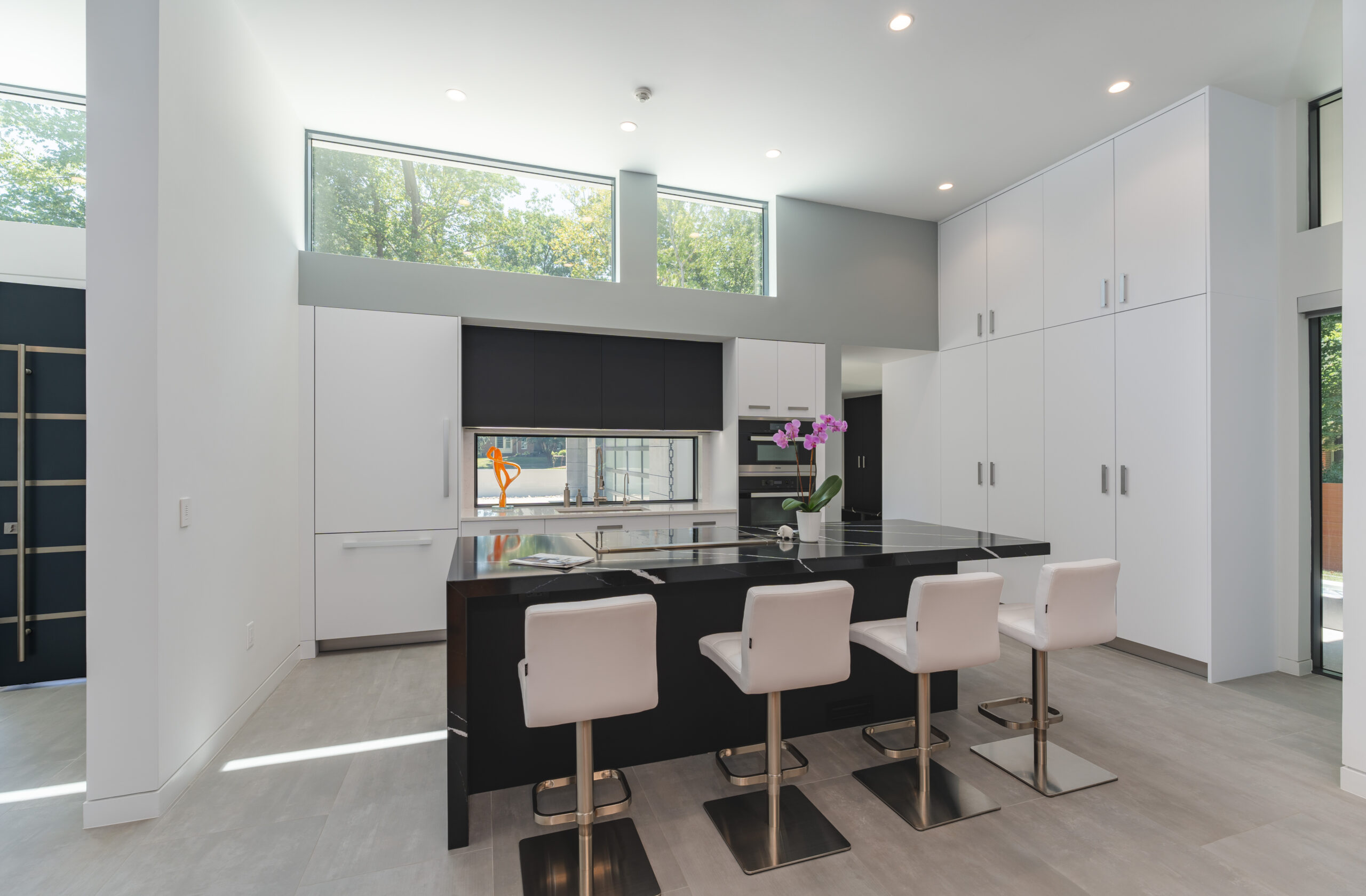
The Three Lines: Baulux, Bauformat, and Burger
Rather than one price point, the company builds three lines on the same manufacturing base. The honest way to read them: the precision and certifications are constant; materials, finish options, and configuration depth scale with budget.
Baulux: The Luxury Line
Baulux is the group’s luxury expression, the line shown when the brief is architectural. Expect real wood veneers in wire-brushed oak and walnut, ultra-matte lacquers, ceramic and glass fronts, handleless channel systems in matched or contrasting finishes, and tall-unit walls with pocket doors. Baulux competes directly with the most exclusive German and Swiss houses while remaining meaningfully more accessible, and it is the natural specification for Vancouver’s high-end homes and penthouse renovations.
Bauformat: Everyday Excellence
The core Bauformat line carries the brand’s centre of gravity: the full design vocabulary (matte lacquers, wood textures, handleless or handled fronts, complete interior organization) at the price point where most serious renovations live. It is the line we specify most often in Vancouver, because it delivers genuine German engineering within typical renovation budgets of $25,000–$80,000.
Burger: Smart Budgets
Burger, the group’s founding brand name, serves cost-disciplined projects (laneway houses, rental suites, developments, first renovations) without leaving the factory’s quality system. Finishes are primarily high-grade laminates and foils rather than veneer and lacquer, and the configuration matrix is tighter, but the carcase construction, hardware, and emission standards remain German. For many projects, Burger is simply the intelligent answer.
Beyond the Kitchen: Closets and Bathroom Vanities
The same platform extends through the home. Bauformat’s closet systems come in three programs (Space, Trend, and Eco) covering walk-in dressing rooms, reach-in wardrobes, and budget-conscious storage respectively, all with the interior fittings discipline the kitchens are known for. Bathroom vanities complete the range, letting a household carry one material language, and one quality standard, from kitchen to bath to bedroom. For condominiums especially, this coherence is a quiet luxury: every fitted element in the home built to the same tolerances.
Design Options: The Range Within the System
Bauformat kitchen cabinets cover the full breadth of 2026 design. Surfaces run from wire-brushed oak veneer (aligned with white oak’s position as the NKBA’s leading species at 51 percent) through ultra-matte anti-fingerprint lacquers in warm neutrals, earth tones, and deep greens, to high-gloss and glass for those who want it. Door geometry spans true handleless channel systems, slim-profile handles, and framed transitional fronts that suit Vancouver’s character homes.
Interior organization is where the system shows its depth: full-extension drawers, vertical larder pull-outs, corner solutions, drawer interiors in solid wood or anthracite steel, and integrated LED lighting planned with the cabinetry rather than added after. Islands, including the oversized, statement-colour islands defining 2026, are configured on the same carcase platform, so a seven-foot island arrives as engineered furniture rather than carpentry improvised on site.
The design options matter less as a catalogue than as a guarantee: whatever direction a project takes, it is executed inside one tested system, by one manufacturer, under one warranty.
A Project with Bauformat BC: From Consultation to Installation
Bauformat BC is the brand’s dedicated showroom for British Columbia, located at 1410 Marine Dr Unit 205 in North Vancouver. A typical project moves through five stages.
1. Consultation
Projects begin in the showroom, ideally with floor plans or site photographs in hand. The first conversation is about how you cook and live, not about door colours: household size, entertaining habits, storage pressure points, and budget range. Honest tier guidance happens here; not every project needs Baulux, and saying so early builds better kitchens.
2. Design Development
Detailed measurement follows, then design development: zoning and clearances, cabinet-by-cabinet configuration, interior fittings, lighting, worktop selection, and appliance integration. Because German manufacture is precise, the design phase is deliberately thorough: every decision is fixed before the order is placed, which is what eliminates the on-site improvisation that plagues conventional renovations.
3. German Manufacture
The confirmed order enters production in Löhne, where it is machined, finished, and quality-checked within the factory’s certified system. Manufacture and ocean freight to Vancouver typically run a number of weeks, time most clients use to coordinate trades for flooring, electrical, and plumbing against a confirmed delivery date.
4. Delivery and Installation
Installation is performed by crews trained on the Bauformat system. This is where factory precision survives contact with real buildings: Vancouver floors and walls are rarely true, and German cabinetry compensates through adjustable plinths and hanging rails, in experienced hands. Worktops are templated after carcases are levelled, and the kitchen is commissioned down to drawer alignment and soft-close tuning.
5. Aftercare
A German kitchen’s long life is supported, not assumed: adjustment visits, replacement parts availability backed by a manufacturer that has existed for over a century, and a single point of accountability at the showroom rather than a chain of subcontractors.
Why Vancouver Homeowners Choose German Kitchens
The economics of Vancouver renovation reward engineering. Kitchen projects here typically run $25,000–$80,000, with refreshes at $15,000–$25,000 and high-end work passing $100,000, sometimes well beyond. Within those numbers, installed German kitchens beginning around $25,000–$30,000 now overlap directly with quality local custom cabinetry, while carrying certifications local shops cannot offer.
The return data supports the decision. Zonda’s 2025 Cost vs. Value research puts minor kitchen remodel ROI at 112.9 percent (recovering more than its cost) while the National Association of Realtors gives kitchen renovation a perfect Joy Score of 10 out of 10 and reports a 48 percent lift in buyer appeal. A kitchen is among the few renovations that pays both daily and at resale.
There is also a fit between German design and this city. Vancouver’s West Coast modernism shares the German instinct for clean lines and natural material; its dense condominium stock rewards the storage engineering German systems do best; and its airtight, energy-efficient buildings make low-emission materials a health decision rather than a preference. German kitchen trends typically reach North America two to three years after their European debut, so buying German in Vancouver means being ahead of that curve, not chasing it.
Why Bauformat Stands Out Among Luxury Kitchen Cabinets
The luxury kitchen market divides into three camps. At the top sit the exclusive German and Swiss ateliers, where kitchens routinely pass $150,000 and the brand carries much of the price. Below them, North American semi-custom lines offer familiar styling with hardware and carcase construction that varies widely by dealer. Bauformat kitchen cabinets occupy the position between, and arguably the most rational one: factory engineering and certifications equal to the ateliers, at prices that overlap quality local custom work.
Three comparisons make the case concrete. Against the exclusive ateliers, Bauformat offers the same Löhne manufacturing region, the same handleless systems and veneer programs, and the same certified testing, without the name premium. Against North American semi-custom, it offers measurably tighter tolerances, independently tested durability, and emission compliance documented rather than implied. Against importing a European kitchen directly, it offers what matters most: a local showroom accountable for measurement, installation, and aftercare, so the precision survives the ocean crossing.
The honest caveat is lead time. A Bauformat kitchen cannot be installed next week; it is manufactured to order in Germany. For homeowners renovating on a realistic schedule, that trade (weeks of waiting for decades of performance) is the easiest one in the project.
Sustainability and Durability: The Longevity of Bauformat Cabinets
Sustainability in cabinetry has two halves, and Bauformat addresses both. The first is what the cabinet is made of: CARB2/TSCA Title VI-compliant boards holding formaldehyde emissions to 0.05 ppm, low-VOC lacquers, and wood sourcing aligned with the EU Deforestation Regulation that takes effect at the end of 2026, a standard requiring deforestation-free supply chains against a 2020 cutoff. FSC certification, now covering more than 171 million hectares of forest worldwide, anchors the sourcing side.
The second half is how long the cabinet lasts, and it is the half the industry discusses least. A kitchen engineered to perform for twenty-five years carries roughly half the lifetime material footprint of one replaced after twelve. The Golden M testing regime (hinge cycles, runner endurance, surface abrasion) exists precisely to verify that longevity. Durability is the most honest sustainability claim a manufacturer can make, and it is the one Bauformat kitchen cabinets are certified to deliver.
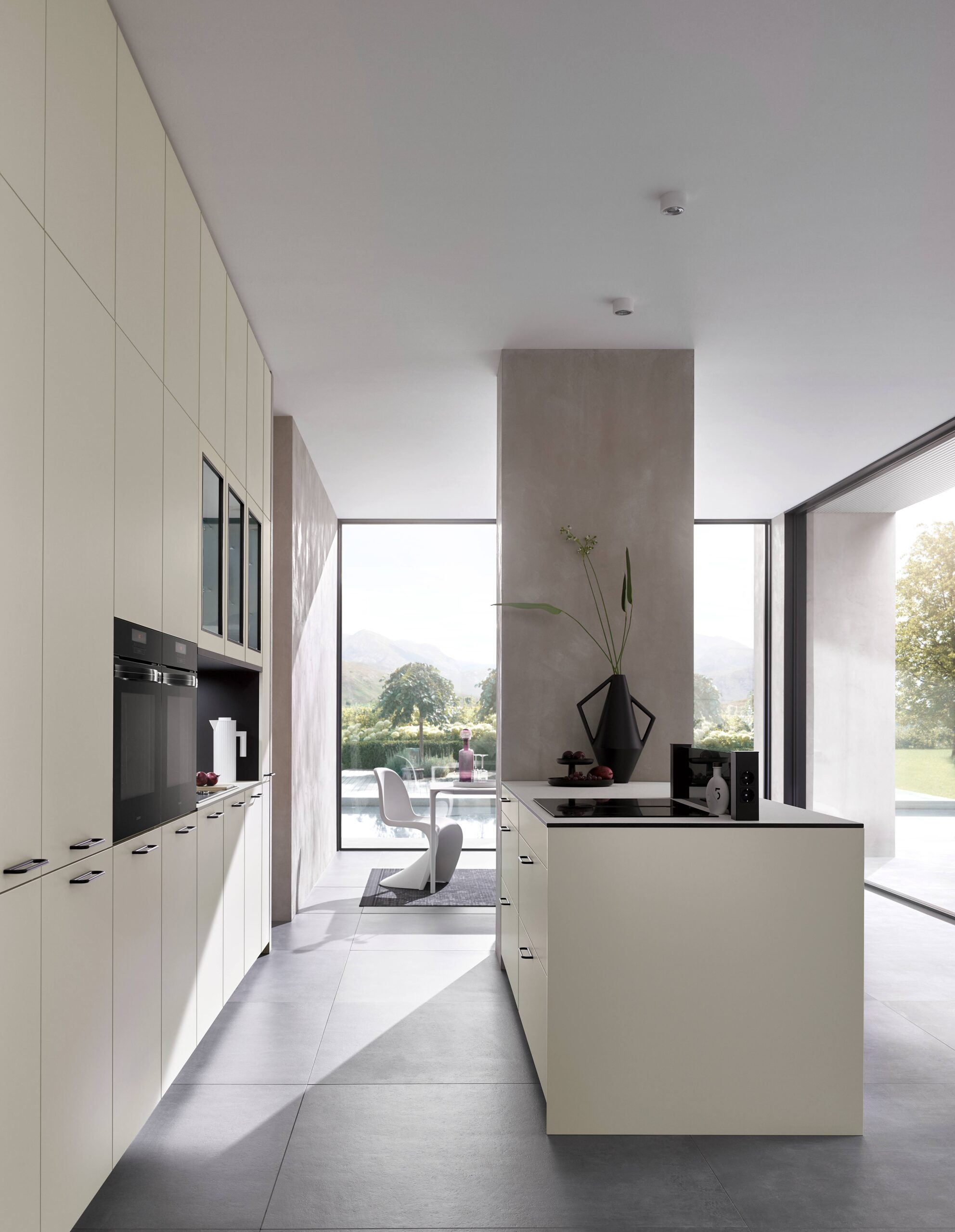
Frequently Asked Questions
Are Bauformat kitchen cabinets made in Germany?
Yes, entirely. Design, engineering, and manufacture take place in Löhne, Germany, under the company’s Made in Germany maxim. The factories produce 650 kitchens per day within a certified quality system.
How much do Bauformat kitchen cabinets cost in Vancouver?
Installed German kitchens typically begin around $25,000–$30,000, with the core Bauformat line serving most renovation budgets and Baulux specifications reaching $100,000 and beyond. The Burger line serves cost-disciplined projects below the core range. Exact pricing follows the design, which is why projects begin with a consultation.
What is the difference between Baulux, Bauformat, and Burger?
All three are built in the same factories to the same tolerances and emission standards. Baulux offers the deepest material range (veneers, lacquers, ceramics) for luxury projects; Bauformat carries the full design vocabulary at mainstream renovation budgets; Burger delivers the engineering in high-grade laminates for smart budgets.
Do Bauformat kitchen cabinets come with a warranty?
Yes. Bauformat cabinetry is warranted by the manufacturer and supported locally through Bauformat BC, with replacement fronts and hardware available through the factory, backed by a family company now in its fourth generation.
How long does a Bauformat kitchen project take?
Plan for several months end to end: consultation and design typically take a few weeks of decisions, German manufacture and ocean freight a further period of weeks, and installation usually under a week once cabinetry arrives. The confirmed factory date makes the schedule reliable, so trades can be booked against it.
What maintenance do Bauformat kitchen cabinets require?
Very little by design. Matte lacquer and laminate fronts need only a soft cloth and mild detergent (no special products) while tested hardware runs without adjustment for years. Wire-brushed veneers carry protective finishes that make them as practical as laminate in daily use. The showroom provides care guidance specific to each surface at handover.
Does Bauformat only make kitchens?
No. The same manufacturing platform produces closet systems in three programs (Space, Trend, and Eco) and bathroom vanities, allowing one material language and one quality standard throughout the home.
The difference is easiest to understand with your hands on it. Book a private tour of the Bauformat BC showroom at 1410 Marine Dr Unit 205 in North Vancouver, or call +1-604-770-1284 to speak with a designer.

Kitchen Layout Ideas: Essential Guidelines for a Successful Modern Kitchen Remodel and Floor Plan
Modern kitchen design stands at the forefront in the ever-evolving home design landscape, embodying the fusion of aesthetics, functionality, and innovation. As the heart of the home, the contemporary kitchen transcends its traditional role as a mere cooking space, evolving into a multifunctional hub for dining, socializing, and even working. At the core of this transformation lies the art of layout and space planning—a meticulous process that balances the demands of daily life with the pursuit of visual harmony and efficiency. This intricate dance between form and function challenges designers to reimagine spaces, integrating cutting-edge technology, sustainable materials, and intelligent storage solutions while maintaining a seamless and inviting atmosphere that caters to the diverse needs of today’s families.
The philosophy of modern kitchen design is deeply rooted in the belief that every detail, no matter how small, plays a pivotal role in crafting an inspiring and practical environment. Central to achieving this balance is the strategic utilization of space, where every square inch is optimized to enhance workflow, minimize clutter, and incorporate elements like a dishwasher seamlessly into the kitchen floor plan. From sleek, minimalist cabinetry that conceals appliances to innovative islands that serve multiple purposes, the modern kitchen is a testament to the power of thoughtful design, focusing on creating the best kitchen layout plans that blend form and function. By embracing open layouts that encourage interaction and flow and incorporating elements that reflect personal style, modern kitchens are not just spaces for culinary creation but are the essence of contemporary living, where every meal prepared and every moment shared celebrates modern life’s dynamic rhythm.
Key Takeaways
- Work Triangle Importance: The ‘Work Triangle’ optimizes the sink, refrigerator, and stove placement to enhance kitchen functionality and comfort.
- Layout Styles Knowledge: Understanding standard kitchen layouts, such as one-wall, galley, L-shaped, U-shaped, and island kitchens, is crucial for maximizing space utility and customization.
- Research-Backed Efficiency: Kitchens designed with the ‘Work Triangle’ principle have proven to be more efficient and comfortable for users.
- Open-Plan and Smart Homes Compatibility: The ‘Work Triangle’ remains relevant even in modern open-plan living and smart home designs, underscoring its enduring significance in kitchen planning.
- Functionality and Practicality: Despite changing trends, the functionality and practicality of kitchen spaces are paramount, with foundational design principles significantly enhancing kitchen efficiency and usability.
- Modern Kitchen Layout Types: Introducing one-wall, galley, L-shaped, U-shaped, and island kitchens highlights diverse design options catering to different space dimensions and cooking needs.
- Bauformat’s Innovation and Quality: Bauformat’s German engineering, customization, and use of premium materials position the brand distinctively in the modern kitchen design sector.
- Design Professionals’ Role: Collaborating with Bauformat’s design professionals ensures tailored, functional, and aesthetically pleasing kitchen spaces.
- Real-World Design Examples: Bauformat Kitchens exemplify the integration of modern design principles, space optimization, kitchen island incorporation, and technology, reflecting personalized homeowner styles and enhancing daily kitchen experiences.
- Technological Integration: The inclusion of intelligent appliances and systems in Bauformat kitchens illustrates the pivotal role of technology in modernizing and streamlining kitchen functionalities.
- Personalized Bauformat Designs: The emphasis on personalized design in Bauformat kitchens highlights the brand’s commitment to creating spaces that reflect individual preferences, balancing modern aesthetics with practical design elements
Understanding the Basics of Kitchen Layouts
In kitchen design, two fundamental concepts reign supreme – the ‘Work Triangle‘ notion and the understanding of popular kitchen layout styles. Have you ever wondered why your sink, refrigerator, and stove are positioned the way they are? The ‘Work Triangle‘ is a clever design principle that ensures optimal spacing between these essential kitchen elements, resulting in a more functional kitchen area.
Are you familiar with the various types of kitchen layouts that exist? Familiarizing yourself with standard kitchen layouts, such as the one-wall kitchen, the galley kitchen, the L-shaped kitchen, the U-shaped kitchen, and the island kitchen, allows you to maximize your available space. This knowledge will enable you to customize your kitchen to suit your needs and preferences.
Did you know that the ‘Work Triangle‘ concept is supported by research? A study in the Journal of Interior Design revealed that kitchens designed with the ‘Work Triangle‘ in mind were more efficient and comfortable for users. Quite intriguing.
Consider your current kitchen layout. Does it adhere to the principles of the ‘Work Triangle‘? If not, what modifications can you implement to enhance its functionality? What kitchen layout do you currently have, and how can you optimize it further?
With open-plan living and smart homes becoming increasingly popular, the traditional ‘Work Triangle‘ concept has evolved to include kitchen islands, reflecting changing kitchen ideas and layouts. This is indeed food for thought.
It’s worth noting that while trends and styles may come and go, the functionality and practicality of our spaces, especially a kitchen, remain paramount. By embracing and applying these foundational design principles, you can significantly enhance your kitchen’s efficiency and usability.
Let’s ponder these concepts and insights as we plan, design, and enhance our kitchen spaces. The next time you find yourself in your kitchen, take a moment to reflect on the ‘Work Triangle‘ and your kitchen layout. You may develop a newfound appreciation for the art and science of kitchen design.

The Work Triangle Concept
The work triangle, a central tool in kitchen design, strategically links three key activity zones: the sink, stove, and refrigerator. This architectural blueprint aims for the total distance among these points to be no more than 26 feet. Critical guidelines for implementing the Work Triangle include ensuring no leg of the triangle is less than 4 feet or more than 9 feet, and the sum of all three sides should be between 13 and 26 feet. This ensures an efficient, unobstructed workflow in the kitchen. Moreover, additional recommendations such as minimum aisle widths and specific counter space next to primary kitchen elements like sinks, refrigerators, and stoves further enhance functionality and user comfort.
The work triangle is not just about efficiency. It’s also about accessibility. It means your key kitchen components are easily accessible, making your culinary tasks more convenient. Would you rather struggle to reach your ingredients and utensils or have them at arm’s length when needed?
Space utilization is another significant advantage of the work triangle. By thoughtfully positioning your sink, stove, dishwasher, and refrigerator, you can maximize your kitchen space’s effectiveness through an updated kitchen triangle approach. It’s like fitting a puzzle together – each piece and appliance fits just right, enhancing your kitchen’s functionality and beauty. But could there be other ways to optimize your kitchen layout? Are there alternatives to the work triangle that could work for different kitchen sizes or those with specific needs, such as baking or gourmet cooking? Let’s delve into these questions in the next section.
In the meantime, let’s appreciate the wisdom of the work triangle, a simple yet powerful concept that turns our kitchens into efficient, accessible, and well-utilized spaces. Isn’t it fascinating how a simple geometric principle can profoundly impact our daily lives? Keep these insights in mind the next time you plan your kitchen space. Remember, your kitchen is more than just a place to cook – it’s a stage for your culinary performances, and the work triangle is your choreographer.
Common Kitchen Layout Types
Five key layout styles emerge in kitchen design – one-wall, galley, L-shaped, U-shaped, and island kitchens. Each layout shines in its unique way, offering specific advantages and efficiencies tailored to different spatial dimensions and cooking requirements.
- One-wall kitchens champion the optimization of productivity in tight spaces.
- Galley kitchens maximize space usage, employing every inch for cabinet usage and counter space.
- L-shaped kitchens bring functionality to the table, accommodating design versatility in smaller areas.
- U-shaped kitchens cater to larger spaces, boasting various storage and workspace solutions.
- Island kitchens act as central points, enhancing the overall look while adding more workspace.
Comprehending these layout types is critical in manifesting a kitchen that harmoniously combines functionality, efficiency, and design charm.

Bauformat in Modern Kitchen Designs
Venturing into the domain of Bauformat reveals its profound influence on contemporary kitchen design, an influence built on a foundation of originality and exceptional quality. Originating from Germany, Bauformat addresses the myriad needs of homeowners with a suite of customizable solutions that artfully intertwine style with functionality. This commitment to using premium materials and cutting-edge technology positions Bauformat as a leader in kitchen design, adept at satisfying the diverse requirements of the modern homeowner. What distinguishes Bauformat in a constantly evolving and highly competitive market? It’s their unwavering commitment to innovation, continually redefining the boundaries of kitchen design by harmonizing aesthetics with utility. The selection of superior materials coupled with the latest technological advancements results in aesthetically pleasing products characterized by their durability and longevity.
Bauformat’s relevance in today’s market is sustained by its acute understanding and adaptation to the evolving preferences of contemporary homeowners, offering bespoke designs that seamlessly integrate into any living space, be it a compact city apartment or a sprawling suburban residence. The increasing global preference for Bauformat kitchens highlights its worldwide appeal and role in transforming kitchens into multifunctional living spaces. This trend invites homeowners to reflect on their kitchen’s current state and consider the unique value a Bauformat design could bring. Investing in a Bauformat kitchen transcends mere aesthetic enhancement; it’s an investment in elevating the functionality and lifestyle quality within one’s home.
Design Innovations:
- Ergonomic Design: Bauformat kitchens prioritize ergonomic design, optimizing working heights and spaces to ensure comfort and efficiency. The strategic application of the work triangle concept facilitates effortless movement between critical kitchen zones, enhancing user experience.
- Focus on Convenience: Emphasizing user convenience, Bauformat introduces innovative features such as the aroma cafe Pantry Box and SpaceFlex food storage solutions, designed to make daily kitchen activities enjoyable and practical.
- Systematic Organization: Bauformat champions meticulous organization by integrating SpaceFlexx, UBOXX systems, and ingenious drawer solutions. It embodies the principle that everything should have its designated place for a clutter-free and efficient kitchen environment.
- Material and Finish Options: Bauformat offers an extensive selection of materials and finishes, allowing for personalized kitchen aesthetics, from the sophistication of Orion grey and the resilience of melamine fronts to the revolutionary, durable, and lightweight Glasgow front material.
- Handleless Kitchen Options: Catering to the modern preference for a sleek, streamlined look, Bauformat’s handleless kitchen designs (CP, CP One, CP 35) offer customization in lighting and finishes, underlining the brand’s versatility and innovative spirit.
The fusion of Bauformat’s innovative design principles with its commitment to functionality and aesthetic diversity encapsulates the essence of modern kitchen design, allowing homeowners to create spaces that are not just about cooking but about enhancing life’s quality.

Overview of Bauformat
Bauformat, a prominent name in German kitchen design, delivers an impressive variety of styles that marry innovation and diversity. The company is widely recognized for its advanced technology integration and array of customization options, which empower customers to design kitchens that reflect their unique tastes and requirements.
- Bauformat’s meticulous attention to detail is evident in the refined aesthetics of its designs. These typically feature clean, sleek lines and premium finishes, exuding luxury and sophistication.
- The company’s commitment to quality is reflected in its choice of materials, ensuring that its kitchens are stylish and durable.
- Bauformat’s designs prioritize functionality. The company’s layouts are designed to maximize the use of space, thereby increasing efficiency and usability.
- The company’s use of advanced technology is evident in its designs, which incorporate practical and contemporary solutions.
Bauformat’s commitment to quality and innovation is reshaping the landscape of modern kitchen design.
Bauformat’s Unique Features and Offerings
Bauformat’s dedication to excellence, novelty, and integrating the best kitchen ideas is well-known. Let’s look at the distinctive features and offerings that make their modern kitchen designs stand out. German engineering forms the backbone of Bauformat’s offerings, and they bring innovative features and customizable options to the table that ensure space efficiency and functionality.
Their use of high-quality materials and a wide variety of options for cabinets, countertops, and storage solutions gives homeowners the freedom to design their dream kitchen. But Bauformat doesn’t stop at practicality; it also focuses on aesthetics. Their designs marry contemporary aesthetics with practical design elements to create a modern look. The perfect mix of style, functionality, and customization showcases Bauformat’s expertise in kitchen design and its unwavering commitment to meeting the unique needs of every homeowner.

Space Planning Essentials for Modern Kitchens
Effective space planning is crucial in contemporary kitchen design. This process calls for strategic decisions regarding layout, storage optimization, ergonomics, and accessibility to create a perfect blend of function and aesthetics. What key elements contribute to a modern and efficient kitchen space, including layout plans, kitchen islands, and the strategic placement of appliances according to the kitchen triangle principle? Let’s delve into these aspects.
The layout is a significant factor in modern kitchen design. It’s not just about placing items where they seem to fit but ensuring that every element has a purpose and place. In contrast, a well-planned layout makes kitchen tasks more manageable, reduces clutter, and optimizes space.
Next, let’s tackle storage optimization. Contemporary kitchens are often characterized by their sleek and minimalistic design, with the incorporation of a kitchen island enhancing both aesthetics and functionality. Modern kitchens are full of intelligent storage solutions, hidden behind elegant cabinet doors or in unexpected places. It’s all about making the most of every inch of space to keep the kitchen tidy and organized.
Ergonomics, or the science of designing the kitchen to fit the user, is another critical aspect. Ergonomics considers everything from the height of the kitchen counters to the placement of appliances, ensuring the kitchen is comfortable, safe, and efficient.
Accessibility is another aspect of modern kitchen design that cannot be overlooked. This involves ensuring that all storage areas, appliances, and work surfaces are easy to reach and use. This is particularly important for those with mobility issues, but it’s a practical consideration for everyone.
The design should not only be about function but aesthetics as well. A beautiful kitchen is more enjoyable and can add significant value to your home. Modern aesthetics often involve sleek lines, neutral colours, and minimalistic details. However, don’t be afraid to inject your unique personality into the space.
Maximizing Storage
What does it take to effectively maximize storage within the limited confines of a contemporary kitchen layout? The answer lies in the strategic application of intelligent storage solutions and organization tips that emphasize optimal use of space.
Let’s discuss some strategies to maximize kitchen storage:
- Consider the use of cabinet and drawer organizers.
- Think about incorporating pull-out shelves and racks.
- Consider installing vertical dividers in cabinets.
- Contemplate custom solutions like built-in spice racks or pantry pull-outs.
Ergonomics and Accessibility
Designing a kitchen that marries aesthetics and functionality necessitates a deep understanding of ergonomics and accessibility. It’s equally important to consider all potential users’ varying heights and abilities. Combining these features with intelligent layouts can minimize physical strain on the user.

Design Elements That Define Modern Kitchens
When it comes to the appearance of modern kitchens, colours and materials take center stage. They not only determine how the kitchen looks but also influence how it feels. Consider your kitchen appliances. Are they merely functional tools for cooking and storing food? In modern kitchens, appliances are more than just tools. Their stylish designs and innovative technology serve as focal points defining the space’s overall aesthetic.
Are these the key elements that distinguish modern kitchens from traditional ones? Absolutely! But are kitchen islands, sleek countertops, and intelligent appliances the only aspects to consider when planning the rest of the kitchen? That’s a question worth exploring.
While paying attention to colours, materials, and appliances is essential, there is a wide range of other factors to consider. How does the kitchen layout and the use of space contribute to its modern appeal? What role does sustainability play in the design of today’s kitchens? These are thought-provoking questions that deepen our understanding of contemporary kitchen design.
Colour Schemes and Materials
Colour schemes and materials play a significant role in shaping the visual charm of contemporary kitchens. These modern spaces frequently showcase a neutral colour palette spiked with daring accents, shiny finishes, and a fusion of industrial and organic elements.
- Cabinet Designs: Cabinets with a high-gloss finish are a common choice. Why? They reflect light and project a sophisticated look.
- Countertop Materials: Strength and minimalistic beauty are crucial in modern kitchens. Hence, natural stone and industrial materials like concrete are preferred.
- Backsplash Selections: What about the backsplash? It can complement the new kitchen’s aesthetics and connect the design aspects with the rest of the kitchen. Materials like glass or those with a textured surface offer a mix of simplicity and warmth.
- Appliance Finishes: Integrated appliances with stainless steel finishes are popular. They offer a seamless, streamlined appearance.
These selections combine to form a modern kitchen design that’s functional and visually appealing.
Lighting and Appliances
What role do lighting and appliances, two pivotal elements in kitchen design, play in defining the look and functionality of today’s kitchens? Consider the ambient lighting, typically generated by eco-friendly LED lights. It doesn’t just light up the space but subtly enhances its design appeal. And what about task lighting, especially the ones positioned under cabinets? These are not just light sources. They ensure that every corner of the kitchen is visible, adding a layer of safety and efficiency to the cooking process.
Have you noticed the rise of intelligent technology in kitchen appliances? From smart refrigerators to induction cooktops, these appliances are revolutionizing how we use our kitchens. They don’t just modernize the space; they make it user-friendly, too.
Then, we have pendant fixtures. On the surface, they are sources of light. But look a little deeper, and you’ll see they are also decorative elements that inject a modern vibe into the space. And let’s not forget integrated appliances. They don’t just blend into the kitchen layout; they also contribute to the minimalist design aesthetics.

Practical Tips for Planning Your Modern Kitchen with Bauformat
The first vital step in creating your ideal contemporary kitchen with Bauformat is to evaluate your specific requirements and the space you have. How can you ensure the most effective use of this space? Here’s where the skills of design experts can make a significant difference. They can help you define your dream kitchen, ensuring the design is visually appealing and practical.
By merging this process with Bauformat’s innovative solutions, you can create a kitchen that blends functionality with modern style. However, what key elements make a Bauformat kitchen stand out?
The devil is in the details. Integrating intelligent storage options, choosing materials and finishes, and placing lighting can all contribute to your kitchen’s overall look and feel. In addition, Bauformat’s wide range of customizable options allows you to create a kitchen that truly reflects your style and meets your unique needs.
In today’s age, the kitchen is more than just a place to prepare meals. It has become a hub of social interaction and a space for creative expression. So, how can you ensure your kitchen design supports this evolving role? The key is in the planning. Understanding your lifestyle, cooking habits, and family’s needs can help shape your kitchen’s design..
Assessing Your Needs and Space
Are you initiating your journey towards a modern kitchen with Bauformat? The initial stages require carefully examining your needs and the space available. Ponder over the implications of functionality and space optimization for a smooth kitchen operation. Think about how the positioning of appliances and furniture influences movement within the kitchen. Also, remember that architectural elements can significantly affect your design.
- Ponder over the tasks your kitchen will accommodate, such as cooking, storage, and dining areas.
- Scrutinize your available space to understand potential layout options.
- Take accurate kitchen measurements to ensure your design exploits the available space to its maximum potential.
- Recognize any architectural limitations that could alter your kitchen layout.
Have you ever considered how a well-designed kitchen can streamline your daily routine? Could investing in a practical and aesthetically pleasing kitchen layout enhance your cooking experience and uplift your mood?
Working with Design Professionals
Once you’ve determined your kitchen’s specific needs and space, the next step is to join forces with skilled design professionals from Bauformat. This partnership ensures you get personalized layouts and functional spaces that match your needs, with particular attention to the kitchen triangle and innovative ideas to craft the best kitchen experience. Their expert assistance helps you design your kitchen, from choosing the perfect layout to smoothly incorporating modern technology. Bauformat’s innovative design ideas and high-quality materials produce a beautiful yet practical kitchen. Close collaboration with these experts results in optimized space use, superior storage, and a great kitchen that meets your particular needs.

Real-World Examples of Modern Kitchen Designs
Modern kitchen designs are exemplified by real-world examples, such as those from Bauformat Kitchens. These examples showcase the fusion of aesthetics, efficiency, and technology in contemporary kitchen spaces. They serve as a tangible representation of design principles and the art of space planning.
Bauformat Kitchens, a global leader in modern kitchen design, focuses on clean lines, minimalistic aesthetics, and functionality. Their intelligent space planning ensures every corner serves a purpose while maintaining an open feel. High-tech appliances seamlessly integrated into the design bring convenience and efficiency to the culinary space.
What sets Bauformat Kitchens apart is their dedication to crafting personalized designs tailored to individual homeowner preferences. Each kitchen reflects the homeowner’s style and needs, creating a functional space and a true reflection of personality. The goal is to design a kitchen that resonates with the homeowner and enhances their daily experience.
Technology plays a pivotal role in simplifying and enhancing the cooking experience in modern kitchens. Smart appliances and systems, from automated cabinetry to intelligent refrigerators, redefine efficiency in the kitchen space. This technology integration streamlines cooking tasks and elevates the overall cooking experience.
These examples underscore the importance of design principles, space planning, and technology integration in modern kitchen design. They also highlight the significance of personalizing the space to align with the homeowner’s taste and lifestyle. Ultimately, a kitchen is more than just a place to cook—it is a space for creativity, family bonding, and lasting memories.
Showcase of Bauformat Kitchens
Exploring tangible samples of Bauformat kitchens reveals how they effortlessly merge current design trends with practical use, setting an outstanding standard for modern kitchen design. Often incorporating a kitchen island as a focal point, these kitchens are recognized for their clever storage options, streamlined finishes, top-tier materials, built-in appliances, and current aesthetics.
Here are a few distinctive characteristics of Bauformat kitchens:
- Smart storage: They offer pragmatic and clever solutions that optimize available space, helping maintain an orderly environment.
- Streamlined finishes: These kitchens feature superior finishes that add a modern look.
- Top-tier materials: Bauformat uses robust and luxurious materials, enhancing the kitchen’s lifespan and visual appeal.
- Built-in appliances: Appliances are flawlessly incorporated into the design, promoting a sleek look and proficient use of space.
These elements fuse to build a Bauformat kitchen that is fashionable and highly functional, embodying the spirit of modern kitchen design.

Frequently Asked Questions
What are some kitchen layout ideas to consider when planning a remodel?
When planning a kitchen remodel, some popular layout ideas include the L-shaped layout with an additional kitchen island for extra workspace and storage, the open-plan concept, and the peninsula design. Each layout offers different advantages in terms of functionality and aesthetic appeal.
How can I plan your kitchen layout effectively to optimize space and workflow?
When planning your kitchen layout, it is essential to consider the kitchen work triangle and the walkway space and ensure enough space for all kitchen activities. Utilizing a kitchen planner or a professional designer can help you make the most out of your kitchen space.
What are some kitchen remodel considerations when aiming for the best functional and aesthetic outcome?
Attention to detail, such as floor plans, kitchen design ideas, and plenty of storage space, is crucial during a kitchen remodel. Incorporating open shelves and maximizing countertop space is essential to a successful kitchen remodel.
How can I ensure that the floor in my kitchen is both stylish and practical?
Consider durable, easy-to-clean, and aesthetically pleasing options when selecting a kitchen floor. Popular choices include tile, wood, and laminate flooring, each offering unique benefits to suit different design preferences.
What steps should I follow when planning a kitchen renovation to achieve the perfect kitchen?
When planning a kitchen renovation, start by considering your needs and preferences, create a floor plan that maximizes space and functionality, and explore design tips to enhance the overall aesthetic of your kitchen.
How can I make the most of an ample kitchen space and ensure clever design?
In a large kitchen, focus on using the space efficiently by incorporating features such as a work triangle layout, ample cupboard and worktop.

Intersecting German Engineering and Modern Living: The Unique Innovations of Bauformat BC in Kitchen Design
In the intricate dance of kitchen design, Bauformat emerges as a choreographer of space, blending the rich traditions of German engineering with the dynamic needs of modern living. This synthesis of innovation, quality, and style positions Bauformat as a brand and a visionary in contemporary kitchen aesthetics and functionality. The journey through the principles of the ‘Work Triangle,’ the exploration of layout types, and the dive into Bauformat’s unique design innovations underscore a singular truth: that the heart of the home lies in a space as efficient as it is beautiful.
Bauformat’s dedication to excellence, evident in its ergonomic designs, focus on convenience, systematic organization, and a wide array of material and finish options, speaks to a heritage of German precision that is second to none. These features, coupled with their embrace of handleless kitchen options, reflect a keen understanding of the evolving tastes and practical requirements of homeowners, designers, architects, and builders in Metro Vancouver and beyond.
In Metro Vancouver, where diverse lifestyles and architectural styles converge, Bauformat BC is a beacon of adaptability and quality. The brand’s commitment to providing customizable design solutions ensures that regardless of the size of the space or the unique needs of its users, there is a Bauformat solution that can transform any kitchen into a masterpiece of form and function. From the streamlined efficiency of a one-wall kitchen to the communal warmth of an island kitchen, Bauformat’s design principles cater to the full spectrum of modern kitchen requirements, making them the preferred choice for those seeking to blend the luxurious with the practical.
Bauformat BC embodies the pinnacle of kitchen remodelling excellence, marrying the storied craftsmanship of German engineering with the boundless possibilities of custom design. For homeowners, designers, architects, and builders in Metro Vancouver, Bauformat BC offers a product and a partnership in creating spaces that elevate the every day into the extraordinary. As we consider the future of kitchen design, Bauformat BC stands ready to lead the way, proving time and again that they are the go-to choice for kitchen remodelling that harmoniously blends functionality, luxury, and unparalleled style.
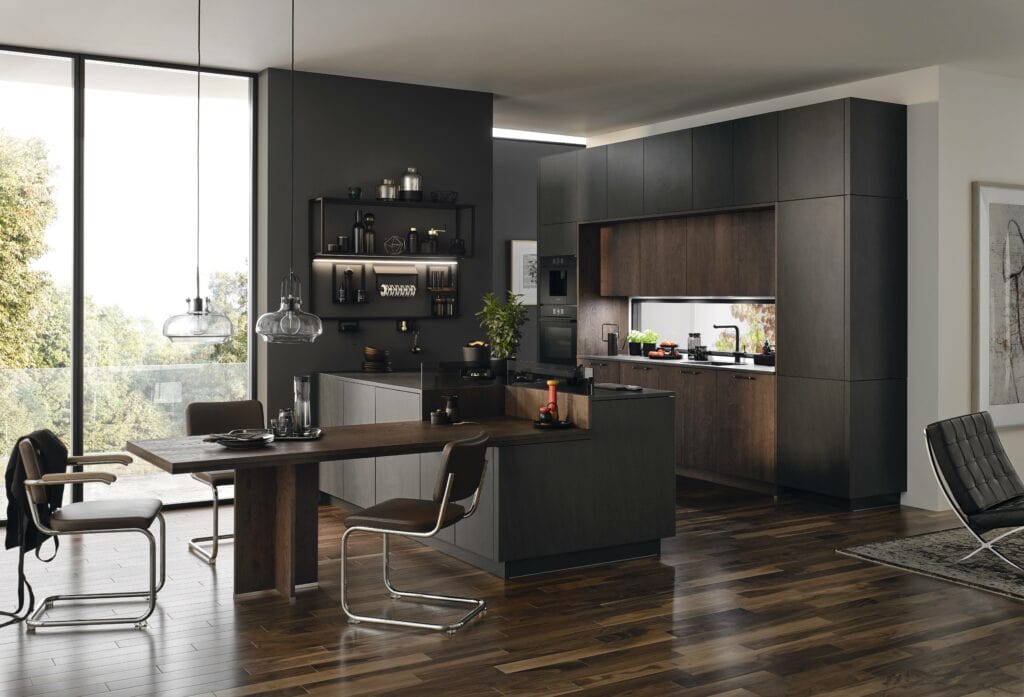
Bauformat’s Prime Selections: Space-Saving Kitchen Furniture for Small Living Areas
Designing a kitchen for small living areas requires innovative solutions to maximize functionality and style. Bauformat excels by utilizing every square inch with intelligently designed cabinets and storage units, ensuring even the smallest kitchens are highly functional and stylish. Multi-use furniture, like kitchen islands with integrated storage and dining surfaces, offers multiple functionalities without consuming extra space, ideal for small apartments. Creative decor strategies, such as light colours and under-cabinet lighting, create the illusion of a larger kitchen, while wall-mounted racks and magnetic strips enhance functionality. Bauformat’s thoughtful design philosophy emphasizes space-saving solutions and multifunctional furniture, ensuring that even the tiniest areas are comfortable and stylish. Their future-focused approach to compact living addresses the challenges of limited space with innovative designs, proving that small square footage means something other than sacrificing comfort or design.
Key Takeaways
- Innovative Kitchen Solutions: Bauformat excels in maximizing kitchen space with cabinets and storage units designed to utilize every square inch, transforming even the most minor kitchen into a highly functional and stylish space.
- Multi-Use Furniture: Bauformat’s multi-use furniture pieces, like kitchen islands with integrated storage and dining surfaces, offer multiple functionalities without consuming extra square footage, perfect for small apartments.
- Creative Decor Strategies: Utilizing light colours and under-cabinet lighting creates an illusion of a more expansive kitchen. Wall-mounted racks and magnetic strips for utensils enhance functionality while maintaining aesthetic appeal.
- Space-Saving Dining and Living Solutions: From space-saving dining tables that fold away when not used to sectional sofas designed for small footprints with storage, Bauformat offers intelligent solutions that make small living and dining areas feel welcoming and spacious.
- Thoughtful Design Philosophy: Bauformat’s approach to small living spaces emphasizes creativity and functionality. It focuses on space-saving solutions and multifunctional furniture to ensure that even the tiniest areas are comfortable and stylish.
- Maximizing Every Inch: Whether through innovative counter space solutions or creative storage and organization, Bauformat designs ensure that every inch of space is utilized efficiently, proving that limited square footage doesn’t mean sacrificing comfort or design.
- Future-Focused Compact Living: Bauformat leads in designing for the future of tiny living, offering solutions that address the challenges of limited space with innovative, space-saving designs and multifunctional furniture, making them the ideal choice for maximizing style, comfort, and functionality in small living spaces.

Maximizing Kitchen Space with Bauformat
Bauformat is a pinnacle of innovation in kitchen design, particularly when maximizing kitchen space. Every square inch counts for small kitchens, and Bauformat’s solutions are meticulously engineered to make the most of these spaces. Their cabinets and storage units are designed to store kitchenware and maximize floor space by hanging items and utilizing every nook. This space-saving approach ensures that even the most miniature kitchen can be transformed into a favourite small room with functionality and style.
Bauformat’s philosophy goes beyond traditional design; it’s about creating ideas that maximize space and enhance usability. Their multi-use furniture pieces, such as kitchen islands with integrated storage and dining surfaces, serve multiple purposes without consuming extra square footage. This approach is especially critical in small apartments where kitchen space is at a premium. By incorporating these innovative solutions, Bauformat helps homeowners make their rooms look larger and more inviting, proving that compact space doesn’t compromise style or function.
Decor ideas play a significant role in Bauformat’s strategy for small kitchens. Using light colours to make the space look bigger and installing under-cabinet lighting creates the illusion of a more expansive kitchen. Additionally, Bauformat’s editors independently select wall-mounted racks and magnetic strips to hang utensils and cutlery to ensure they meet the brand’s high standards of functionality and aesthetic appeal.
Understanding that the kitchen is the heart of the home, Bauformat focuses on ideas that maximize space and social interaction. Their designs often include a small dining area within the kitchen, enabling even those with limited space to enjoy meals in comfort. This thoughtful consideration demonstrates Bauformat’s commitment to ensuring that every room is fully utilized and appreciated, no matter how small.
For those working with limited kitchen space, Bauformat offers various indispensable solutions. From ingenious cabinet designs to multifunctional islands, their offerings are tailored to meet the needs of modern living. Bauformat’s dedication to maximizing kitchen space exemplifies its belief that small spaces can offer immense possibilities with the right design, embodying the essence of space-saving elegance.
Efficient Cabinet Solutions
Bauformat’s cabinet solutions are masterfully crafted to ensure every square inch of your small kitchen becomes prime real estate for storage. By prioritizing organization ideas and innovative designs, these cabinets transform clutter into elegance, making them a cornerstone of compact living. Vertical space and hidden compartments allow for more storage space without taking over the living space, making these cabinets an essential piece of furniture in any small living area.
Transformative Kitchen Islands
A Bauformat kitchen island is a marvel of space-saving design. It serves as a focal point in your tiny kitchen while providing extra counter space, storage, and even seating. Designed for versatility, these islands can become the best small kitchen solution, offering a compact living experience without sacrificing style or functionality. With built-in kitchen storage and options for tucked-away stools, these islands efficiently utilize every inch of space.
Wall-Mounted Wonders
Bauformat’s wall-mounted shelves and tables are perfect for small living spaces, offering valuable floor space back to the room. These space-saving furniture pieces can be folded against the wall when unused, making the space seem more extensive and open. Ideal for tiny living rooms or small studio apartments, these innovative solutions use vertical wall space, providing storage and work areas without the bulk.

Innovative Solutions for Small Living Rooms
Bauformat recognizes the challenges of styling small living rooms and presents intelligent solutions that blend functionality with aesthetic appeal. Their furniture pieces are not just designed to fit into small spaces but to transform them. By incorporating multi-use items like sofa beds and ottomans with storage, Bauformat ensures that even a tiny living room can serve multiple functions without feeling cluttered or cramped. These innovative furniture choices are essential for making a small living space feel welcoming and spacious.
Ideas for small living rooms often revolve around strategically using furniture and decor to create the illusion of more space. Bauformat’s approach includes using sleek, contemporary pieces that don’t overwhelm the square footage. A minimalist side table or a slimline sofa can make all the difference, providing essential functionality without the bulk. Moreover, Bauformat suggests elevating floor space by hanging shelves and entertainment units, which saves space and adds a modern touch to the room.
Decor ideas from Bauformat often emphasize the importance of light and reflection in making small living rooms appear more prominent. Mirrors strategically placed to reflect natural light, glass tabletops, and glossy finishes on furniture can brighten the room and make it seem more open. These carefully selected elements, combined with Bauformat’s space-saving furniture pieces, ensure that every tiny living room can be a favourite spot in the home.
Space next to windows or in corners is prime real estate in small living rooms. Bauformat encourages homeowners to use it to hang planters or install corner shelves, turning these often-overlooked areas into functional parts of the room. This thoughtful use of space adds character and ensures that every inch of the room works to enhance the living experience.
Bauformat’s intelligent solutions for small living rooms are all about making the space work for you, regardless of size. By employing multi-use furniture, innovative storage solutions, and strategic decor ideas, Bauformat proves that living in a small space doesn’t mean you can’t have a stylish, functional living area. Their expertise and carefully curated pieces offer endless possibilities to make small living rooms feel cozy, organized, and chic.
Sectional Sofas for Small Footprints
Optimize your living room with Bauformat’s sectional sofas, designed specifically for small footprints. These pieces of furniture provide ample seating and feature storage underneath. They can also be arranged to fit the corner of a room, maximizing floor space. Their multifunctional design makes them a favourite for small living room ideas, proving that compact living doesn’t mean you can’t have stylish and functional furniture.
Multipurpose Coffee Tables
Bauformat offers multipurpose coffee tables that are more than just a place to rest your drink; they come with hidden storage, and some models can transform into dining tables or provide an extra seat, making them perfect for small living spaces. These pieces of furniture are designed to maximize space and style, ensuring that even a small living room feels complete and functional.
Innovative Side and Nesting Tables
Side and nesting tables from Bauformat are the epitome of space-saving design, ideal for small rooms where floor space is at a premium. These tiny living solutions can be easily moved or tucked away when not needed, offering extra surface space whenever necessary. Their sleek design ensures they don’t take up much space, making them an excellent addition to any compact living area.

Dining Solutions for Tiny Spaces
Dining in tiny spaces can be challenging, but Bauformat rises to the occasion with creative solutions that make every meal pleasurable. Their space-saving dining tables are designed to fit snugly into small kitchens or living areas, some even folding away when not in use to free up valuable floor space. These tables, which can expand to accommodate guests, are perfect examples of Bauformat’s commitment to multi-use furniture pieces, ensuring that homeowners can entertain without worrying about square footage.
Bauformat offers stools and chairs that tuck away under counters or inside table cavities when not in use to complement these tables. This clever design strategy minimizes clutter and maximizes available space, making it ideal for those living in studio apartments or homes with limited dining areas. Additionally, Bauformat’s bar carts serve as movable dining storage, where you can store everything from dishes to drinkware, showcasing the brand’s innovative approach to making the most of every inch of space.
Decor ideas for tiny dining spaces often involve using light colours and reflective surfaces to make the area appear more prominent. Bauformat takes this further by recommending wall-mounted or pendant lighting that doesn’t take up floor space but adds warmth and ambiance to dining areas. These lighting solutions are carefully selected to enhance the dining experience, proving that even small spaces can have prominent character.
Bauformat also suggests using the space next to windows for a compact dining area, where natural light can make the space more open and inviting. A small table paired with a couple of chairs can transform a previously unused corner into a cozy meal spot, demonstrating Bauformat’s ability to think outside the box regarding dining solutions for tiny spaces.
For those who may earn their living from a home studio or work with a very small one, Bauformat’s dining solutions offer hope. Their creative, space-efficient dining furniture and decor ideas ensure that every meal is enjoyed in comfort and style, no matter the size of the space. Bauformat’s expertise in maximizing tiny spaces is evident in its dining solutions, making it a go-to for anyone looking to enhance its small living area.
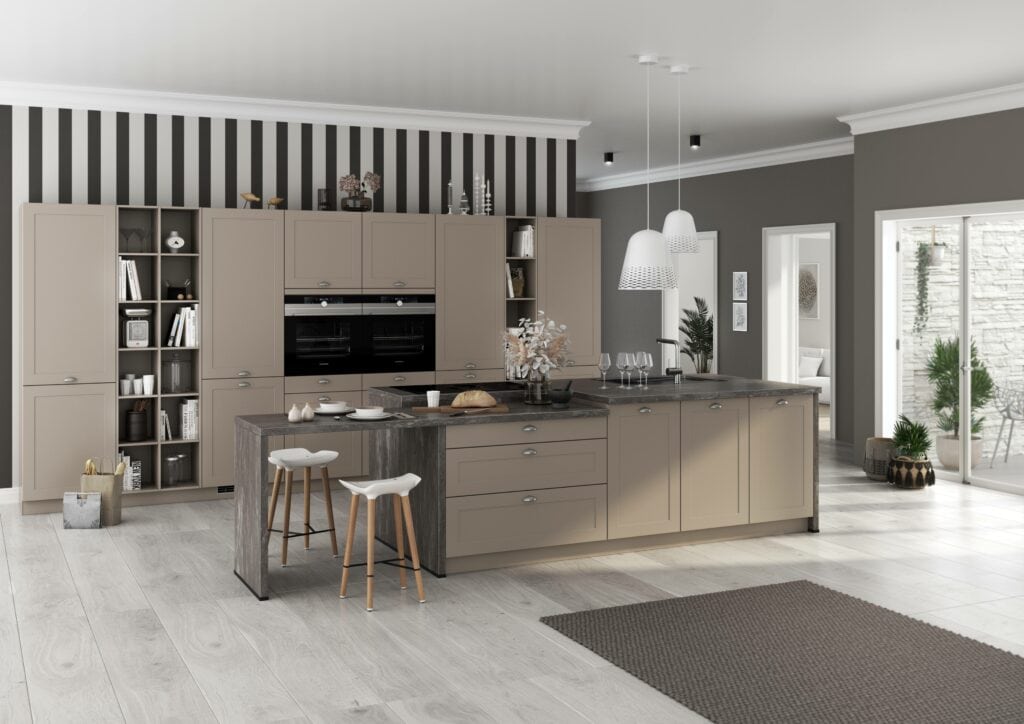
Space-Saving Dining Tables
Bauformat’s dining tables are crafted to make the most of every square foot in your small living space. With extendable and foldable options, these tables can be adjusted to suit your needs, providing a dining solution in a tiny kitchen or studio apartment without consuming valuable floor space. When not in use, they can be minimized or tucked away, embodying the essence of space-saving functionality.
Stools and Bar Carts
Stools from Bauformat are designed to slide under counter space or serve as extra seating without adding clutter, ideal for small kitchens or dining areas short on space. Bar carts offer a movable storage solution for kitchen essentials or serveware, doubling as a kitchen cart for extra organization in your small living space. These multi-use furniture pieces provide function and style in compact areas.
Wall-Mounted Dining Solutions
For those living in a studio or with limited space, Bauformat’s wall-mounted dining solutions are a game-changer. These dining tables and shelves can be attached to the wall and folded away when not in use, offering a space-saving dining area that doesn’t compromise your living space. This innovative approach ensures that even the smallest kitchens can have a dining solution that is both practical and stylish.

Creative Storage and Organization by Bauformat
Creative storage and organization are at the heart of Bauformat’s design philosophy, especially in small living spaces where clutter can quickly become overwhelming. Their innovative storage solutions are designed to maximize every inch of space, from the tops of your cabinets to the hidden nooks beneath the furniture. Bauformat’s cabinetry is a prime example, offering extensive customization options to create a prime real estate for storage in every homeroom, especially in small ones.
Bauformat understands that adequate storage goes beyond functionality; it must blend seamlessly with the room’s decor. Their shelving units, side tables with hidden compartments, and multifunctional pieces are all designed with this in mind. These items provide essential storage space and contribute to the room’s overall aesthetic, making them favourite small decor ideas for homeowners looking to combine style with practicality.
Bauformat recommends furniture choices that double as storage solutions for those living in compact spaces. An ingenious way to keep your living space organized and clutter-free is a sofa with built-in drawers, a coffee table with a storage compartment, or a kitchen cart with extra space for pots and pans. Bauformat’s editors independently select these space-saving furniture pieces to ensure they meet the brand’s high design and functionality standards.
Floor space by hanging items is another Bauformat tip for maximizing storage in small areas. Wall-mounted racks for pots and pans in the kitchen, hooks for coats and bags in the entryway, or shelves for books and decor in the living room can all make a significant difference in how spacious and organized the room feels. Bauformat’s designs often incorporate these elements, demonstrating their commitment to creating spaces as functional as beautiful.
Bauformat’s creative storage and organization solutions testify to their belief that every room can be a haven of order and style, no matter how small. By utilizing innovative storage ideas and furniture for multiple purposes, Bauformat helps homeowners make the most of their living space, proving that limited square footage doesn’t mean sacrificing comfort or aesthetics.

Utilizing Tops of Cabinets and Hidden Storage
Bauformat encourages using every available space, including the tops of your cabinets, for storing items not frequently used, thereby maximizing cabinet space. Their designs often include hidden storage within pieces of furniture, making them perfect for keeping small living areas tidy and organized. This clever use of space is precious in small studio apartments where every inch counts.
Space-Optimized Living Room Furniture
Bauformat’s living room furniture is designed for small spaces, offering solutions that enhance organization and minimize clutter. Each piece is carefully selected, from sofas with storage to compact shelving units, to maximize living space and style, making your small living room furniture functional and fashionable.
Innovative Counter Space Solutions
Counter space is prime real estate in small kitchens. Bauformat’s innovative solutions, like retractable counters and multifunctional kitchen carts, provide the extra space needed for meal prep without permanently occupying the room. These designs are perfect for tiny kitchens, where ensuring limited space doesn’t mean sacrificing functionality.

Bauformat’s Philosophy: Think Outside the Box for Small Spaces
Bauformat’s philosophy for small spaces is simple yet revolutionary: think outside the box. This approach is evident in every aspect of their design, from multi-use furniture pieces that save valuable floor space to innovative storage solutions that use every inch of the room. Bauformat believes that when it comes to small spaces, creativity and functionality should go hand in hand, ensuring that even the tiniest living area can be transformed into a comfortable, stylish home.
Space-saving solutions are at the core of Bauformat’s designs. For example, a kitchen island that doubles as a dining table or a wall-mounted desk that folds away when not in use are just a couple of the ways Bauformat maximizes floor space while providing the functionality needed for everyday life. These ideas for small living rooms and kitchens are fundamental in studio apartments and tiny homes, where making the most available space is crucial.
Decor ideas from Bauformat often focus on enhancing the perception of space. Mirrors to reflect light and make rooms appear larger, furniture with slender lines to reduce visual bulk, and transparent materials to give an airy feel are all strategies employed by Bauformat. These design choices make the space look more extensive and create an inviting atmosphere that doesn’t feel cramped or restricted.
Furniture multi-use pieces that can be easily moved or stored away are another hallmark of Bauformat’s philosophy. A stool that serves as an extra seat, a side table, or a step ladder; a side table with a removable top that becomes a tray; and a bed with storage drawers underneath are examples of Bauformat’s ingenious approach to furniture design. These pieces ensure that every room, no matter how small, is fully utilized and adaptable to the homeowner’s changing needs.
Bauformat’s commitment to thinking outside the box for small spaces has made it a leader in designing compact living areas. By challenging traditional notions of what is possible in small spaces, Bauformat provides solutions that maximize space and style. Their philosophy ensures that living in a small space doesn’t mean you can’t have a beautiful, functional home. With Bauformat, every square foot is an opportunity to create something extraordinary, proving that creativity and intelligent design can turn any small space into a dream home.

Maximize Your Kitchen with Bauformat
Bauformat specializes in creating kitchens that make the most of every square foot. With custom storage solutions, innovative kitchen islands, and space-saving cabinets, Bauformat designs ensure that even the smallest kitchen can be fully functional and stylish. Their expertise in small kitchen design maximizes space and style, proving that even a tiny footprint can significantly impact.
Furniture that Transforms Small Living Areas
Bauformat’s range of furniture is designed to transform small living areas into functional, stylish spaces. With multi-use furniture pieces like sectional sofas that double storage and coffee tables that adjust to dining tables, Bauformat makes compact living chic and comfortable. Their furniture choices are tailored to make a small living space feel larger and more inviting without compromising on design or functionality.
Designing for the Future of Small Living
Bauformat is at the forefront of designing for the future of tiny living, with furniture and kitchen solutions that address the challenges of limited space. By focusing on innovative, space-saving designs and multifunctional furniture, Bauformat ensures that small living spaces are no longer about compromises but about maximizing style, comfort, and functionality. Their commitment to quality and innovative design makes Bauformat the ideal choice for anyone looking to make the most of their small living space.

Unlocking the Essence of Home: Bauformat’s Journey to Redefining Kitchen Spaces
In the heart of British Columbia, where the melding of modern sophistication meets the landscape’s natural beauty, Bauformat stands as a pillar of innovation and timeless design in kitchen manufacturing. With our German origins dating back to 1917 in Löhne, Germany, Bauformat has built a legacy founded on precision, superior quality, and an unwavering dedication to craftsmanship. Our journey from a modest workshop to a global leader in kitchen design reflects our commitment to excellence and our passion for creating spaces that are as functional as they are breathtaking.
At Bauformat, our design philosophy seamlessly marries functionality with aesthetic appeal, ensuring every kitchen we create is a testament to our ability to adapt to our client’s diverse tastes. From sleek, modern kitchens that capture the essence of urban living to warm, traditional designs that evoke a sense of home, Bauformat’s versatility is unmatched. Our collections reflect our deep respect for our heritage, combined with an eye toward the future of kitchen design.
Our product features are at the forefront of innovation, utilizing premium materials and incorporating meticulous attention to craftsmanship. Bauformat kitchens are distinguished by their innovative features, such as intelligent storage solutions, energy-efficient appliances, and durable surfaces that stand the test of time. With an extensive range of customization options in finishes and colours, each Bauformat kitchen is uniquely tailored to reflect the individuality of its owner, ensuring that no two kitchens are alike.
For our homeowners in British Columbia, Bauformat recognizes the unique blend of urban and natural elements that characterize your lifestyle. We strive to create kitchens that meet your functional needs and complement the stunning backdrop of your homes, from the bustling streets of Vancouver to the serene landscapes of the Okanagan. Bauformat is dedicated to engaging with our client’s aspirations, transforming your ideas into spaces that inspire creativity, fostering social interaction, and enhancing your daily life.
Bauformat BC is more than just a kitchen retailer; we are your partner in creating a vision of the perfect kitchen. By choosing Bauformat, you are investing in a piece of German heritage that embodies over a century of excellence in kitchen design. Let us take you on a journey to discover the true potential of your kitchen space, where functionality meets beauty, and every detail reflects your style and the unique spirit of British Columbia.
Frequently Asked Questions
What is Bauformat’s Prime Selections?
Bauformat’s Prime Selections is a collection of space-saving kitchen furniture designed for small living areas.
How can Bauformat’s furniture help maximize floor space?
Bauformat’s furniture pieces are designed to be space-saving, allowing you to use every inch of floor space in your small living area.
What makes Bauformat’s furniture ideal for small kitchens?
Bauformat’s furniture is compact and space-saving, perfect for small kitchens with limited floor space.
How does Bauformat’s furniture provide additional kitchen storage?
Bauformat’s furniture pieces offer clever storage solutions to help you maximize your kitchen storage space.
Can Bauformat’s furniture help create a clutter-free small living room?
Yes, Bauformat’s furniture is designed to be space-saving and multifunctional, ideal for small living rooms where clutter is a concern.
How does Bauformat’s furniture utilize valuable floor space in small rooms?
Bauformat’s furniture is designed to tuck away neatly, using every corner of a room and maximizing floor space.
What are some examples of Bauformat’s furniture pieces that are space-saving?
Examples include side tables that double as extra seats, corner units that provide additional storage, and wall units that tuck away when unused.
