
A kitchen earns its keep three times a day. It is where the morning rush happens, where dinner comes together after a long Vancouver commute, and where the dishes pile up before anyone gets to sit down. So when an appliance starts costing more in time and money than it gives back, the whole room feels it. That is usually the moment people start wondering whether the newer, smarter machines are actually worth the price, or just clever marketing wrapped in stainless steel.
The honest answer is that high-tech kitchen appliances have quietly stopped being a luxury and started paying for themselves. Better efficiency means lower bills, precise heat means food that turns out the way you wanted, and sensors mean fewer scorched pots and forgotten burners. The trick is choosing the right ones and planning your cabinetry around them so they look built-in rather than bolted on. Here is the case for the upgrade, grounded in numbers rather than hype.
Key Takeaways
- Induction cooktops reach roughly 85 percent energy efficiency, far ahead of gas at around 32 to 40 percent, so more of what you pay for actually cooks the food.
- Certified efficient dishwashers use about 12 percent less energy and 30 percent less water than standard models, with real savings over the life of the machine.
- High-tech appliances save time through faster heating, programmable cycles, and automation that handles routine steps for you.
- Precision features such as steam, convection, and exact temperature control produce more consistent cooking results.
- Safety improves with auto shut-off, surface sensors, and cool-touch induction surfaces.
- Built-in and panel-ready models pair best when cabinetry is planned around them, which is how Bauformat kitchens are designed.
Lower Energy and Water Bills That Add Up
The most measurable payoff is on your monthly statement. An induction cooktop transfers heat directly into the pan through an electromagnetic field, so very little energy escapes into the room. Induction runs at roughly 85 percent efficiency, while a gas burner converts only about 32 percent of its energy into actual cooking heat and a standard electric coil sits around 74 to 75 percent (U.S. Department of Energy, 2025). In practice that means a smaller share of every kilowatt-hour is wasted, and your kitchen stays cooler in summer because the heat is going into your food instead of the air.
Dishwashers tell a similar story. A certified efficient dishwasher uses about 12 percent less energy and 30 percent less water than a standard model, and a standard-sized certified unit can save thousands of litres of water over its lifetime (ENERGY STAR, 2025). Refrigerators have improved too, with certified models running about 15 percent more efficient than the minimum federal standard (ENERGY STAR, 2025). None of these numbers sound dramatic on their own, but stacked across a cooktop, a dishwasher, and a fridge running every day for a decade, they turn into real money.
That matters more in Metro Vancouver than in many places, because BC Hydro uses a two-step residential rate. Once a household pushes past the lower-priced first tier of monthly consumption, every additional unit costs more. Appliances that quietly trim your draw help keep you closer to that cheaper band, which is exactly where you want to live on the bill. For a busy Yaletown condo or a North Shore family home, the efficiency gains compound month after month.
Time You Get Back
Money is one thing, but time is the benefit people notice first. Induction boils water dramatically faster than gas because there is no waiting for a burner to heat a grate and then the pot. That difference shows up every single evening when you are trying to get pasta water going before the kids melt down. Faster preheating on convection ovens, quick-steam functions, and rapid-chill settings on newer refrigerators all shave minutes off tasks you repeat constantly.
Automation handles the rest. Programmable cycles let you set a roast to start later, a dishwasher to run overnight on the cheaper part of your usage, or a coffee routine to begin before your alarm. Connected models can send a notification when a cycle finishes or when the fridge door has been left ajar, so you are not walking back to check. The smart kitchen appliance market grew to an estimated 29 billion dollars in 2025 and is climbing toward roughly 34 billion in 2026 (The Business Research Company, 2026), and a big part of that demand is simply people wanting their kitchen to do more of the repetitive work on its own.
Better Cooking Results, Not Just Faster Ones
Speed is nice, but precision is what changes how your food turns out. Induction responds instantly to a dial change, the way a gas flame does, except you can also hold a low, steady simmer that never scorches a delicate sauce. Many models let you set an exact temperature so a pan of melting chocolate or a pot of stock holds where you want it without babysitting.
Steam ovens have moved from restaurant kitchens into home ones for good reason. Steam keeps fish moist, revives day-old bread, and cooks vegetables without leaching out their colour and nutrients. Convection ovens circulate hot air for even browning, so the cookies at the back of the tray finish at the same time as the ones in front. Combine steam and convection and you can roast a chicken with crisp skin and meat that is not dried out. These are not gimmicks. They are the difference between a meal that works and one you apologize for.
Convenience Features Worth Having
Some smart features are genuinely useful, and a few are filler. The ones that earn their place tend to be the quiet ones. A refrigerator that tracks its own temperature and adjusts to keep produce fresh longer means less food in the compost bin. An oven you can preheat from your phone on the way home turns dinner around faster. Cooktops with bridge zones let you span a long griddle across two elements, and pause functions let you lift every pot off the heat at once when the doorbell rings.
Cleaning has gotten easier too. Self-cleaning pyrolytic ovens, dishwashers with sensors that read how dirty the load is and adjust water use accordingly, and flat induction surfaces you wipe down in seconds all reduce the after-dinner chore list. The goal is not a kitchen full of screens. It is a kitchen that removes small frustrations so the room is pleasant to use, which is what keeps people actually cooking at home.
Safety Built Into the Hardware
Safety is the upgrade people underrate until they need it. An induction surface only heats where a compatible pan sits, and the cooktop itself stays relatively cool to the touch, which matters in a home with curious kids or anyone who has brushed a hot gas grate by accident. Lift the pan off and the heat stops almost immediately.
Beyond that, many high-tech appliances include automatic shut-off after a set period of inactivity, residual-heat indicators that warn you a surface is still warm, and child-lock settings. Ovens with temperature probes shut down or alert you when food hits the target, so nothing burns while you step away. Connected smoke and leak awareness, where the appliance flags a problem and pings your phone, adds a layer of reassurance for anyone who travels or runs a rental suite. These features will not stop every accident, but they catch the common ones.
Planning Cabinetry Around Integrated Appliances
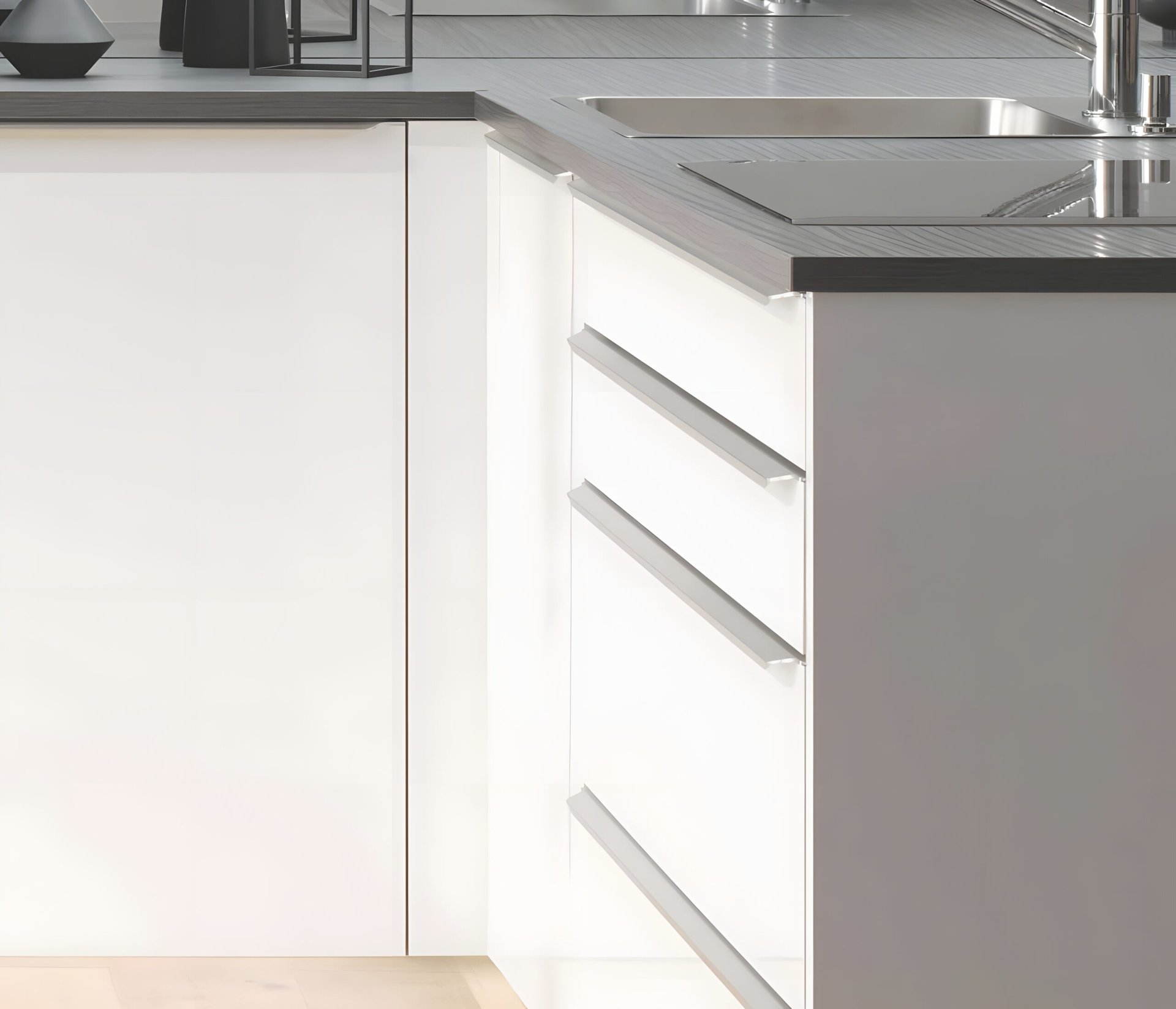
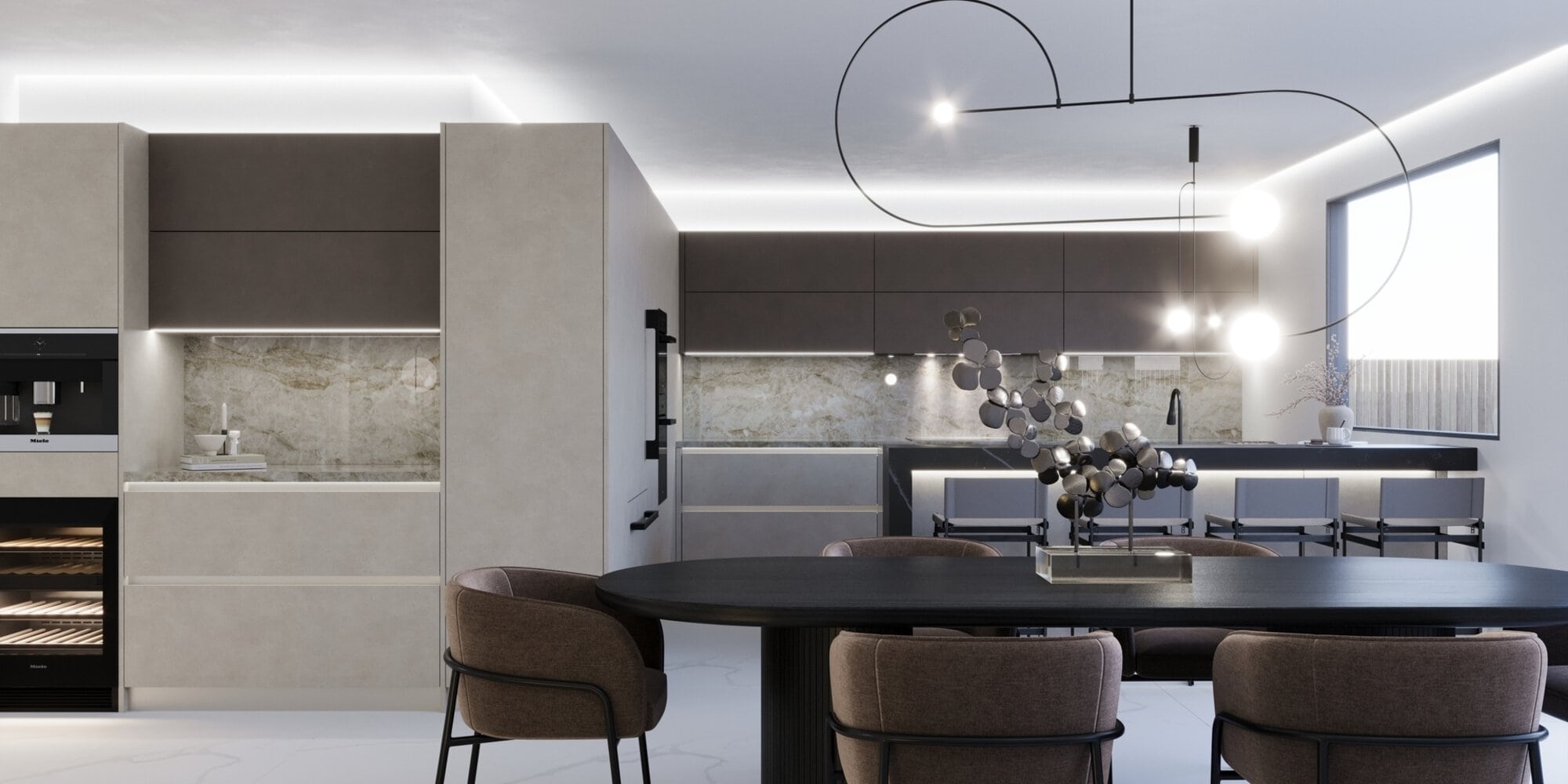
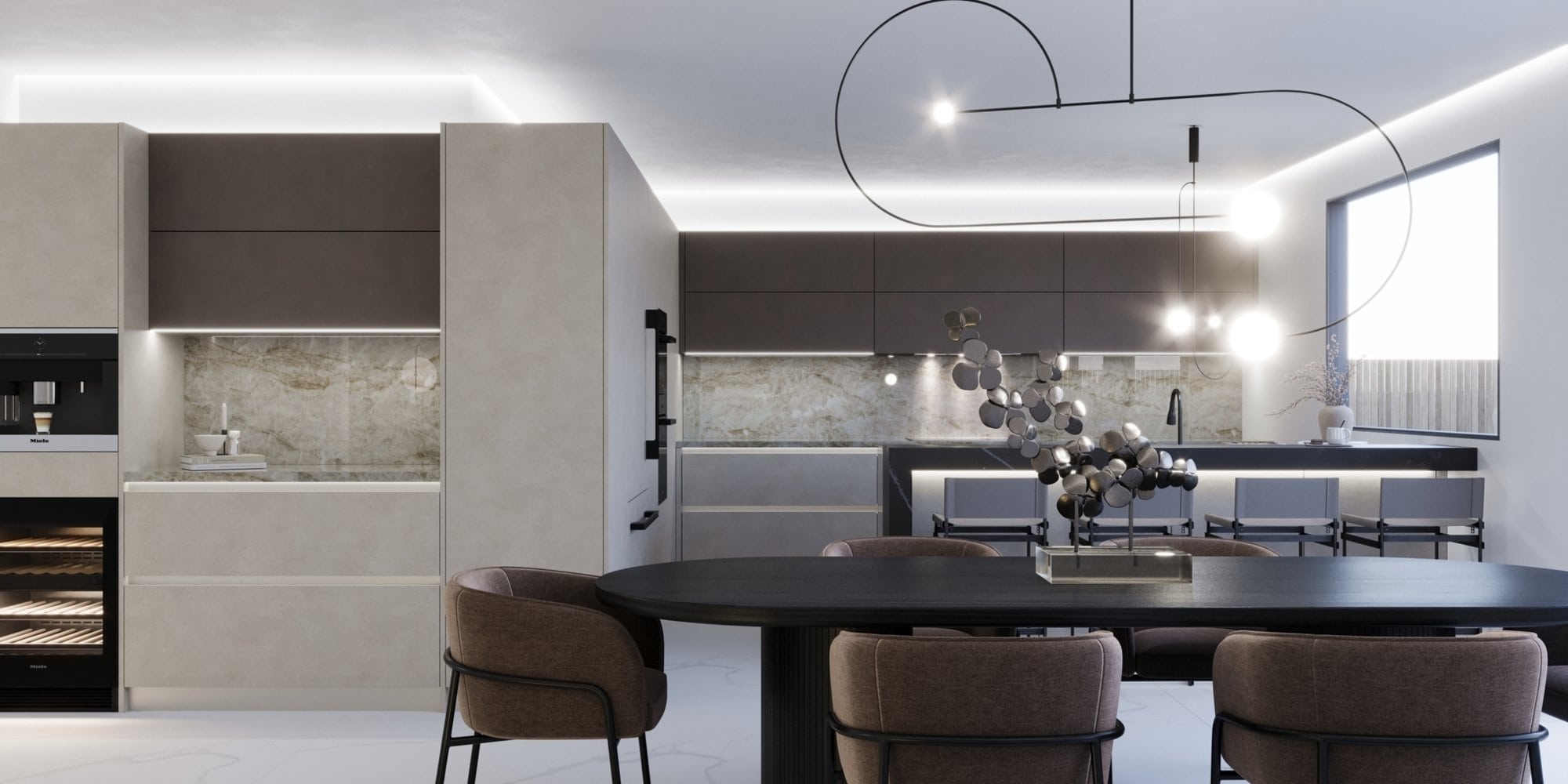
Here is where the appliance choice and the kitchen design meet. A high-tech oven or fridge delivers its full benefit only when it fits the space precisely, vents correctly, and sits flush with the surrounding cabinetry. That is hard to retrofit after the fact and much easier when the cabinets are planned around the appliances from the start. Bauformat kitchens are designed this way, with integrated and panel-ready appliances factored into the layout so a dishwasher or refrigerator wears a cabinet front and disappears into the run, leaving a calm, continuous look.
The hardware underneath supports that. Full-extension soft-close runners bring heavy drawers all the way out and ease them shut without a slam, and 3D-adjustable concealed hinges let the local Vancouver team fine-tune every door so panel-ready fronts line up perfectly across the kitchen. Bauformat has been made in Germany since 1917 in Lohne, and the cabinetry comes in three collections to match different priorities: Baulux, the broad Bauformat range with the widest choice, and Burger for the best value. Whichever you choose, the appliances are measured, planned, and installed as part of one design rather than squeezed in afterward, which is what makes a smart kitchen feel effortless instead of cobbled together.
Frequently Asked Questions
Are high-tech kitchen appliances actually worth the higher price?
For most households, yes, because the savings show up steadily rather than all at once. Lower energy and water use trims the monthly bill, faster and more precise cooking saves time and reduces wasted food, and built-in safety features reduce risk. Over the eight to twelve years a quality appliance lasts, those small gains add up well beyond the price difference, especially on BC Hydro’s tiered rate.
Is induction better than gas for a Vancouver kitchen?
For efficiency, speed, precision, and safety, induction has clear advantages, and it runs at roughly 85 percent efficiency compared with around 32 to 40 percent for gas (U.S. Department of Energy, 2025). It also keeps the kitchen cooler and the air cleaner indoors. The main catch is that induction needs flat, magnetic cookware, so check your pots before switching.
What does panel-ready mean, and why does it matter?
A panel-ready appliance is built to accept a custom cabinet front so it blends into the surrounding cabinetry instead of showing a stainless or black face. It matters because it gives the kitchen a built-in look, and it works best when the cabinets are planned around the appliance from the beginning, which is how Bauformat layouts are designed.
Will smart appliances become outdated quickly?
The core functions, efficient heating, precise temperature control, and good insulation, do not go out of date. The connected software features get updated over time, and reputable manufacturers support their apps for years. Choosing appliances for their cooking performance first and their connectivity second is the best way to avoid buyer’s remorse.
Upgrading your kitchen technology is less about chasing the newest feature and more about buying back time, trimming the bills, and cooking with a bit more confidence. The appliances do most of that work on their own, but they reach their full potential when the kitchen is designed around them from the first measurement, so everything fits, vents, and lines up the way it should in your Metro Vancouver home.
Explore more from Bauformat BC
- Master the Future of Kitchen Design: A Guide to Integrating High-Tech Appliances
- Kitchen Cabinet Hardware
- Modern Kitchen Design
German cabinetry, planned and built for Metro Vancouver
The kitchen is one of the highest-return rooms in a home: the 2025 Cost vs. Value Report found a minor kitchen remodel recoups roughly 96% of its cost at resale. Choosing cabinetry that lasts is central to that return, which is where German engineering earns its place. Every Bauformat kitchen is manufactured in Germany, then measured, planned, and installed by our Vancouver team, built to fit your room to the millimetre.
See the Baulux, Bauformat, and Burger collections in person at our North Vancouver showroom at 1410 Marine Dr Unit 205, learn more about the manufacturer at bauformat.de, and meet our local team at The Bau Team.
Book a 30-minute consultation with our Metro Vancouver kitchen designers to plan a kitchen built to last.
