

There is a particular kind of kitchen that looks like it belongs in a converted warehouse: raw concrete tones, blackened steel, a row of bare bulbs hanging over the island, and cabinetry so matte it seems to absorb the morning light. If you have ever walked through a heritage loft in Gastown or Yaletown and felt the pull of those exposed beams and brick walls, you already understand the appeal. Industrial design takes the bones of old urban buildings and turns their honesty into a style.
The good news is that you do not need a real warehouse to get the look. Much of industrial kitchen design comes down to material choices and a few well-placed details, many of which are friendly to a confident DIYer. This guide walks through the palette, the anchor pieces, and the tricks that make the difference between a kitchen that feels intentional and one that feels unfinished. We will keep it urban and modern rather than rustic, and point out where a German-engineered cabinet line does the heavy lifting so the rest of your weekend projects land cleanly.
Key Takeaways
- Industrial style leans on a tight material palette: matte black, concrete-look surfaces, raw or blackened metal, and dark wood for warmth.
- Matte black or flat-front cabinetry is the anchor of the whole room, and it is the one element worth investing in properly.
- Concrete-look counters and backsplashes give you the raw look without the maintenance headaches of real poured concrete.
- Black hardware, faucets, and open shelving with metal brackets are achievable DIY swaps that read as high design.
- Exposed industrial lighting ties the ceiling plane into the scheme and is one of the highest-impact, lowest-cost moves.
- The trick to a livable industrial kitchen is balance: warm one or two elements so the room feels lived in, not like a factory floor.
The Industrial Material Palette
Every successful industrial kitchen starts with restraint. Where a traditional kitchen might mix three wood tones, a painted island, and a busy stone, the industrial look pares everything back to a handful of hard-working materials. Think matte black, the soft grey of concrete, raw or powder-coated metal, and a single dark wood to keep things from feeling cold. That last ingredient matters more than people expect. Pure black and grey can tip into severe, so a warm walnut or smoked oak somewhere in the room is what keeps it human.
This palette is squarely in step with where kitchens are heading. Matte finishes have overtaken high-gloss as the preferred surface, partly because they hide smudges and glare and partly because they read as more natural and modern (House Digest, 2026). Concrete and stainless steel are both called out as trending specifically for their raw, industrial character (Caesarstone, 2026). In other words, the look you are chasing is not a fringe choice. It is one of the more current directions in kitchen design right now.
The DIY angle here is about sampling before you commit. Order finish samples and physically tape them up in your space across a full day. Vancouver light shifts dramatically between a grey morning and a bright afternoon, and a concrete-look surface that felt warm at noon can go flat and dreary by evening. Living with the samples for a few days saves you from an expensive change of heart.
Matte Black Cabinetry: The Anchor
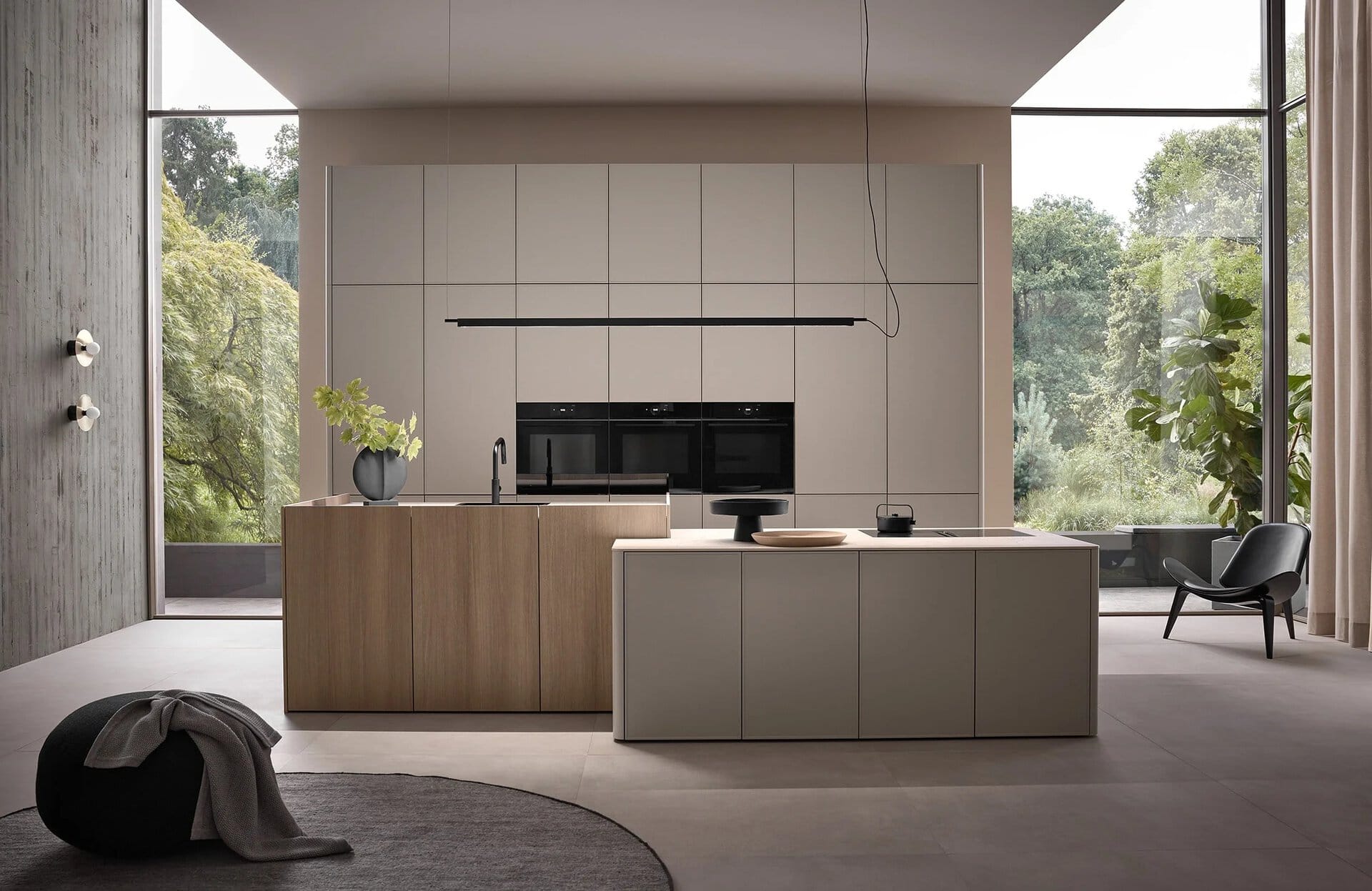
If there is one element to get right, it is the cabinetry. Flat-front, handleless, or matte black doors set the tone for everything else, and they are the hardest piece to fake or fix after the fact. Sleek slab fronts with no decorative moulding are the defining feature of an urban industrial kitchen. They give you that clean architectural surface that lets the rougher materials, the metal and concrete, stand out by contrast.
Dark and matte cabinetry is also having a genuine moment. Matte black, charcoal, and ebony have become some of the most requested finishes at design showrooms heading into 2026, evolving from a bold statement into a mainstream, sophisticated choice (The Designery, 2026). At the 2026 Kitchen and Bath Industry Show, the pairing of black with light wood was the single most visually striking combination on the floor, appearing in just under 19 percent of displays (Emily’s Interiors, 2026). That black-and-wood contrast is the heart of the modern industrial kitchen.
This is the place to be honest about DIY limits. You can hang your own shelves and swap your own faucet, but cabinetry needs to be measured, planned, and installed accurately or the whole room reads as off. A true ultra-matte black front, like those in the Baulux collection, holds its depth without the fingerprint problem that plagues cheaper finishes, while the broader Bauformat range covers flat-front and wood-grain doors when you want to pair black with a smoked oak. Both are made in Germany and measured, planned, and installed by the local Vancouver team, which is exactly the part of the project you do not want to improvise. Inside, full-extension soft-close runners and 3D-adjustable concealed hinges mean the sleek exterior is matched by hardware that actually works day to day.
Concrete-Look Counters and Backsplash
Concrete is the signature surface of industrial design, and for good reason. Its cool grey tone and faint mottling read as honest and unfussy. Concrete countertops keep gaining ground among people chasing a raw, architectural feel (Caesarstone, 2026). The catch is that real poured concrete is heavy, porous, prone to hairline cracks, and demands regular resealing.
This is where smart substitution earns its keep. Quartz and porcelain now come in convincing concrete-look finishes that deliver the same raw aesthetic with far better durability and almost no maintenance (House Digest, 2026). For most homeowners, a concrete-effect quartz or a large-format porcelain slab is the better call. You get the matte grey look without sealing the counter twice a year or worrying about a glass of red wine.
For the backsplash, large-format porcelain panels in a concrete or microcement finish create a near-seamless wall with very few grout lines, which suits the minimal industrial look. If a full slab backsplash is beyond your comfort zone, microcement is a popular DIY route: it is a thin troweled-on coating that gives you a continuous concrete surface over existing tile or drywall. It takes patience and a steady hand, but it is one of the more forgiving ways to add real raw texture yourself.
Black Hardware and Fixtures
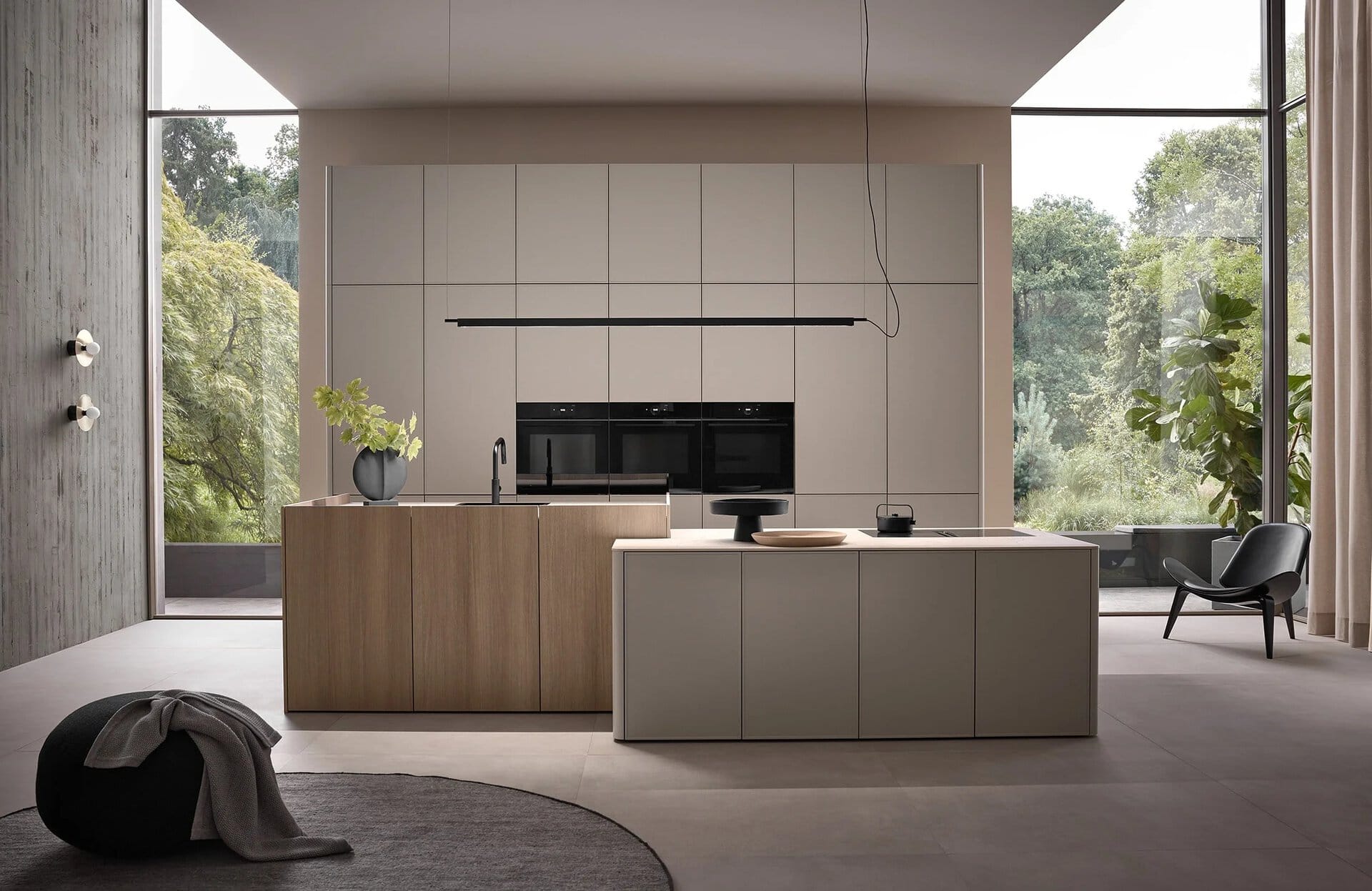
If cabinetry is the biggest lever, hardware is the highest-value small one. Swapping shiny chrome for matte black pulls, a black faucet, and black or gunmetal fixtures is the fastest way to push a plain kitchen toward industrial. These are weekend jobs with a screwdriver and an adjustable wrench, and the visual payoff is out of proportion to the cost.
A few details separate a considered result from a scattered one. Keep your metals consistent: pick matte black or blackened steel and carry it across pulls, the faucet, light fixtures, and even the visible shelf brackets so the eye reads one intentional finish rather than a grab bag. For pulls, longer tubular bar handles in black suit the slab-front look better than small knobs. And if your cabinetry is handleless, lean into that and let the faucet and lighting carry the black accents instead, so the fronts stay clean.
Industrial style also tolerates a little raw metal that a polished kitchen would not. An exposed stainless range hood, a steel shelf, or a pot rail in blackened iron all belong here. The rule is to choose finishes that look honest about what they are, rather than anything trying to imitate a more precious material.
Open Shelving Done Right
Open shelving on metal brackets is almost a signature of the loft kitchen, but it is also the detail most likely to go wrong. Done well, a pair of thick wood shelves on black iron brackets adds warmth and breaks up a wall of cabinetry. Done carelessly, it becomes a cluttered ledge that makes the whole room feel messy.
The trick is to treat open shelving as deliberate display, not bulk storage. Use it for a curated set of items: a few stacked bowls, a row of matte ceramics, a couple of cookbooks, a plant. Keep everyday clutter behind closed cabinet doors and reserve the open shelf for things that earn their place. A thick reclaimed or dark-stained wood shelf, paired with a sturdy black bracket rated well above what you plan to load, is a very achievable DIY project and one of the clearest nods to the industrial look.
Placement matters too. A single run of shelving flanking a window or above a counter run reads as intentional. Shelves scattered across every available wall start to feel like a hardware-store display. When in doubt, install fewer and let each one breathe.
Industrial Lighting
Lighting is where the industrial story gets told overhead, and it is one of the most cost-effective changes you can make. Exposed bulbs, black metal cage pendants, articulated task lamps, and linear track systems all evoke the workshop and factory roots of the style. A trio of black pendants over an island instantly signals the aesthetic, and most pendant swaps are within reach of a careful DIYer, though anything involving new wiring or a new junction box should go to a licensed electrician.
Layer your light so the room stays warm rather than harsh. Pendants and a statement fixture handle the mood, but you still want under-cabinet strips and discreet task lighting so the work surfaces are genuinely usable. Choose warm-white bulbs in the 2700K to 3000K range; cool blue light fights the cozy, lived-in quality that keeps an industrial kitchen from feeling clinical. Visible Edison-style filament bulbs are a small touch that reinforces the look without any structural work at all.
Balancing Raw With Livable
The single biggest mistake with industrial kitchens is committing so fully to the raw look that the room stops feeling like a home. A kitchen that is all black cabinetry, grey concrete, and cold steel can read as a stylish showroom and a slightly unwelcoming place to make breakfast. The fix is balance.
Warm one or two elements on purpose. A smoked oak island, dark wood open shelves, or a length of warm wood flooring softens all that black and grey. Textiles help too: a runner, linen, a couple of woven stools at the island. The industrial palette is the backbone, but a little warmth and a few soft surfaces are what make people want to linger.
There is a practical reason to get this balance right beyond comfort. The most reliable returns in a kitchen renovation come from refreshing finishes, counters, hardware, and lighting rather than gutting everything, and budget-conscious updates can recover roughly 75 to 85 percent of their cost at resale in the current Canadian market (Immovision, 2026). Much of the DIY industrial toolkit, swapping hardware, adding shelving, changing lighting, and updating the backsplash, falls squarely into that high-return category. Anchoring it all with well-fitted cabinetry is what protects that value over the long run.
Vancouver gives this style a natural home. The city’s heritage warehouse conversions in Gastown and Yaletown, with their tall ceilings, exposed brick, and timber beams, are the original reference point for the loft kitchen, and those buildings still command a real premium in the market (Rain City Properties, 2026). Whether you are working in an actual converted loft or a standard condo that you want to feel like one, the same principles apply.
Frequently Asked Questions
Is an industrial kitchen hard to keep clean?
Less than you might fear, as long as you choose your surfaces wisely. Matte finishes hide fingerprints and smudges better than gloss, which is part of why they have overtaken high-shine surfaces. Real poured concrete needs regular sealing, but concrete-look quartz or porcelain gives you the same raw appearance with almost no upkeep. The main areas to think through are open shelves, which collect dust, and very dark cabinetry, which can show water spots, both manageable with a quick wipe-down routine.
Can I get the industrial look in a small condo kitchen?
Yes, and it can be very effective. In a compact space, lean on a few high-impact moves rather than covering every surface: matte black or flat-front cabinetry, black hardware, one run of open shelving, and a couple of industrial pendants. Keep the concrete tones lighter and use warm wood and good lighting generously so the room does not feel like a dark box. Handleless fronts and a near-seamless backsplash also help a small kitchen feel calm and uncluttered.
What parts should I leave to a professional?
Hardware swaps, open shelving, pendant-for-pendant lighting changes, and a microcement backsplash are all reasonable DIY projects for a confident homeowner. Cabinetry is the clear exception. Doors and boxes need to be measured, planned, and installed accurately, or the sleek industrial look falls apart at the seams. Any new electrical wiring or plumbing should also go to a licensed trade. A sensible split is to invest in professionally fitted cabinetry as the anchor, then handle the lighter cosmetic layers yourself.
Will dark cabinets make my kitchen feel smaller?
They can, if you let them dominate every surface, but a well-balanced industrial kitchen avoids that. Pair dark fronts with lighter concrete-look counters and warm wood accents, and add layered lighting including under-cabinet strips. The black-and-light-wood contrast that designers favour exists precisely because the lighter element keeps the room feeling open. Reflective touches like a polished faucet or glass pendants also bounce light around and prevent the space from closing in.
An industrial kitchen, at its best, feels honest. It celebrates the materials it is made from instead of dressing them up, and it carries a bit of the city’s warehouse history into a room you use every day. Get the palette tight, anchor it with cabinetry that is measured and built to last, and let the DIY layers of hardware, shelving, and lighting bring the character. The result is a space that feels both raw and genuinely comfortable, which is exactly what the loft look was always about.
Explore more from Bauformat BC
- Master the Art of Rustic Industrial Kitchen Design With These Seven Essential Tips
- How would Bauformat Matte Black Cabinets Change the Mood of a Kitchen?
- Why Choose Rustic Styles for Your Kitchen Cabinets?
German cabinetry, planned and built for Metro Vancouver
The kitchen is one of the highest-return rooms in a home: the 2025 Cost vs. Value Report found a minor kitchen remodel recoups roughly 96% of its cost at resale. Choosing cabinetry that lasts is central to that return, which is where German engineering earns its place. Every Bauformat kitchen is manufactured in Germany, then measured, planned, and installed by our Vancouver team, built to fit your room to the millimetre.
See the Baulux, Bauformat, and Burger collections in person at our North Vancouver showroom at 1410 Marine Dr Unit 205, learn more about the manufacturer at bauformat.de.
Book a 30-minute consultation with our Metro Vancouver kitchen designers to plan a kitchen built to last.
