
Minimalist kitchens get a reputation for being expensive, all hidden appliances and slabs of imported stone. The truth is gentler than that. A pared-back kitchen is mostly about restraint, clean fronts, a tight colour story, and hardware that disappears, and restraint is something you can afford. The look comes from what you leave out as much as what you put in.
If you live in a Metro Vancouver condo, where the kitchen is often the first thing you see when you walk through the door, a clean minimalist design can make a compact space feel calmer and larger. Below are three distinct budget minimalist kitchen looks, each with a clear palette, a recommended Bauformat front, and one or two tactics to keep the cost sensible. Pick the one that suits your light, your floor, and your nerves.
Key Takeaways
- A budget minimalist kitchen is built on three things: flat or handleless fronts, a tight colour palette, and quiet hardware. None of those have to be costly.
- Flat and slab door styles are now the clear preference, with 69 percent of respondents favouring them in NKBA survey data, so a minimalist look is squarely on trend rather than a risk.
- The three looks: Warm Scandi Minimalist (pale wood and white), Monochrome Matte Minimalist (one muted colour, handleless), and Natural Material Minimalist (wood-grain and stone-look).
- Spend on the fronts and the runners you touch daily; save on the colour scheme, the backsplash, and decorative extras.
- Burger gives you Bauformat’s German build at the best value, which is where most budget condo kitchens should start.
Look One: Warm Scandi Minimalist
This is the most forgiving of the three and the easiest to live with long term. Think pale wood paired with soft white, flat fronts, and an open, airy feel that suits the grey light we get for half the year on the coast. It reads as friendly rather than clinical, which matters in a small condo where the kitchen and living space often share one room.
Palette: a light oak or ash wood-grain on the lower run, with a warm off-white above. Keep it to two tones. The contrast does the decorating for you, so you do not need a feature wall or a busy backsplash.
Fronts: flat slab fronts from the Bauformat collection, which carries the widest choice of wood-grain finishes. A pale wood-look front on the base cabinets and a matte white on the uppers keeps the recipe simple and the cost down, since you are not specifying a single premium finish across the whole kitchen.
Hardware: slim bar pulls in brushed steel, or a single handleless run if your budget stretches. Inside, the full-extension soft-close runners mean drawers glide out completely and close without a slam, which is the quiet luxury you notice every day. The 3D-adjustable concealed hinges keep doors aligned even after years of use.
Budget tactic: wood beat white for the first time since 2016 in the 2026 Houzz Kitchen Trends Study, with wood at 29 percent, so a pale wood-grain front is both current and far cheaper than real timber. Use the wood-look only where it shows, on the base run and any island face, and keep the uppers in plain white to stretch the effect.
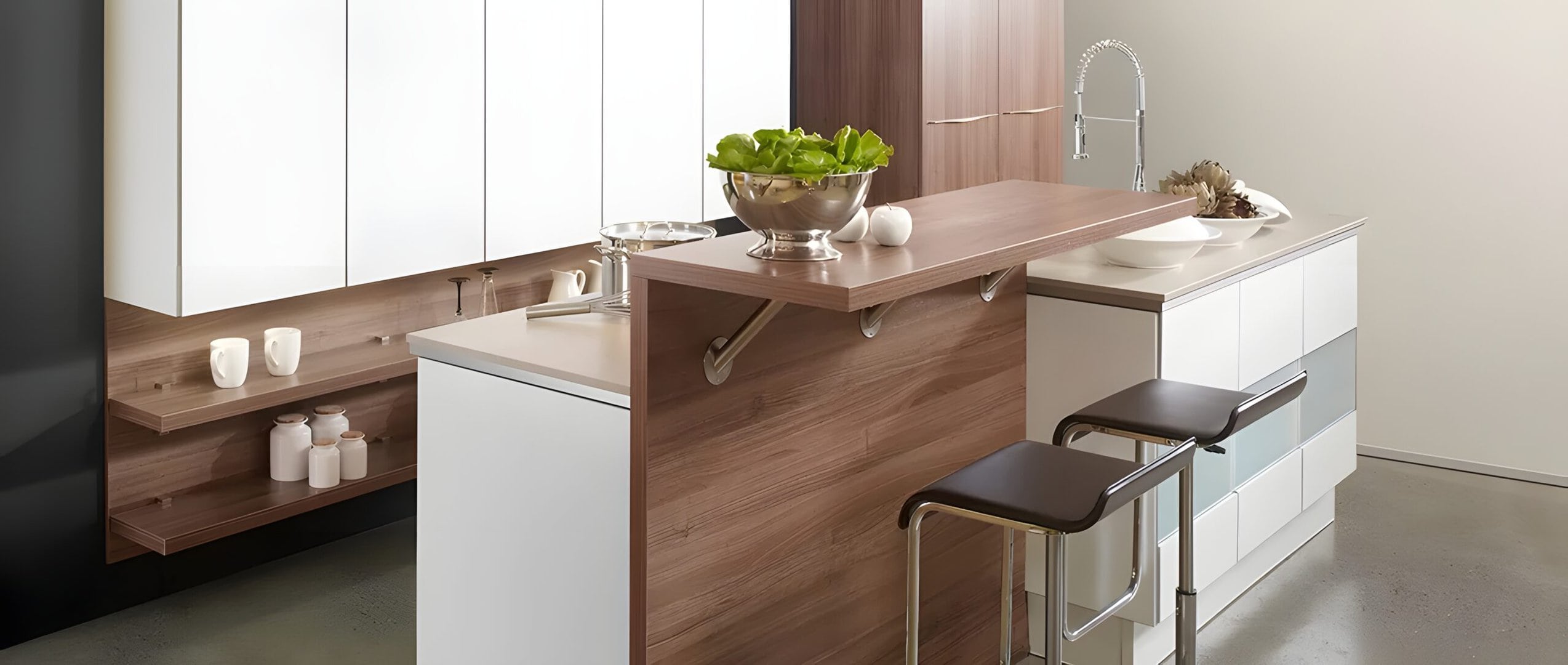
Look Two: Monochrome Matte Minimalist
This is the most dramatic look, and oddly one of the most budget-friendly, because a single colour means a single decision. One muted shade across every cabinet, matte fronts, and a handleless key run. The result is architectural and quiet, the kind of kitchen that almost reads as furniture rather than cabinetry.
Palette: one muted colour, top to bottom. A soft clay, a deep sage, a warm greige, or a charcoal if your space gets good light. Matte finishes absorb light rather than bounce it, which hides fingerprints and the small chaos of daily life better than gloss.
Fronts: the Baulux collection is built for exactly this, ultra-matte and handleless. A handleless front removes every knob and pull, so the eye runs along an unbroken surface. Running it across one continuous wall, your main galley or the island, gives you the high-design effect where it counts.
Hardware: here the hardware is the absence of hardware. Handleless fronts open on a recessed channel or push mechanism, and behind them the same soft-close runners and concealed hinges do the work. Because there are no handles to buy or fit, you trim a line item without trimming the look.
Budget tactic: you do not have to go handleless everywhere. Put the handleless treatment on the one run people see first, then use a simple matte front with a discreet edge pull on the pantry wall they do not. The eye reads the kitchen as fully handleless. With 60 percent of NKBA respondents preferring minimal styles, this restraint is exactly what most buyers now want, which helps at resale in a competitive Metro Vancouver market.
Look Three: Natural Material Minimalist
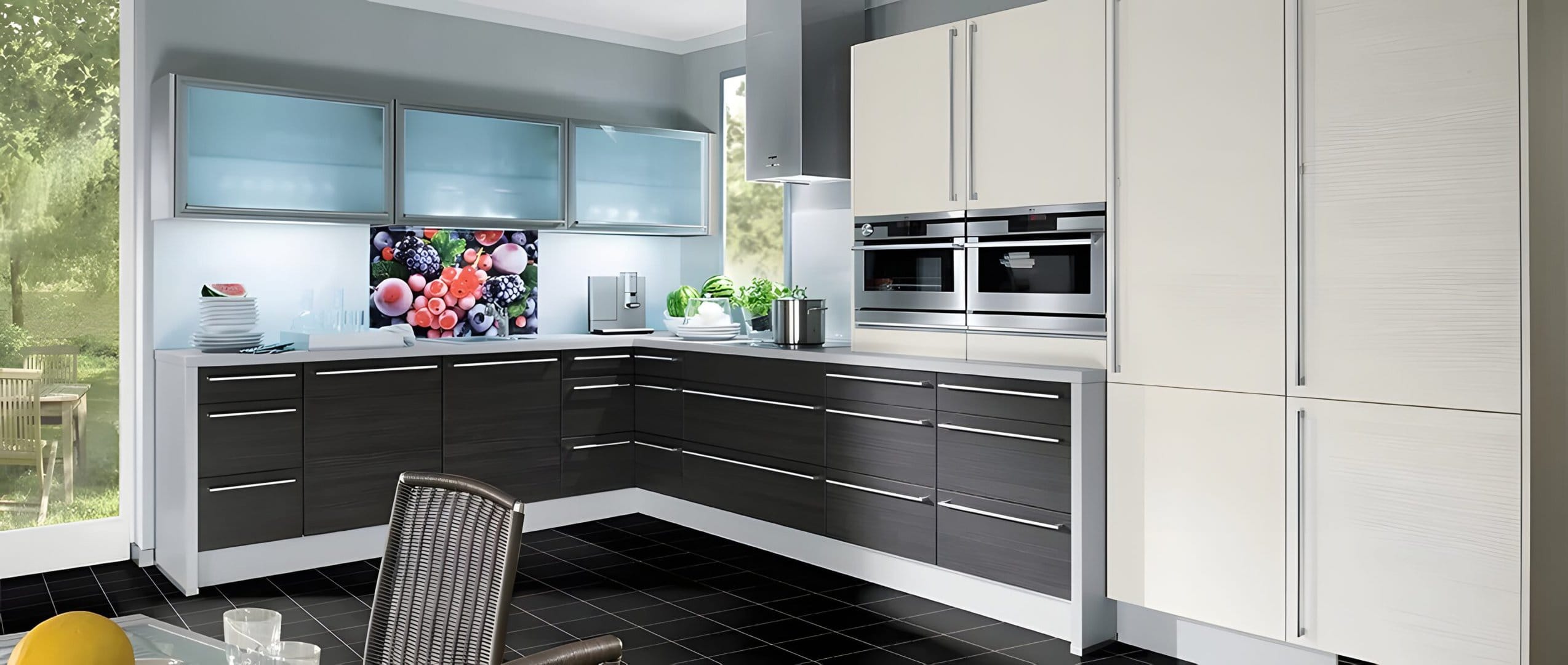
If the first look is soft and the second is bold, this one is grounded. It leans on the materials themselves, a wood-grain front against a stone-look counter, with the simplest possible lines so the textures carry the room. No fuss, no decorative profiles, just honest surfaces.
Palette: a mid-tone wood-grain, walnut-look or smoked oak, paired with a pale stone-look worktop and splash. Two natural materials, nothing competing. The grain and the stone veining give you all the visual interest a minimalist room needs.
Fronts: wood-grain slab fronts from the Bauformat collection, which offers the broadest wood-look range, including handleless options if you want the lines even cleaner. A flat front lets the grain run uninterrupted, so each door looks like a single piece of material.
Hardware: keep it nearly invisible. A long, thin pull in a finish that matches the grain undertone, or a handleless edge. The full-extension runners matter more here than ever, because a natural-material kitchen tends to mean fewer, larger drawers, and you want every one to open to the back.
Budget tactic: the wood revival is real, with the NKBA 2026 report finding 59 percent of design professionals named wood grain as a growing trend and white oak as the top species. A wood-grain laminate or melamine front gives you that warmth at a fraction of solid timber, and a stone-look quartz or laminate worktop does the same for the counter. Spend the saving on one genuinely nice element, a good tap or an honest stone splash, and let it anchor the room.
What All Three Looks Share
Underneath the different palettes, these three kitchens are built the same way, and that is the point. All of them use flat or handleless fronts, a two-tone or single-tone colour story, and quiet hardware. None of them rely on expensive detailing, ornate mouldings, or a long shopping list of finishes. Minimalism is naturally cheaper to specify because every decision you skip is a decision you do not pay for.
They also share the same engineering. Every Bauformat kitchen is made in Germany, where the company has built cabinets in Lohne since 1917, then measured, planned, and installed by the local Vancouver team. The full-extension soft-close runners and 3D-adjustable concealed hinges are standard across the collections, so the quiet, smooth feel of a minimalist kitchen is built in rather than an upgrade. That consistency is what lets a budget look feel considered instead of cheap.
For a Metro Vancouver condo specifically, the case is even stronger. Condo kitchens here typically run lower than detached homes, with several local renovation guides putting them in the range of roughly 28,000 to 55,000 dollars depending on scope, and minimalist design helps you land at the right end of that. Strata rules, elevator bookings, and tight downtown access already add cost and time, so a kitchen with fewer parts and a simpler install works in your favour.
Where to Spend and Where to Save
The honest way to keep a minimalist kitchen affordable is to be deliberate about the split. A few things you touch every single day deserve the money. Most of the rest does not.
Spend on: the fronts and the runners. The fronts are the entire look in a minimalist kitchen, since there is nothing else to hide behind, so a quality matte or wood-grain front is worth it. The runners and hinges are what you feel every time you open a drawer, and Bauformat’s soft-close, full-extension hardware is where the daily pleasure lives.
Save on: the colour scheme and the extras. A single muted colour or a simple two-tone palette costs no more than a complicated one and often less. Skip the feature backsplash, the under-cabinet drama, and the decorative open shelving. A clean run of cabinets needs none of it, and leaving it out is the whole aesthetic.
Starting with the Burger collection is the smartest move for most budget condo kitchens. It carries the same German build and the same hardware, at the best value of the three collections, which means your money goes into the fronts and the fit rather than into a premium badge. The minor-remodel maths backs this up: the 2025 Cost vs. Value Report from Zonda found a minor kitchen remodel returns about 96 percent of its cost nationally, far ahead of major upscale projects, so a tighter, well-chosen kitchen is also the financially sensible one.
Frequently Asked Questions
Which of the three looks is cheapest to build?
Usually the Monochrome Matte Minimalist, because a single colour across every cabinet is one decision and one finish to specify, and a handleless run removes the cost of buying and fitting handles. The Warm Scandi look is close behind if you keep the wood-grain only on the lower cabinets. The Natural Material look can creep up if you choose a real stone counter, so a stone-look quartz or laminate keeps it in budget.
Do handleless fronts cost more than fronts with handles?
Not necessarily. You remove the cost of the handles themselves, which offsets the recessed channel or push mechanism. On the Baulux handleless system the clean look is part of the design rather than a pricey add-on. If budget is tight, run handleless on the one wall people see first and use a simple edge pull elsewhere.
Will a minimalist kitchen feel cold in a small condo?
Only if you let it. The Warm Scandi and Natural Material looks both build in warmth through pale or mid-tone wood-grain, which is exactly why wood-grain fronts are trending so strongly. Even the Monochrome look stays warm if you choose a soft clay, greige, or sage rather than a stark white or hard grey. Matte finishes also feel softer to the eye than gloss.
Are flat slab fronts a passing trend?
The data suggests not. Flat and slab door styles are now the majority preference in NKBA survey results, well ahead of raised-panel styles, and minimal styles overall are favoured by most respondents. A clean front is more likely to age well than a heavily detailed one, which is reassuring if you plan to stay or to sell in Metro Vancouver’s value-conscious market.
A budget minimalist kitchen is less about spending and more about choosing well, then stopping. Pick the look that fits your light and your floor, keep the palette tight, put the money into the fronts and the runners you touch every day, and let the German engineering inside a Bauformat kitchen carry the rest. In a Yaletown condo or anywhere across Metro Vancouver, restraint turns out to be one of the most affordable design moves you can make.
Explore more from Bauformat BC
- crafting the perfect minimalist dream kitchen a design guide
- The Minimalist Kitchen: A Step-by-Step Design Guide
- Budget-Friendly Guide to Achieving a Streamlined Kitchen Makeover
German cabinetry, planned and built for Metro Vancouver
The kitchen is one of the highest-return rooms in a home: the 2025 Cost vs. Value Report found a minor kitchen remodel recoups roughly 96% of its cost at resale. Choosing cabinetry that lasts is central to that return, which is where German engineering earns its place. Every Bauformat kitchen is manufactured in Germany, then measured, planned, and installed by our Vancouver team, built to fit your room to the millimetre.
See the Baulux, Bauformat, and Burger collections in person at 1410 Marine Dr Unit 205, North Vancouver, learn more about the manufacturer at bauformat.de.
Book a 30-minute consultation with our Metro Vancouver kitchen designers to plan a kitchen built to last.
The kitchen earns its reputation as the busiest room in the house. It is where the morning starts, where dinner comes together, and where everyone seems to drift during a gathering. A 2025 Houzz Kitchen Trends Study found that more than a third of renovating homeowners, 35 percent, actually enlarge their kitchens, often borrowing square footage from dining and living rooms, which tells you just how much life happens in this one space. When a room works that hard, clutter creeps in fast.
The good news is that decluttering is less about owning the perfect bins and more about a handful of repeatable habits. It matters, too: a 2025 study in the Journal of Environmental Psychology surveyed 501 adults and found that people who described their homes as more cluttered reported lower well-being, less life satisfaction, and more negative emotions. If you live in a Metro Vancouver condo, where the median new home keeps getting tighter, a calm and editable kitchen is worth real effort. Here are eight ingenious ways to declutter your kitchen and keep it that way.
Key Takeaways
- Decluttering is a process, not a one-time purge. The habits you build matter more than the products you buy.
- Empty and categorize everything first so you can see what you actually own before deciding what stays.
- Use the one-year rule to be honest about the tools and gadgets you truly use.
- Work one zone at a time to avoid overwhelm and keep momentum.
- Clear the counters and store items by how often you reach for them.
- A two-minute daily reset and an always-open donation box keep clutter from returning.
- Good built-in storage, like full-extension soft-close drawers, makes a decluttered kitchen easy to maintain in a small condo.
1. Clear Everything Out and Categorize First
Before you decide what to keep, you need to see what you have. Pick a stretch of time when you will not be interrupted, then empty your cupboards and drawers completely onto the counter or the kitchen table. It feels chaotic for an hour, and that is the point. You cannot edit a collection you cannot see, and most of us have no real idea how many measuring cups or takeout containers we are hoarding until they are all in one pile.
As you empty, sort like with like. Baking gear in one group, food storage in another, mugs together, serving pieces together. Grouping items this way does two things at once. It shows you the duplicates immediately, and it tells you which categories have outgrown their space. In a compact Vancouver condo kitchen, this single step often reveals that you are storing for a household twice your size. Once everything is visible and grouped, the decisions that follow get much easier.
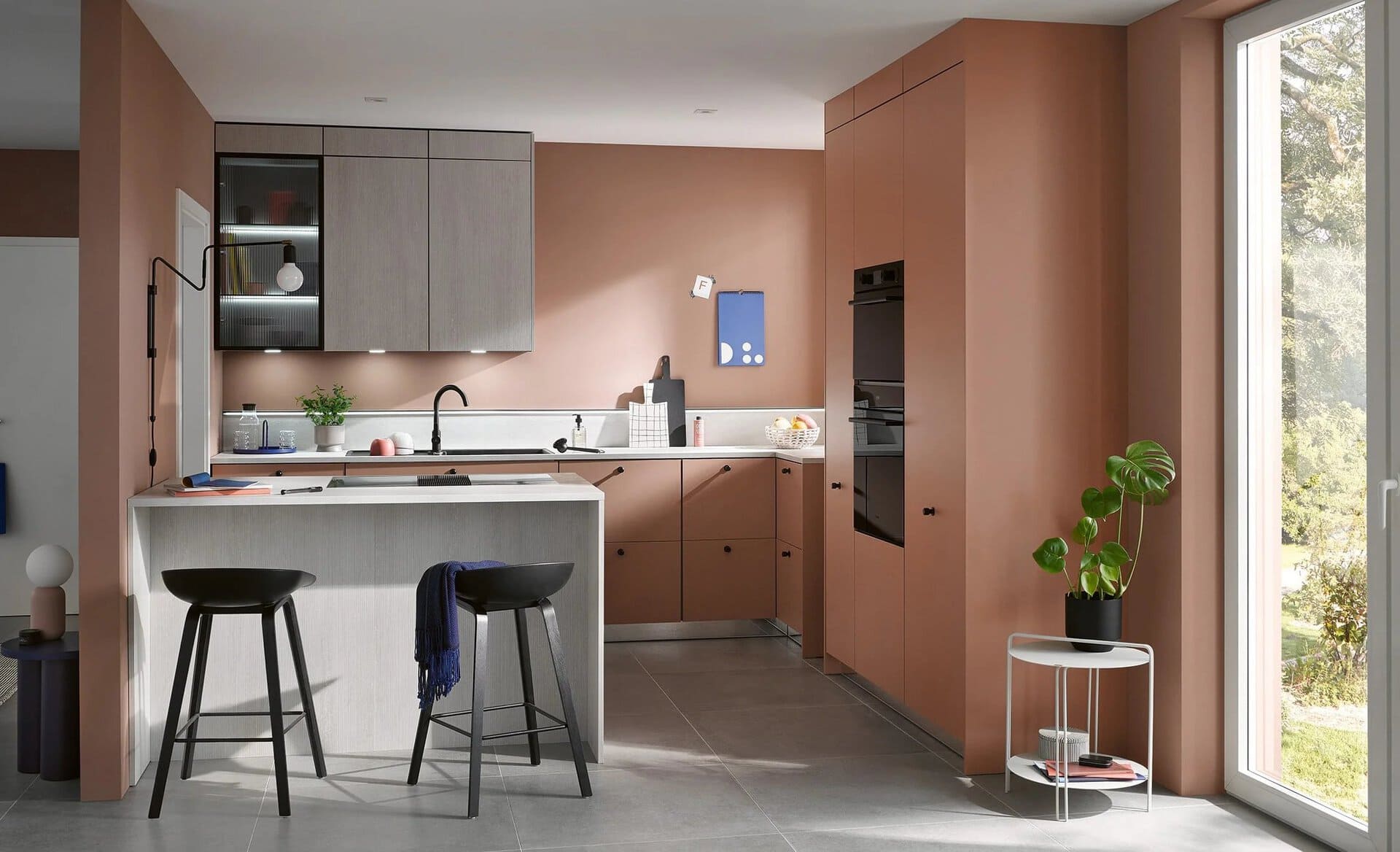
2. Be Honest With the One-Year Rule
The hardest part of decluttering is admitting what you do not use. A simple test cuts through the guilt: if you have not used something in the past year, you almost certainly do not need it. One full cycle of seasons covers your holiday baking, your summer entertaining, and every birthday in between. If a tool sat untouched through all of that, it is taking up space it has not earned.
Be especially honest about single-use gadgets and the aspirational gear, the bread maker you used twice, the specialty pans for a recipe you tried once. Keeping them does not make you more likely to use them. It just makes the things you reach for every day harder to find. Give yourself permission to let those items move on to someone who will actually use them. Your future self, opening an uncrowded drawer, will thank you.
3. Tackle One Zone at a Time
Trying to declutter the entire kitchen in a single afternoon is how good intentions collapse into a bigger mess than you started with. Instead, break the room into zones and finish one completely before moving to the next. The cutlery drawer today. The pantry shelf tomorrow. The cupboard under the sink on the weekend. Each zone is a small, winnable project rather than an exhausting marathon.
This approach matters even more in a smaller condo, where there is no spare room to use as a staging area. Working zone by zone keeps the disruption contained to one corner, so you can still cook dinner while the project is underway. Finishing a zone also gives you a quick hit of satisfaction, and that momentum is what carries you to the next one. Clutter built up gradually, and it comes apart the same way.
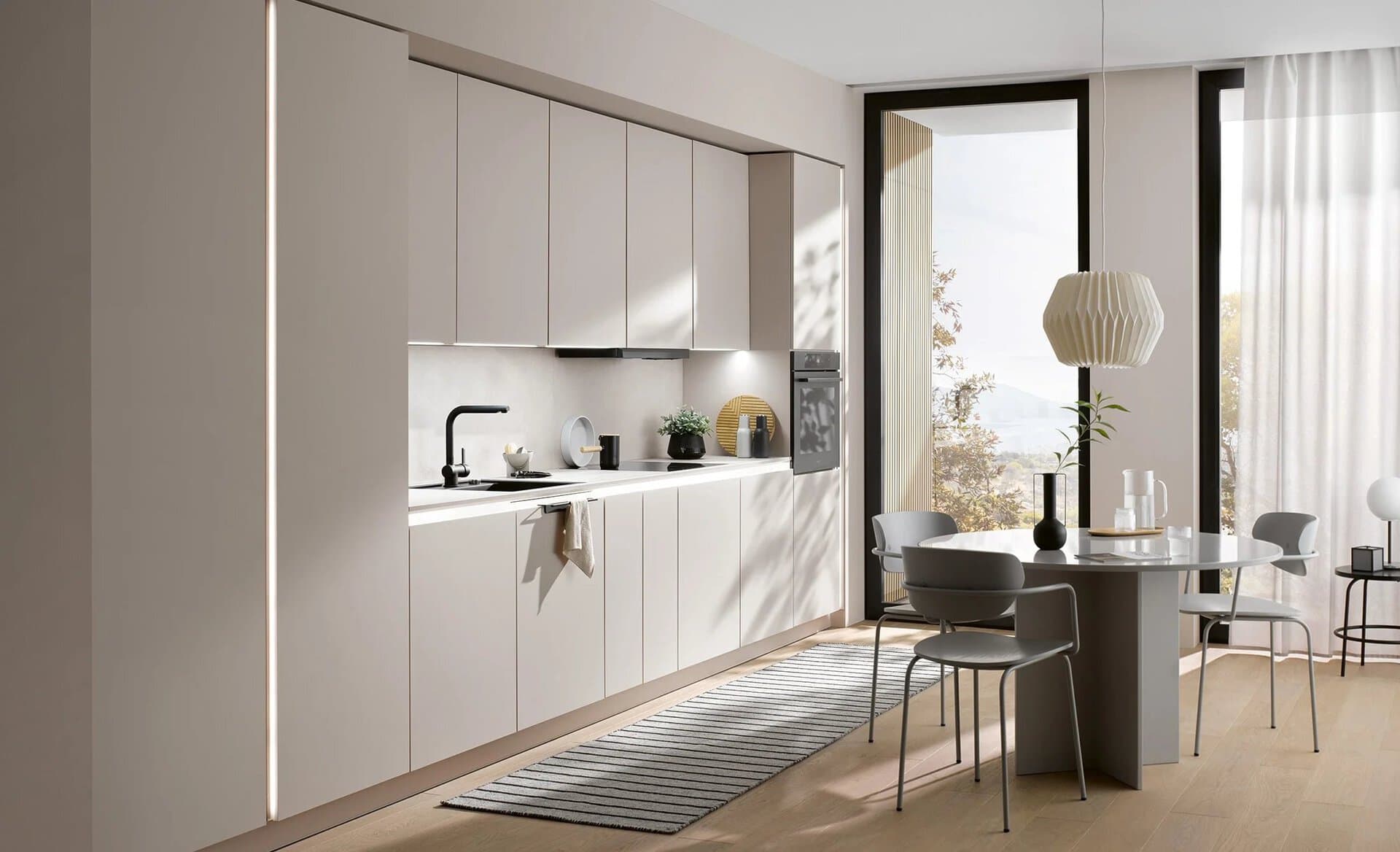
4. Reduce the Duplicates
Once everything is grouped, the duplicates announce themselves. Five wooden spoons when two would do. A drawer of mismatched lids that fit nothing. Three half-used bottles of the same olive oil. Multiples quietly eat the storage you do not have to spare, and they make every drawer feel fuller than it needs to be.
Go category by category and decide how many of each thing a household your size genuinely needs. Keep the best version and release the rest. The same logic applies to mugs and water bottles, which multiply faster than anything else in a kitchen. Be realistic about how many people you actually cook and serve for on a normal week, not the once-a-year dinner party. You can always borrow extra plates for the big occasions far more easily than you can find storage for them the other 360 days of the year.
5. Get Everything Off the Counters
Clear counters are the single biggest visual win in any kitchen, and they make the whole room feel larger and calmer. The research backs up the feeling. The 2025 Journal of Environmental Psychology study found that cluttered homes are perceived as less beautiful, and that lost sense of beauty partly explained the drop in well-being people reported. Your counters are the first thing you see, so they set the tone for the entire space.
Aim to keep only what you use daily on the surface. The coffee setup, maybe a knife block, perhaps a fruit bowl. Everything else, the stand mixer, the blender, the stack of mail, deserves a home inside a cupboard or drawer. This is where smart built-in storage earns its keep. An appliance garage tucks the toaster and kettle behind a door without unplugging anything, and a well-planned drawer keeps small appliances within reach but out of sight. In a tight condo, reclaiming counter space is the difference between a kitchen that feels cramped and one that feels generous.
6. Build a Daily Reset Habit
No decluttering effort survives without a maintenance habit, and the simplest one is a daily reset. Before bed, spend two minutes returning anything that drifted out of place. Wipe the counters, put the stray items back in their zones, and start the dishwasher. That is it. Two minutes tonight prevents the slow pile-up that turns into an hour of cleanup on Saturday.
The reason this works is momentum. A kitchen that starts each day clear is one you naturally keep clear, because adding a single mess to an empty counter feels obvious and easy to undo. The reset is also a kindness to yourself. There is real comfort in walking into a calm kitchen with your morning coffee, and research has linked a cluttered, unfinished-feeling home to higher day-to-day stress, so the payoff is more than cosmetic.
7. Store Everything by Frequency of Use
Where you store something should be decided by how often you reach for it, not by what fits where on the day you moved in. The things you use every day belong in the prime real estate: the drawers and shelves between your knees and your eyes, closest to where you prep and cook. The things you use a few times a year, the roasting pan, the holiday platters, can live up high or down low, out of the daily flow.
This one habit removes a surprising amount of friction. When your everyday plates, knives, and utensils are exactly where your hands expect them, cooking gets faster and the kitchen stays tidier on its own, because putting things away is effortless. Full-extension drawer runners help enormously here, since they let you pull a drawer all the way out and see everything in it at a glance, with nothing lost in the dark at the back. In a condo where every cubic inch counts, storing by frequency turns limited space into usable space.
8. Keep a Donation Box Going
Decluttering is not a one-time event, because new things keep arriving: gifts, impulse buys, the gadget that seemed essential in the store. The trick is to make releasing things as ongoing as acquiring them. Keep a box or bag in a closet or the front hall, and the moment you realize you are done with something, put it straight in. No deliberating, no setting it aside to deal with later.
When the box is full, it goes to a local donation centre, and a fresh one takes its place. This habit keeps clutter from quietly rebuilding between your big sorts, and it taps into a broader shift. The global home organization market is expected to reach 13.27 billion dollars in 2025, according to data reported by Woodworking Network, driven in part by the rising appeal of decluttering and minimalist living. An always-open donation box is the lowest-effort version of that trend, and it costs nothing. It simply keeps the door open for things to leave as easily as they came in.
Frequently Asked Questions
How do I declutter my kitchen when I barely have any space to begin with?
Start with the empty-and-categorize step, because tight kitchens hide their duplicates and unused items most effectively. In a small Metro Vancouver condo, where the median new home keeps shrinking, the goal is not to add more storage but to reduce what you are storing, then assign every keeper a home based on how often you use it. Storing by frequency and clearing the counters will make a small kitchen feel dramatically larger without moving a single wall.
What is the fastest way to make my kitchen look decluttered?
Clear the counters. It is the quickest, most visible change you can make, and it instantly reads as calm and spacious. Move every appliance and pile you do not use daily into a cupboard or drawer, even temporarily, and the room will transform in minutes. From there, the daily two-minute reset keeps that clear-counter look in place with almost no effort.
How often should I declutter my kitchen?
A thorough zone-by-zone sort once or twice a year keeps the bigger categories in check, but the real work happens daily and continuously. The nightly reset handles everyday tidiness, and the always-open donation box handles the slow drift of new items. Together, those two habits mean you rarely need a major purge, because the kitchen never gets the chance to fully fill up again.
Does better cabinetry actually help a kitchen stay decluttered?
It makes a real difference. When storage is designed around how you actually use the kitchen, with full-extension soft-close drawers, smart interior dividers, and appliance garages, putting things away becomes effortless, and effortless habits are the ones that last. Thoughtful built-in storage does not declutter the kitchen for you, but it removes the friction that causes clutter to pile back up.
Decluttering your kitchen is really a series of small, kind decisions repeated over time. Clear everything out and look at it honestly, edit by zone, give what stays a logical home, and protect the calm with a couple of tiny daily habits. None of it requires a renovation or a weekend lost to chaos. And when your kitchen is built with storage that genuinely fits the way you live, keeping it clear stops feeling like a chore and starts feeling like the natural state of the room, which is exactly how a busy kitchen should feel.
Explore more from Bauformat BC
- Designing for Kitchen Efficiency: Zones, Storage, and Flow
- Revamp Your Kitchen Storage Space: Kitchen Organization Ideas for Ultimate Space-Saving
- Mastering the Art of Kitchen Space Optimization
German cabinetry, planned and built for Metro Vancouver
The kitchen is one of the highest-return rooms in a home: the 2025 Cost vs. Value Report found a minor kitchen remodel recoups roughly 96% of its cost at resale. Choosing cabinetry that lasts is central to that return, which is where German engineering earns its place. Every Bauformat kitchen is manufactured in Germany, then measured, planned, and installed by our Vancouver team, built to fit your room to the millimetre.
See the Baulux, Bauformat, and Burger collections in person at 1410 Marine Dr Unit 205, North Vancouver, learn more about the manufacturer at bauformat.de.
Book a 30-minute consultation with our Metro Vancouver kitchen designers to plan a kitchen built to last.
Walk through Shaughnessy, Kerrisdale, or the older blocks of Mount Pleasant and you start to notice a rhythm: panelled doors, deep trim, the kind of millwork that was meant to last a century. Metro Vancouver is full of character homes built for exactly this sensibility, and the kitchens inside them respond best to cabinetry that feels grounded and familiar rather than sharp and showroom-glossy. Traditional kitchen cabinets carry that warmth, and they do it without shouting for attention.
The challenge most homeowners run into is that traditional can tip into dated if you copy a look wholesale from twenty years ago. The good news is that the classic vocabulary, raised panels, shaker fronts, cup pulls, glass doors, has plenty of room to feel current. This guide walks through what actually defines the style, the colours and hardware that hold up, and how to keep it reading as timeless in 2026.
Key Takeaways
- Traditional cabinetry is defined by framed looks, raised-panel and shaker doors, furniture-like details, and decorative trim used in moderation.
- Transitional design, which blends traditional and modern, leads professional demand: 72 percent of respondents named it the top style for the next three years (NKBA 2026 Kitchen Trends Report).
- Shaker remains the dominant door profile, accounting for roughly 50 percent of cabinet designs observed at KBIS 2026.
- Classic palettes lean on creamy whites, soft neutrals, sage and forest greens, and deep blues, with warm neutrals favoured by 96 percent of designers for 2026.
- Knobs, cup pulls, and finishes like aged brass and oil-rubbed bronze anchor the look; glass-front cabinets and plate racks add character without clutter.
- Bauformat’s shaker and classic fronts pair the traditional aesthetic with German engineering, so the warm look comes with modern hardware underneath.
What Actually Defines Traditional Cabinetry
At its core, traditional cabinetry is about visible structure and craft. The most recognizable cue is the framed look, where each door sits within a face frame rather than floating flush against the box. That single detail reads as classic immediately, because it echoes the way fine furniture has been built for generations.
From there, the style leans on a handful of consistent ideas. Doors carry a defined profile, whether that is a raised centre panel or a recessed shaker panel. Decorative detailing shows up, but in moderation: a bead of moulding here, a turned leg there, a furniture-style toe kick that makes an island look like a freestanding piece rather than a row of boxes. Restraint is the part people miss. A traditional kitchen that piles on every flourish at once starts to feel like a period set rather than a room you cook in.
In Vancouver’s character homes, these furniture-like elements do real work. An older house often has quirks, uneven walls, odd ceiling heights, a chimney chase that cannot move, and traditional cabinetry absorbs those quirks gracefully. A run of panelled uppers with a furniture base on the island makes a 1920s kitchen feel intentional rather than patched together.
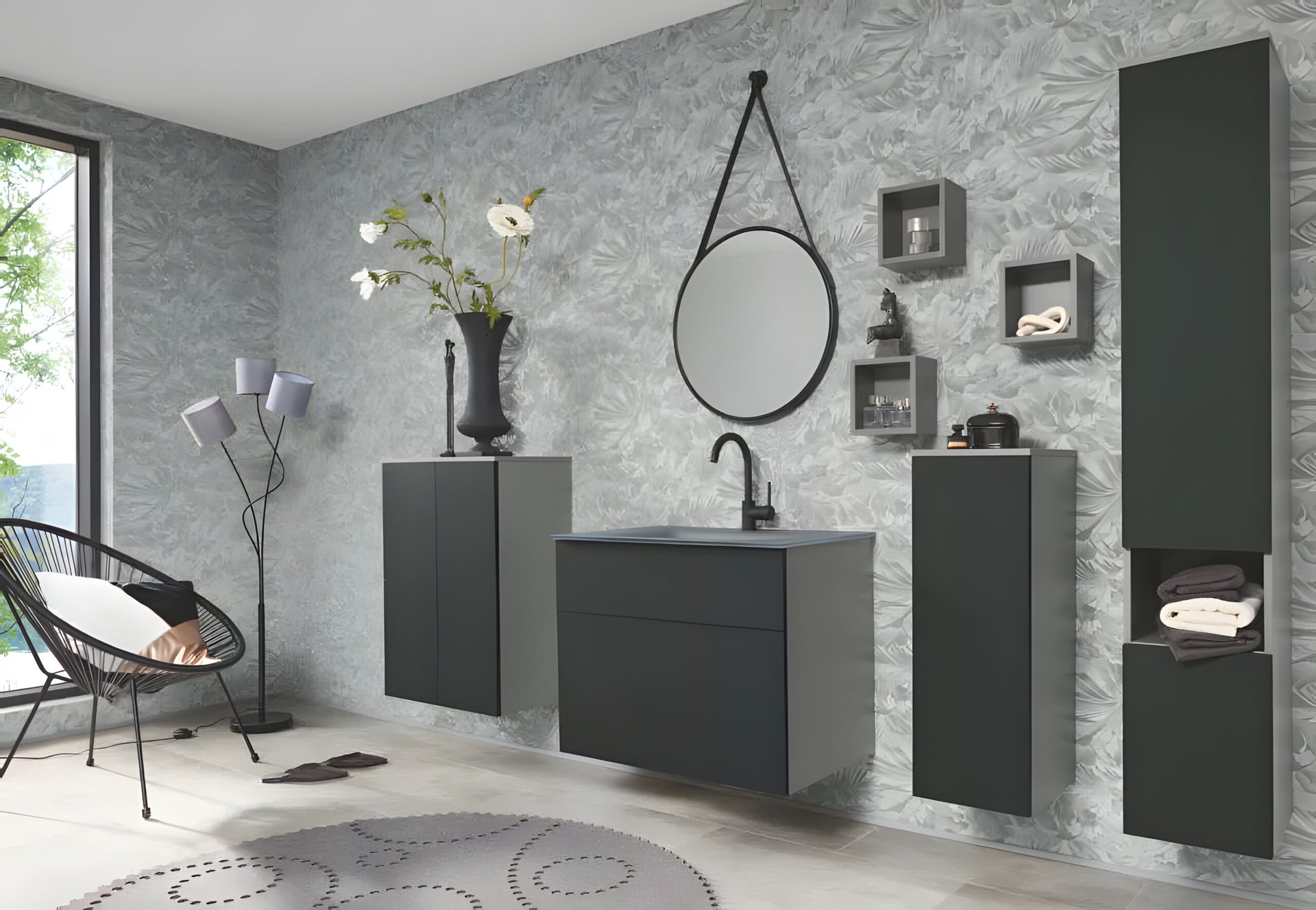
Classic Door Styles: Raised Panel and Shaker
Two door styles carry most of the traditional weight. The raised-panel door, with its profiled centre that sits slightly proud of the frame, is the more ornate of the two. It catches light along its edges and gives a kitchen a sense of depth and formality, which suits larger character homes and dining-adjacent kitchens beautifully.
The shaker door is the workhorse, and it is not going anywhere. Its clean recessed panel and square edges sit comfortably between classic and contemporary, which is exactly why it dominates. Shaker accounted for roughly half of the cabinet designs observed at KBIS 2026, and white shaker in particular continues to lead showroom requests. The appeal is its flexibility: the same door reads as farmhouse with a cup pull and cream paint, or as transitional with a slim profile and a matte black knob.
That flexibility matters because transitional design, the blend of traditional and modern, tops professional demand right now, with 72 percent of kitchen and bath pros naming it the most popular style for the next three years (NKBA 2026 Kitchen Trends Report). Bauformat’s shaker and classic fronts sit right in this sweet spot. You get the familiar panelled face, and a noticeable move toward slimmer shaker proportions on the 2026 show floor means you can lean traditional or transitional without changing the bones of the design.
Classic Colour Palettes That Hold Up
Colour is where a traditional kitchen either ages gracefully or starts to feel stuck. The palettes that endure are the ones drawn from nature and from the materials of older homes themselves.
Creamy whites and soft off-whites are the backbone. The stark, bright white of a decade ago has cooled off, replaced by warmer ivories and gentle greiges that flatter the wood floors and warm light common in Vancouver’s heritage houses. Warm neutrals are the safe centre of gravity: 96 percent of designers named mushroom, taupe, warm greige, and creamy whites among the most popular 2026 choices (ProCraft Cabinetry, 2026).
For colour with staying power, greens and blues lead. Sage, olive, and deeper forest tones connect a kitchen to the gardens and greenery that define the city, and green is the favourite non-neutral, expected to lead palettes by 86 percent of designers, with blue close behind at 78 percent (ProCraft Cabinetry, 2026). Deep blues, from soft slate to true navy, give an island or a run of lowers a quiet, grounded weight. Natural wood tones round out the traditional palette, especially on islands, open shelving, or a furniture-style hutch, where warm grain softens a room full of painted fronts.
A practical approach for a character home: keep the perimeter in a creamy neutral, then introduce one classic colour, a sage, an olive, a navy, on the island or a single bank of cabinets. That two-tone move feels current and stops the kitchen from reading as one flat wash of white.
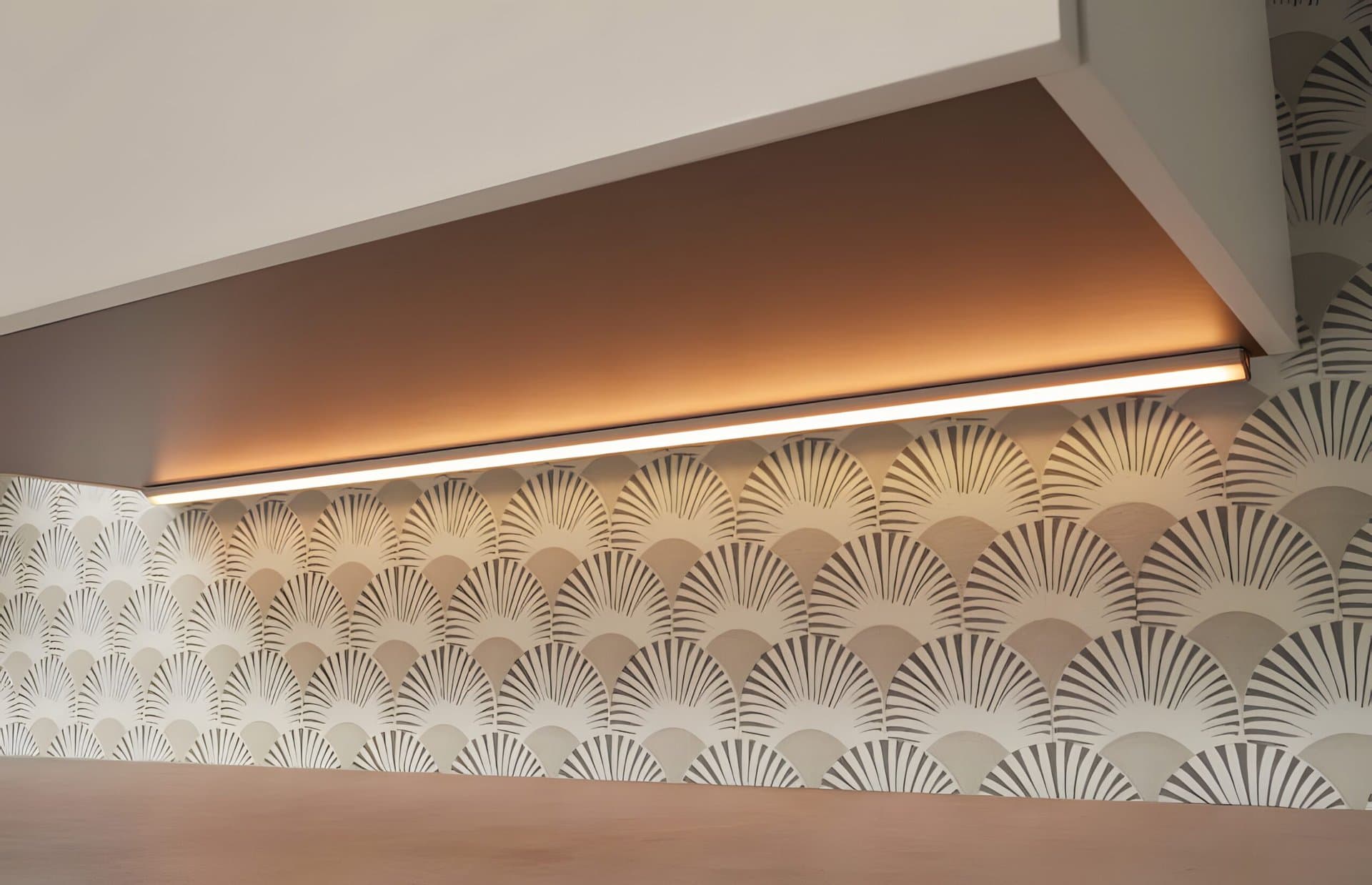
Classic Hardware: Knobs, Pulls, and Finishes
Hardware is jewellery for cabinetry, and on a traditional kitchen it does an outsized amount of styling for very little cost. The classic combination is knobs on doors and cup pulls on drawers. Cup pulls, those half-moon bin pulls, are one of the most traditional cues you can add, and they instantly suggest old-house provenance.
Finish is where you steer the room. Aged or unlacquered brass brings warmth and a touch of formality, and it has come roaring back from its earlier reputation as dated. Oil-rubbed bronze and pewter feel softer and more rustic, suited to a country or farmhouse direction. Polished nickel sits in the middle, refined without being cold. The rule that keeps a traditional kitchen from feeling fussy is consistency: pick one finish for hardware and try to echo it in faucets and light fixtures so the room reads as composed.
Underneath that classic-looking hardware, the mechanics should be thoroughly modern, and this is where the build quality earns its keep. Bauformat fits full-extension soft-close runners and 3D-adjustable concealed hinges, so a drawer with a heritage-style cup pull still glides out fully and closes without a slam. The classic face hides hardware that has been engineered in Germany since 1917, which is the part a guest never sees but the cook appreciates every day.
Glass Fronts, Plate Racks, and Trim Details
The details are what separate a generic kitchen from a genuinely traditional one. Glass-front cabinets are the most useful of them. A pair of glazed uppers breaks up a solid wall of doors, adds depth, and gives you a spot to display dishware or glassware. Mullioned glass, with its grid of dividers, reads more formal and classic; a single clear pane reads more transitional. Either way, glass fronts lighten a heavy traditional run and bring in a furniture-cabinet feel.
Plate racks are another period detail worth considering, especially in a character home where open, accessible storage suits the way the kitchen was originally meant to work. A built-in plate rack above a counter or flanking a window turns everyday dishes into part of the decor.
Then there is the trim. Crown moulding at the top of the uppers gives cabinetry a finished, architectural cap and ties it into the existing millwork of an older house. Light rail moulding under the uppers hides task lighting and softens the line where cabinet meets counter. Decorative legs, valances over a sink window, and a furniture base on the island complete the look. The discipline, again, is moderation: choose two or three of these moves rather than all of them, and let the trim feel like part of the house rather than an add-on.
Keeping Traditional Feeling Current in 2026
The line between timeless and dated is mostly about editing. A few choices keep a traditional kitchen firmly in the present.
Simplify the door profile. A slim shaker or a clean raised panel reads fresher than a heavily ornate one, which is exactly why slimmer shaker proportions were so visible at KBIS 2026. Lean into warm rather than stark colour, since creamy whites and warm neutrals have replaced the cold bright white that now signals an older renovation. Introduce one confident colour through a green or blue island rather than splashing it everywhere. Mix metals with restraint, pairing a warm brass with a darker accent instead of matching every fixture to a single shiny chrome.
It is also worth thinking about resale, since smart, restrained kitchens pay back well. Minor kitchen remodels delivered roughly a 113 percent return nationally in the 2025 Cost vs. Value Report, while major upscale remodels recouped far less. The takeaway for a traditional kitchen is reassuring: you do not need to over-build to get the look. Quality fronts, classic hardware, and good trim, kept tasteful, do more for both daily living and resale than a maximalist renovation. In a market like Metro Vancouver, where character homes already carry a premium, cabinetry that respects the house tends to hold its value.
Frequently Asked Questions
What is the difference between traditional and transitional kitchen cabinets?
Traditional cabinets lean fully into classic cues: framed doors, raised panels, ornate trim, and furniture-like detailing. Transitional cabinets keep some of that warmth, often a shaker door and classic hardware, but pair it with cleaner lines and simpler trim for a look that bridges old and new. Transitional is currently the most in-demand style among design professionals, which is part of why slim shaker fronts have become so popular.
Are white traditional kitchens going out of style?
White is not going anywhere, but the shade has shifted. Stark, bright white has cooled in favour of creamy whites, soft ivories, and warm off-whites that feel less clinical and flatter the wood tones and natural light common in older Vancouver homes. A warm white perimeter with one classic accent colour reads as current rather than dated.
What hardware looks best on traditional cabinets?
The classic pairing is knobs on doors and cup pulls on drawers. For finishes, aged brass, oil-rubbed bronze, pewter, and polished nickel all suit the style. The most important rule is consistency: keep one finish across your hardware and echo it in your faucet and light fixtures so the kitchen feels composed rather than busy.
Do traditional cabinets work in a small kitchen?
Yes. The trick is restraint. Choose a slim shaker door, a light creamy colour, and a single pair of glass-front uppers to add depth without weight. Skip the heavier trim and ornate detailing that can overwhelm a compact room, and let crown moulding and good hardware carry the classic feel.
Traditional cabinetry endures because it was never really about a trend. It is about structure, warmth, and craft, the same qualities that make Metro Vancouver’s character homes worth restoring in the first place. Choose a classic door, a palette drawn from nature, hardware with a little patina, and a few well-placed details, then resist the urge to add more. Built well and edited carefully, a traditional kitchen looks at home the day it goes in and still looks right decades later.
Explore more from Bauformat BC
- Uncover the appeal of top traditional small kitchen styles perfect for petite spaces!
- Ultimate Guide to Elevating Your Kitchen Layout with Timeless & Classic Design Ideas
- Why Are Shaker Style Kitchen Cabinets So Popular?
German cabinetry, planned and built for Metro Vancouver
The kitchen is one of the highest-return rooms in a home: the 2025 Cost vs. Value Report found a minor kitchen remodel recoups roughly 96% of its cost at resale. Choosing cabinetry that lasts is central to that return, which is where German engineering earns its place. Every Bauformat kitchen is manufactured in Germany, then measured, planned, and installed by our Vancouver team, built to fit your room to the millimetre.
See the Baulux, Bauformat, and Burger collections in person at 1410 Marine Dr Unit 205, North Vancouver, learn more about the manufacturer at bauformat.de.
Book a 30-minute consultation with our Metro Vancouver kitchen designers to plan a kitchen built to last.
A backsplash used to be an afterthought, a thin band of tile chosen at the very end of a kitchen project. That has changed. In 2026 the backsplash has become one of the most expressive surfaces in the room, the place where a kitchen decides whether it wants to whisper or sing. Across Metro Vancouver, from Yaletown condos to North Shore family homes, we are watching homeowners treat this wall as a design moment rather than a splash guard.
The shift is partly about materials and partly about confidence. People are running stone to the ceiling, matching the wall to the counter, and reaching for handmade tile with real character. Below are the five backsplash directions shaping kitchens this year, what each look is really about, and how to keep it practical in a coastal climate. We have also added a short note on how any of these ideas should sit alongside German cabinetry so the whole room stays balanced.
Key Takeaways
- Full-height slab backsplashes that run from counter to ceiling are the dominant kitchen trend of 2026, prized for their clean, grout-free look.
- Matching the backsplash to the countertop creates a quiet, architectural effect that lets cabinetry and hardware take centre stage.
- Large-format porcelain delivers the drama of natural stone with far less upkeep, a real advantage in Metro Vancouver’s damp climate.
- Handmade zellige and bold coloured tile are back, adding warmth and personality after years of all-white and grey kitchens.
- Fluted and three-dimensional panels bring texture and shadow play, and 3D tiles are projected to hold over 10 percent of the tile market by 2026 (Accio, 2026).
- A well-planned kitchen remains one of the highest-return renovations in Canada, with returns of roughly 75 to 100 percent (Appraisal Institute of Canada, cited 2025).
1. Full-Height Slab Backsplashes That Run to the Ceiling
The single biggest backsplash story of 2026 is the full-height slab, where a continuous piece of stone or porcelain travels from the countertop all the way up to the ceiling or the underside of the upper cabinets. There is no four-inch lip, no busy field of small tiles, just one calm sweep of material. Designers describe countertop-to-ceiling surfaces that flow up the wall as the look defining the year, and full-height backsplashes have been named the top kitchen trend of 2026 (Hard Rock Stone Works, 2026).
Part of the appeal is purely visual. A tall slab makes a galley or a compact condo kitchen feel grander, drawing the eye upward. The other part is practical. With few or no grout lines, there is almost nothing to scrub behind the range, which matters in a working family kitchen. For care, seal natural stone such as marble or quartzite on the schedule your fabricator recommends, and wipe spills promptly near the cooktop. If you love the marble look but cook a lot, a porcelain slab in a marble pattern gives you the same effect with far less worry.
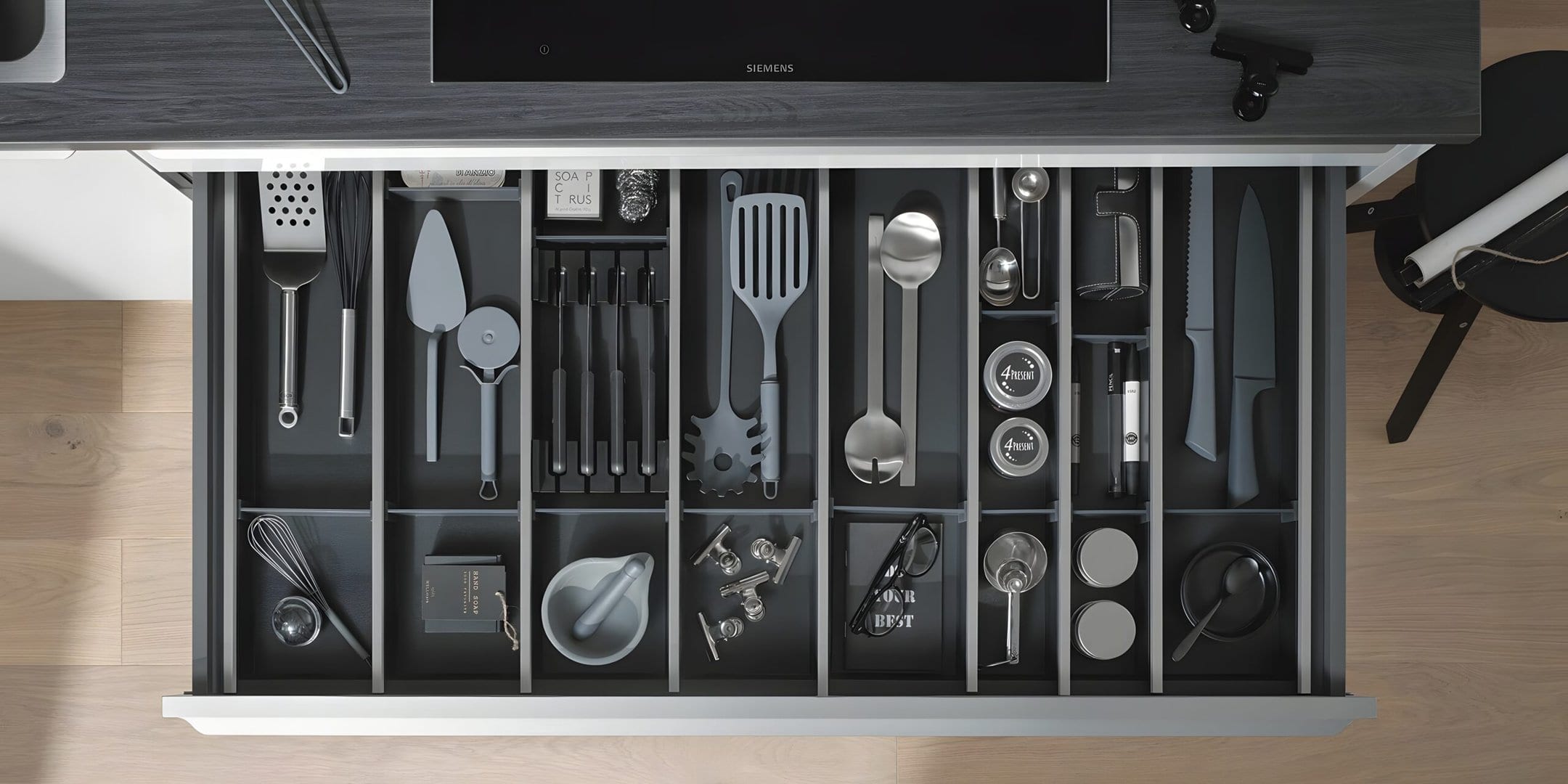
2. Matching the Backsplash to the Countertop
Closely tied to the slab trend is the idea of carrying the exact countertop material up the wall, sometimes called a continuous or wrapped surface. The counter and the backsplash read as one piece, and the join almost disappears. The result is restrained and architectural, the kind of detail you notice without quite knowing why a kitchen feels so resolved.
This look is rising because the broader 2026 palette has turned quieter, leaning into soft creams, warm whites and chalky neutrals rather than high contrast (Homes and Gardens, 2026). When the wall and the worktop share a tone, the room reads as composed, and your cabinetry becomes the star. Care is simple because you are maintaining a single material rather than two, though you should still seal porous stone and avoid abrasive cleaners that dull the finish. This is also a forgiving choice for resale, since neutral, cohesive surfaces appeal to the widest range of Metro Vancouver buyers.
3. Large-Format Porcelain and Continuous Surfaces
Large-format porcelain is the workhorse behind much of what is happening this year. These big panels can cover an entire wall with minimal grout lines, and they come in finishes that convincingly mimic marble, concrete and travertine. The category is growing quickly, with the global decorative tiles market estimated at 35.32 billion US dollars in 2025 and projected to reach 44.37 billion by 2030, driven in part by technology that enables ever larger formats (IndexBox, 2025).
For a rainy coastal city, porcelain is hard to beat. It is dense, water-resistant and almost impervious to staining, which suits a region where kitchens see a lot of steam and damp days. You get the visual depth of natural stone without the sealing routine, and fewer grout lines mean fewer places for grime to settle. Day-to-day care is genuinely easy, just warm water and a soft cloth, with the occasional pH-neutral cleaner. Because the panels are large and heavy, this is one trend where professional measuring and installation truly pays off.
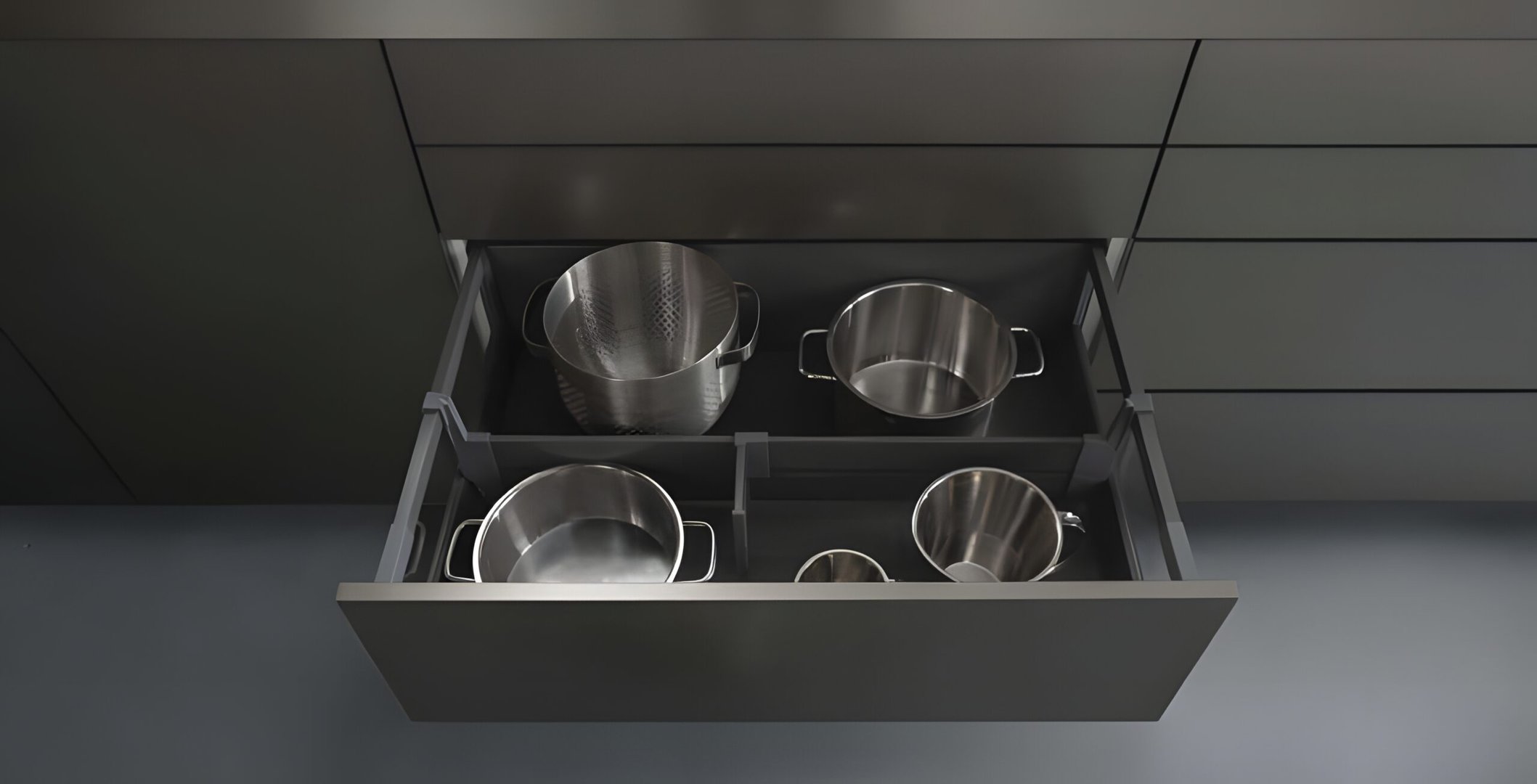
4. Handmade Zellige and Textured Tile
After years of flat, uniform tile, handmade texture is having a real moment. Zellige, the glazed Moroccan tile fired and finished by hand, is trending strongly for 2026 in both soft neutrals and richer colours (Tasting Table, 2026). Each piece carries slight variations in tone and surface, and the wavy, glossy glaze catches and scatters light so the wall shifts gently through the day. It is the antidote to anything that looks mass-produced.
Zellige rewards a relaxed eye. The irregular edges and uneven faces are the point, so it pairs beautifully with the warm wood tones and creamy neutrals leading kitchen design this year. On care, the handmade glaze can show watermarks, so wipe it down after cooking and use a gentle cleaner rather than anything harsh. Grout choice matters too. A tone close to the tile keeps the look soft, while a contrasting grout makes the pattern crisp and graphic. Either way, this is a backsplash with genuine soul.
5. Bold Colour and Fluted, Three-Dimensional Panels
The last direction is really two related ideas, and both signal a move away from the all-white kitchen. Colour is returning, with terracotta, sage green, creamy ivory and dusty ocean blue showing up as the trend replacing endless white and grey (Homes and Gardens, 2026). These tones feel current without shouting, and they sit happily against natural wood and warm metals.
Alongside colour, fluted, ribbed and sculpted surfaces are surging. These three-dimensional panels create a play of light and shadow that a flat wall simply cannot, adding quiet drama behind a range or sink. The momentum is measurable, with 3D tiles projected to account for more than 10 percent of the total tile market by 2026 (Accio, 2026). For care, dust can settle in the grooves of fluted tile, so an occasional pass with a soft brush keeps it sharp. Metal panels, another textured option, should be matched to your climate and cleaned with products suited to the specific finish so they do not spot or dull.
Letting the Backsplash and Your Cabinets Work Together
Whatever you choose, the backsplash should be in conversation with your cabinetry, not competing with it. Our general rule is that one surface leads and the others support. If you want a bold zellige or a coloured tile, let the cabinets stay calm and architectural. A handleless German kitchen in an ultra-matte Baulux finish, or a warm woodgrain from the broad Bauformat range, gives a busy backsplash room to breathe. If instead you go for a dramatic full-height slab, simpler cabinet fronts keep the eye on that one beautiful wall.
This balance is easier to achieve when the cabinetry is precise. Bauformat kitchens have been made in Germany since 1917, and details like full-extension soft-close runners and 3D-adjustable concealed hinges mean fronts sit in true, even alignment. Crisp, consistent cabinet lines act as a quiet frame for whatever backsplash you fall for. It also helps to make these decisions together rather than in sequence, since the local Vancouver team measures, plans and installs as one project, so the slab, the counter and the cabinet fronts are coordinated before anything is cut.
Frequently Asked Questions
Is a full-height backsplash worth it in a small Vancouver kitchen?
Often yes. In compact Yaletown condos and townhomes, a continuous full-height surface can actually make the room feel taller and more open, because the unbroken material draws the eye upward and removes visual clutter. It also eliminates the grout lines that collect grime in a hard-working kitchen. The main consideration is material cost and installation, since large slabs need careful measuring and professional fitting.
Does a new backsplash add resale value in Metro Vancouver?
A backsplash on its own is a finishing touch, but as part of a thoughtful kitchen update it contributes to one of the highest-return renovations in the country. A well-planned kitchen renovation in Canada can return roughly 75 to 100 percent of its cost (Appraisal Institute of Canada, cited 2025). Neutral, cohesive surfaces such as a matched counter and backsplash tend to appeal to the broadest pool of local buyers.
Is porcelain or natural stone better for a backsplash here?
Both are excellent, and the right answer depends on how you live. Natural stone such as marble offers unmatched depth and character but needs periodic sealing and a gentle touch. Large-format porcelain gives a very similar look with almost no maintenance and strong resistance to water and stains, which suits Metro Vancouver’s damp climate and busy households. Many people choose porcelain behind the range and stone elsewhere to get the best of both.
How do I keep a bold backsplash from overwhelming the kitchen?
Let it be the one loud element. Pair a coloured or heavily textured backsplash with calm, simple cabinet fronts and restrained hardware so the eye has somewhere to rest. Repeating a single tone from the backsplash elsewhere in the room, perhaps in an accent or a worktop edge, ties everything together without adding noise.
The exciting thing about backsplashes in 2026 is how much room there is to express yourself, whether you lean into a serene full-height slab or a hand-glazed tile full of character. The trends share one quiet principle, which is that the wall and the cabinetry should feel like they were planned together from the start. Get that relationship right and the backsplash stops being an afterthought and becomes the detail that makes the whole Metro Vancouver kitchen feel considered.
Explore more from Bauformat BC
- Unveiling the Secrets of Kitchen Sinks: an Indispensable Guide
- Exploring the Timeless Elegance of Quartz Countertops with Bauformat
- Unearth the Secrets of Bauformat’s Heat-Defying Kitchen Countertops
German cabinetry, planned and built for Metro Vancouver
The kitchen is one of the highest-return rooms in a home: the 2025 Cost vs. Value Report found a minor kitchen remodel recoups roughly 96% of its cost at resale. Choosing cabinetry that lasts is central to that return, which is where German engineering earns its place. Every Bauformat kitchen is manufactured in Germany, then measured, planned, and installed by our Vancouver team, built to fit your room to the millimetre.
See the Baulux, Bauformat, and Burger collections in person at 1410 Marine Dr Unit 205, North Vancouver, learn more about the manufacturer at bauformat.de.
Book a 30-minute consultation with our Metro Vancouver kitchen designers to plan a kitchen built to last.
Most kitchen colour decisions go sideways for the same reason: people start with the fun part. They fall for a cabinet door in a magazine, paint a swatch on one wall, and try to build everything else around a single favourite. Then the floor fights the counter, the cabinets read green at noon and grey at dusk, and the whole room feels slightly off in a way nobody can name. The problem is rarely the colours themselves. It is the order they were chosen in.
A good kitchen colour palette is built, not picked. There is a sequence that designers follow almost without thinking, and once you learn it, choosing colours stops feeling like a gamble. This guide walks you through that sequence step by step, with a worked example you can follow from a blank room to a finished palette. We will also account for something every Metro Vancouver homeowner has to plan around: our soft, grey, low-angle coastal light, which changes colour selection more than most people expect.
Key Takeaways
- Start with what you cannot change. Floor, countertop, and fixed finishes set your direction before you choose a single cabinet colour.
- Lock your undertone first. Deciding warm versus cool early prevents the most common palette mistakes.
- Use the 60-30-10 structure. One dominant colour, one secondary, one accent gives a balanced, restful result.
- Test against your own light. Metro Vancouver’s cool grey daylight pulls colours bluer, so judge samples in your actual room across the day.
- A repeatable method beats inspiration. Follow the steps in order and the palette assembles itself.
Step 1: Gather Your Fixed Elements
Before you think about colour at all, take inventory of what is staying. These are your fixed elements: the things that are already in the room or already decided, and that you will not be replacing in this project. Typically that means the flooring, the countertop if you are keeping it, the backsplash, any exposed brick or stone, and large appliances if they have a strong finish like a warm stainless or a black slate.
Light is a fixed element too, and the one people forget. The direction your windows face, the time of day you cook and entertain, and the colour temperature of your overhead and under-cabinet fixtures all act on every other colour in the room. Note them down. A north-facing Yaletown kitchen and a west-facing kitchen in a house on the North Shore are working with completely different raw material, even with identical cabinets.
Write your fixed elements in a list and, where you can, gather a physical sample of each: a flooring offcut, a counter chip, a tile. This becomes your reference board. Every later decision gets held up against this board, which is how you keep the whole room speaking the same language.

Step 2: Choose Your Undertone, Warm or Cool
This is the single most important decision in the framework, and it is the one most often skipped. Every colour has an undertone, a quiet bias toward warm (yellow, red, brown) or cool (blue, green, grey). A white can be a creamy warm white or a crisp cool white. A grey can lean greige and warm or steel and cool. When undertones clash, a room feels uneasy even when each individual colour is lovely.
Look at your fixed elements from Step 1 and ask which way they lean. Oak and walnut floors, brass fixtures, and beige stone push warm. Polished concrete, marble with grey veining, and chrome push cool. Your undertone decision should generally follow your largest fixed surface, usually the floor, because it is the hardest and most expensive thing to argue with.
The 2026 trend cycle makes this easier than it used to be. Kitchen colour is moving firmly toward warm, complex neutrals such as soft mushroom, limestone, taupe, and clay, away from the cool whites and stark greys that dominated the last decade (John Lewis of Hungerford, 2026). Warmth also does practical work in our climate, which brings us to light.
Step 3: Account for Your Light Before You Commit
Metro Vancouver gives us a particular kind of daylight: cool, diffuse, and often grey for long stretches of the year. North-facing rooms anywhere have a cooler, greyer light with a subtle blue cast, because the sun strikes them low in the sky rather than head on (Benjamin Moore, 2025). Across much of the year, a lot of our city’s kitchens are effectively living in north-facing light regardless of which way they point.
The practical consequence is that cool undertones get amplified here. A grey that looks sophisticated in a sun-washed showroom photo can read flat, dingy, and cold in a Vancouver kitchen on a wet February afternoon. This is why so many local palettes that started cool end up feeling clinical. If you love grey, the fix is to choose a grey with a warm brown or beige undertone, a greige, which bounces the available light around and keeps the room feeling alive rather than chilly.
Build this knowledge into your undertone choice from Step 2. For most Metro Vancouver kitchens, nudging the whole palette a half-step warmer than you think you want will counteract the cool ambient light and give you a room that feels welcoming in every season, not just the three sunny months.

Step 4: Pick Your Dominant Colour (the 60)
Now you choose colours, and you do it using a proven structure. The 60-30-10 rule allocates roughly 60 per cent of the room to a dominant colour, 30 per cent to a secondary, and 10 per cent to an accent. It is the framework designers reach for because it produces a balanced, restful scheme almost automatically (Homes and Gardens, 2025).
Your dominant colour is the backdrop, the 60 per cent. In a kitchen that usually means the bulk of your cabinetry, or the cabinets and walls together. Because it covers the most surface area and is the most permanent, it should be the most restrained choice in your palette, and it must agree with the undertone you locked in Step 2.
This is where Bauformat’s finish range earns its place in the method. The Bauformat collection offers the widest choice of colours and finishes, which means you can land precisely on the warm neutral your light demands rather than settling for the nearest stock option. The Baulux collection brings the rich, deep colours and textured finishes for homeowners who want their dominant tone to carry real depth, while Burger covers the same logic at the best value. Whichever you choose, the dominant colour is committed to a hard, durable cabinet finish, so it is worth getting exactly right.
Step 5: Add Your Secondary Colour (the 30)
The secondary colour fills the next 30 per cent and creates contrast and interest against your dominant. In a kitchen this is often an island in a different finish, the lower cabinets when the uppers are your dominant, the wall colour, or a run of open shelving. Its job is to support the dominant, not to compete with it.
Choose a secondary that shares your undertone but differs in value or depth. If your dominant is a soft warm white on the perimeter, a mid-tone warm taupe or a muted clay on the island reads as intentional contrast rather than conflict. The two should look like they were chosen by the same person on the same afternoon, because in your method, they were.
This is also the natural moment to think about your fixed elements again. Your secondary colour is your best opportunity to echo something from the floor or counter, which ties the new colours to the things you could not change and makes the whole room feel resolved.
Step 6: Add Your Accent (the 10)
The final 10 per cent is your accent, and it is where personality lives. Because it covers so little surface, the accent can be braver than anything else in the palette: a saturated colour on bar stools, pendant lights, a backsplash detail, small appliances, or hardware. It is also the cheapest element to change later, so it can chase trends without committing you.
For 2026, golden, sun-washed yellows are emerging as a leading kitchen accent, prized for the way they amplify brightness and optimism in a space (House Digest, 2026). In a cool-lit Vancouver kitchen, a warm accent like this does double duty: it adds joy and it pushes back against the grey ambient light at exactly the points where your eye lands.
Hardware is a quiet accent that people underrate. The metal you choose for handles, paired with Bauformat’s 3D-adjustable concealed hinges and full-extension soft-close runners, sets a tone every time a drawer opens. Brass and warm bronze reinforce a warm palette; matte black grounds a cooler one.
Step 7: Test the Whole Palette Against Your Light
Before anything is ordered, test. Gather samples of all three colours plus your fixed-element references and live with them in the actual kitchen for at least two full days. Look in early morning, at midday, under your artificial lights at night, and crucially on a grey overcast day, because in Metro Vancouver that is your most common lighting condition, not the exception.
Move the samples around the room. A colour near the window behaves differently from the same colour on a shaded return wall. Watch for any sample that turns cold, muddy, or unexpectedly green as the light shifts. If something falls apart in your real light, this is the cheap, painless moment to swap it, long before it becomes a cabinet door.
A Worked Example, Start to Finish
Here is the framework applied to a real scenario: a north-facing kitchen in a Yaletown condo, the kind of cool, grey-lit space the whole city knows well.
Step 1, fixed elements: wide-plank warm oak flooring (staying), a quartz counter with a soft cream base and faint grey veining (staying), stainless appliances. Light is north-facing and cool nearly all year.
Step 2, undertone: the oak floor is decisively warm, so the palette goes warm. This also hedges against the cool light.
Step 3, light: because the room is cool-lit, we nudge every choice a half-step warmer than first instinct and avoid any blue-grey.
Step 4, dominant (60): perimeter cabinets in a warm limestone-beige from the Bauformat range, a soft neutral that holds its warmth even on an overcast day.
Step 5, secondary (30): an island in a deeper clay-taupe from the Baulux collection, echoing the warmth of the oak floor and giving the room a grounded centre.
Step 6, accent (10): warm brass hardware and a pair of sun-washed ochre pendant lights over the island, lifting the room against the grey light.
Step 7, test: samples sit in the condo for two days. The limestone-beige stays warm at midday and under evening light, the clay holds on a rainy afternoon, the brass glows. Nothing turns cold. The palette is approved and goes to order.
Five colours, chosen in order, each one earning its place. That is the entire method, and it works in any kitchen once you trust the sequence over the impulse.
Frequently Asked Questions
How many colours should a kitchen colour palette have?
Three is the reliable number, structured by the 60-30-10 rule: one dominant colour covering roughly 60 per cent of the room, one secondary at 30 per cent, and one accent at 10 per cent. Your fixed elements like floor and counter sit alongside these and inform them. More than three competing colours and a kitchen starts to feel busy rather than considered.
Should I choose warm or cool colours for a Vancouver kitchen?
For most Metro Vancouver kitchens, lean warm. Our coastal daylight is cool, diffuse, and often grey, which amplifies cool undertones and can leave a grey or blue palette feeling cold and flat for much of the year. Warm neutrals, or at minimum a greige with a brown undertone, counteract that light and keep the room welcoming in every season.
Does a new colour palette actually add value when I sell?
A well-chosen kitchen refresh is one of the strongest home investments available. A minor kitchen remodel returns about 113 per cent of its cost on average nationally, making it one of the strongest interior projects for ROI, according to the 2025 Cost vs. Value Report (Zonda, 2025). A cohesive, light-appropriate palette is a large part of why buyers respond to a refreshed kitchen.
What if I get my undertone wrong?
This is exactly what Step 7 protects you from. Testing real samples in your real light, including on an overcast day, catches an undertone mismatch while it is still free to fix. The mistake only becomes expensive when you skip the test and discover the problem after the cabinets are installed.
The reason this framework works is that it removes guesswork from a decision that usually runs on instinct alone. Fixed elements first, then undertone, then a dominant, a secondary, and an accent, all tested against the light you actually have. Bauformat’s range, made in Germany since 1917 and measured, planned, and installed by the local Vancouver team, gives you the breadth of warm finishes to land each step precisely where your room and our coastal light need it. Follow the sequence, trust it over the impulse to start with a favourite, and the perfect palette stops being luck and becomes a process you can repeat in any kitchen.
Explore more from Bauformat BC
- Transform Your Kitchen Mood With Powerful Colour Choices: a Design Guide
- Kitchen Colour Trends 2026: The Definitive Guide
- German Kitchen Design Inspiration for 2026
German cabinetry, planned and built for Metro Vancouver
The kitchen is one of the highest-return rooms in a home: the 2025 Cost vs. Value Report found a minor kitchen remodel recoups roughly 96% of its cost at resale. Choosing cabinetry that lasts is central to that return, which is where German engineering earns its place. Every Bauformat kitchen is manufactured in Germany, then measured, planned, and installed by our Vancouver team, built to fit your room to the millimetre.
See the Baulux, Bauformat, and Burger collections in person at 1410 Marine Dr Unit 205, North Vancouver, learn more about the manufacturer at bauformat.de.
Book a 30-minute consultation with our Metro Vancouver kitchen designers to plan a kitchen built to last.
A premium kitchen is not the sum of its price tags. You can spend a great deal on countertops and appliances and still end up with a room that feels stitched together from standard parts, full of fillers, awkward gaps, and storage that almost works. What separates a luxury kitchen from an expensive one is intention: every dimension, every finish, every drawer answers to the way you actually live and to the exact walls you live within.
That is the quiet promise of bespoke design. In Metro Vancouver, where a Yaletown glass tower and a Kerrisdale character home present completely different geometry, a kitchen built to order is the only honest answer to a space with its own quirks. Custom kitchen design is less about adding luxury and more about removing compromise, so the room feels resolved rather than assembled.
Key Takeaways
- Premium means bespoke fit. A custom kitchen is engineered to your exact room, not adapted from a fixed catalogue of sizes.
- Materials carry the feeling. Ceramic, glass, ultra-matte surfaces, and real wood read as quality long before you touch them.
- German engineering shows in the details: full-extension soft-close runners, 3D-adjustable hinges, and consistent reveals across the run.
- True personalization is functional. Storage, ergonomics, and integrated appliances are planned around your habits and your height.
- Made-to-order German cabinetry from Bauformat, with Baulux premium finishes, is measured, planned, and installed by the local Vancouver team.
- Demand for custom and luxury kitchens keeps climbing, driven by interest in bespoke design and natural, tactile materials (Harvey Jones, 2026).
Bespoke Fit to Your Exact Space
Off-the-shelf cabinetry comes in fixed increments. Your home does not. Ceilings dip, walls bow, a heritage bay window steals a few centimetres, a condo’s structural column lands precisely where you wanted a pantry. Standard boxes meet those realities with filler strips and scribe panels, the small confessions that a kitchen was never made for this room.
Bespoke design begins the other way around. The local Vancouver team measures the space first, then plans cabinetry to those numbers, so a run of cabinets meets the wall cleanly and a tall unit rises to the ceiling without a dust-collecting gap on top. In a downtown condo where every square foot is accounted for, that precision recovers usable storage you would otherwise lose. In an older East Vancouver home with settled floors and out-of-square corners, it means doors that align and counters that sit level despite a building that has shifted over decades.
The result is a kitchen that looks as though the room was built around it. Nothing is forced, nothing is patched, and the eye reads the whole composition as deliberate.
Premium Materials and Finishes
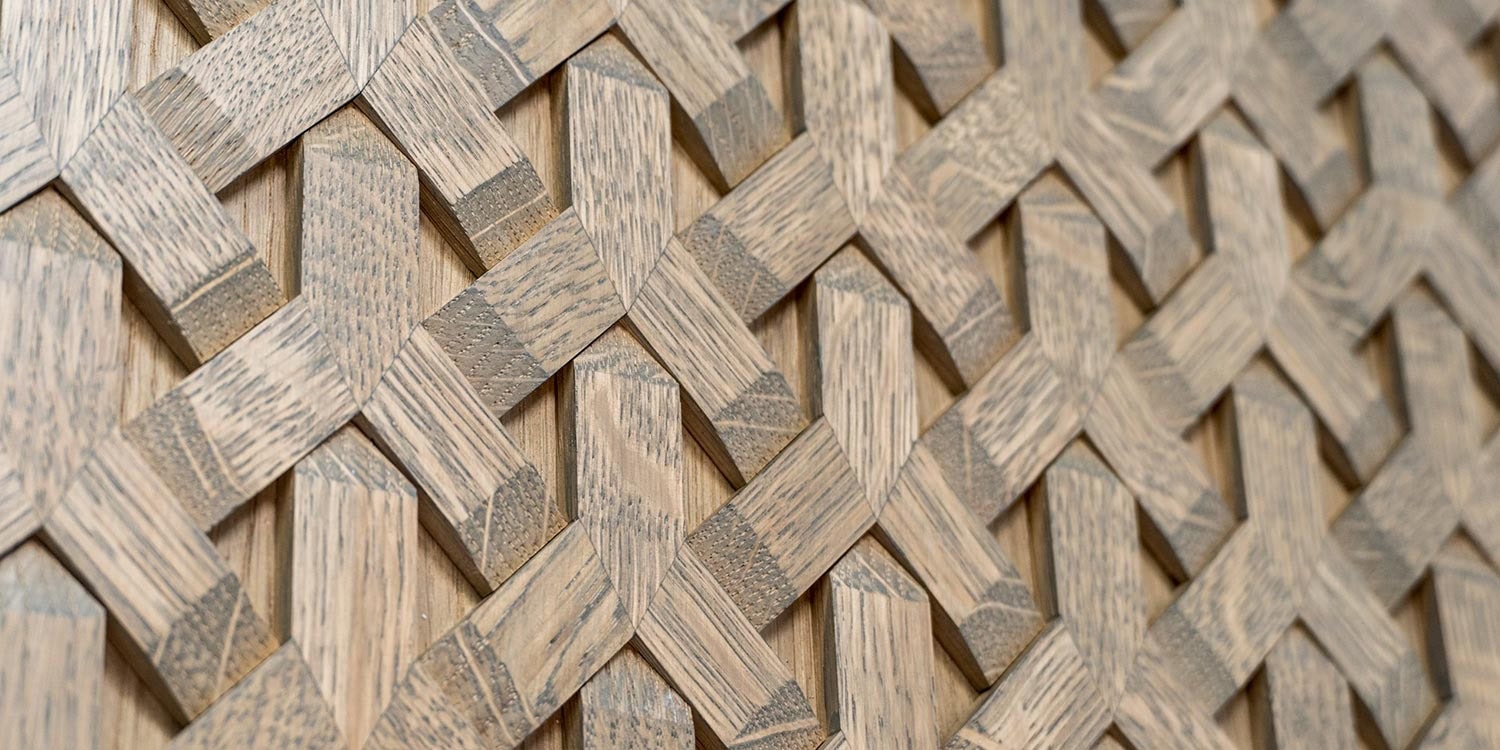
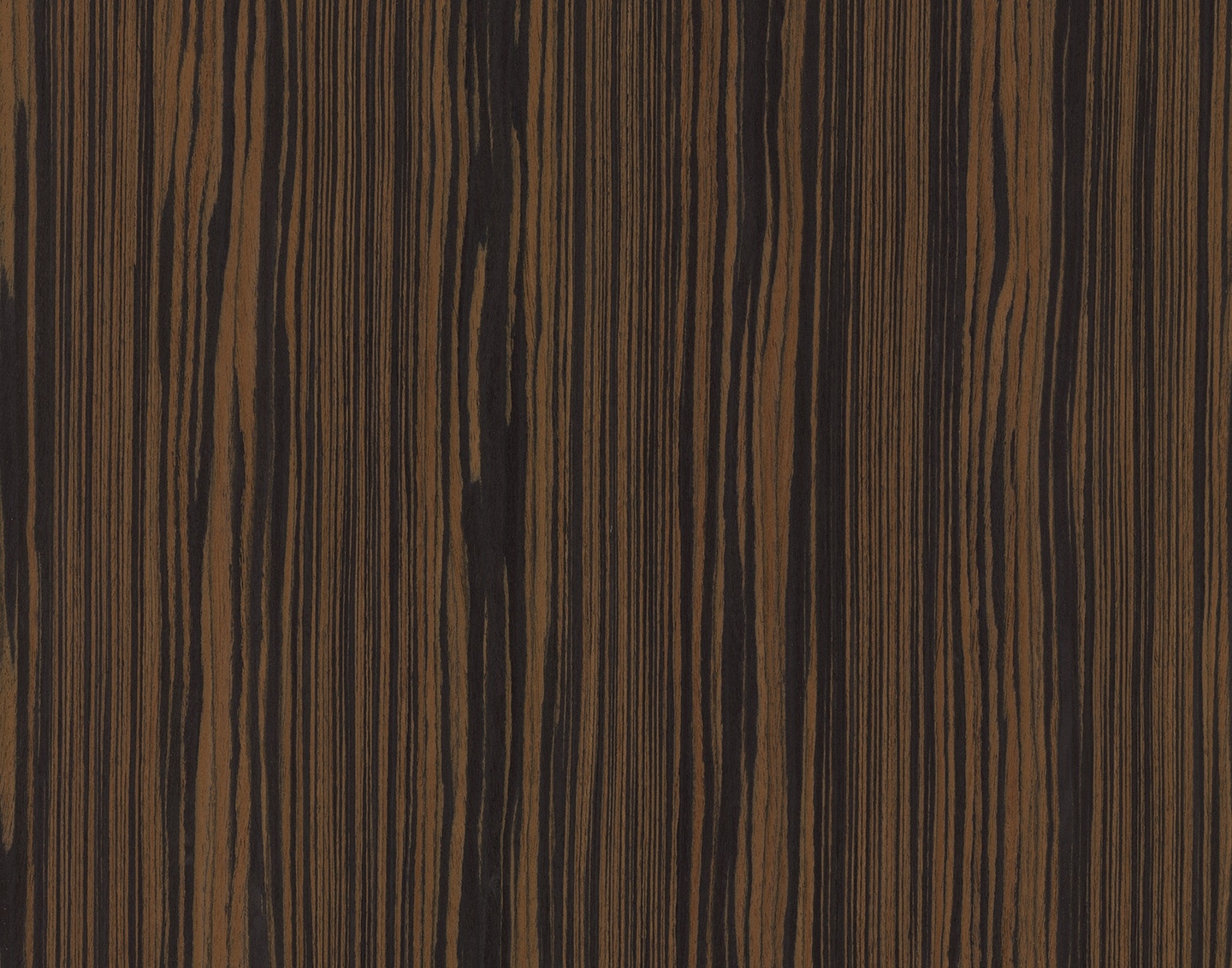
You register the quality of a surface before you consciously evaluate it. A genuine ultra-matte front absorbs light and resists the glare and fingerprints that cheaper coatings show within a week. Ceramic and glass fronts carry a depth and coolness that printed laminates only imitate. Real wood brings grain that runs true from door to door, a warmth that photographs poorly and lives beautifully.
This is where the Baulux collection earns its place, with premium ceramic, glass, and ultra-matte finishes built for kitchens meant to last and to be looked at closely. The shift toward these materials is not a Bauformat preference alone. Across high-end design, glossy surfaces are giving way to matte, honed, and textured finishes that reduce glare, hide fingerprints, and pair naturally with stone and oak, while white oak, walnut, and maple remain the most requested wood species in North American homes (Cuisine Ideale, 2026).
Finishes also have to behave in a real Metro Vancouver kitchen, where coastal humidity and the steam of daily cooking test every coating. Surfaces engineered to resist moisture, heat, and wear hold their look long after the renovation glow fades, which is the entire point of choosing premium in the first place.
Precision German Engineering and Hardware
The parts you never see decide how a kitchen feels for the next twenty years. Bauformat has been made in Germany since 1917, in Lohne, and that long manufacturing discipline shows in the mechanisms more than the marketing. Full-extension soft-close runners let a drawer glide all the way out so the back is as reachable as the front, then close without a slam. Concealed hinges with 3D adjustment let an installer fine-tune a door on three axes until the gaps match across an entire run.
That adjustability matters more in Vancouver than people expect. Wood and substrate move slightly with seasonal humidity, and a building can shift over the years. Hardware that can be dialled back into alignment keeps a kitchen looking precise long after installation, rather than drifting into the uneven gaps that betray cheaper cabinetry.
Engineering is also why made-to-order cabinetry can be both customized and consistent. Each cabinet is built to plan in the factory, to tolerances that let dozens of components line up on site as a single, coherent whole.
True Personalization, Planned Around You
Personalization in a premium kitchen is not a colour choice. It is the interior fit-out that makes the room work for your particular life. Smart interior storage turns a deep cabinet into a system: tiered cutlery trays, pull-outs sized to your everyday pots, a tall larder that brings the contents forward instead of hiding them at the back, dividers that keep trays and boards upright.
Ergonomics get the same treatment. Counter heights, the placement of a wall oven at a comfortable lift rather than a deep bend, drawers under the hob for the pans you reach for most, the bin tucked exactly where you prep. A kitchen planned around how tall you are and how you cook quietly removes friction from a hundred small daily movements.
Integrated appliances complete the picture. Fridges, dishwashers, and ovens disappear behind matching fronts so the room reads as architecture rather than a wall of competing brand logos. Tailored, functional storage of exactly this kind has become a cornerstone of luxury kitchen design, prized for blending style with everyday practicality (L’Atelier Paris, 2026). In a compact Yaletown floor plan, that discipline is what lets a serious kitchen sit comfortably inside an open-concept living space without overwhelming it.
Craftsmanship and Detailing
Refinement lives in the details most people feel without naming. The reveal, the consistent shadow line between doors and drawers, should stay even from one end of the kitchen to the other. Fronts should sit flush, with adjacent surfaces meeting on a clean plane. Grain and finish should carry across a bank of cabinets as though cut from one piece. None of this happens by accident.
It comes from cabinetry manufactured to tight tolerances and then installed by people who treat alignment as the job, not the afterthought. Because Bauformat is measured, planned, and installed by the local team, the precision built into the factory is preserved on the wall. A run of handleless fronts, for instance, only looks effortless when every gap is identical, and that is craft, not luck.
These are the cues your eye reads as quality. You may not consciously notice an even reveal, but you absolutely notice when one is wrong, and that single misaligned line is often what makes an otherwise costly kitchen feel ordinary.
Why Custom Beats Off-the-Shelf
Stock cabinetry optimizes for the manufacturer: a limited set of sizes, produced in volume, sold to fit roughly. Custom cabinetry optimizes for you, your room, and the way you use it. The difference is not only visible, it is functional and durable. Better fit means no wasted space. Better hardware means a kitchen that still operates smoothly after years of use. Better materials mean finishes that survive a coastal climate and constant cooking.
The market is moving this way for good reason. The kitchen remodel services sector is forecast to grow from roughly 11.9 billion dollars in 2025 to 12.7 billion in 2026, with rising demand for luxury renovation and greater customization named among the drivers (Research and Markets, 2026). The taste underneath that growth has shifted too, toward bespoke design, earthy materials, and kitchens with genuine character rather than interchangeable parts (Harvey Jones, 2026).
There is a financial dimension as well, though it should not be the only one. Kitchens consistently rank among the highest-return projects in home improvement, with focused minor remodels recouping well over 100 percent of cost in many markets (Remodeling 2025 Cost vs. Value, via Kitchen Cabinet Kings, 2026). In a Metro Vancouver luxury market where well-presented homes still command attention, a kitchen that is genuinely bespoke is both a daily pleasure and a serious asset.
Frequently Asked Questions
What actually makes a kitchen custom rather than just expensive?
A custom kitchen is engineered to your specific room and routine, not assembled from fixed-size stock units. It is measured before it is planned, so cabinetry meets your walls and ceiling without fillers or gaps, and the interior storage, counter heights, and appliance integration are tailored to how you cook. Price alone does not make a kitchen custom; intention and fit do.
Are German-engineered cabinets worth it for a Vancouver home?
Yes, particularly here. Made-to-order German cabinetry from Bauformat brings full-extension soft-close runners and 3D-adjustable concealed hinges that keep doors and drawers aligned even as wood and buildings move with coastal humidity. That adjustability and build quality mean the kitchen keeps looking and working precisely for years, which is exactly what you want in a long-term home.
Which finishes suit Metro Vancouver’s climate and luxury homes?
Premium ceramic, glass, and ultra-matte surfaces, like those in the Baulux collection, resist moisture, heat, and fingerprints, which matters in a humid coastal climate and a hard-working kitchen. They also reflect the current move toward matte, tactile finishes paired with real wood (Cuisine Ideale, 2026), so they read as contemporary and refined in both a glass condo and a character home.
How long does a made-to-order kitchen take to plan and install?
Because every cabinet is built to order, the process begins with an on-site measure and a detailed plan, then production, then installation by the local Vancouver team. Timelines vary with the size and complexity of the project and the finishes chosen, but the made-to-order approach is what allows the precise fit and consistent detailing that stock cabinetry cannot match.
A premium custom kitchen is finally about how it feels to use a room that was designed around you, in your home, for your habits. The materials are chosen to be touched, the mechanisms tuned to disappear, the proportions resolved so nothing fights the architecture. Whether the setting is a Yaletown tower or a century-old house on Vancouver’s east side, made-to-order German cabinetry, refined Baulux finishes, and a local team who measure, plan, and install give a kitchen the quiet authority that only bespoke design can deliver.
Explore more from Bauformat BC
- Your German Kitchen, Step by Step: From First Sketch to Installation
- German Kitchen Design on a Budget: Your 2026 Options
- Four Affordable European Kitchen Styles for 2026
German cabinetry, planned and built for Metro Vancouver
The kitchen is one of the highest-return rooms in a home: the 2025 Cost vs. Value Report found a minor kitchen remodel recoups roughly 96% of its cost at resale. Choosing cabinetry that lasts is central to that return, which is where German engineering earns its place. Every Bauformat kitchen is manufactured in Germany, then measured, planned, and installed by our Vancouver team, built to fit your room to the millimetre.
See the Baulux, Bauformat, and Burger collections in person at 1410 Marine Dr Unit 205, North Vancouver, learn more about the manufacturer at bauformat.de.
Book a 30-minute consultation with our Metro Vancouver kitchen designers to plan a kitchen built to last.
A Vancouver condo kitchen can feel like a puzzle with a few too many pieces and not nearly enough table to lay them on. You want a spot for the good knives, room to actually chop something, and a cupboard that does not turn into an avalanche every time you reach for a pot lid. In a micro-suite, every centimetre carries its weight, and the difference between a kitchen that frustrates you and one that quietly works comes down to how cleverly that space is planned.
The good news is that small does not have to mean cramped. With the right layout moves and storage that reaches into corners and climbs to the ceiling, a genuinely tiny kitchen can hold more, feel bigger, and look calmer than rooms twice its size. These tiny kitchen design ideas are about working smarter with the footprint you already have, and they translate beautifully to the compact realities of Metro Vancouver living.
Key Takeaways
- Go vertical: tall cabinetry to the ceiling captures storage that small rooms usually waste.
- Full-extension, soft-close pull-outs let you use the entire depth of every cabinet, not just the front.
- Corner pull-outs and toe-kick drawers reclaim the spaces most kitchens give up on.
- Fold-away and multi-use surfaces add prep room without permanently stealing floor space.
- Slim and counter-depth appliances keep circulation open in a tight galley or one-wall layout.
- Light colours, handleless fronts, and reflective finishes make a small kitchen read as larger and brighter.
Go Vertical: Use the Full Height of the Room
In most small kitchens, the single biggest pool of unused space is the air between the top cabinets and the ceiling. That gap usually collects dust and the occasional decorative bowl nobody touches. Running cabinetry all the way up turns that dead zone into genuine storage for the things you reach for a few times a year: the roasting pan, the stand mixer, the holiday platters.
This is not a niche idea anymore. The 2026 NKBA Kitchen Trends Report found that smarter storage is leading kitchen demand, with floor-to-ceiling cabinetry with more drawers topping designers’ lists (NKBA/KBIS 2026 Kitchen Trends Report, 2025). In a condo where you cannot push a wall outward, the only direction left is up, and tall units make that climb pay off.
Bauformat’s tall cabinets and pantry units are built for exactly this. Made in Germany since 1917 and planned around your specific ceiling height by the local Vancouver team, they stack usable storage into a slim vertical footprint. The upper reaches hold what you rarely need; the easy-to-reach middle holds your everyday dishes and dry goods. Nothing is wasted, and the room gains a clean, continuous line that draws the eye upward and makes the ceiling feel taller.

Use Every Inch With Full-Extension Pull-Outs
A standard cabinet has a dirty secret: you only ever use the front third of it. Anything pushed to the back disappears into a dark cave you excavate twice a year. Full-extension hardware fixes that. When a drawer or pull-out glides all the way out, the back of the cabinet comes to you, and suddenly the whole depth is in play.
This matters even more in a tiny kitchen, where you simply do not have spare cabinets to write off. Pull-out larder units, base drawers that hold pots upright, and slim pull-out cupboards tucked beside the oven or fridge mean every cubic centimetre earns its keep. Demand for exactly this kind of storage has surged, with pull-out shelves and custom drawer inserts ranking among the most sought-after kitchen storage solutions of 2025 as urban living pushes people toward space optimization (Accio Kitchen Storage Trends, 2025).
Bauformat fits its cabinets with full-extension, soft-close runners, so even a heavily loaded drawer pulls out smoothly and closes without a slam. Interior dividers, knife blocks, and spice inserts keep the contents from sliding into chaos. The result is a kitchen where you can see everything you own at a glance, which means you stop buying duplicates and start cooking faster.
Conquer Corners and Toe-Kicks: The Forgotten Spaces
Corners are where storage goes to die. The classic blind corner cabinet swallows whatever you put in it and refuses to give it back without a flashlight and a long arm. In a small kitchen, losing an entire corner to inaccessibility is a luxury you cannot afford.
Corner pull-out mechanisms solve this elegantly. Shelves swing or slide out of the corner and into the open, bringing your pots, small appliances, or pantry goods within easy reach. What was once a black hole becomes one of the most generous cabinets in the room. Bauformat’s corner solutions are designed to make that awkward 90-degree turn fully usable, which can add the equivalent of a whole extra cupboard to a tight galley.
Then there is the toe-kick, the recessed strip at the very bottom of your base cabinets. That hidden band of space, normally just there to keep your toes from stubbing, can become shallow drawers. Toe-kick drawers are perfect for flat items you rarely think about but always need: baking sheets, serving trays, placemats, the pizza stone. In a micro-suite kitchen, finding storage in a place you did not know existed feels a little like getting a free upgrade.
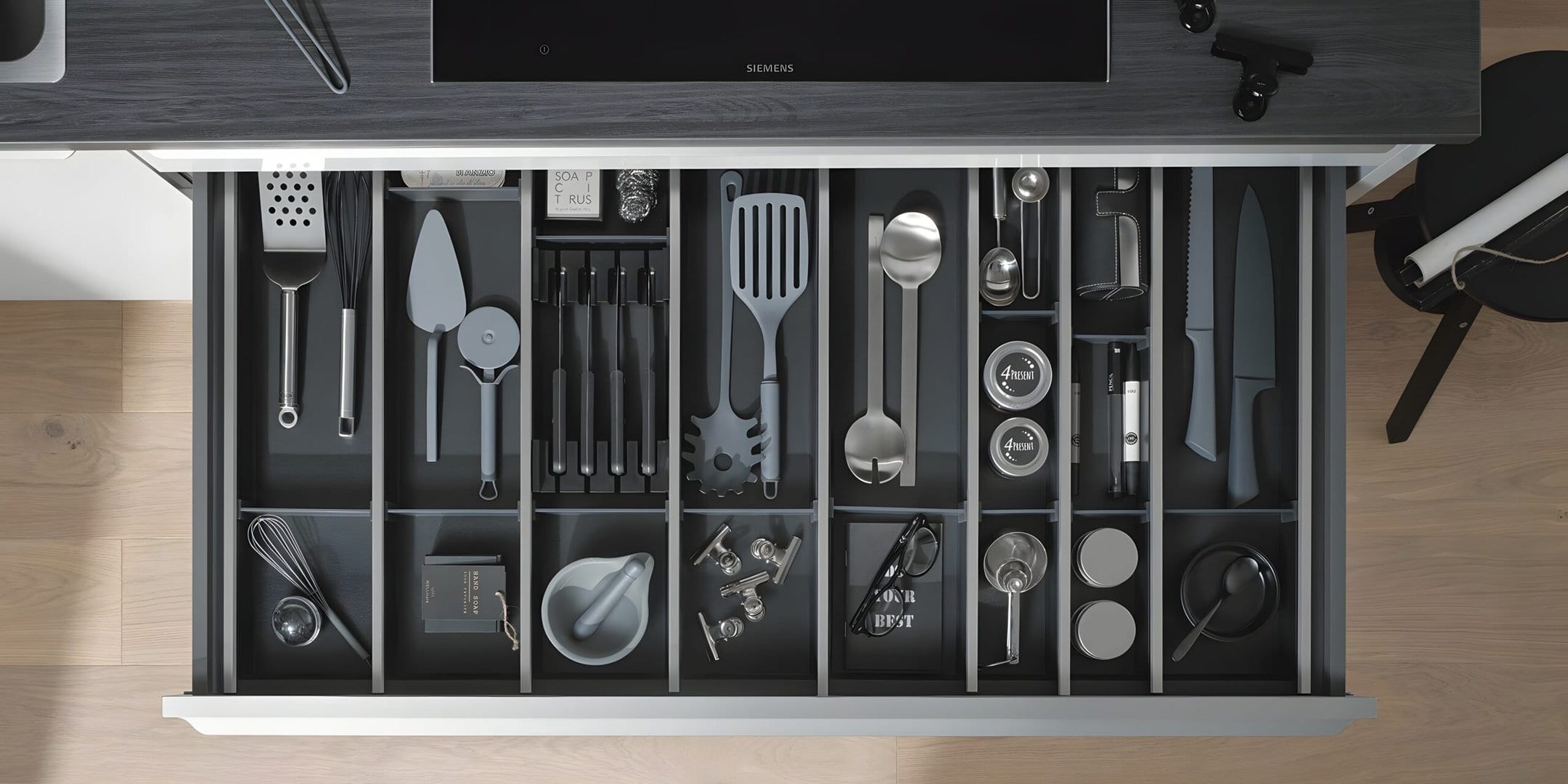
Fold-Away and Multi-Use Surfaces
Counter space is the rarest currency in a tiny kitchen. You need room to prep, but you do not always need it, and a permanent counter that eats into a small floor plan can make the whole space feel choked. The trick is surfaces that appear when you want them and vanish when you do not.
A pull-out work surface tucked under the countertop slides out to give you an extra prep zone, then disappears once the dishes are done. A fold-down shelf mounted on a wall becomes a breakfast bar for two and folds flat against the wall the rest of the day. A deep windowsill can double as a herb garden and a landing spot for a cooling tray. Each of these adds function without claiming permanent territory.
Multi-use zones extend the same thinking. A single stretch of counter can be your coffee station in the morning, your prep area at dinner, and your laptop desk in between if it is planned with the right outlets and clearance. In a Metro Vancouver condo where the kitchen often opens straight into the living area, designing that counter to flex between roles keeps the whole open-plan space feeling intentional rather than cramped. The goal is one surface doing the work of three.
Slim and Counter-Depth Appliances Keep You Moving
You can plan the smartest cabinets in the city, but if a bulky fridge juts into the walkway, the kitchen still feels tight. Appliances are where many small kitchens quietly lose their breathing room, and choosing slim, counter-depth, and integrated models is one of the easiest ways to reclaim it.
A counter-depth refrigerator sits nearly flush with the cabinets instead of bulging into the room, which keeps the line of your counters clean and your circulation path clear. Slim dishwashers, narrower cooktops, and compact wall ovens all do the same job: they deliver the function you need in a footprint scaled to the space you actually have. This matters in a region where new condos keep getting tighter. The median size of newer Metro Vancouver condos sits around 749 square feet, with one-bedroom units averaging just 545 square feet, and municipal policies now encourage micro-units as small as 320 square feet to ease affordability pressure (Business in Vancouver, 2025).
When appliances are integrated behind cabinet fronts, they also disappear visually, which makes the kitchen read as one calm, continuous surface rather than a patchwork of competing metal boxes. Bauformat plans its cabinetry around your chosen appliances from the start, so everything lines up and the panels match, and the room reads as a single considered piece rather than a collection of parts squeezed together.
Light, Reflection, and Handleless Fronts
How a small kitchen feels is just as important as how much it holds, and a few visual tricks can make a tight footprint feel open and airy. Light colours are the simplest. Pale cabinet fronts, light countertops, and a soft backsplash bounce daylight around the room instead of absorbing it, which is a real advantage through Vancouver’s grey, rain-soaked winters when natural light is in short supply.
Reflective and glossy surfaces push this further. A high-gloss cabinet front, a glass or mirrored backsplash, and a polished countertop all catch and throw light, which visually expands the boundaries of the room. The eye reads brightness as space, so a kitchen finished in light, reflective materials feels noticeably larger than the same room in dark matte tones.
Handleless fronts are the finishing move. Removing protruding handles gives you a smooth, unbroken run of cabinetry with nothing to snag a hip or a sleeve as you squeeze past, which genuinely improves circulation in a narrow galley. The look is also cleaner and more modern, with fewer visual interruptions to make the space feel busy. Bauformat offers handleless designs across its range, alongside the value-focused Burger collection and the refined Baulux line, and pairs them with 3D-adjustable concealed hinges so every door sits perfectly aligned. The payoff is a kitchen that is both easier to move through and easier on the eye.
Frequently Asked Questions
What is the best layout for a very small condo kitchen?
For most Metro Vancouver micro-suites, a galley or one-wall layout works best because it keeps the work triangle tight and circulation simple. The key is to build upward with tall cabinetry and pack the base cabinets with full-extension pull-outs and toe-kick drawers, so the limited floor area is supported by storage that climbs and reaches deep. A good local design team will measure your exact space and plan around it rather than forcing a standard template.
Does upgrading a small kitchen actually add value?
It can, and the numbers are encouraging. The 2025 Cost vs. Value Report found that minor kitchen remodels return roughly 96 percent of their cost nationally, making them one of the strongest ROI projects in the home (Zonda 2025 Cost vs. Value Report, 2025). In a market like Vancouver where every square foot is at a premium, a smartly storaged kitchen is also a genuine selling point for buyers who know how tight condo space can be.
How do I get more storage without making the kitchen feel crowded?
The secret is hidden storage rather than more visible cabinets. Corner pull-outs, toe-kick drawers, tall pantry units, and full-extension interiors all add capacity without adding visual bulk. Pair them with handleless, light-coloured fronts so the room stays calm and uncluttered to the eye. You end up holding far more while the kitchen actually looks more spacious, not less.
Are handleless cabinets practical in a small kitchen?
Very. With no handles jutting into the walkway, you move through a narrow kitchen without catching clothing or bumping a hip, which is a real daily benefit in a tight galley. Bauformat’s handleless fronts use either a recessed grip rail or a push-to-open mechanism, both paired with soft-close hardware, so they stay easy to use while keeping the clean, snag-free lines that make a small space feel open.
A tiny kitchen rewards cleverness over square footage. When the storage climbs to the ceiling, slides out of corners, and tucks into the toe-kick, and when light surfaces and handleless fronts keep the whole room feeling open, a compact Metro Vancouver kitchen stops feeling like a compromise and starts feeling like a space that was designed entirely around how you live. The footprint may be small, but with German engineering and a layout planned for every inch, it can absolutely punch above its size.
Explore more from Bauformat BC
- Bauformat’s Triple Threat: Transforming Tiny Kitchens with Compact Appliances
- Uncover the appeal of top traditional small kitchen styles perfect for petite spaces!
- Mastering the Art of Kitchen Space Optimization
German cabinetry, planned and built for Metro Vancouver
The kitchen is one of the highest-return rooms in a home: the 2025 Cost vs. Value Report found a minor kitchen remodel recoups roughly 96% of its cost at resale. Choosing cabinetry that lasts is central to that return, which is where German engineering earns its place. Every Bauformat kitchen is manufactured in Germany, then measured, planned, and installed by our Vancouver team, built to fit your room to the millimetre.
See the Baulux, Bauformat, and Burger collections in person at 1410 Marine Dr Unit 205, North Vancouver, learn more about the manufacturer at bauformat.de.
Book a 30-minute consultation with our Metro Vancouver kitchen designers to plan a kitchen built to last.
A kitchen renovation is one of the bigger projects most homeowners ever take on, and in Metro Vancouver it carries a few extra wrinkles: high labour costs, strata rules in condo buildings, and older homes that hide surprises behind the drywall. The good news is that almost every renovation that goes sideways went sideways in the planning, not the building. Get the front end right and the rest tends to follow.
This is the whole-project view, from setting goals and a realistic budget through layout, selections, sequencing, permits, trades, and living through the dust. Think of it as the map you draw before anyone picks up a pry bar. We make German-engineered cabinetry here at Bauformat BC, and we plan and install kitchens across the region, so much of this comes straight from watching what works and what trips people up.
Key Takeaways
- Decide what problem you are solving before you spend a dollar, then build a budget with a 10 to 20 percent contingency on top.
- Most full mid-range kitchen renovations in Metro Vancouver land between roughly 45,000 and 75,000 dollars, with condos often running a little lower (Vancouver General Contractors, 2026).
- Cabinets are usually the single largest line item, often 30 to 40 percent of the total, so they deserve early attention (Zoocasa, 2025).
- Plan for 8 to 14 weeks from demolition to finishing, longer once permits, strata approval, and custom lead times are added (Quay Construction, 2026).
- Condo owners need strata approval on top of city permits, so start that conversation early.
- A well-done kitchen can return a meaningful share of its cost and lift a home’s value by up to 20 percent (Royal LePage via Morningstar Canada, 2025).
Start With Goals, Then Build a Realistic Budget
Before layouts and finishes, write down what you are actually trying to fix. More counter space? A kitchen that works for two cooks? Better storage so the island stops collecting clutter? Hosting that does not feel cramped? Your honest answers decide where the money goes and keep you from spending on things that look nice in a showroom but do not solve your problem.
Once goals are clear, set a number you are comfortable with and treat it as real. A reliable budget has three parts: the work itself, a contingency, and the soft costs people forget. Set aside 10 to 20 percent for surprises, because older Vancouver homes in particular tend to reveal knob-and-tube wiring, out-of-level floors, or plumbing that was never meant to last this long. Soft costs include permits, strata fees, design time, appliance delivery, and eating out while your kitchen is offline. A budget that ignores these is a budget that breaks.
It also helps to think about return. A kitchen renovation has the potential to increase a home’s value by up to 20 percent according to a Royal LePage national survey of agents (via Morningstar Canada, 2025), and kitchen projects commonly return between 75 and 100 percent of their cost (HomeStars, 2025). The pattern worth knowing: the more you spend, the lower your percentage return tends to be, so spend where it genuinely improves your daily life rather than chasing resale alone.
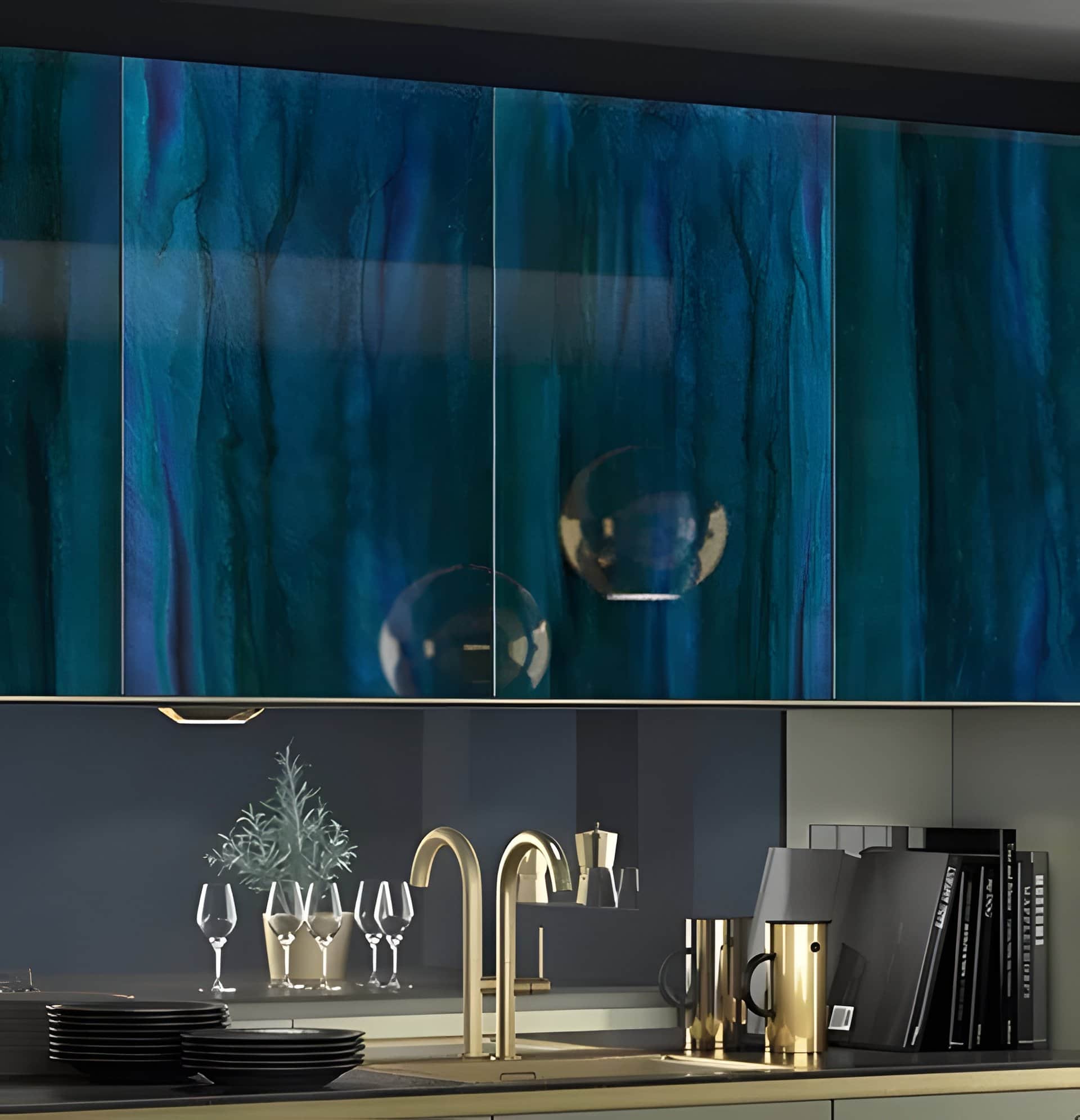
Understand Where Metro Vancouver Money Goes
Local costs run higher than national averages, mostly because of labour. Across Canada the average kitchen renovation sits around 30,944 dollars, with most projects between roughly 16,400 and 45,600 dollars (HomeStars, 2025). In Metro Vancouver the same work costs more: most homeowners spend between 25,000 and 80,000 dollars, and a full mid-range remodel commonly lands between 45,000 and 75,000 dollars for a detached home or townhouse, while condo kitchens often run a little lower at 28,000 to 55,000 dollars (Vancouver General Contractors, 2026).
Knowing where the dollars land helps you make trade-offs with eyes open. Cabinets are typically the largest single category, often 30 to 40 percent of the total, followed by countertops, appliances, and labour (Zoocasa, 2025). A general contractor managing the whole project usually charges 15 to 20 percent of the total for coordination (Vancouver General Contractors, 2026). When you see those proportions, it becomes clear why cabinetry is worth getting right the first time. Quality boxes, drawers, and hardware are the bones of the room, and they are the hardest thing to change later.
Plan the Layout and Make Your Selections
Layout is where a kitchen becomes either a pleasure or a daily annoyance. The classic working triangle between sink, stove, and fridge still matters, but modern kitchens are really about zones: prep, cooking, cleanup, and storage. Walk through how you actually cook and entertain, then design around that. In Vancouver condos, layout is often constrained by where the plumbing stack and venting already sit, so moving a sink or range can add real cost. Working with the existing services rather than against them keeps the budget sane.
Selections come next, and they are easier when you choose in the right order: cabinets, then counters, then appliances, then the finishing details. Cabinets set the tone and the dimensions everything else fits into. This is where our collections give you room to match the budget to the goal. Baulux leans contemporary and refined, the Bauformat line offers the widest range of doors and finishes, and Burger is built for best value without giving up the engineering. All of them use full-extension soft-close runners and 3D-adjustable concealed hinges, which means drawers that glide fully open and doors you can fine-tune perfectly square even in an older home where nothing is quite level.
For counters and appliances, decide what you will genuinely use. A second oven or a built-in coffee unit is wonderful if it earns its space, and dead weight on the budget if it does not. Order appliances early so cabinetry can be planned around exact dimensions, not assumptions.
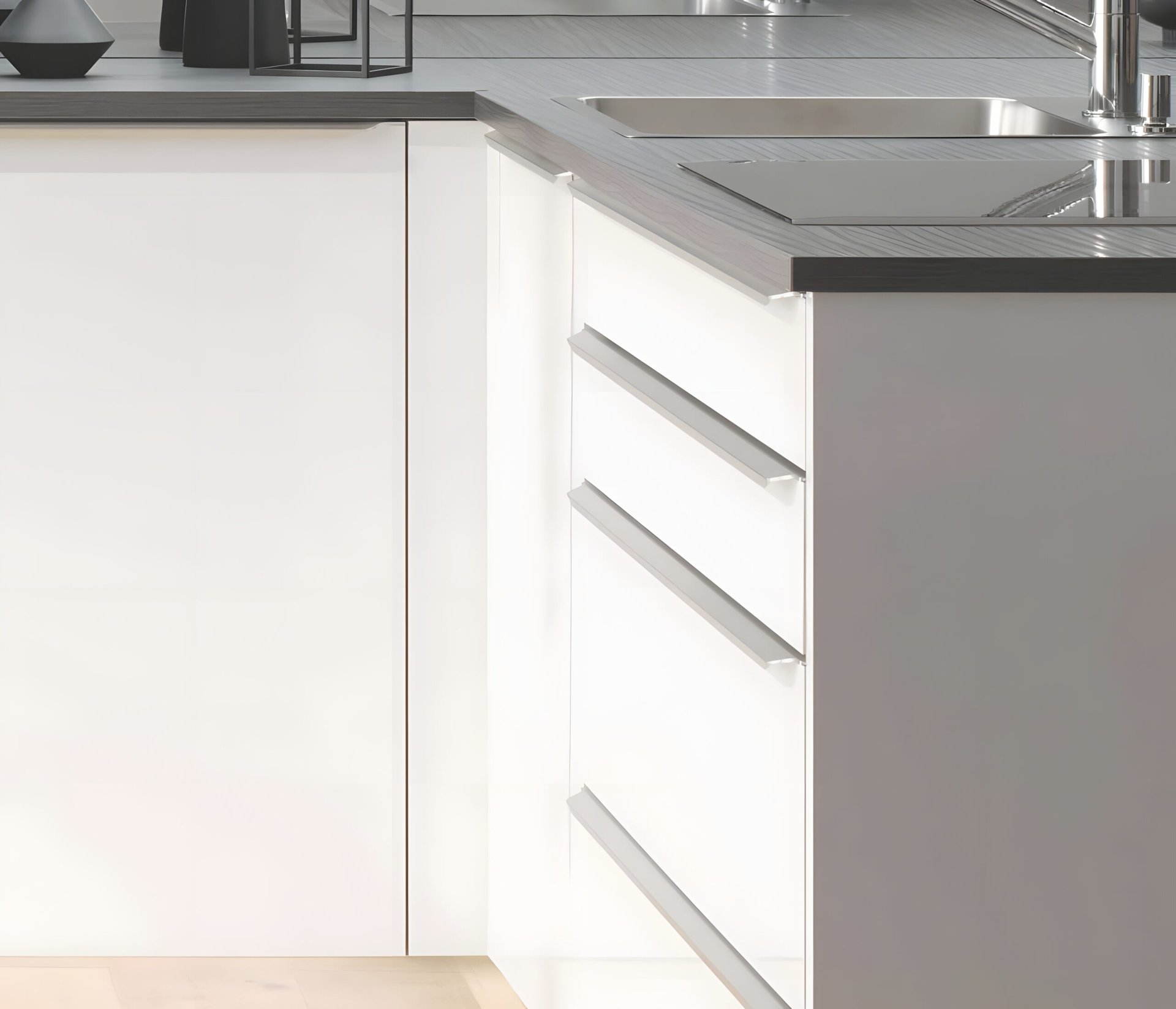
Sequence the Work and Set a Realistic Timeline
Renovations have a natural order, and skipping ahead is how schedules collapse. The rough sequence is: design and selections locked, permits and approvals secured, demolition, rough-in for plumbing and electrical, inspections, drywall and paint, flooring, cabinet install, counter templating and install, then appliances, fixtures, and finishing.
On timing, plan for 8 to 14 weeks total once work begins, depending on permit complexity and material lead times (Quay Construction, 2026). Condo projects can run 6 to 16 weeks (YVR Construction, 2026). The hidden schedule-killer is lead time on materials: custom cabinets, specialty tile, and imported fixtures can take 8 to 16 weeks from order to delivery (Quay Construction, 2026). The lesson is simple. Order your long-lead items before demolition, not after, so trades are never standing around waiting for boxes to arrive. A kitchen torn out and waiting on backordered cabinets is the most expensive kind of empty room.
Permits and Strata Approval
Most cosmetic refreshes, such as new cabinets in the same footprint, do not need a building permit, but anything touching plumbing, electrical, gas, or walls usually does. In 2025 the City of Vancouver processed over 12,000 residential building permits, with standard renovation approvals averaging 6 to 10 weeks (Vancouver General Contractors, 2026). That is not a step to leave until the last minute. Build it into the front of your timeline.
If you live in a condo or townhouse, you have a second gate: strata approval, which is required on top of any city permits. Most Vancouver buildings need sign-off before work begins, and the process can add days or weeks depending on the building’s rules (CAS Vancouver, 2026). Stratas often dictate work hours, elevator booking for material delivery, floor soundproofing requirements, and proof of contractor insurance. Read your bylaws early, submit your request with drawings, and assume it will take longer than you hope. Starting demolition before strata signs off is a mistake that can stop a project cold.
Hire and Coordinate Your Trades
A kitchen pulls in several trades: a general contractor or project lead, plumber, electrician, sometimes a gas fitter, plus tile, paint, flooring, and cabinet installers. You can manage them yourself, but most people are better served by a contractor who sequences the crew and owns the schedule. That coordination fee, the 15 to 20 percent noted earlier, buys you someone whose job is making sure the electrician is not booked the same day the drywallers need the room.
When you hire, get detailed written quotes that spell out scope, materials, and what is excluded. Ask for proof of WorkSafeBC coverage and liability insurance, check references on recent local projects, and be wary of any bid that comes in far below the others, because that gap usually reappears later as a change order. One quiet advantage of buying cabinetry from a team that also measures and installs is that there is no finger-pointing between the supplier and the installer when something needs adjusting. Our local Vancouver crew measures, plans, and installs the cabinets we make, so the people who set your kitchen are accountable for how it fits.
Living Through the Reno and Avoiding Common Mistakes
For a few weeks your kitchen will be gone, so plan a temporary one. A microwave, kettle, toaster oven, and a sink in the bathroom or laundry will carry you further than you would think. Box up what you do not need, keep a small set of dishes accessible, and budget realistically for takeout. If you are in a condo, confirm where the crew can store materials and how debris leaves the building, because strata rules on this catch people off guard.
The common mistakes are predictable, which means they are avoidable. Changing your mind mid-project is the costliest one: every change after construction starts triggers delays and change orders. Decide everything you can on paper first. Other frequent traps are skipping the contingency fund, underestimating lead times, ignoring lighting and ventilation until it is too late to wire properly, and choosing finishes for looks alone without thinking about how they wear. In older Vancouver homes, the biggest surprises hide behind walls, so a contractor who opens things up early and flags issues before they snowball is worth their weight. Patience in planning is what buys you calm during the build.
Frequently Asked Questions
How much should I budget for a kitchen renovation in Metro Vancouver?
Most homeowners spend between 25,000 and 80,000 dollars, with a full mid-range remodel commonly landing between 45,000 and 75,000 dollars for a detached home or townhouse, and condos often a little lower at 28,000 to 55,000 dollars (Vancouver General Contractors, 2026). Add a 10 to 20 percent contingency on top, since local labour costs and older homes both push prices up.
How long does a kitchen renovation take?
Plan for roughly 8 to 14 weeks from demolition to finishing, with condo projects running 6 to 16 weeks (Quay Construction and YVR Construction, 2026). Permits add 6 to 10 weeks on average (Vancouver General Contractors, 2026), and custom materials can take 8 to 16 weeks to arrive, so order long-lead items before demolition begins.
Do I need a permit and strata approval for my condo kitchen?
Cosmetic work in the same footprint often does not need a city permit, but anything affecting plumbing, electrical, gas, or walls usually does. If you are in a strata building, you also need strata approval before starting, and most Vancouver buildings require it (CAS Vancouver, 2026). Read your bylaws and submit your request early.
Is a kitchen renovation worth it for resale?
Generally yes. A kitchen renovation can lift a home’s value by up to 20 percent (Royal LePage via Morningstar Canada, 2025), and kitchen projects commonly return 75 to 100 percent of their cost (HomeStars, 2025). Keep in mind that bigger budgets tend to return a smaller percentage, so spend where it improves daily life as well as resale.
A successful kitchen renovation rarely comes down to luck. It comes from clear goals, an honest budget with room for surprises, smart sequencing, and the patience to settle decisions before the work starts. Get those right, and the build becomes the calm, satisfying part: watching a well-planned room come together exactly the way you pictured it.
Explore more from Bauformat BC
- Bauformat Guide: How to Make Your Kitchen Makeover Both Affordable and Easy
- Budget-Friendly Guide to Achieving a Streamlined Kitchen Makeover
- Bauformat: Germany’s Elite Kitchen Cabinet Craftsmen
German cabinetry, planned and built for Metro Vancouver
The kitchen is one of the highest-return rooms in a home: the 2025 Cost vs. Value Report found a minor kitchen remodel recoups roughly 96% of its cost at resale. Choosing cabinetry that lasts is central to that return, which is where German engineering earns its place. Every Bauformat kitchen is manufactured in Germany, then measured, planned, and installed by our Vancouver team, built to fit your room to the millimetre.
See the Baulux, Bauformat, and Burger collections in person at 1410 Marine Dr Unit 205, North Vancouver, learn more about the manufacturer at bauformat.de.
Book a 30-minute consultation with our Metro Vancouver kitchen designers to plan a kitchen built to last.
There is a particular kind of kitchen that stops you in your tracks. Rough-sawn wood that looks like it has a story, black iron that grounds the room, a glow from filament bulbs that feels more like a workshop at golden hour than a showroom. This is the rustic industrial kitchen, and it is the warmer, more lived-in cousin of the sleek factory look. Where pure urban industrial leans cool and hard-edged, rustic industrial pulls the temperature up: farmhouse meets factory, aged texture meets honest material.
In Metro Vancouver, that combination feels right at home. Our heritage warehouse conversions in Yaletown and Gastown already come with timber columns, exposed brick and tall industrial windows, and our older character houses carry plenty of patina of their own. The trick is balancing all that ruggedness so the room stays liveable rather than looking like a half-finished renovation. Below are seven tips for getting the rustic industrial kitchen right, from material choices to lighting, with cabinetry that holds the whole composition together.
Key Takeaways
- Rustic industrial is warmer than pure industrial: lead with reclaimed and rough-sawn wood, then layer in black metal and iron.
- Warm, earthy tones now dominate kitchen design, and wood grain has overtaken painted fronts, so the look is firmly in step with current trends.
- Aged and vintage elements add soul, but they need a clean counterpoint to keep the room from feeling cluttered.
- Smart, precise cabinetry grounds the rough textures and makes the whole mix read as intentional.
- Warm industrial lighting, filament bulbs and aged brass, does as much work as any finish in setting the mood.
- Metro Vancouver lofts and character homes give you a head start with brick, beams and big windows already in place.
1. Lead With Warm Reclaimed and Rough-Sawn Wood
Wood is the heart of this style, and not the polished, uniform kind. Reclaimed boards, rough-sawn planks and timber with visible saw marks and old nail holes give a rustic industrial kitchen its warmth and its narrative. The grain is what separates this look from the cold, all-metal version of industrial design.
You are working with the grain of the market here, too. The NKBA 2026 Kitchen Trends Report found that wood grain has outpaced painted cabinets for the first time in years, with white oak leading at 51 percent popularity, and designers favouring mid-to-dark finishes that bring depth and authenticity (NKBA 2026 Kitchen Trends Report, 2026). Reclaimed wood in particular has become a defining material of the year, prized for its patina and the instant warmth it lends a space (Smithers of Stamford, 2026).
You do not have to source salvaged beams to get the effect. Bauformat offers a wide range of wood-grain fronts across the Bauformat collection, which carries the widest choice of finishes including wood-grain and matte options. A textured wood-grain front in a warm oak or walnut tone reads as rustic without the splinters, the warping or the maintenance that genuine salvage can demand.
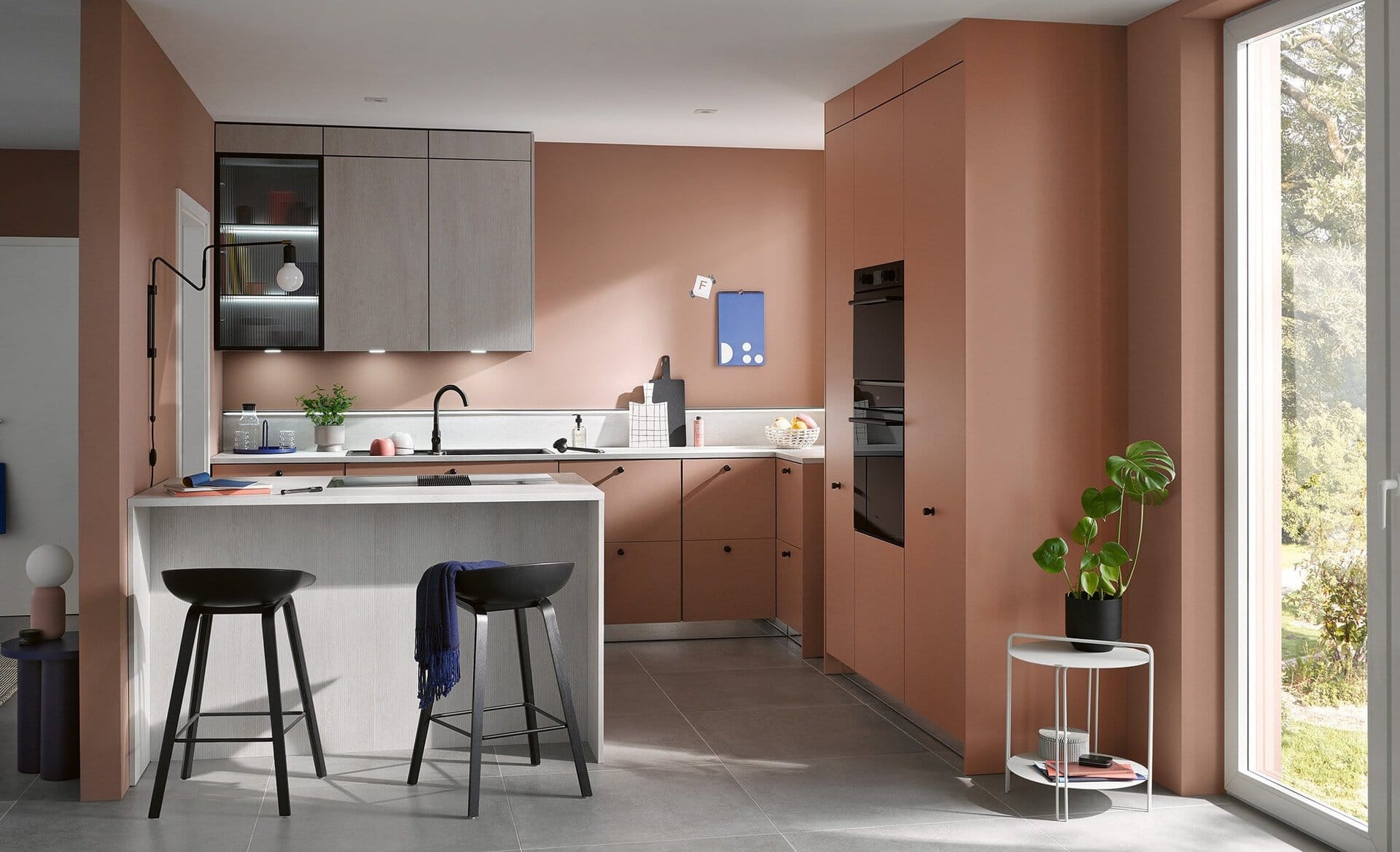
2. Mix Wood With Black Metal and Iron
Once the wood is in place, the industrial half of the equation comes from metal. Black iron, dark steel and blackened brackets create the structural, factory-floor backbone that keeps the room from drifting into pure farmhouse territory. Think open shelving on iron supports, black-framed glass, a steel range hood, or matte black hardware against a wood-grain front.
A word on restraint. Matte black is still very much in play, but the guidance has shifted: industry professionals now treat it as a secondary or accent finish rather than the default across every cabinet, with warmer metals gaining ground alongside it (Inspire Hardware, 2026). For a rustic industrial scheme, that is good news. Let black iron handle the structure and accents, then warm the room with aged brass elsewhere, and the metal reads as deliberate rather than relentless.
3. Choose Warm, Earthy Tones
The colour story for rustic industrial is grounded in nature. Chocolate browns, muddy greens, clay, mushroom, rust and sand all pull their weight, echoing the wood and the aged metal rather than fighting them. This is a kitchen that should feel like it belongs to the earth, not a laboratory.
The wider design world has moved decisively this way. The NKBA 2026 report found that 96 percent of industry professionals now name warm neutrals as the most popular kitchen colour direction, with greens leading the natural palette at 86 percent, followed by blues at 78 percent and browns at 67 percent (NKBA 2026 Kitchen Trends Report, 2026). For a Metro Vancouver home, where so much of the year is spent under grey skies, those warm, saturated earth tones do real work in making a kitchen feel comforting from October through to spring.
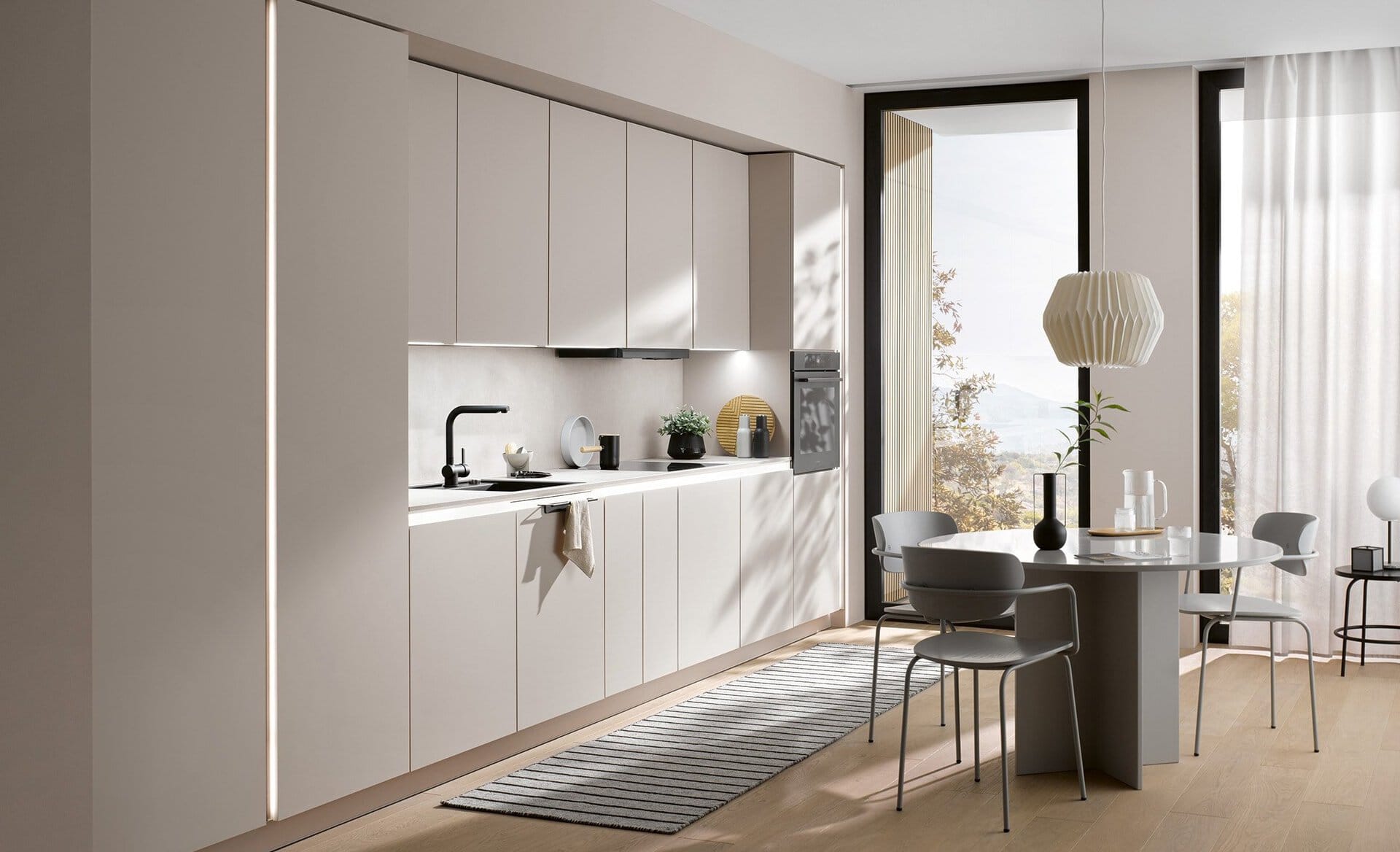
4. Add Aged and Vintage Elements
Patina is the soul of this style. A reclaimed butcher block, an old factory cart repurposed as an island, vintage stools with worn leather, a salvaged sign or a length of weathered shelving all add the sense of history that makes rustic industrial feel collected rather than bought in a single afternoon.
The appeal of these aged pieces is partly about sustainability and partly about character. Reclaimed materials are increasingly used to add gravity and soul to modern and industrial spaces, not just farmhouse ones, precisely because their unique wear cannot be faked by a factory (Smithers of Stamford, 2026). One caution: vintage finds carry visual weight, so a few strong pieces will always beat a roomful of competing curiosities. Choose the items that genuinely speak to you and give them space to be seen.
5. Balance Rough Textures With Smart, Precise Cabinetry
Here is the tip that separates a polished rustic industrial kitchen from a chaotic one. All that rough wood, raw metal and visible patina needs a clean, precise counterpoint to keep the room legible. That counterpoint is the cabinetry. When the boxes are crisp, the lines are true and the doors close with a quiet, even action, the rugged elements around them suddenly look intentional.
This is where German engineering earns its place in a rustic room. Bauformat has been made in Germany since 1917 in Lohne, and every kitchen is measured, planned and installed by the local Vancouver team, so the cabinetry sits true even in an older home where walls are rarely square. Full-extension soft-close runners and 3D-adjustable concealed hinges mean drawers glide all the way out and doors line up perfectly, giving you the precise frame that lets the rough textures sing. There is a budget-conscious path, too: the Burger collection delivers that same engineering as the best-value option, while Baulux offers a refined, pared-back alternative.
It is worth remembering that this kind of considered cabinetry pays you back. The latest cost vs. value data shows minor kitchen remodels returning an ROI of up to 113 percent, up from the prior year, with cabinet replacement and refacing among the core projects driving that figure (Kitchen Cabinet Kings 2026 Kitchen ROI Report, 2026). Quality cabinetry is rarely money lost.
6. Use Warm Industrial Lighting
Lighting is where a rustic industrial kitchen either glows or goes cold. Skip the crisp, clinical white light and reach for warmth: exposed filament bulbs, caged pendants, aged brass and dark bronze fixtures, and the kind of amber tone that flatters wood and softens metal. A row of filament pendants over an island is practically the signature move of the style.
Aged brass and other warm metals are having a genuine moment, gaining favour because they bring depth and comfort to interiors in a way that cooler finishes cannot (Inspire Hardware, 2026). Layer your lighting so you have task light where you chop and prep, then a warmer, lower glow for the rest of the room. In a Yaletown loft with tall windows, that layering also lets you transition gracefully from bright winter mornings to long, dim evenings.
7. Keep It Cosy and Liveable
For all its rugged materials, a rustic industrial kitchen should feel like a place you want to linger, not a stage set. The whole point of the rustic half of the equation is warmth, so resist the urge to make the room read as a museum of raw materials. Soften the hard surfaces with textiles, a runner underfoot, open shelving styled with everyday objects you actually use, and a generous spot to sit.
This is also where Metro Vancouver homeowners have an advantage. Our heritage warehouse conversions along Hamilton, Mainland and Homer streets already come with exposed timber columns, soaring ceilings and historic character built in, which means much of the rustic industrial groundwork is already poured. Your job becomes editing rather than manufacturing: let the building’s bones carry the rugged load, then warm them with wood-grain cabinetry, earthy colour and soft light until the room feels like home.
Frequently Asked Questions
How is a rustic industrial kitchen different from a regular industrial one?
Pure industrial leans cool and minimal, all concrete, steel and stark lines. Rustic industrial keeps the metal but turns up the warmth: reclaimed and rough-sawn wood takes the lead, the palette shifts to earthy browns and greens, and aged, vintage pieces add a sense of history. It is the farmhouse-meets-factory version, softer and more lived-in than its sleek cousin.
Will a rustic industrial look feel dated in a few years?
It is well positioned to age gracefully. The look is built on natural materials and warm, earthy tones, which is exactly where current design is heading, with warm neutrals named the most popular kitchen colour direction by 96 percent of industry professionals (NKBA 2026 Kitchen Trends Report, 2026). Reclaimed wood and honest metal also wear in rather than wear out, so a little extra patina only improves the look over time.
Does German cabinetry suit a rustic kitchen, or is it too modern?
It suits it well, and arguably makes the style work. The precise lines and quiet, even action of well-engineered cabinetry give all the rough textures around them a clean frame, so the room reads as intentional. Bauformat’s wide range of wood-grain fronts means you can get the warm, textured rustic look on the surface while keeping the precision engineering, full-extension soft-close runners and adjustable hinges behind it.
I live in an older Vancouver character home with uneven walls. Is that a problem?
It is common and entirely manageable. Pre-war homes rarely have square walls, which is exactly why having the kitchen measured, planned and installed by a local team matters. The cabinetry is adjusted to the realities of the room rather than the other way around, so the finished result sits true even where the original structure does not.
A rustic industrial kitchen is, at its core, a balancing act between rough and refined. Lead with warm reclaimed wood, ground it with black iron, layer in earthy colour, aged finds and the amber glow of filament light, then let smart, precise cabinetry hold it all in place. Get that balance right, and you end up with a room that feels both rugged and welcoming, perfectly suited to the character homes and converted lofts that give Metro Vancouver so much of its texture.
Explore more from Bauformat BC
- Master the Art of Kitchen Renovation: Must-Know Tricks for a DIY Industrial Kitchen Remodelling
- How would Bauformat Matte Black Cabinets Change the Mood of a Kitchen?
- Why Choose Rustic Styles for Your Kitchen Cabinets?
German cabinetry, planned and built for Metro Vancouver
The kitchen is one of the highest-return rooms in a home: the 2025 Cost vs. Value Report found a minor kitchen remodel recoups roughly 96% of its cost at resale. Choosing cabinetry that lasts is central to that return, which is where German engineering earns its place. Every Bauformat kitchen is manufactured in Germany, then measured, planned, and installed by our Vancouver team, built to fit your room to the millimetre.
See the Baulux, Bauformat, and Burger collections in person at 1410 Marine Dr Unit 205, North Vancouver, learn more about the manufacturer at bauformat.de.
Book a 30-minute consultation with our Metro Vancouver kitchen designers to plan a kitchen built to last.
A kitchen lives a long time. The cabinetry you choose today will likely outlast three or four generations of the gadgets you plug into it, which is exactly why the smartest tech decisions are the ones you make before a single appliance arrives. The future kitchen is not the one crowded with screens and blinking lights. It is the one where the technology is so well integrated that you barely notice it, where a fridge sits flush behind a cabinet front and the cooktop disappears into the counter when the cooking is done.
Smart kitchen design is really a planning discipline. It is the work of routing power and data to the right places, hiding outlets before they become eyesores, and choosing appliances that vanish into the cabinetry rather than fight it. Done well, it gives Metro Vancouver homeowners a kitchen that feels calm and current for decades, not one that looks dated the moment a new model ships. Here is how to plan a connected kitchen that ages gracefully.
Key Takeaways
- Plan technology into the cabinetry from the start. Retrofitting power, data and ventilation after installation is costly and rarely looks clean.
- Panel-ready and built-in appliances let high-function tech hide behind matching cabinet fronts, keeping sightlines uninterrupted.
- Decide where charging, outlets and connectivity live during the design phase, not on installation day.
- Integrated LED lighting and smart controls do more visual work than any single appliance and are easy to plan around concealed runs.
- Connected appliances are most useful when they share one ecosystem rather than four competing apps.
- Choose timeless cabinetry and neutral integration so the kitchen carries the tech, and the tech can be swapped without a renovation.
Hide the Appliances in the Cabinetry
The clearest signal of a well-designed modern kitchen is what you do not see. Panel-ready refrigerators, dishwashers and freezer drawers accept a cabinet front that matches the rest of the room, so the appliance reads as cabinetry instead of a stainless steel interruption. Built-in ovens and coffee systems sit in a tall run at eye level, framed cleanly rather than dropped into a gap. The result is a continuous, quiet surface where the eye travels without stopping.
This look is becoming the default rather than the exception. The 2026 NKBA Kitchen Trends Report points to strong demand for hidden technology and panel-ready refrigeration that lets high-function kitchens keep uninterrupted lines, with appliances expected to feel integrated rather than showy (NKBA, 2026). Achieving that requires the cabinetry and the appliances to be planned together from the beginning, because a panel-ready front has to be sized, hinged and aligned to the exact appliance behind it.
This is where Bauformat’s approach earns its keep. The cabinetry is planned around integrated and panel-ready appliances, with 3D-adjustable concealed hinges and full-extension soft-close runners doing the quiet mechanical work behind the doors. When the local Vancouver team measures, plans and installs, the appliance fronts line up with everything around them, so the fridge and the pantry and the dishwasher all belong to the same visual family.
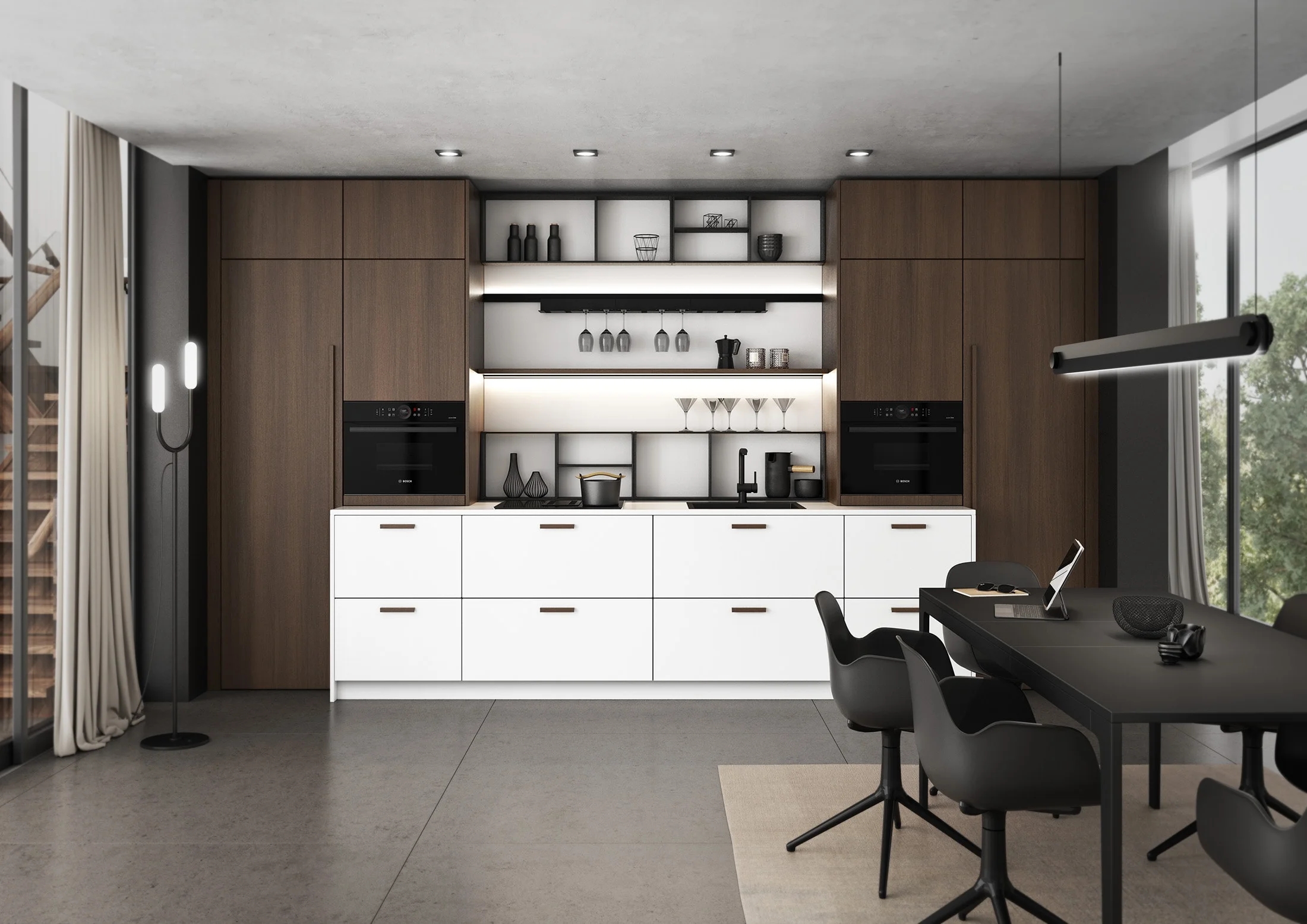
Plan Power, Data and Ventilation Early
The least glamorous part of a smart kitchen is also the part that decides whether the whole thing works. Connected appliances need power and, often, a hard-wired or strong wireless data connection. Induction cooktops draw heavily and frequently need a dedicated circuit. Built-in ovens, steam ovens and warming drawers each have their own electrical requirements. None of this can be improvised after the cabinets are hung.
Ventilation deserves the same early attention. As more Metro Vancouver homeowners move to induction and downdraft cooktops, the extraction path has to be planned into the cabinetry and, in many cases, routed to an exterior wall. Downdraft units that rise behind the cooktop and retract when idle are elegant, but they consume cabinet depth and need a clear duct run. A ceiling-recessed or integrated hood has to be coordinated with cabinet heights and any soffit work. Decided early, these choices are invisible. Decided late, they force compromises you will see every day.
The practical move is to map every appliance, its power draw, its data needs and its ventilation path during the design phase, then build the cabinetry to accommodate them. A measured plan from a local team that knows Vancouver’s housing stock, from Yaletown condos to North Shore renovations, prevents the expensive surprise of discovering a panel or a duct cannot go where you assumed it would.
Charging Drawers and Hidden Outlets
Phones, tablets and small devices have quietly become kitchen fixtures, and nothing dates a counter faster than a tangle of cords. The fix is to give them a home. A dedicated charging drawer, lined and fitted with outlets or USB ports inside, keeps devices powered and out of sight. A tablet propped at eye level for a recipe is useful; the charging brick feeding it does not need to be on display.
Outlets themselves can be planned to disappear. Recessed outlets, pop-up towers that retract into the counter or the cabinetry, and runs tucked under upper cabinets keep the backsplash clean and uninterrupted, which matters more as slab backsplashes and continuous surfaces become the look people want. Hidden storage and interior fittings, the kind that come standard in a planned Bauformat layout, give every charger, blender base and small appliance a defined place, so the working surfaces stay clear.
The principle is simple. Decide what plugs in and where it lives before the cabinetry is built, and the kitchen stays calm. Leave it to chance, and the counters fill with the daily clutter of modern life.
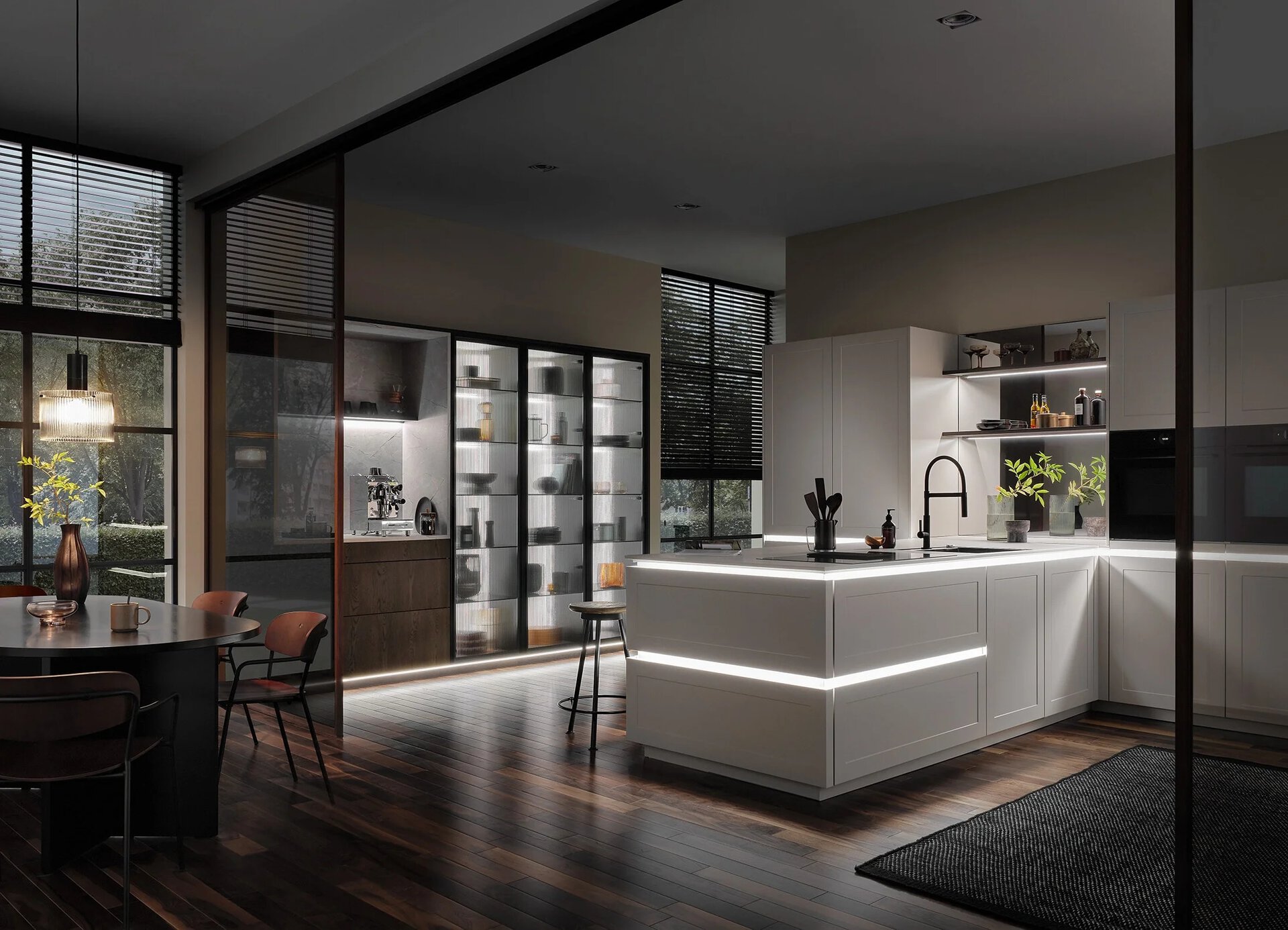
Smart Lighting and Controls
Lighting does more to make a kitchen feel modern than any single appliance, and it is one of the easiest systems to plan around concealed cabinetry. Integrated LED lighting under upper cabinets, inside glass-front units, along toe kicks and within drawers turns the kitchen into something you can tune through the day, bright and task-focused for cooking, low and warm for an evening at the counter. Because the runs are built into the cabinetry, the fixtures themselves stay invisible.
Smart controls tie that lighting to the rest of the home. Dimming, colour temperature and scenes can be set on a schedule, triggered by a switch or folded into a broader smart-home system, so the kitchen responds to the time of day rather than waiting for someone to flip a switch. The Metro Vancouver reality of short, dark winter days makes layered, adjustable light especially worthwhile here. A kitchen that brightens itself on a grey January afternoon is a small luxury that pays off every year.
Because integrated lighting is wired during cabinetry installation, it is one of the cleanest pieces of smart-kitchen tech to specify early. There are no visible fixtures to date the room, and the control layer can be upgraded over time without touching the cabinetry.
Connected Appliances and the Ecosystem
Connected appliances have moved from novelty to norm. The global smart home market grew to roughly 164 billion dollars in 2026, up from 148 billion in 2025 (ConsumerAffairs, 2026), and the smart kitchen appliances market is projected to grow from about 29 billion dollars in 2025 to 34 billion in 2026 (The Business Research Company, 2026). Behind those numbers are fridges that track contents, ovens that follow a recipe’s temperature curve, and dishwashers that run on off-peak schedules.
The catch is fragmentation. A fridge from one maker, an oven from another and a lighting system from a third can each demand a separate app, and the convenience evaporates fast. The better path is to choose appliances that speak to a common smart-home ecosystem, so one interface handles the kitchen rather than four. When you are selecting integrated and panel-ready appliances during the planning phase, compatibility is worth weighing as seriously as finish and capacity.
It also pays to be honest about which connected features you will actually use. A precise built-in oven and a quiet, efficient dishwasher earn their place every day. A feature you will open once and forget is not worth designing the kitchen around. Plan for the connectivity you want, build the cabinetry to host it, and let the genuinely useful features carry the rest.
Induction and Downdraft Integration
Induction cooking is central to the future kitchen, and not only because it is fast and efficient. A flush or near-flush induction surface can sit almost level with the counter, and full-surface units virtually disappear when not in use, which is exactly the uninterrupted look modern design is chasing. The residential induction cooktops market is expected to grow from about 16.5 billion dollars in 2025 to 17.5 billion in 2026 (Mordor Intelligence, 2026), with built-in units leading the category.
Integrating induction cleanly comes back to planning. The cooktop needs its dedicated circuit, the surrounding cabinetry has to be specified for the cutout and any clearances, and the ventilation strategy has to be settled before installation. Pairing induction with an integrated downdraft keeps the sightline above the cooktop completely clear, with no overhead hood breaking the space, which suits open-plan kitchens and island cooktops particularly well. That clean result depends on a duct path and cabinet depth planned from the start.
For Metro Vancouver homeowners weighing the switch, the design upside is real. A flush induction surface paired with concealed extraction gives you a counter that works as a workspace and then reads as a continuous surface the moment the cooking stops, which is hard to achieve with traditional cooktops and overhead hoods.
Designing So the Tech Does Not Date the Kitchen
The hard truth of smart kitchens is that appliances and devices move faster than cabinetry ever will. A connected feature that feels cutting-edge today will be ordinary in five years and obsolete in ten. The way to protect a significant investment is to let the cabinetry carry the kitchen and treat the tech as replaceable.
In practice that means a few disciplined choices. Keep the cabinetry and the integration neutral and timeless rather than tied to a trend, so the room reads as current for decades. Favour panel-ready and built-in formats sized to standard appliance dimensions, so a future fridge or oven can slot into the same opening behind the same style of front. Build in generous, well-routed power and data so upgrades do not require opening walls. The tech then becomes a layer you can refresh, not a feature welded to the room.
This is the genuine advantage of building around well-made German cabinetry. Bauformat has been made in Germany since 1917, and across the Baulux, Bauformat and Burger collections the engineering is built to last far beyond any single generation of appliances. Plan the connected features into that foundation, and the kitchen can evolve quietly over time while the bones of it stay beautiful.
Frequently Asked Questions
What does smart kitchen design actually involve?
It is less about buying connected gadgets and more about planning for them. Smart kitchen design means routing power and data to the right places, choosing panel-ready and built-in appliances that hide in the cabinetry, planning ventilation for induction and downdraft cooktops, and building in lighting, charging and hidden outlets from the start. The goal is technology that works hard and stays out of sight.
Should I plan the technology before or after choosing cabinetry?
Before, and ideally at the same time. Appliances, outlets, charging drawers, lighting runs and ventilation all have to be accommodated by the cabinetry, so they need to be on the plan when the cabinets are designed. Retrofitting power, data or a duct after installation is expensive and rarely looks clean. A measured plan handled by a local Vancouver team avoids those surprises.
How do I keep a high-tech kitchen from looking dated in a few years?
Separate the cabinetry from the devices. Choose timeless, well-made cabinetry and neutral integration, use panel-ready and built-in formats sized to standard appliance dimensions, and build in generous power and data so upgrades are easy. The tech then becomes a layer you can swap without renovating, while the cabinetry carries the kitchen for decades.
Is induction worth integrating in a Vancouver kitchen?
For most homeowners planning a future-ready kitchen, yes. Induction is fast and efficient, and a flush surface delivers the clean, uninterrupted look modern design favours. Paired with an integrated downdraft, it removes the need for an overhead hood entirely. The main requirement is planning the dedicated circuit and ventilation path early, which is straightforward when the cabinetry is designed around it.
The connected kitchen is not really about how much technology you can fit into a room. It is about how invisibly you can do it. When the appliances hide behind matching fronts, the outlets disappear, the lighting tunes itself and the cooktop melts back into the counter, you are left with something rare: a kitchen that feels effortlessly current and is built to stay that way. Plan the tech into the cabinetry from the start, and the future of your kitchen takes care of itself.
Explore more from Bauformat BC
- Why Does Your Kitchen Deserve the Upgrade to High-Tech Appliances?
- Kitchen Cabinet Hardware
- Modern Kitchen Design
German cabinetry, planned and built for Metro Vancouver
The kitchen is one of the highest-return rooms in a home: the 2025 Cost vs. Value Report found a minor kitchen remodel recoups roughly 96% of its cost at resale. Choosing cabinetry that lasts is central to that return, which is where German engineering earns its place. Every Bauformat kitchen is manufactured in Germany, then measured, planned, and installed by our Vancouver team, built to fit your room to the millimetre.
See the Baulux, Bauformat, and Burger collections in person at 1410 Marine Dr Unit 205, North Vancouver, learn more about the manufacturer at bauformat.de.
Book a 30-minute consultation with our Metro Vancouver kitchen designers to plan a kitchen built to last.
There is a particular kind of warmth a country kitchen gives off. It is the smell of something baking, a row of mismatched mugs hanging from hooks, a worn wooden counter that has seen a thousand mornings. The good news for anyone watching their wallet is that this look was never about money in the first place. The farmhouse and country style grew out of make-do, hand-me-down, use-what-you-have living, which makes it the friendliest style there is for a tight budget.
That matters in Metro Vancouver, where renovation costs run higher than almost anywhere else in the country. A full mid-range kitchen here can run between 35,000 and 90,000 dollars, and even a basic refresh starts around 15,000 to 25,000 dollars (Delana Interiors, 2026). This guide skips all of that. It is the genuinely thrifty playbook for a country kitchen on a budget, built around small swaps, paint, salvaged finds, and a few smart dollars spent where they show the most. If you live in a character home in East Van or a basement suite in Burnaby, every tip here is yours to use.
Key Takeaways
- Painting your existing cabinets or swapping just the door and drawer fronts to shaker style is the single cheapest path to the country look, since refacing runs roughly 50 to 70 percent less than full replacement (Kitchen Cabinet Guys, 2025).
- Open shelving with collected crockery, classic cup-pull hardware, and a country paint palette cost very little but carry most of the charm.
- A butcher-block or wood-look counter delivers farmhouse warmth without stone prices.
- Salvaged finds, simple textiles, and one freestanding piece add the lived-in soul that makes the room feel real.
- Spending a few dollars on quality shaker fronts is the upgrade that pays back, with minor kitchen remodels returning about 113 percent of their cost (Zonda Cost vs. Value Report, 2025).
Start With Paint, or Swap to Shaker Fronts
If you change one thing, change the cabinet fronts. The flat, glossy doors that read as builder-basic are the biggest thing standing between you and a country kitchen, and the shaker front, that simple recessed panel framed by four flat rails, is the shape that says farmhouse more than any other single detail.
The cheapest version costs almost nothing but a weekend. Clean your existing doors thoroughly, sand them lightly, prime, and roll on two coats of a good cabinet paint. A creamy off-white, a soft sage, or a muted blue-grey will transform the room. Take the doors off, label the hinges, and paint in the garage or on the balcony so you are not breathing fumes indoors.
The next step up, and the one worth saving for, is swapping the fronts themselves. Keeping your existing cabinet boxes and changing only the doors and drawer fronts is far gentler on the budget than ripping everything out. Refacing this way typically costs 50 to 70 percent less than a full replacement (Kitchen Cabinet Guys, 2025). Bauformat shaker and classic fronts, available across the Bauformat collection, give you a crisp, factory-finished panel that no home paint job can quite match, and they hang on hardware built to last: full-extension soft-close runners and 3D-adjustable concealed hinges that you can nudge into perfect alignment years down the road. For an older Vancouver character home where the original boxes are still solid, this is the thrifty sweet spot. You keep what works and replace only the face the eye actually sees.

Open Shelving and Collected Crockery
Few things say country kitchen like an open shelf stacked with everyday dishes. It is also one of the cheapest moves you can make, because it replaces upper cabinets with a plank of wood and two brackets. Take down a single upper cabinet, patch the wall, and mount a shelf or two where it used to hang. The room instantly feels older, softer, and more personal.
The trick is what goes on the shelf. Resist the urge to buy a matched set. The country look thrives on the gathered-over-time feel of mismatched plates, ironstone pitchers, a few glass jars of dry goods, and mugs hung from cup hooks underneath. Thrift shops and church sales around Metro Vancouver are full of white ironstone and patterned crockery for a couple of dollars a piece. Stick to a loose palette, mostly white with a few blue or amber accents, so the collection reads as charming rather than cluttered. One open shelf does more for the country feeling than a whole new set of cabinets ever could.
Butcher-Block and Wood-Look Counters
Stone counters eat budgets alive, and they are not even the right look here. A country kitchen wants warmth underhand, and wood gives it. Butcher-block counters cost a fraction of quartz or granite, and a length of it across an island or a run of base cabinets brings instant farmhouse character.
You can install butcher-block yourself with a circular saw, a sander, and a few hours. Seal it with a food-safe oil and it ages into something better looking every year, exactly the patina the country style is after. If you want zero maintenance, a wood-look laminate counter gives you the same warm tone at an even lower price, and today’s printed surfaces are convincing. A smart middle path in a small kitchen or a suite is to run wood across one section, say the island or a baking corner, and keep a cheaper hardwearing surface on the rest. The eye reads wood, the budget stays intact.
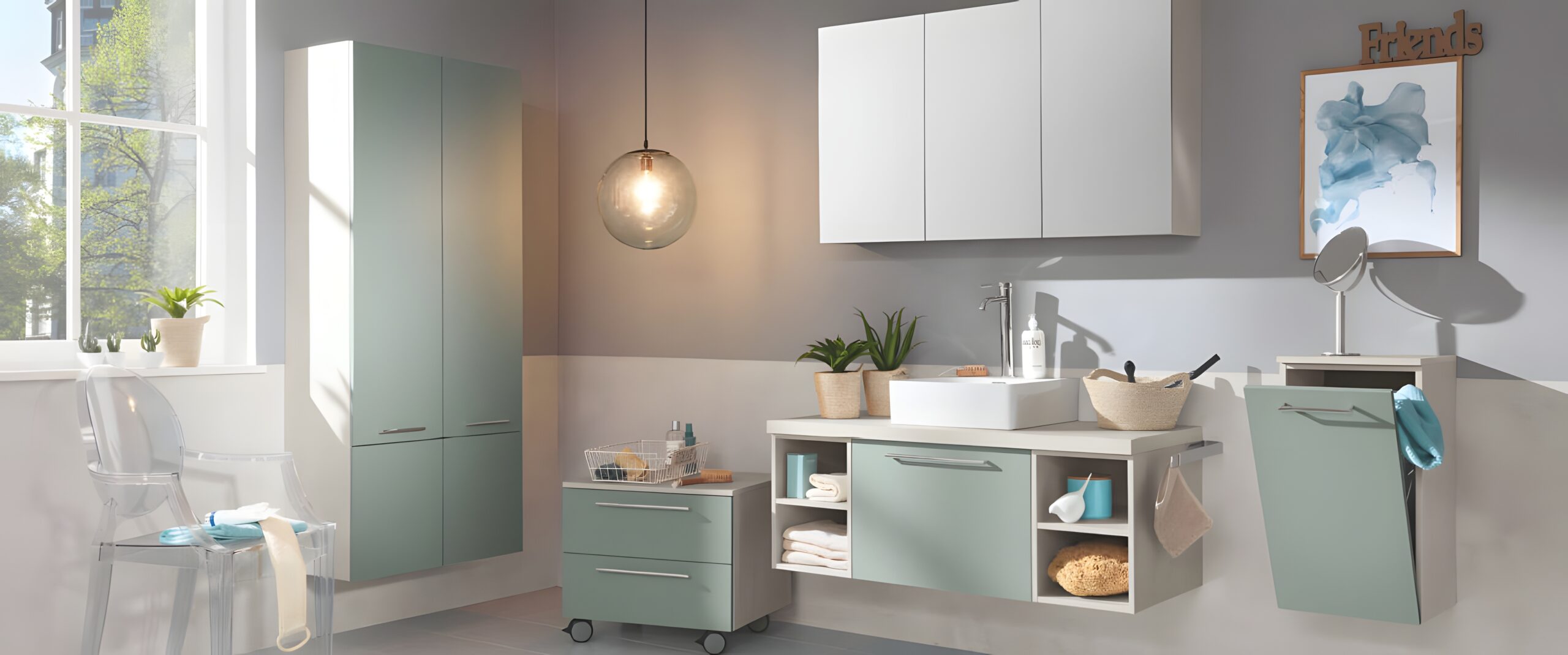
Classic Cup-Pull Hardware
Hardware is the jewellery of a kitchen, and it is astonishing how much a small bag of the right pulls can change a room. For the country look you want two shapes: the cup pull, that half-moon scoop you grip from underneath on drawers, and the simple round or bar knob on doors. In aged brass, oil-rubbed bronze, or matte black, they pull the whole farmhouse story together.
This is the highest-impact dollar you will spend. A set of cup pulls and knobs for a full kitchen costs far less than almost any other change, and swapping them takes an afternoon with a screwdriver. If your new fronts came undrilled, a cheap hardware jig keeps your holes straight. Mix a cup pull on the drawers with a knob on the doors for the classic, slightly unfussed look that reads as authentic rather than showroom-perfect.
A Country Paint Palette
Colour is free, or nearly so, and it is where the country mood lives. The palette is soft, warm, and drawn from the farmhouse itself: creamy whites and warm off-whites, muted sage and olive greens, dusty blues, and warm earth tones. These are not loud colours. They are the shades of milk paint and old linen, and they make even a modest room feel settled.
Designers point to butter yellow, mustard, sage green, and deep blues leading farmhouse cabinetry and accents right now (jane at home, 2026), so a thrifty repaint is also a current one. You do not need to paint everything. A two-tone kitchen, pale uppers with a deeper green or blue on the lower cabinets or the island, gives you depth for the price of a single quart. In a Vancouver suite with limited natural light, lean toward the warmer creams and softer greens, which keep a small north-facing kitchen from feeling cold. Test colours on a scrap board and look at them morning and evening before you commit, since our grey light shifts a paint chip more than you would expect.
Salvaged and Vintage Finds
Here is where a country kitchen earns its soul, and where the budget gets to relax completely. The salvage yard, the estate sale, and the online marketplace are your design store. A reclaimed wood plank becomes a shelf. An old enamel sign or a wooden bread board leans against the backsplash. A vintage scale, a stoneware crock full of utensils, a chipped pitcher holding wildflowers, each one carries the kind of age and story that a new kitchen cannot fake.
Metro Vancouver is good hunting ground for this. Restore-style charity warehouses, weekend estate sales across the North Shore and the Fraser Valley, and neighbourhood buy-and-sell groups turn up old hardware, light fixtures, and freestanding furniture for very little. Refacing and small kitchen refreshes already keep usable material out of the landfill, and leaning on salvage doubles down on that. Buy slowly, buy only what speaks to you, and let the collection build. A country kitchen assembled over a few patient months always looks better than one bought in a single afternoon.
Textiles and a Freestanding Piece
The last layer is the soft one, and it is cheap. Skip the cabinet over the sink window and hang a simple cafe curtain or a gingham valance instead. A striped runner, a couple of linen tea towels on the oven door, a woven rush mat underfoot, these textiles add the homespun warmth that hard surfaces cannot. Most of it can be sewn from a metre of fabric or found secondhand for a few dollars.
Then add one freestanding piece, and let it be the heart of the room. A painted hutch or dresser holding your crockery, a worn farmhouse table used as an island, a simple open baker’s rack, any of these breaks up the built-in run of cabinets and makes the kitchen feel like furnished living space rather than a fitted box. This is the single most country move in the whole guide, because it brings in furniture where most kitchens have only cabinetry. Hunt one down secondhand, give it a coat of paint from your palette, and the room is finished.
Frequently Asked Questions
What is the cheapest way to get a country kitchen look?
Paint. Repainting your existing cabinets in a soft country shade, then swapping the hardware to cup pulls and knobs, gives you the biggest visible change for the least money, often under a few hundred dollars in materials. Add one open shelf with collected crockery and you have the country feel without touching the cabinet boxes at all. When you are ready to go further, swapping just the door and drawer fronts to shaker style is the next thrifty step, since refacing runs roughly 50 to 70 percent less than a full replacement (Kitchen Cabinet Guys, 2025).
Is it worth spending a little more on cabinet fronts?
Yes, if the fronts are the part you see most. Painted doors look great but show wear at the edges over time, while factory-finished shaker fronts hold their crisp look for years and hang on better hardware. Spending here also pays back at resale: minor kitchen remodels that include refreshed fronts and hardware return about 113 percent of their cost, the best return of any interior project (Zonda Cost vs. Value Report, 2025). It is the one place where a few extra dollars genuinely earns its keep.
Can I create a country kitchen in a small Vancouver suite or condo?
Absolutely, and the style suits small spaces well because it relies on warmth and personality rather than scale. Lean on lighter paint colours to keep the room feeling open, use a single open shelf rather than several, and choose one compact freestanding piece instead of a large hutch. Condo kitchens in Metro Vancouver typically run lower than detached-home kitchens to renovate (Delana Interiors, 2026), and the thrifty country approach keeps a suite project well below even that.
Does the farmhouse style still feel current, or is it dated?
It is still very much in demand and has evolved rather than faded. The modern country kitchen is described as making a major comeback for 2026, refined with European farmhouse and English cottage touches (The House Plan Company, 2026), and the warm, lived-in palette is leading current colour trends (jane at home, 2026). Because the style is rooted in real, gathered, hand-worn pieces, it tends to age gracefully instead of looking of-the-moment.
A charming country kitchen was never a question of budget, and it still is not. It is a question of warmth, patience, and a willingness to mix the new with the gathered and the old. Start with paint and a few good fronts, layer in open shelving, salvaged finds, and soft textiles, and let the room build itself over a season. Here in Metro Vancouver, where every renovation dollar is precious, the thrifty country kitchen might be the most rewarding project of all, because the things that make it beautiful are exactly the things that cost the least.
Explore more from Bauformat BC
- Uncover the Top 7 Affordable Country Kitchen Styles That Radiate Rustic Charm with Bauformat
- Why Choose Rustic Styles for Your Kitchen Cabinets?
- Why Opt for Economical Kitchen Cabinet Materials?
German cabinetry, planned and built for Metro Vancouver
The kitchen is one of the highest-return rooms in a home: the 2025 Cost vs. Value Report found a minor kitchen remodel recoups roughly 96% of its cost at resale. Choosing cabinetry that lasts is central to that return, which is where German engineering earns its place. Every Bauformat kitchen is manufactured in Germany, then measured, planned, and installed by our Vancouver team, built to fit your room to the millimetre.
See the Baulux, Bauformat, and Burger collections in person at 1410 Marine Dr Unit 205, North Vancouver, learn more about the manufacturer at bauformat.de.
Book a 30-minute consultation with our Metro Vancouver kitchen designers to plan a kitchen built to last.
The kitchen is one of the hardest-working rooms in any Metro Vancouver home, and the lights tend to stay on longer here than almost anywhere else. Morning coffee, after-school homework, late dinners that run past nine: all of it happens under kitchen lighting. So the question of how efficient those fixtures are is not a small one. Over a year, the difference between a smart lighting setup and a wasteful one shows up clearly on your BC Hydro bill.
The good news is that efficient kitchen lighting no longer asks you to choose between savings and good light. Today’s LED systems are brighter, warmer, and more controllable than the bulbs many of us grew up with, and they sip electricity by comparison. This guide focuses squarely on efficiency and running cost: which technology wins, how to read the numbers that matter, and how controls like dimmers, sensors, and daylight strategies cut waste in a real Vancouver kitchen.
Key Takeaways
- LED lighting uses at least 75 percent less energy than incandescent bulbs, and ENERGY STAR rated LEDs last up to 25 times longer (ENERGY STAR, 2025).
- Lighting makes up roughly 10 to 15 percent of an average home’s electricity use, so efficient fixtures add up over a year (U.S. Department of Energy, 2025).
- BC Hydro residential rates sit at about 11.72 cents per kWh on the first tier and 14.08 cents on the second (BC Hydro, 2025), which is why cutting waste pays off here.
- Lumens measure brightness, watts measure energy draw; shop by lumens to get the light you want for the lowest cost.
- Dimmers, motion or occupancy sensors, and daylight harvesting reduce how long lights run at full power.
- Bauformat kitchens offer integrated, under-cabinet, and in-cabinet LED options, so efficient task light is built into the design rather than added on.
Why LED Lighting Saves the Most Money
If you do only one thing for kitchen efficiency, switch every fixture to LED. The reason is physics. An old incandescent bulb releases roughly 90 percent of its energy as heat and only a small fraction as light, which is why those bulbs got hot to the touch. LEDs flip that ratio and turn most of their energy into light instead. Residential LEDs, especially ENERGY STAR certified ones, use at least 75 percent less energy than incandescent lighting, and some achieve closer to 90 percent savings (ENERGY STAR, 2025).
Lifespan is the other half of the value. ENERGY STAR rated LEDs are built to last up to 25 times longer than incandescent bulbs, with rated lives around 25,000 hours or more (ENERGY STAR, 2025). In a kitchen where the lights might run four or five hours a day, that is years of service before anything needs changing. You buy fewer bulbs, climb fewer ladders, and replace fewer fixtures over the life of the kitchen.
Put dollars to it. The average household saves about 225 dollars a year in energy costs by using LED lighting (ENERGY STAR, 2025). The kitchen is where a big share of that saving lives, because it is the room that gets lit the longest. Multiply that across a Metro Vancouver home with several rooms, and the case for LED is settled.

Lumens vs Watts: Shop for Brightness, Not Power
For decades we bought bulbs by wattage, asking for a 60-watt or a 100-watt. That habit measures the wrong thing. Watts tell you how much electricity a bulb draws, not how bright it is. With LEDs, you can get the same brightness for a fraction of the watts, so wattage is now a poor guide to the light you will actually get.
The number that matters is lumens, the measure of brightness. As a rough guide, a traditional 60-watt incandescent puts out about 800 lumens, and an LED can deliver that same 800 lumens while drawing roughly 8 to 10 watts. So when you shop, decide how much light a counter or island needs in lumens, then choose the LED that hits that figure at the lowest wattage. A higher lumens-per-watt rating means a more efficient fixture.
Colour temperature matters too, even though it is not an efficiency number. For kitchen work surfaces, many Vancouver homeowners prefer a neutral white around 3000 to 4000 Kelvin, which reads clean for food prep without feeling clinical. The efficiency lesson stands either way: pick your lumens and your colour, then let the watts fall as low as the technology allows.
Choosing Efficient Under-Cabinet LED
Under-cabinet lighting is where efficiency and good design meet most clearly in a kitchen. A continuous LED strip or bar tucked beneath the upper cabinets throws light straight onto the counter, which is exactly where you need it for chopping, reading a recipe, or measuring. Because the light lands on the task instead of scattering across the room, you get the brightness you need at a far lower energy cost than flooding the whole kitchen from the ceiling.
When you choose under-cabinet LED, look at lumens per watt and at the quality of the light, measured by the colour rendering index, or CRI. A CRI of 90 or higher makes vegetables, meat, and finishes look true to colour, which matters when you are cooking. Integrated systems, where the LED is built into the cabinetry rather than clipped on afterward, also tend to run cooler and last longer because they are designed as part of the unit.
This is one of the areas where Bauformat kitchens, made in Germany since 1917 and measured, planned, and installed by the local Vancouver team, have a built-in advantage. Integrated and under-cabinet LED options are part of the cabinetry design, along with in-cabinet lighting for pantries and glass-front units. That means efficient task light is engineered into the kitchen from the start, across the Baulux, Bauformat, and Burger collections, rather than retrofitted with mismatched strips later.
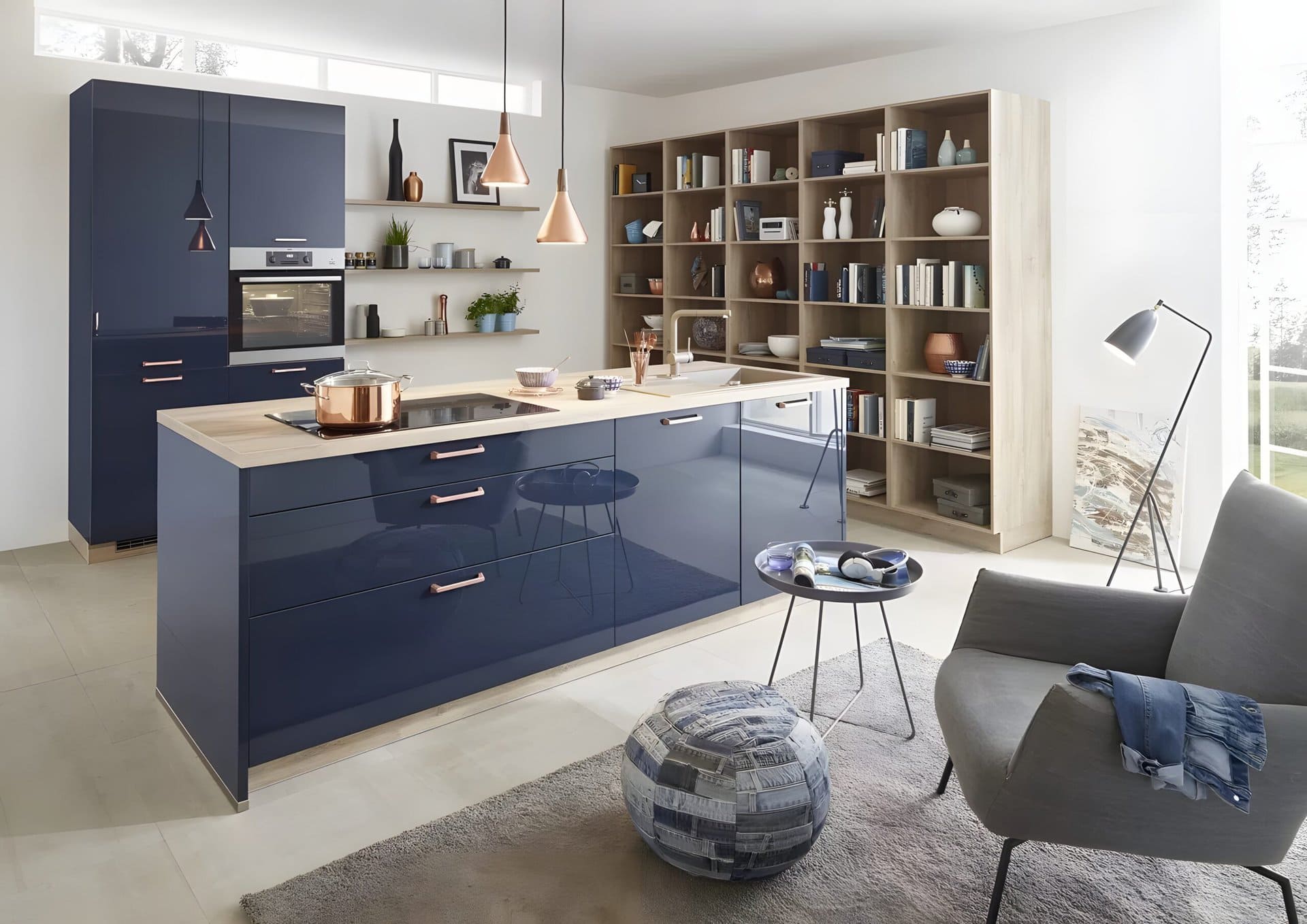
Dimmers and Sensors: Cut Waste Without Thinking About It
Even the most efficient LED wastes energy when it burns at full brightness in an empty room. Controls solve that, and they are some of the cheapest upgrades you can make. A dimmer lets you run lights at, say, 60 percent for an evening glass of wine instead of full output, which lowers the draw and extends the life of the fixture at the same time. Make sure you pair LEDs with dimmers rated for LED, since older dimmers can cause flicker or buzz.
Motion and occupancy sensors take the decision out of your hands entirely. A pantry, a walk-in, or a hallway off the kitchen are perfect candidates: the light comes on when you walk in and shuts off a few minutes after you leave. For households where someone always forgets to flip the switch, sensors quietly recover energy that would otherwise leak away every single day. Occupancy sensors that turn lights on automatically and vacancy sensors that only turn them off are both worth considering depending on the space.
The payoff scales with your local rate. With BC Hydro charging roughly 11.72 cents per kWh on the first tier and 14.08 cents on the second (BC Hydro, 2025), and a net residential bill increase of 3.75 percent that took effect in April 2026 (BC Hydro, 2026), every hour of light you do not waste is money kept. For homes on BC Hydro’s optional time-of-day pricing, shifting heavy lighting use out of the 4 to 9 PM peak window adds another small saving on top.
Making the Most of Daylight
The most efficient kitchen light is the one you do not have to pay for. Metro Vancouver gets long, bright summer days and plenty of soft daylight even through grey winters, and a kitchen designed to use that daylight runs its electric lights for fewer hours. This idea, called daylight harvesting, simply means letting natural light do as much of the work as possible and topping it up with LEDs only when needed.
In practice, that starts with the room. Keep sightlines to windows open, choose lighter cabinet finishes and reflective counter surfaces where it suits your style, and avoid blocking a window with tall upper cabinets if you can plan around it. Glossy and light-toned surfaces bounce daylight deeper into the room, which means you reach for the switch later in the day.
Controls close the loop. Daylight sensors, sometimes called photosensors, can dim or switch off fixtures automatically when there is enough natural light coming through the windows. Near a sunny eating nook or a window over the sink, that keeps the LEDs from running pointlessly on a bright afternoon. Even without sensors, simply putting your brightest task lighting on its own switch lets you light only the counter you are working at while the rest of the room coasts on daylight.
Smart Controls and ENERGY STAR Fixtures
Smart lighting controls turn good habits into automatic ones. Scheduling lets you set the kitchen to dim in the evening and switch off overnight. Scenes let one tap shift from bright prep light to a low, warm setting for dinner. Remote control through an app means the lights someone left on after the morning rush get shut off from your phone on the way to work. None of this changes how the LED works, but it removes the human forgetfulness that quietly drives bills up.
When you buy fixtures or bulbs, look for the ENERGY STAR label. It is a useful shortcut because certified products have been tested for both efficiency and quality, including minimum lifespan, light output, and colour consistency. Choosing ENERGY STAR rated LEDs means you get the deep energy savings without ending up with a bulb that dims early or shifts colour over time.
It is worth knowing how much room lighting leaves for improvement. Lighting accounts for roughly 10 to 15 percent of an average home’s electricity use (U.S. Department of Energy, 2025), and the kitchen carries more than its share because of how long the lights stay on. Tightening up that slice with efficient fixtures and smart controls is one of the easier wins in a home, and it pairs naturally with other efficiency moves you might already be making as a BC Hydro customer.
Frequently Asked Questions
How much can switching my kitchen to LED actually save?
LEDs use at least 75 percent less energy than incandescent bulbs, and the average household saves about 225 dollars a year by switching to LED across the home (ENERGY STAR, 2025). The kitchen carries a large part of that saving because it is usually the most-used room. At BC Hydro’s residential rates of roughly 11.72 to 14.08 cents per kWh (BC Hydro, 2025), the long hours a kitchen runs make it the best room to start with.
Are integrated LED systems more efficient than add-on strips?
They tend to perform better over time. Integrated and under-cabinet LED that is built into the cabinetry, as in a Bauformat kitchen, is designed to manage heat and direct light onto the counter, which keeps it efficient and long-lasting. Add-on strips can work well, but quality varies widely, and a poorly cooled strip can dim or fail earlier. Built-in systems also look cleaner because the wiring and fixtures are concealed within the design.
Do dimmers really save energy, or just lower the brightness?
They do both, as long as you use a dimmer rated for LED. Running an LED at a lower level reduces its power draw and tends to extend its life. The catch is that some older dimmers were built for incandescent loads and can cause LEDs to flicker or hum, so it is worth confirming the dimmer is LED-compatible when you upgrade.
What should I look for on a fixture to know it is efficient?
Check three things. First, the ENERGY STAR label, which signals tested efficiency and quality. Second, the lumens-per-watt figure, where a higher number means more light for less energy. Third, the colour rendering index, or CRI, ideally 90 or above for a kitchen so food and finishes look true. Together those tell you far more than the wattage alone ever did.
Efficient kitchen lighting is one of those upgrades that quietly keeps paying back, month after month, on a Metro Vancouver power bill. Lead with LED, shop by lumens, let daylight do its part, and add dimmers and sensors to trim the waste you would never notice otherwise. When that efficient lighting is engineered into the cabinetry from the start, as it is across the Baulux, Bauformat, and Burger collections, you get a kitchen that looks considered and runs lean for the long haul.
Explore more from Bauformat BC
- Illuminating Brilliance: Choosing Bauformat’s Cutting-Edge Kitchen Lighting Designs
- Modern Kitchen Design
- Mastering the Art of Kitchen Space Optimization
German cabinetry, planned and built for Metro Vancouver
The kitchen is one of the highest-return rooms in a home: the 2025 Cost vs. Value Report found a minor kitchen remodel recoups roughly 96% of its cost at resale. Choosing cabinetry that lasts is central to that return, which is where German engineering earns its place. Every Bauformat kitchen is manufactured in Germany, then measured, planned, and installed by our Vancouver team, built to fit your room to the millimetre.
See the Baulux, Bauformat, and Burger collections in person at 1410 Marine Dr Unit 205, North Vancouver, learn more about the manufacturer at bauformat.de.
Book a 30-minute consultation with our Metro Vancouver kitchen designers to plan a kitchen built to last.
