
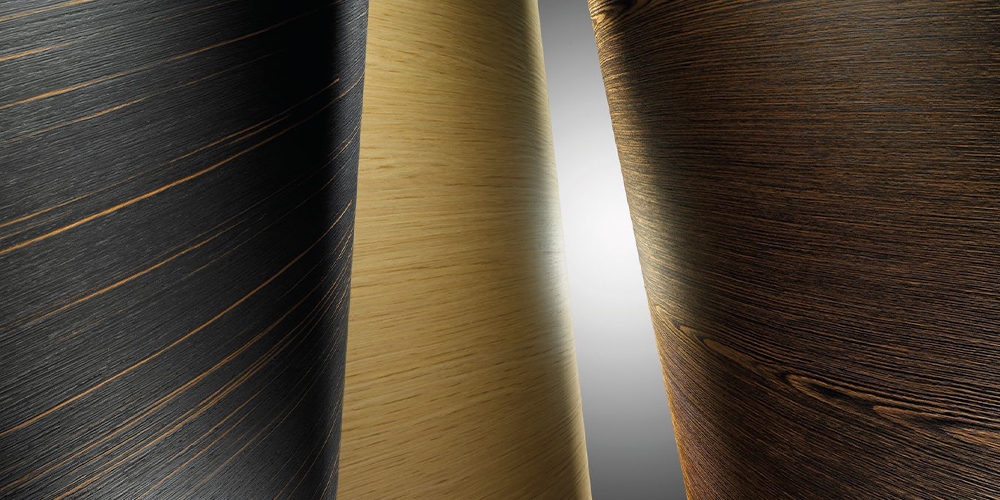
German kitchen cabinet materials are a study in restraint and rigour. High-quality woods, metals, and engineered materials are selected for verifiable durability before they are considered for beauty, and every board entering a German factory is now measured against some of the strictest environmental standards in the world. The craftsmanship that shapes these materials (manufacturing tolerances of ±0.1mm, grain-matched fronts, moisture-resistant carcases) is what separates a German kitchen from cabinetry that merely photographs well.
This guide examines the materials and craftsmanship behind German kitchen cabinets: where the tradition comes from, how the materials are chosen and certified, what precision engineering actually means at the bench, and where the discipline is heading in 2026. Throughout, we draw on Bauformat, a fourth-generation family business in Löhne, East Westphalia, producing 650 kitchens a day, as a working example of the standard.
Key Takeaways
- German kitchen cabinets are built around frameless (full-access) construction, moisture-resistant carcases, and manufacturing tolerances of ±0.1mm.
- Materials range from solid and veneered wood to advanced lacquers and laminates, all governed by formaldehyde limits of 0.05 ppm under CARB2 and US TSCA Title VI, stricter than the EU requirement.
- The Golden M (RAL-GZ 430), Europe’s strictest furniture quality mark, independently tests stability, durability, and emissions; Bauformat holds it.
- Craftsmanship shows in the details: soft-close undermount full-extension glides, handleless channel systems, and grain-matched fronts.
- For 2026, wood-tone cabinetry has overtaken white for the first time (29% versus 28% in Houzz’s study of 1,780 homeowners), with white oak named the leading wood by 51% of NKBA professionals.
- The EU Deforestation Regulation applies from December 30, 2026, requiring deforestation-free wood supply chains, a standard German manufacturers have been preparing for years.
The Rich History of German Kitchen Cabinet Craftsmanship
German cabinetmaking did not arrive at its reputation by accident. It is the product of a guild tradition that treated joinery as a discipline to be examined and certified, refined over the twentieth century into an industrial culture where the word Wertarbeit (work of value) still carries weight. The Bauformat story is typical of the region: a family business founded in 1917, with the Baumann brothers’ joinery established in Löhne in 1929, in the East Westphalian district that remains the centre of the German kitchen industry today. More than 105 years later the company is still family-owned, led by Delf Baumann since 1996, and ranks among Europe’s top ten kitchen manufacturers.
Evolution of German Kitchen Cabinets: Merging Tradition with European Elegance
The early decades of German kitchen furniture were defined by solid-wood carcases and regional workshop traditions. What changed everything was the systematic study of the kitchen as a workplace, most famously the 1926 Frankfurt Kitchen, which applied time-and-motion research to domestic space. From that point, German cabinetry evolved as a system rather than a collection of furniture: standardized modular dimensions, interchangeable fronts, and carcases engineered for repeatable precision. The elegance came not from ornament but from proportion: consistent reveals, aligned gaps, and fronts that read as a single composed surface.
Modernism’s Mark on German Kitchen Design: A Fusion of Form and Function
The Bauhaus principle that form follows function remains the operating logic of German kitchen design. Modernism stripped the kitchen of decorative cabinetry conventions and asked instead what the room had to do: store, prepare, clean, gather. The answer produced the frameless cabinet, the handleless front, and the monolithic island, forms in which the engineering is invisible and the function is total. Today’s German kitchens still measure themselves against that standard. Decoration is permitted; arbitrariness is not.
Selecting Superior Materials for German Kitchen Cabinetry: Tradition Meets Innovation
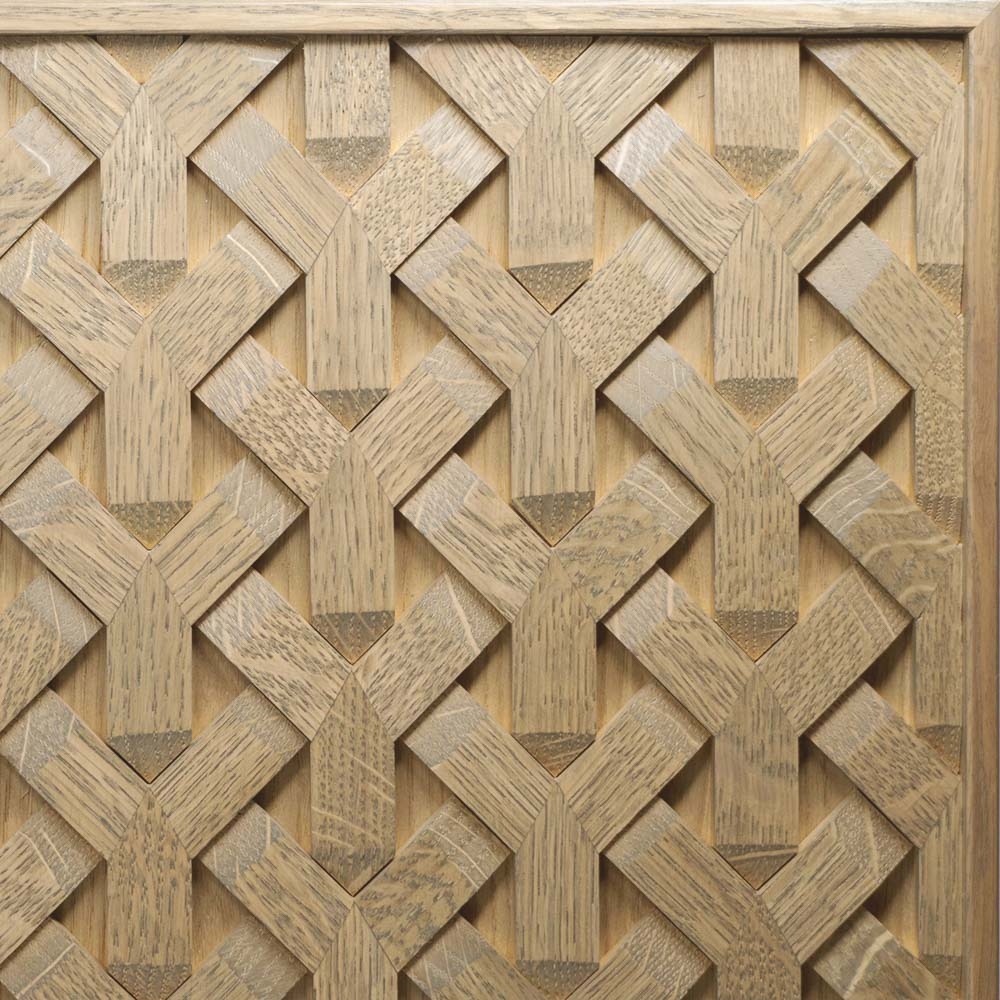
Material selection in a German factory begins with certification, not appearance. Boards must meet the CARB2 and US TSCA Title VI formaldehyde limit of 0.05 ppm (a threshold stricter than the EU’s own requirement) before any discussion of finish. Suppliers are audited for chain of custody, a discipline that matters more than ever as the EU Deforestation Regulation takes effect on December 30, 2026, requiring proof that wood entering the supply chain is deforestation-free, with a cutoff date of December 31, 2020. Globally, FSC-certified forest area now exceeds 171 million hectares, and German manufacturers draw heavily on it.
The Essence of Wood in German Kitchen Cabinets: Durability Meets Aesthetics
Wood remains the emotional centre of the German kitchen, and in 2026 it is also the commercial centre. The National Kitchen & Bath Association names white oak the leading cabinet wood, cited by 51% of design professionals, and 59% of pros report growing demand for visible wood grain. Houzz’s 2026 study of 1,780 renovating homeowners found wood-tone cabinetry chosen by 29%, overtaking white, at 28%, for the first time on record.
German manufacturers treat wood with characteristic discipline. Veneers are sliced from a single log and sequenced so that grain flows continuously across a run of doors and drawers: the grain-matched front that distinguishes a considered kitchen from an assembled one. Solid wood is reserved for elements where its movement can be controlled; elsewhere, real-wood veneer over an engineered substrate delivers the warmth of timber with the dimensional stability a precision kitchen demands.
Engineered Materials in German Kitchens: Practicality and Style
The carcase of a German cabinet is almost always engineered board, and deliberately so. Moisture-resistant particleboard and MDF, edge-sealed on all sides, outperform solid wood in the humid, hardworking environment of a kitchen. They hold screws consistently, stay flat across decades, and accept machining to tolerances of ±0.1mm. Fronts in matte and high-gloss lacquer, through-coloured laminate, and synchronized-texture surfaces that reproduce timber down to the pore have made engineered materials a first choice rather than a compromise. Low-VOC lacquer systems, cured in energy-efficient German production lines, complete the picture.
Metal and More: Diverse Materials Elevating German Kitchen Design
Beyond wood and board, German kitchens deploy a quiet inventory of supporting materials. Aluminium frames carry glass fronts with minimal sightlines. Steel drawer systems (soft-close, undermount, full-extension) bear the daily mechanical load. Glass appears in satin, smoked, and fluted treatments; ceramic and ultra-compact surfaces extend onto fronts and worktops. Each material is specified for a measured property (scratch resistance, load rating, light transmission) and only then for its contribution to the composition.
Craftsmanship in German Kitchen Cabinets
Craftsmanship in the German sense is not nostalgia for hand tools. It is the insistence that every repeatable operation be done to the same exacting standard, whether by a master joiner or a CNC line producing hundreds of kitchens a day. At Bauformat’s Löhne facilities, 1,200 staff produce 650 kitchens daily under the maxim “Made in Germany”, and the output is verified rather than asserted. The company holds the Golden M (RAL-GZ 430), Europe’s strictest furniture quality mark, alongside the “Furniture Made in Germany” seal and GS tested-safety certification, and was named a TOP 100 German innovation leader in 2025.
Precision Engineering: The Hallmark of German Kitchen Cabinet Craftsmanship
Precision is the visible difference. German lines machine carcase components to ±0.1mm, which is why a wall of cabinetry presents perfectly consistent reveals and why doors close with the same damped action on day one and year fifteen. Frameless, full-access construction (the European standard) eliminates the face frame entirely, yielding roughly ten percent more usable interior volume and a flush plane of fronts that frame construction cannot achieve. Edges are laser-sealed or zero-joint bonded so that the line between front and edge effectively disappears.
Revolutionary Hinges and Fittings: The Secrets Behind Bauformat’s Customizable Cabinetry
The fittings are where engineering meets daily life. Soft-close hinges adjustable in three dimensions allow installers to true every door to a fraction of a millimetre. Undermount full-extension glides carry heavily loaded drawers on concealed steel runners, closing with a damped, near-silent action. Lift systems hold wall-cabinet fronts at any opening angle. Handleless channel systems (a continuous machined groove in place of hardware) depend entirely on the precision of the carcase behind them; a channel that is even slightly out of line announces itself across the whole kitchen, which is precisely why so few manufacturers outside Germany attempt it at scale.
Customization and Flexibility in German Kitchen Design: Adapting to Every Kitchen Space
The German modular system is often misread as rigidity. In practice the opposite is true: a deep grid of carcase widths, heights, and depths, combined with hundreds of front finishes and interior fittings, lets a planner resolve nearly any floor plan without resorting to one-off carpentry. Within the Bauformat group the range is tiered honestly: Baulux for uncompromising luxury, Bauformat for everyday excellence, and Burger for smart budgets, so the same engineering culture is accessible at more than one price point. Filler-free planning, custom-height plinths, and made-to-measure tall units handle the irregularities of real architecture, including the concrete realities of Vancouver condominiums.
Design Principles of German Kitchen Cabinets: Where Functionality Marries Minimalism
German kitchen design rests on a small set of principles applied without exception: every element earns its place by function, proportion governs the composition, and the material is allowed to speak without ornament. The result reads as minimalism, but it is better understood as completeness: nothing missing, nothing extra.
Form Follows Function
Ergonomics is the unglamorous foundation. Worktop heights are matched to the cook, not to convention. Heavy storage lives in full-extension drawers at waist height rather than blind base cabinets. Tall units place ovens at eye level. The working triangle (and its modern successor, the zone plan) determines where every cabinet goes before any aesthetic decision is made. When the function is fully resolved, the form that results needs no justification.
The Aesthetics of Minimalism and Elegance in German Kitchen Cabinets
The aesthetic vocabulary is architectural: negative space treated as a material, shadow gaps in place of mouldings, a monolithic island anchoring the room, fronts composed as a single elevation. Matte surfaces and handleless lines remain the contemporary register, and timber-drenching (carrying one wood tone across fronts, panelling, and shelving) has emerged as the warm counterpoint to the all-white kitchens of the last decade. Elegance, in this tradition, is what remains when everything arbitrary has been removed.
Crafting Aesthetic and Practical European Kitchen Cabinets with Bauformat Principles
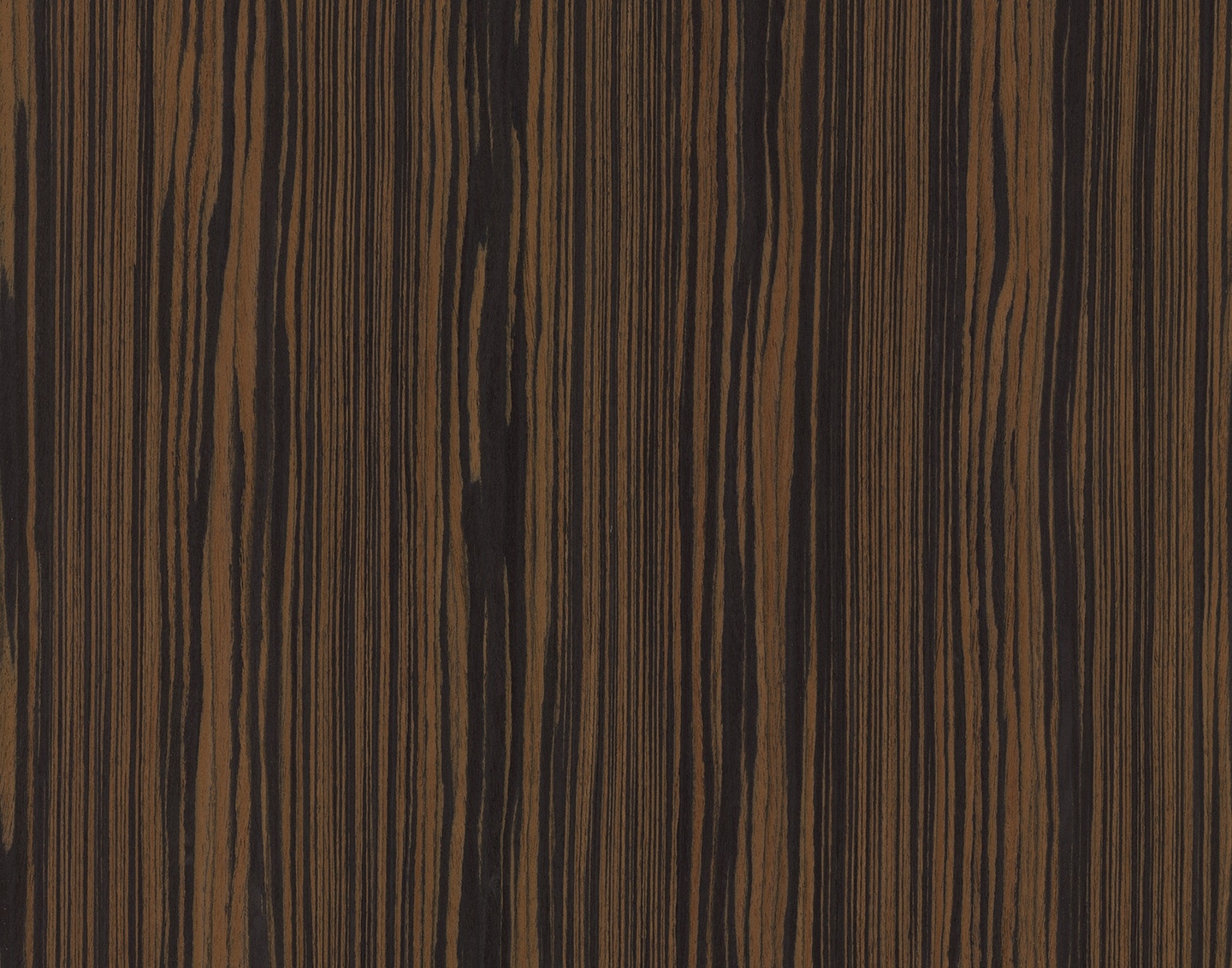
Turning a design into 650 finished kitchens a day requires a manufacturing culture in which aesthetics and logistics are engineered together. Every kitchen is produced to order (carcases, fronts, and fittings batched, machined, and sequenced for a single project) which is how a factory achieves both industrial consistency and genuine individuality.
The Art of Manufacturing German Kitchen Cabinets: From Sketch to Production
The process begins in planning software that carries the designer’s drawing directly into machine code: no re-measurement, no transcription, no drift between intent and output. Boards are cut, edged, and bored on lines calibrated to ±0.1mm; veneer sequences are tracked so grain-matched fronts leave the factory in the order they will hang on the wall. Hardware is inserted and tested before packing. A kitchen arrives in Vancouver as a kit of parts machined an ocean away that fits together on site as if the room had been built around it, because dimensionally it was.
Ensuring Excellence: The Rigorous Quality Control and Testing of German Kitchen Cabinets
Quality in German manufacturing is externally policed. The Golden M (RAL-GZ 430) subjects furniture to independent laboratory testing for stability, surface durability, hinge and drawer endurance, and emissions, the strictest such regime in Europe, and one Bauformat passes as a condition of carrying the mark. GS tested-safety certification and the “Furniture Made in Germany” seal add further independent verification, while board stock is held to the 0.05 ppm formaldehyde ceiling of CARB2 and TSCA Title VI. The point of all this testing is simple: the buyer should never have to take craftsmanship on faith.
Emerging Trends in German Kitchen Cabinet Design: Smart Solutions and Sustainability
The German industry enters 2026 in recovering health: revenue just under €5.6 billion in 2025 with an export quota of roughly 46%, and order intake up 2.6% through the first eight months of 2025. Its design direction is unusually clear: warmer materials, more intelligence, and demonstrable sustainability.
Smart Kitchens: Integrating Technology with German Kitchen Cabinetry for Ultimate Functionality
The arrival of Matter 1.5 in late 2025 finally unified smart appliances across brands, and cabinetry is adapting accordingly: servo-assisted opening, in-cabinet charging, sensor-driven lighting, and tall units planned around connected ovens and refrigeration. The NKBA identifies “increasing kitchen IQ” as a defining 2026 theme, and Pinterest reports searches for “kitchen lighting plan” up 165%, a sign that buyers now treat integrated cabinet lighting as infrastructure rather than accessory. The German approach keeps the technology invisible: intelligence in the cabinet, never on it.
Eco-friendly German Kitchen Designs: Embracing Sustainability Without Compromising Style
Sustainability has moved from marketing to regulation. The EU Deforestation Regulation applies from December 30, 2026, requiring documented deforestation-free timber, and the FSC-certified base it draws on now exceeds 171 million hectares worldwide. German factories add low-VOC lacquer systems, energy-efficient production, and board recycling to the equation. The deeper sustainability argument, though, is longevity: a cabinet engineered and tested to last decades is the most resource-efficient cabinet there is.
Frequently Asked Questions
What makes German kitchens stand out in terms of materials and craftsmanship?
Independent verification. German kitchens combine certified low-emission materials, frameless precision construction at ±0.1mm tolerances, and externally tested quality marks such as the Golden M (RAL-GZ 430). The standard is measured, not claimed.
Why should I consider investing in German kitchen cabinets?
Because the cost is amortized over decades of daily use. Tested hinge and drawer endurance, moisture-resistant carcases, and durable surfaces mean a German kitchen typically outlasts two or three conventional replacements, and kitchens remain the highest-joy, highest-demand renovation a homeowner can make.
What are some of the critical features of German kitchen furniture?
Frameless full-access carcases, soft-close undermount full-extension glides, handleless channel systems, grain-matched fronts, modular planning dimensions, and integrated lighting and technology, all assembled to consistent, verifiable tolerances.
Are there entry-level German kitchen options available for more affordable kitchen ranges?
Yes. Within the Bauformat group, Burger serves smart budgets with the same German factory standards, Bauformat delivers everyday excellence, and Baulux occupies the uncompromising luxury tier. The engineering culture is shared; the specification depth differs.
How can German kitchens help create a modern look for my kitchen?
Handleless fronts, matte surfaces, and architectural proportion produce the clean elevation modern design depends on. For 2026, pairings such as white oak with black (a Pinterest search term up 625%) show how the German palette stays current without chasing fashion.
What sets German kitchen cabinets apart from other kitchen furniture?
System thinking. A German kitchen is engineered as one coordinated system (carcase, front, fitting, and installation tolerance) rather than as separate pieces of furniture, which is why the finished room reads as architecture.
Why are German kitchens worth the investment?
Durability you can verify, ergonomics you feel daily, and design that does not date. Industry data consistently places kitchen renovation among the best-returning home investments, and a kitchen built to German standards protects that return for decades.
Embracing the Future with German Kitchen Cabinet Craftsmanship
The materials are certified, the tolerances are measured, and the tradition is more than a century deep. What German kitchen craftsmanship offers in 2026 is what it has always offered: cabinetry in which every decision, from the formaldehyde content of a board to the grain sequence of a veneer, has been made deliberately and can be defended. For Vancouver homeowners weighing wood-tone fronts, handleless lines, or a monolithic island, the surest way to understand the difference is to open a drawer and feel it close.
Experience German materials and craftsmanship first-hand. Book a private showroom tour at Bauformat BC, 1410 Marine Dr Unit 205, North Vancouver, +1-604-770-1284.
