
A truly green kitchen is not about a colour on the cabinet doors. It is about how long that kitchen lasts, what it is made from, how much energy and water it uses every day, and where the leftovers end up after dinner. In Metro Vancouver, where the green bin sits next to the recycling under nearly every sink and BC Hydro keeps our power among the cleanest in the country, those choices add up faster than most of us realize.
The good news is that an eco-friendly kitchen design rarely asks you to give anything up. The most sustainable kitchen is usually also the most pleasant one to cook in: solid, quiet, well lit, easy to sort, and built to outlast the next several trends. Here is how to plan one that is genuinely kind to the environment, with a few notes specific to living and renovating in British Columbia.
Key Takeaways
- Durability is the headline. The greenest kitchen is the one you do not have to replace. Buying quality cabinetry once keeps a tonne of material out of the landfill.
- Look for low-emission, certified materials. Low-VOC finishes and formaldehyde-managed panels protect your indoor air for years after the install.
- Energy and water savings are daily. ENERGY STAR appliances, LED lighting, and efficient fixtures quietly cut consumption every single day.
- Sorting is design, not an afterthought. Built-in waste and recycling systems make Metro Vancouver’s organics program effortless.
- Plan carefully to waste less. Made-to-order, accurately measured cabinetry means fewer offcuts, fewer mistakes, and nothing torn out a year later.
Durable Cabinetry: The Foundation of a Sustainable Kitchen
Before any conversation about finishes or composting, sustainability starts with one honest question: how long will this kitchen last? Cabinetry is the largest single material investment in most kitchens, and it is also one of the heaviest things people throw out when a renovation goes sideways. More than 75 per cent of construction waste from materials like wood and drywall still ends up in landfills (BigRentz, 2025), and worn-out or poorly built cabinets are a real part of that stream.
This is where buying quality once becomes the most environmentally responsible decision you can make. Bauformat has been manufacturing cabinetry in Lohne, Germany since 1917, to engineering standards built around decades of daily use, not a quick resale flip. Full-extension soft-close runners, 3D-adjustable concealed hinges, and made-to-order construction are not just nice features. They are the reason a kitchen keeps working smoothly long after a cheaper one would have started sagging, sticking, or being hauled to the curb.
A cabinet that survives twenty or thirty years instead of ten effectively halves its lifetime environmental cost. When you are comparing options, ask about the hardware, the carcass material, and how doors are made to be adjusted and replaced rather than discarded. Longevity is quiet, but it is the single biggest lever you have.
Low-Emission and Certified Materials
What your cabinets are made from matters for the planet and for the air inside your home. Many conventional cabinet panels are held together with adhesives that can off-gas formaldehyde and other volatile organic compounds for years after installation. In a room where you prepare food and your family gathers daily, that is worth taking seriously.
Buyers have noticed. The sustainable furniture market, which includes eco-friendly cabinetry, is projected to reach 16.48 billion dollars by 2030, and roughly 64 per cent of younger buyers say they will pay a premium of nearly 10 per cent for verified sustainable products (Casta Cabinetry, 2026). Demand for low-VOC and formaldehyde-managed materials is climbing because people increasingly read the label on their furniture the way they read it on their food.
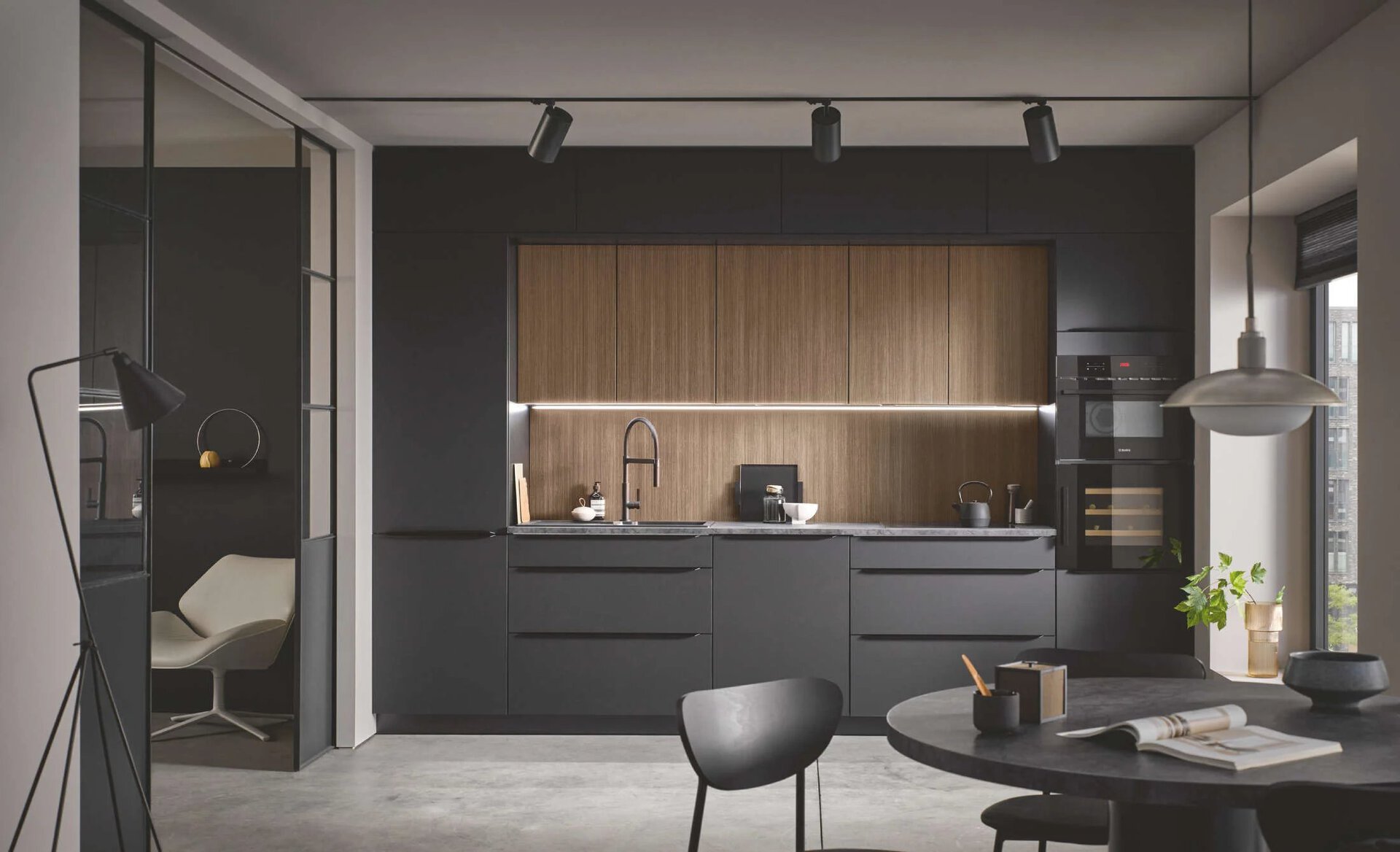
When you plan a kitchen, look for materials with low-emission certifications and finishes designed to keep VOCs down. German manufacturing operates under some of the strictest emissions and material standards in the world, which is part of why made-in-Germany cabinetry appeals to households focused on indoor air quality. Across the Baulux, Bauformat, and Burger collections, you can choose surfaces and finishes that fit a low-emission home without sacrificing the look you want.
Energy-Efficient Appliances and Lighting
Cabinetry is the structure, but appliances and lighting are where your kitchen uses energy every day. This is the easiest place to lock in savings that repeat for the life of the room.
Start with ENERGY STAR appliances. A certified dishwasher is on average 10 per cent more energy efficient and 20 per cent more water efficient than a standard model, and a standard-size unit can save thousands of litres of water over its lifetime (ENERGY STAR, 2025). Upgrading from a pre-2013 dishwasher to a current ENERGY STAR model can meaningfully cut annual electricity use, because older units could draw far more power than the under 270 kWh a year a modern unit uses (SolarTech, 2025). In British Columbia, where BC Hydro supplies overwhelmingly clean hydroelectric power, choosing efficient appliances stretches an already low-carbon grid even further, and BC Hydro periodically offers rebates that make the upgrade easier on the budget.
Lighting is the other daily draw. Integrated LED lighting uses a fraction of the energy of older bulbs and lasts far longer, which means fewer replacements heading to the bin. Bauformat cabinetry can be specified with integrated LED, so under-cabinet task lighting and interior lighting are built in rather than bolted on later. The result is a kitchen that is brighter to work in and lighter on your hydro bill.
Water-Saving Fixtures
Water is the quiet half of kitchen sustainability. Even with our reputation for rain, treating and delivering clean water takes energy, and summer restrictions are a regular part of life across Metro Vancouver. A thoughtful kitchen reduces what goes down the drain without making everyday tasks harder.
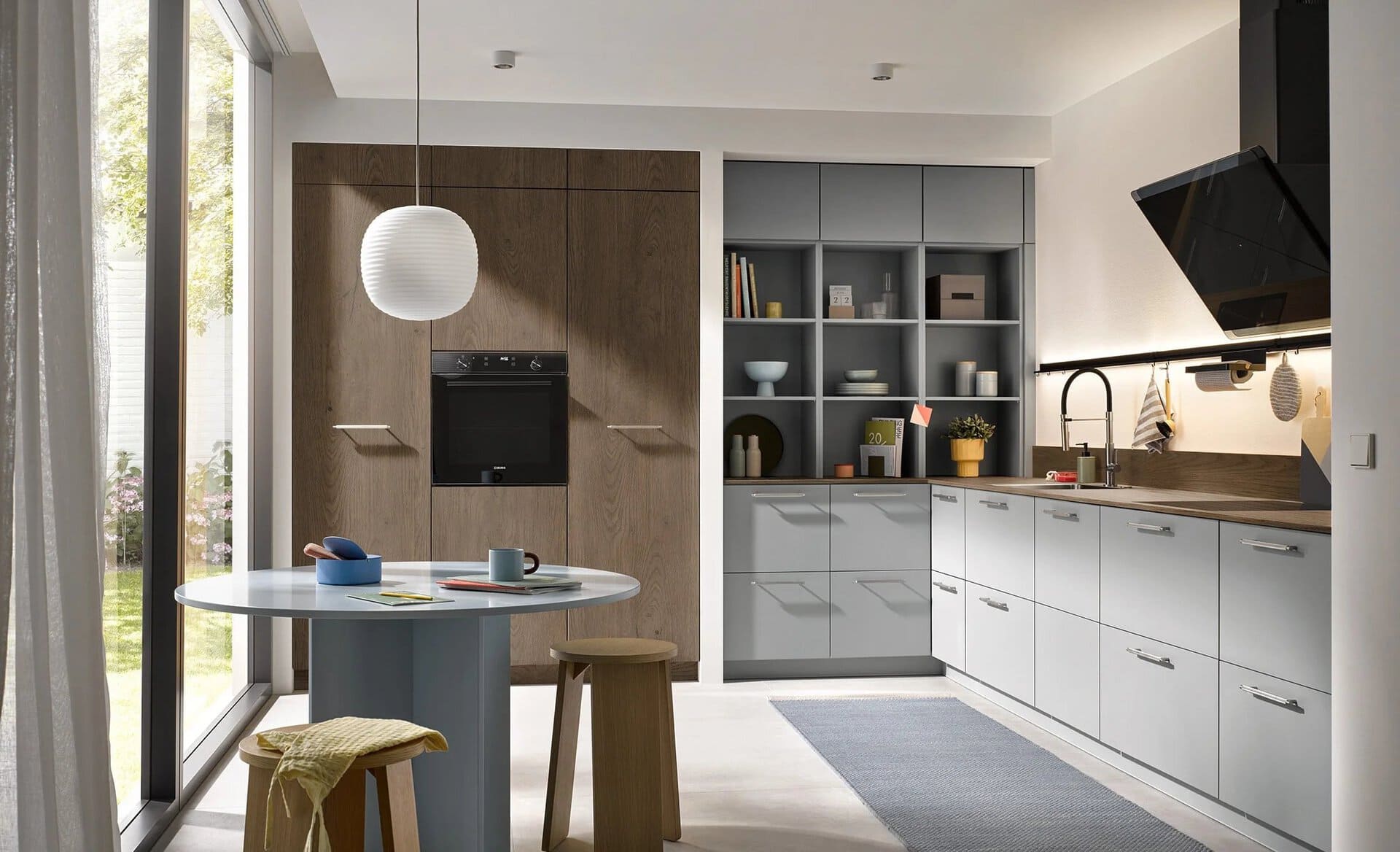
A WaterSense-labelled or low-flow kitchen faucet delivers the pressure you need for rinsing and filling pots while using noticeably less water than older fixtures. Pull-down sprayers with efficient aerators help you rinse quickly and shut off cleanly. Pairing an efficient faucet with an ENERGY STAR dishwasher matters more than people expect, because a modern dishwasher generally uses far less water per load than washing the same dishes by hand under a running tap. Designing the sink, faucet, and dishwasher as one zone encourages the habits that save the most.
Built-In Recycling and Compost Sorting
Nowhere is the local angle clearer than here. Metro Vancouver banned organics from the garbage in 2015, yet compostable food scraps are still the single most common item arriving at the landfill, making up about 22 per cent of waste on average (CBC News, 2025). In 2024, the region diverted enough organic material to produce 140,000 tonnes of compost (Metro Vancouver, 2025). The infrastructure exists. The missing piece, in a lot of homes, is a kitchen that makes sorting effortless.
That is a design problem, and it has a design solution. Integrated waste and recycling bin systems built into a cabinet give you dedicated, pull-out compartments for garbage, recycling, and organics, right where you prep and clean up. When the compost bin glides out next to the cutting board on a soft-close runner, scraps go where they belong without a second thought. Bauformat’s integrated waste systems are designed exactly for this, turning Metro Vancouver’s green-bin program from a chore into the path of least resistance.
If you are planning a renovation, decide on your sorting setup early so it can be designed into the cabinet run rather than wedged in afterward. A bin system sized for your household and your municipality’s collection streams is one of the most practical green upgrades you can make.
Responsibly Sourced Wood
Wood is renewable, but only when it is harvested responsibly. The difference between a forest managed for the long term and one that is simply cut down shows up in certifications like FSC, which trace material back to well-managed sources. When you are choosing wood doors, fronts, or veneers, asking about sourcing is a fair and reasonable question.
Responsible sourcing also pairs naturally with durability. A solid, well-made wood front that lasts for decades honours the tree it came from far better than a disposable one that is replaced twice in the same period. German cabinetry traditions tend to treat wood as a long-term material to be engineered and protected, which is exactly the mindset a sustainable kitchen wants. Choosing a finish that can be cleaned and maintained, rather than one that scratches and dates quickly, keeps that wood in service and out of the waste stream.
Reducing Waste Through Good Planning
Some of the most effective sustainability happens before anything is built. Mistakes are expensive for the environment as well as your wallet. Cabinets ordered to the wrong size, layouts that do not work and get torn out, and offcuts from cutting standard boxes down to fit all become waste that careful planning avoids.
This is the practical advantage of made-to-order cabinetry that is measured, planned, and installed by a local team. When your kitchen is built to your exact dimensions in Germany and fitted by the Vancouver team that measured it, there is far less guesswork, far less material trimmed away on site, and far less risk of a costly redo. Accurate planning means you buy what you need and it fits the first time.
Good planning also means designing for how you actually live, so the kitchen keeps working as your needs change. Drawers organized for the way you cook, storage scaled to your household, and adjustable hardware that adapts over time all extend the life of the room. The longer a well-planned kitchen serves you, the less often anything has to be replaced, and that is sustainability you feel every day.
Frequently Asked Questions
Is buying expensive cabinetry really more eco-friendly than a budget kitchen?
In most cases, yes. The greenest kitchen is the one that does not need replacing. A durable, made-to-order kitchen that lasts two or three decades keeps a large amount of heavy material out of the landfill and avoids the energy and resources of building a replacement. Spreading the cost over the years of use, buying quality once is typically the more sustainable choice than replacing a cheaper kitchen twice.
What makes a kitchen low-emission for indoor air quality?
Low-emission kitchens use panels and finishes that release minimal volatile organic compounds, including formaldehyde, after installation. Look for low-VOC finishes and materials made to strict emissions standards. German manufacturing standards are among the most stringent in the world for material emissions, which is one reason buyers focused on indoor air quality look to made-in-Germany cabinetry.
How does a built-in bin system help with Metro Vancouver’s organics program?
Metro Vancouver requires food scraps to be kept out of the garbage, but they remain the most common item still landing in the landfill. An integrated, pull-out bin system gives organics, recycling, and garbage their own dedicated compartments inside a cabinet near your prep area, so sorting becomes automatic rather than an extra step. That convenience is what turns a good intention into a daily habit.
Do energy-efficient appliances matter in BC if our power is already clean?
They still help. BC Hydro’s hydroelectric power is among the cleanest in the country, so efficiency here is more about conserving a valuable shared resource, lowering your bill, and easing demand on the grid than about cutting carbon alone. ENERGY STAR appliances and integrated LED lighting also reduce water use and replacement waste, which matters regardless of how the electricity is generated.
An eco-friendly kitchen design is really just a well-made kitchen seen clearly: durable enough to stay out of the landfill, made from materials that are kind to your air, efficient with the energy and water it uses, and organized so that sorting and composting feel natural. None of that asks you to compromise on how the room looks or how it feels to cook in. Built well once, with the local realities of Metro Vancouver in mind, a green kitchen quietly does the right thing every day for as long as you live with it.
Explore more from Bauformat BC
- Green Benefits of German Kitchen Cabinets
- Why Choose Long-Lasting Materials for Your Kitchen Cabinets
- Why Opt for Economical Kitchen Cabinet Materials?
German cabinetry, planned and built for Metro Vancouver
The kitchen is one of the highest-return rooms in a home: the 2025 Cost vs. Value Report found a minor kitchen remodel recoups roughly 96% of its cost at resale. Choosing cabinetry that lasts is central to that return, which is where German engineering earns its place. Every Bauformat kitchen is manufactured in Germany, then measured, planned, and installed by our Vancouver team, built to fit your room to the millimetre.
See the Baulux, Bauformat, and Burger collections in person at our North Vancouver showroom at 1410 Marine Dr Unit 205, learn more about the manufacturer at bauformat.de, and meet our local team at The Bau Team.
Book a 30-minute consultation with our Metro Vancouver kitchen designers to plan a kitchen built to last.
