
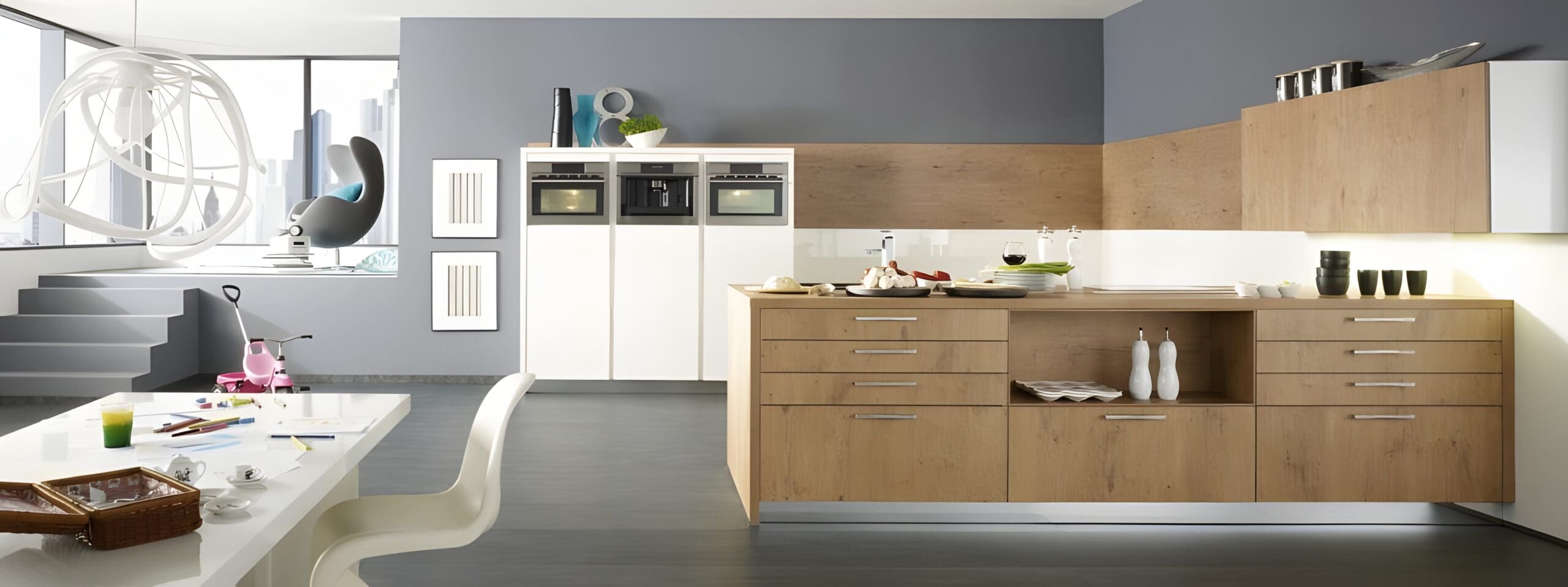
Walk into a kitchen designed for 2026 and the first thing you notice is how calm it feels. The hard, glossy, all-white look that ruled the last decade has softened into something warmer and more grounded. Wood grain is back. Colour has returned, though in muted, earthy registers rather than loud accents. Surfaces are matte, tactile, and quiet. The German design tradition, with its love of clean geometry and engineering precision, has always been ahead of this curve, and 2026 is the year the wider world catches up to it.
In our design consultations we have watched Metro Vancouver homeowners move toward kitchens that work harder and shout less. This is a round-up of the directions shaping the year, each one viewed through a German-design lens, with concrete examples of how the looks come together in a real Vancouver home. Use it as a planning tool, a mood board, and a reality check on what is genuinely current versus what is already fading.
Key Takeaways
- Warm minimalism is the defining mood of 2026: clean lines made livable through natural materials, matte surfaces, and earthy colour.
- Wood grain has overtaken painted cabinets in popularity, with white oak the most-requested wood, and neutrals still dominate at 96 percent of professionals (NKBA, 2026).
- Handleless fronts, integrated appliances, and floor-to-ceiling storage create the seamless, calm look that German cabinetry delivers natively.
- Statement islands and decorative lighting are where personality lives now, with 87 percent of pros calling statement lighting a key consideration (NKBA, 2026).
- A minor kitchen remodel returned about 113 percent of its cost at resale, making thoughtful updates one of the strongest home investments (Remodeling Cost vs. Value, 2026).
Warm Minimalism: The Mood of the Year
If 2026 has a single headline, it is warm minimalism. The discipline of minimalism stays, the clean runs of cabinetry, the absence of clutter, the architectural calm, but the coldness is gone. Designers are softening hard geometry with natural texture, warmer undertones, and materials you actually want to touch. The NKBA’s 2026 report found that contemporary and minimalist styles rank second in popularity over the next three years at 60 percent, just behind transitional at 72 percent, with organic and natural styles close behind at 58 percent (NKBA, 2026). The takeaway is that pared-back design is not going anywhere, it is just getting more human.
This is the territory German cabinetry has occupied for a century. Made in Germany since 1917, Bauformat builds fronts with the flat, full-height proportions and tight reveals that warm minimalism depends on. The trick is balance. A run of warm wood-grain tall units against a matte clay-toned island reads as serene rather than stark. In a Vancouver context, where grey skies are a fact of life for much of the year, that warmth matters more than it might in a sunnier climate. A kitchen that glows softly on a wet November afternoon is doing real work.
Handleless Fronts and the Vanishing Hardware
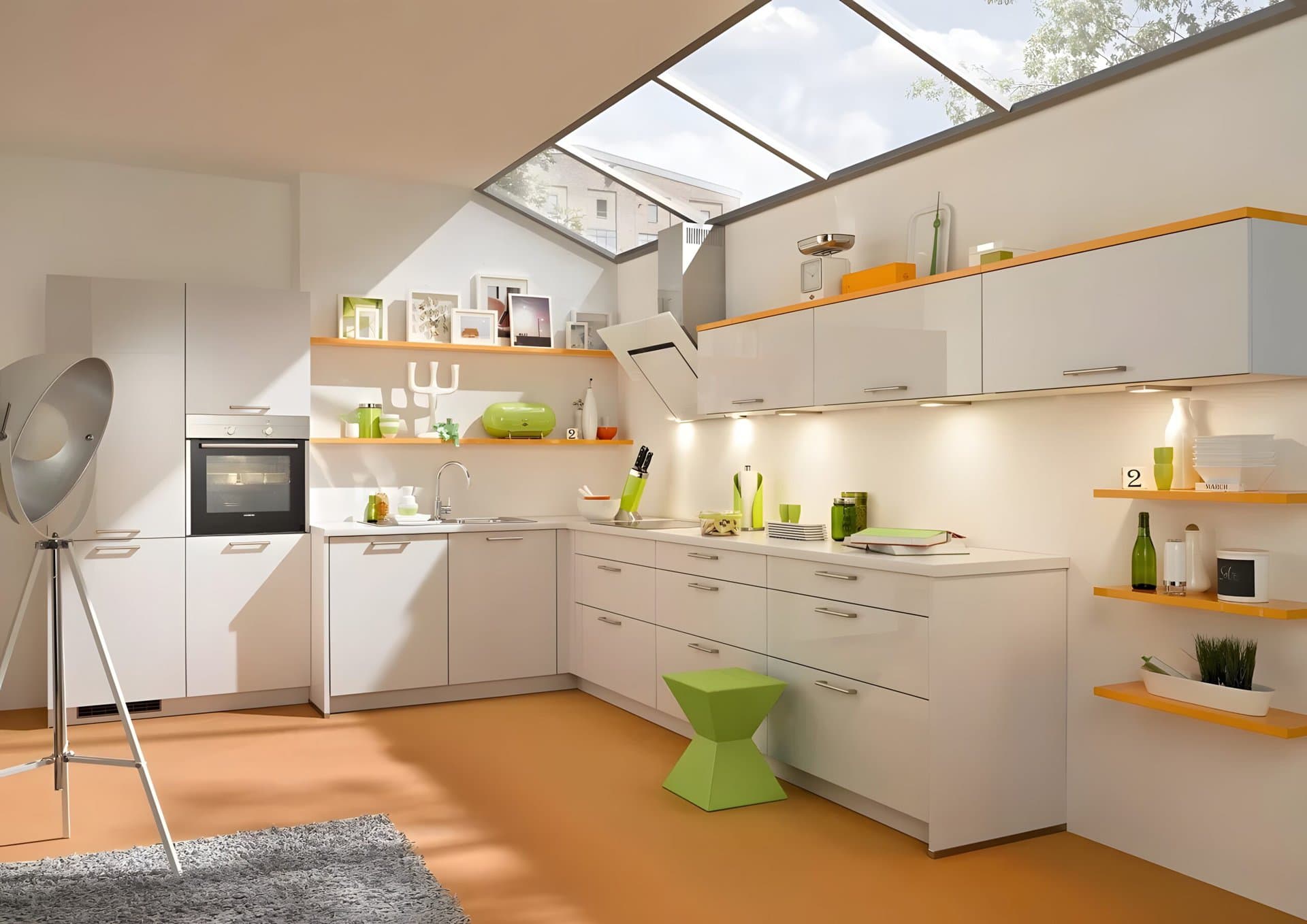
Nothing signals a current German kitchen faster than handleless fronts. Pulls and knobs interrupt the clean plane of a cabinet run, and 2026 design wants that plane uninterrupted. Handleless designs using touch-latch and recessed-grip systems are growing specifically for the minimalist look the year favours (NKBA, 2026). The result is a kitchen that reads as architecture, not furniture, with long unbroken horizontals that make even a compact space feel composed.
There are two main ways to achieve it, and both belong in the Bauformat range:
- Recessed grip rails: a continuous channel routed into the top edge of the front, so you open the door with a fingertip behind the panel. Clean, durable, and forgiving of daily use.
- Push-to-open mechanisms: a gentle press releases the door, paired with soft-close so it returns quietly. This gives the purest flat-front look with zero visible hardware.
What makes the handleless look actually pleasant to live with is the hardware behind the scenes. Full-extension soft-close runners let a drawer glide fully open and close without a slam, and 3D-adjustable concealed hinges keep door gaps even over years of use, which is exactly what keeps those tight reveals looking sharp. In a Yaletown condo or a Kitsilano character home alike, handleless fronts make a galley or single-wall kitchen feel intentional rather than cramped.
Natural and Warm Materials Take the Lead
The biggest material story of 2026 is the return of wood. For the first time in years, wood grain has surpassed painted cabinets in popularity, with 59 percent of professionals naming it as growing, and white oak is the single most-requested wood type at 51 percent (NKBA, 2026). Medium and lighter natural tones lead the comeback. This is a clear break from the painted-shaker era and a move toward surfaces that show their character.
For German cabinetry this plays to a real strength. The Bauformat collection offers convincing wood-grain fronts in oak and walnut registers, with the grain running consistently across a full run so a wall of tall units reads as one continuous piece of timber rather than a patchwork. On countertops and backsplashes, natural quartzite is rising fast, sitting right behind engineered quartz at 62 percent for counters and 61 percent for backsplashes (NKBA, 2026). The pairing of a warm wood-grain base with a veined stone slab is the defining 2026 material combination.
How the look comes together
- White-oak grain base cabinets with a soft matte clay or sage on the upper run.
- A full-height stone or stone-look slab backsplash instead of tile, for an unbroken surface.
- Wood flooring underfoot, still the runaway favourite among 94 percent of pros (NKBA, 2026), tying the natural palette together.
Earthy and Moody Colour
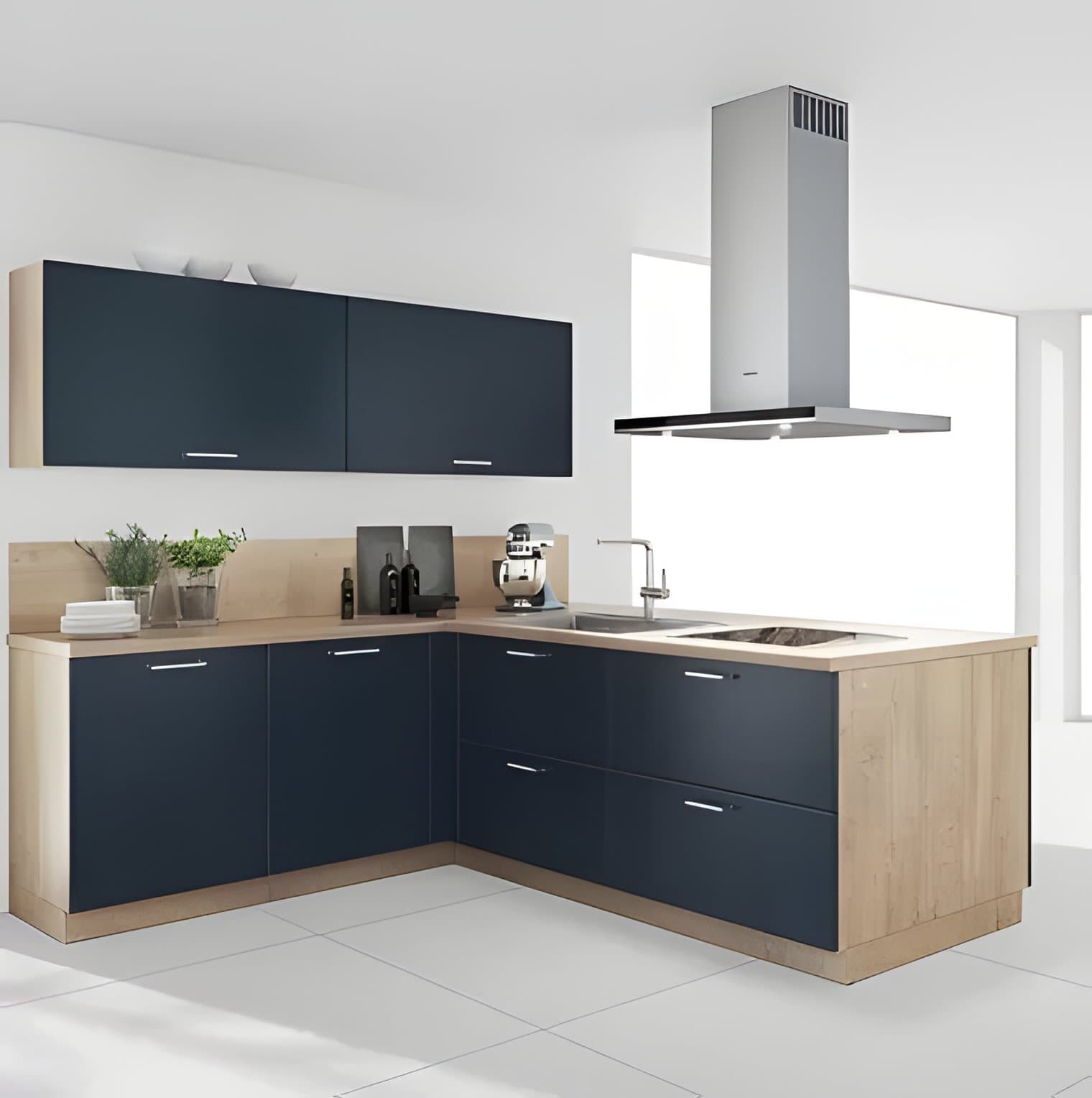
Colour is back, but read the room before you reach for anything bright. Neutrals still dominate at 96 percent of professionals, with greens at 86 percent and blues at 78 percent the leading accent families, while loud shades like bright orange and red sit at the very bottom of the list (NKBA, 2026). The all-white kitchen is genuinely on its way out, with 86 percent of pros saying so, replaced by warm neutrals and earth tones confirmed by 67 percent of experts (kbbreview, 2026). Think mushroom, olive, clay, deep forest, and warm greige rather than anything you would call a statement on its own.
Where designers do add colour, they place it deliberately. The NKBA found new statement colours landing on backsplashes (60 percent), the island (57 percent), and decorative accessories (55 percent) rather than across every cabinet (NKBA, 2026). That measured approach suits German cabinetry well, because the matte and ultra-matte fronts in the Baulux and Bauformat ranges hold deep, complex colours beautifully. A forest-green island anchored by warm oak surrounds is a far more current move in 2026 than a kitchen painted a single bright shade throughout.
Integrated and Hidden Appliances
A calm kitchen is one where the machinery disappears. Panel-ready, integrated appliances behind cabinetry fronts are central to the 2026 look, working alongside matching slab backsplashes and hidden storage doors to create one cohesive, uninterrupted surface (NKBA, 2026). When the fridge and dishwasher wear the same front as the cabinets beside them, the eye reads the whole wall as architecture, and the warm-minimalist effect holds.
This is precisely the kind of precision German cabinetry is built around. Integration depends on consistent front thicknesses, accurate panel sizing, and hinges that carry the extra weight of an appliance door without sagging, which is where 3D-adjustable concealed hinges earn their keep. Two practical moves define the trend:
- Appliance garages: a lift-up or pocket-door cabinet that hides the kettle, toaster, and coffee machine on the counter, so the worktop stays clear.
- Integrated tall units: fridge, freezer, and ovens absorbed into a single floor-to-ceiling wall of cabinetry, often the cleanest way to handle a Vancouver open-plan condo where the kitchen is visible from the living room.
Statement Islands
If the perimeter is where 2026 stays quiet, the island is where it speaks. The island has become the social and visual centre of the kitchen, and designers are treating it as a feature in its own right: a contrasting colour or material, a thick waterfall stone edge, generous seating, and storage built into every face. Islands also rank among the top places homeowners are introducing their statement colour, at 57 percent (NKBA, 2026).
In a German cabinetry plan, the island is where you can be bold without overwhelming the room. A common 2026 approach pairs a warm wood-grain perimeter with an island in a deep matte tone, or flips it, with a calm neutral perimeter and a richly veined stone island as the hero. Because the same soft-close runners and concealed hinges run through the island as the rest of the kitchen, the bank of deep drawers facing the seating side stays just as functional as it is good-looking. For Metro Vancouver families who live in their kitchens, an island that combines a homework-and-coffee gathering spot with serious storage is the practical heart of the whole design.
Texture, Matte Surfaces, and Smart Storage
Two final threads tie the year together: how surfaces feel, and how the kitchen stays calm in daily use. Matte and ultra-matte fronts have moved from niche to mainstream, prized for the way they absorb light, resist fingerprints, and read as soft rather than slick. Texture is doing the work that bright colour used to do, with fluted and ribbed fronts, fine-grain wood, and tactile stone adding interest to an otherwise restrained palette. The Baulux collection in particular, with its ceramic, glass, and ultra-matte fronts, was built for exactly this contemporary, low-sheen direction.
Storage is the quiet hero. Floor-to-ceiling cabinetry with more drawers, deep pull-outs, and dedicated work zones is firmly in (NKBA, 2026), and it is what keeps a minimalist kitchen from drifting into clutter. German cabinetry has long led here, and the full-extension runners that let a deep drawer open completely turn a cabinet’s full depth into usable, visible space.
Lighting that does double duty
Lighting has graduated from afterthought to design feature. A full 87 percent of pros now call decorative, statement lighting a key consideration, while under-cabinet lighting (82 percent), interior cabinet lighting (72 percent), and pendants (63 percent) round out the most-cited priorities (NKBA, 2026). The 2026 approach layers them: warm under-cabinet strips wash the backsplash and make worktops usable, interior lights bring tall units to life when the doors open, and a sculptural pendant or run of pendants over the island provides the one decorative flourish a restrained room needs. In Vancouver’s long, dark winters, that layered light is not just decorative, it is what makes the kitchen feel good to be in.
Frequently Asked Questions
Is the all-white kitchen really over for 2026?
As a single dominant look, largely yes. 86 percent of professionals say the all-white kitchen is on its way out, replaced by warm neutrals and earth tones (kbbreview, 2026). White still appears, but as one quiet note in a warmer, more layered palette rather than the whole story. Wood grain and earthy colour are the directions with real momentum.
Are handleless kitchens practical for everyday use?
Very. Recessed grip rails and push-to-open mechanisms are designed for daily life, and paired with soft-close runners and adjustable concealed hinges they stay smooth and quiet for years. The lack of protruding hardware also means nothing to catch sleeves or bags on, which is a genuine bonus in a tight Vancouver galley kitchen.
Is a kitchen renovation a sound investment in Metro Vancouver?
Historically among the strongest. A minor midrange kitchen remodel returned roughly 113 percent of its cost at resale nationally, and kitchens overall recoup about 70 to 80 percent across all project scopes (Remodeling Cost vs. Value, 2026). In a high-value market like Metro Vancouver, a well-planned kitchen is one of the most visible upgrades a buyer notices.
Can German cabinetry deliver these looks at different budgets?
Yes. The Baulux collection leans into the most contemporary ceramic, glass, and ultra-matte fronts, the core Bauformat range offers the widest choice including handleless, wood-grain, matte, and high-gloss, and the Burger collection delivers the best value while keeping the same engineering underneath. The 2026 looks are achievable across that spread.
The thread running through every one of these directions is restraint with warmth: fewer hard edges, more natural texture, colour used with intent, and storage that keeps the whole thing calm. It is a sensibility German cabinetry has carried for generations, and 2026 is simply the year the rest of kitchen design arrives at the same place. For a Metro Vancouver home, that means a kitchen that feels as good in the grey of January as it looks in the long light of July.
Explore more from Bauformat BC
- Modern Kitchen Design
- Decoding German Kitchen Cabinets Vs. Italian Kitchen Cabinets
- How would Bauformat Matte Black Cabinets Change the Mood of a Kitchen?
German cabinetry, planned and built for Metro Vancouver
The kitchen is one of the highest-return rooms in a home: the 2025 Cost vs. Value Report found a minor kitchen remodel recoups roughly 96% of its cost at resale. Choosing cabinetry that lasts is central to that return, which is where German engineering earns its place. Every Bauformat kitchen is manufactured in Germany, then measured, planned, and installed by our Vancouver team, built to fit your room to the millimetre.
See the Baulux, Bauformat, and Burger collections in person at our North Vancouver showroom at 1410 Marine Dr Unit 205, learn more about the manufacturer at bauformat.de.
Book a 30-minute consultation with our Metro Vancouver kitchen designers to plan a kitchen built to last.
