
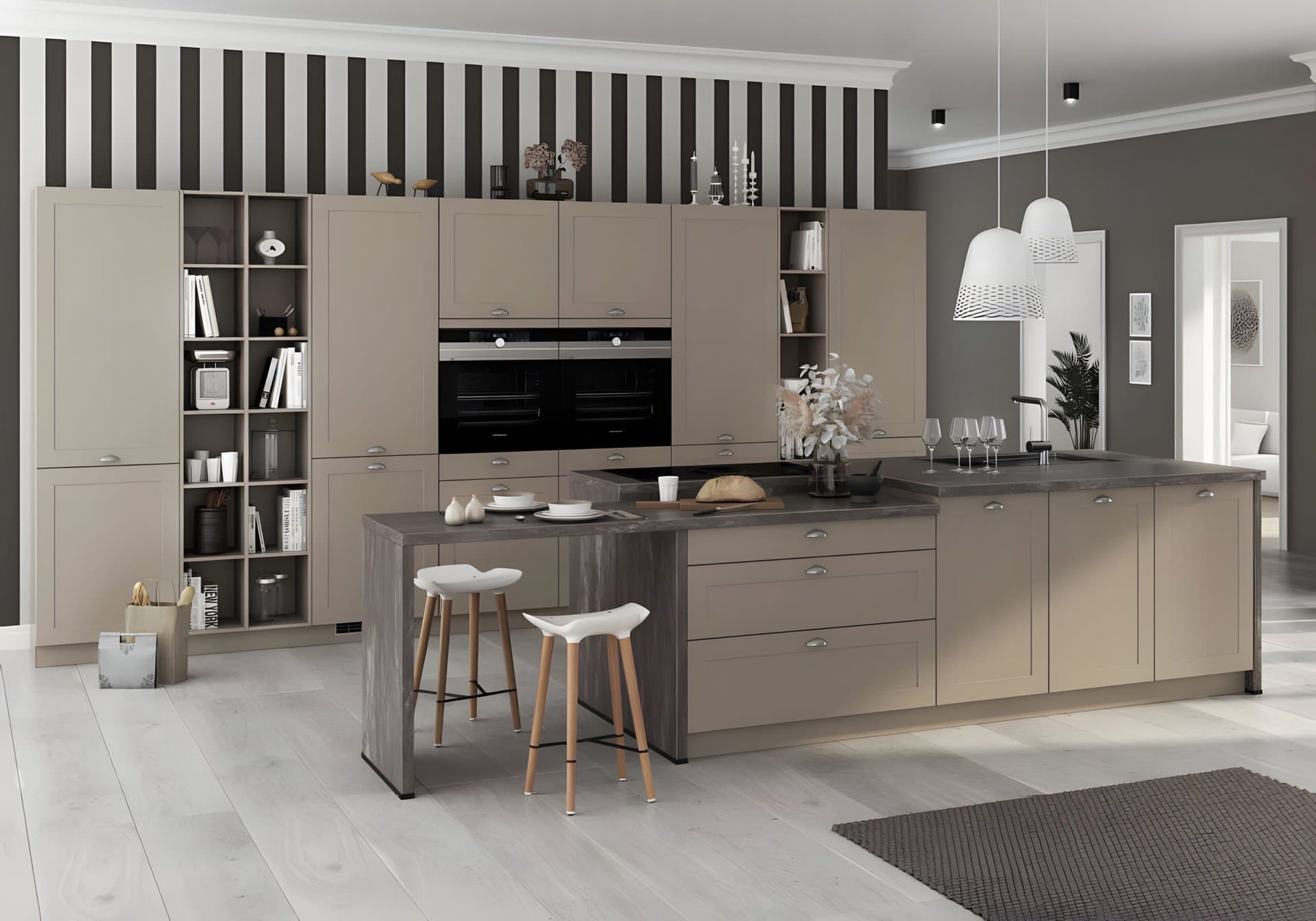
A German kitchen has a reputation, and most of it is earned. The cabinets are made to order, the drawers glide and close themselves, and the whole thing is built to outlast the room around it. The catch, or at least the assumption, is that all of this sits firmly out of reach unless you are doing a top-to-bottom luxury build. That assumption is where a lot of Metro Vancouver homeowners talk themselves out of something they could actually afford.
Here is the more honest version. A German kitchen is not a single price tag, it is a set of choices. Some of those choices carry real cost and real payoff, and some of them are just how the showroom photo was styled. Once you understand where the money actually goes, you can hold onto the parts that make a German kitchen worth owning and quietly trim the parts that only make it more expensive. That is what this guide is about.
Key Takeaways
- Cabinets are usually the single biggest line item in a kitchen, often 35 to 45 percent of the total project cost, so this is where smart decisions matter most.
- The Burger collection is Bauformat’s best-value line and the most direct route to German engineering without a premium price.
- A simpler layout and standard cabinet sizes save more money than almost any single product swap.
- Cost-effective fronts and finishes can read as high-end. The hardware inside is where you do not want to compromise.
- Buying quality once tends to pay off. Minor kitchen remodels post some of the strongest returns of any home project.
What Actually Drives the Cost of a German Kitchen
Before trimming anything, it helps to know what you are trimming. A full kitchen renovation in Canada in 2026 commonly lands somewhere between 35,000 and 45,000 dollars, with budget refreshes starting nearer 15,000 to 20,000 dollars and high-end builds climbing past 70,000 dollars, according to RenoQuotes (2026). In Metro Vancouver those numbers run higher than the national average, partly because labour here is among the most expensive in the country.
Inside that total, cabinetry is almost always the heaviest line. Industry figures put cabinets at roughly 35 to 45 percent of a kitchen’s cost, per Vancouver General Contractors (2026). That single fact tells you where your attention belongs. Shaving a few hundred dollars off a faucet barely moves the needle. The cabinet decisions, the collection, the layout, the fronts, the carcase quality, are what set the tone for the entire budget.
The cost drivers inside cabinetry are fairly predictable. Specialty fronts in ceramic, glass, or deep ultra-matte cost more than a clean laminate or wood-look surface. Custom and oversized cabinet sizes cost more than standard modules. A layout with lots of corners, angles, and one-off units costs more than a straightforward run. And appliance-integration cabinetry, tall pantry towers, and elaborate interior fittings all add up. None of these are required to get a German kitchen. They are upgrades, and you get to choose which ones you actually want.
Choose the Best-Value Collection
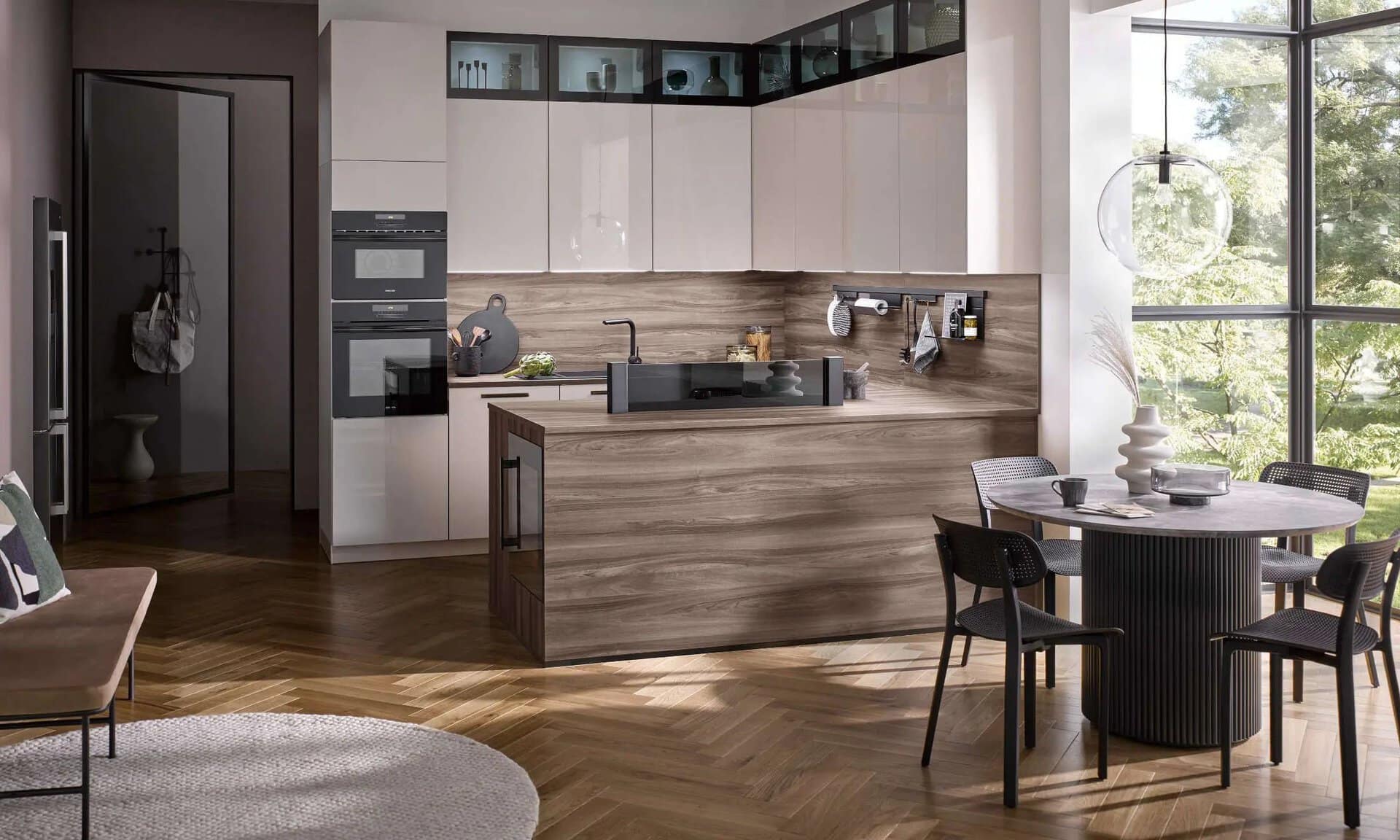
Bauformat is made in Germany and has been since 1917, out of Lohne, and the range is built so that the same engineering shows up across different price points. There are three collections. Baulux sits at the premium end with ceramic, glass, and ultra-matte surfaces. The core Bauformat line offers the widest choice of fronts, colours, and configurations. And the Burger collection is the best-value option, which makes it the natural starting point for a budget-minded project.
What matters here is that choosing Burger is not choosing a lesser kitchen. You still get a made-to-order German cabinet, the same precision in how it is measured and built, and the same hardware philosophy underneath. What you are giving up is the most expensive front materials and some of the more elaborate finish options, not the build quality that makes a German kitchen worth buying. For most Metro Vancouver homes, condos in Yaletown, townhomes on the North Shore, family kitchens further out in the suburbs, Burger covers the brief comfortably.
The practical move is to start your specification in the best-value collection and only step up to the core Bauformat or Baulux range for the specific things you care about. Maybe that is one wall of glass-fronted display cabinets, or a particular ultra-matte colour for the island. Treating the upgrade as a deliberate exception rather than the default keeps the overall number honest.
Keep the Layout Simple
The cheapest cabinet is the one you do not have to make twice. Standard cabinet widths and heights are produced efficiently, and a layout that uses them keeps both the material cost and the labour predictable. The moment a plan calls for unusual sizes, awkward fillers, or units shaped around an obstacle, cost starts creeping in from several directions at once.
A galley or single-wall run, or a clean L-shape, will almost always cost less than a layout stuffed with corners, returns, and one-off pieces. If you are working in a Vancouver condo, the footprint is often doing you a favour here, since the room rewards a tight, efficient plan anyway. In a larger house, resist the urge to fill every wall. Fewer, better-chosen cabinets usually beat a room crammed with units you open twice a year.
This is also where the local team earns its keep. Because Bauformat kitchens are measured, planned, and installed by the Vancouver team, the layout can be designed around the cabinet system from the start, which means fewer custom fillers and fewer expensive surprises on install day. A plan that respects standard sizing is not a compromise on design. It is the difference between paying for cabinets and paying for problem-solving.
Cost-Effective Fronts That Still Look High-End
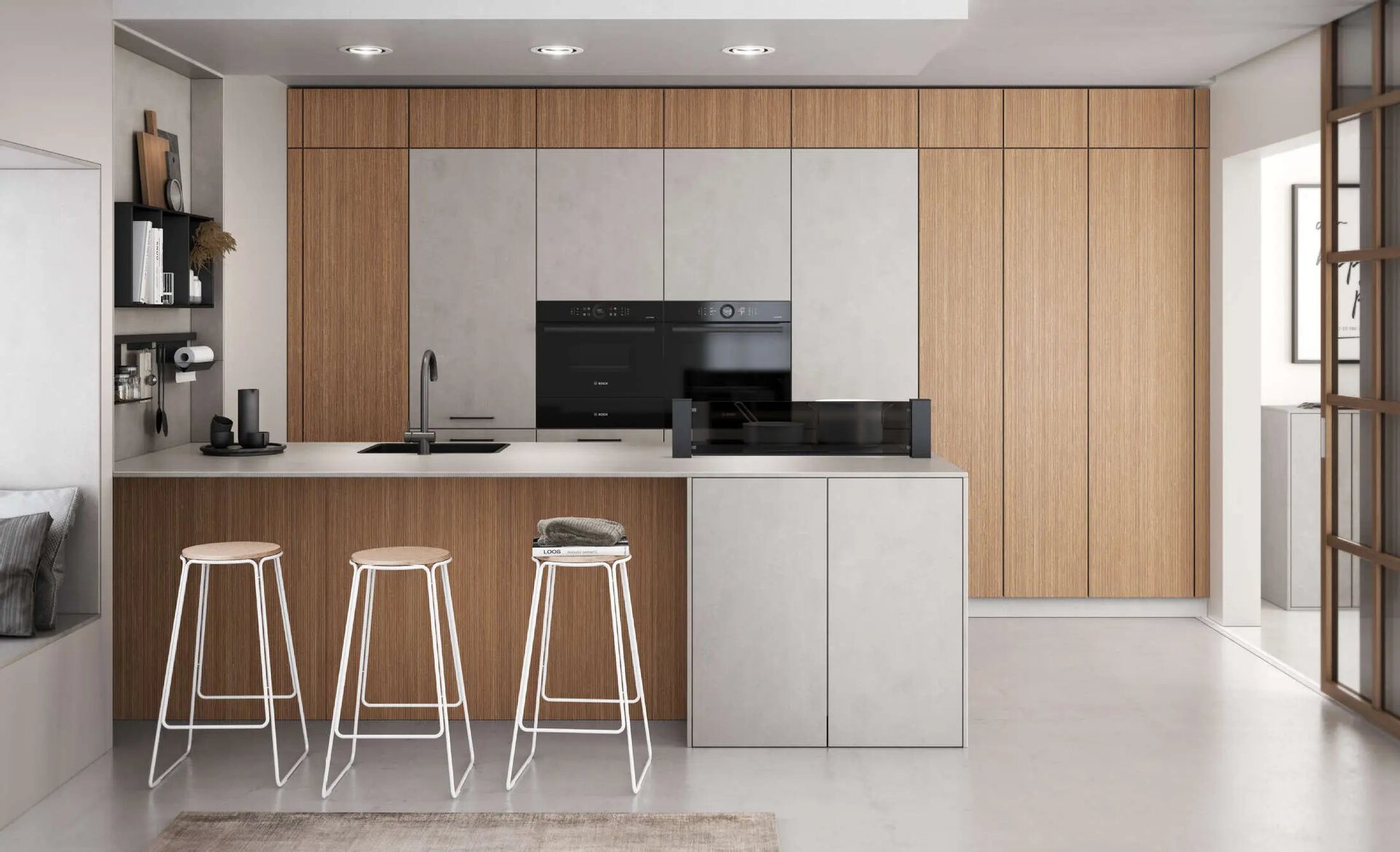
Front material is where a lot of budget quietly disappears, and also where you have the most room to be clever. Ceramic, real glass, and deep ultra-matte surfaces are beautiful and they photograph well, but they sit at the top of the price range. A good laminate or wood-look front, chosen carefully, can read as genuinely high-end at a fraction of the cost.
The trick is that perceived quality comes less from the raw material and more from the details around it. Consistent, slim reveals between doors. A handleless look or a clean integrated grip rather than fussy hardware. A restrained colour palette, one or two tones rather than five. Matte over high gloss if you want to hide fingerprints and the realities of daily life. These choices cost little or nothing and do most of the work that people credit to expensive materials.
A practical budget strategy is to put your nicer front where it gets seen and keep it simple everywhere else. The island or the main run that greets you when you walk in can carry a slightly upgraded finish, while the rest of the kitchen uses the value front in a coordinating tone. The eye reads the overall composition as cohesive and considered, not as a place where corners were cut.
Where the German Engineering Is Worth Paying For
Now the other side of the ledger, because budgeting well is not the same as cheaping out. Some things in a German kitchen are worth every dollar, and the hardware is at the top of that list. Bauformat cabinets use full-extension soft-close runners and 3D-adjustable concealed hinges. Those are not cosmetic features. They are the parts you touch every single day, thousands of times a year, and they are the parts that fail first in a poorly built kitchen.
The durability case is real. German-made cabinets are reported to extend their useful lifespan by around 35 percent compared with similarly priced non-German cabinets, according to UCS Kitchen Design (2024), largely because of material quality, manufacturing precision, and the endurance testing the hardware goes through before it ever ships. Drawers that are tested through thousands of open-and-close cycles behave the same in year ten as they did on day one. That is the quiet luxury you are actually paying for.
The made-to-order fit belongs in this category too. Because the cabinets are built to your measurements rather than pulled off a generic shelf, the gaps are even, the doors line up, and the kitchen sits in the room as if it grew there. In a market like Metro Vancouver, where older homes and irregular condo layouts are common, that precision turns a tricky space into a clean one. This is the part of the budget to protect, even when you are trimming elsewhere.
Keep Appliances and Counters Sensible
Two line items have a habit of inflating a kitchen budget without adding much daily value: appliances and countertops. Both can be excellent at a sensible price, and both can quietly double if you let the showroom talk you into the top tier.
On appliances, a solid mid-range package from a reputable maker will cook, chill, and clean just as well as the flagship version for most households. The premium often buys a badge and a couple of features you will use rarely. Decide where performance genuinely matters to you, the range if you cook seriously, the dishwasher if it runs nightly, and let the rest be reliable rather than aspirational. Integrated panel-ready appliances look wonderful but add cost on both the appliance and the cabinetry, so treat full integration as a want, not a given.
On counters, an engineered quartz or a well-chosen laminate gives you durability and a clean look without the price and upkeep of the most exclusive stone. If you love a particular natural stone, consider using it only on the island as a feature and running a more economical surface elsewhere. The countertop is important, but it does not need to be the most expensive decision in the room to look and perform beautifully.
The Long-Term Value of Buying Quality Once
Budget thinking usually focuses on the cheque you write this year. The smarter frame is cost over the life of the kitchen. A cabinet that lasts noticeably longer, with hardware that does not wear out, simply costs less per year of use, even if it costs a little more up front. Buying quality once tends to beat buying twice.
The resale picture supports this too. A minor kitchen remodel, the kind that keeps the bones sensible and spends on quality fronts, hardware, and finishes, returned about 96 percent of its cost at resale and ranked among the strongest projects of any home improvement, according to the 2025 Zonda Cost vs. Value Report. Major, all-out remodels, by contrast, recouped closer to 36 to 51 percent. The lesson is clear: restraint and quality, rather than maximum spend, is what holds value.
In a Metro Vancouver market where housing costs are high and kitchens are scrutinized by buyers, a well-built German kitchen that still looks current in a decade is a genuine asset. You get the daily pleasure of a kitchen that works properly, and you get a room that does not need redoing the moment you want to sell. That is the real argument for spending thoughtfully rather than spending little.
Frequently Asked Questions
Can you really get a German kitchen on a budget?
Yes, within reason. A German kitchen is a set of choices rather than one fixed price, and starting in the best-value Burger collection, keeping the layout standard, and choosing cost-effective fronts brings the entry point down a long way. You are not buying a cheaper kitchen so much as a more disciplined one, with the engineering kept intact and the optional luxuries trimmed.
What is the difference between the Burger, Bauformat, and Baulux collections?
All three are made in Germany and share the same build philosophy. Burger is the best-value line and the natural budget starting point. The core Bauformat collection offers the widest range of fronts, colours, and configurations. Baulux is the premium tier, with ceramic, glass, and ultra-matte surfaces. You can specify mostly in Burger and step up only for specific features you care about.
How much of my kitchen budget should go to cabinets?
Cabinets are typically the largest single line item, often around 35 to 45 percent of the total project cost in the Vancouver market. Because they carry so much of the budget and so much of the daily experience, it is the place to be most deliberate, protecting build quality and hardware while being flexible on the more decorative choices.
Is German hardware actually worth the extra cost?
For the parts you use constantly, yes. Full-extension soft-close runners and 3D-adjustable concealed hinges are tested for durability and tend to keep working long after cheaper hardware has started to sag or stick. Since German-made cabinets are reported to last meaningfully longer than similarly priced alternatives, the hardware is one of the last places to cut.
Getting a German kitchen on a budget is not about finding the cheapest version of something expensive. It is about knowing which decisions carry real value and which ones are simply optional luxury. Protect the engineering, keep the layout honest, choose finishes that look the part without the premium, and you end up with a kitchen that does its job beautifully for years, right here in Metro Vancouver, without the budget ever feeling like the thing you settled for.
Explore more from Bauformat BC
- Your German Kitchen, Step by Step: From First Sketch to Installation
- Unravelling the Secrets Elegance of Premium Custom Kitchen Design
- Four Affordable European Kitchen Styles for 2026
German cabinetry, planned and built for Metro Vancouver
The kitchen is one of the highest-return rooms in a home: the 2025 Cost vs. Value Report found a minor kitchen remodel recoups roughly 96% of its cost at resale. Choosing cabinetry that lasts is central to that return, which is where German engineering earns its place. Every Bauformat kitchen is manufactured in Germany, then measured, planned, and installed by our Vancouver team, built to fit your room to the millimetre.
See the Baulux, Bauformat, and Burger collections in person at our North Vancouver showroom at 1410 Marine Dr Unit 205, learn more about the manufacturer at bauformat.de, and meet our local team at The Bau Team.
Book a 30-minute consultation with our Metro Vancouver kitchen designers to plan a kitchen built to last.
