
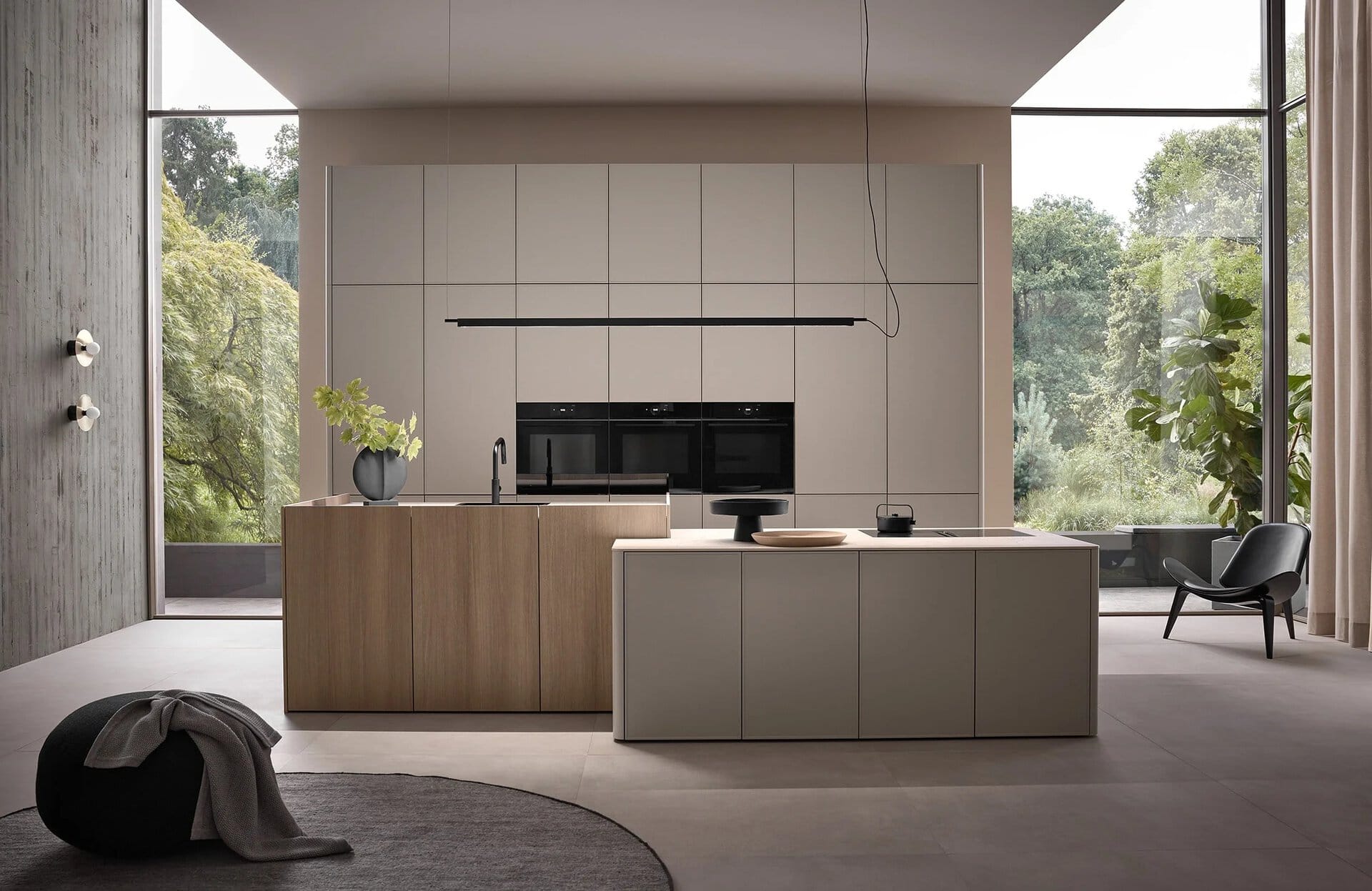
A kitchen can look generous on the floor plan and still feel cramped the moment you start cooking. The culprit is rarely square footage. It is wasted volume: the dead corner you can barely reach, the gap beside the fridge too narrow for anything useful, the cupboard so deep that half its contents disappear into the dark. In a Metro Vancouver condo, where every centimetre is paid for at a premium, that hidden waste adds up fast.
The good news is that the smartest storage is not something you bolt on after the fact. It is engineered into the cabinet itself. This roundup walks through the built-in mechanisms that reclaim space you already own, the kind of smart interior storage built into Bauformat kitchens, so you can see which solutions earn their keep in a compact city kitchen.
Key Takeaways
- The biggest storage gains come from built-in mechanisms, not add-on bins, because they use the full depth and height of a cabinet rather than the front portion you can easily reach.
- Corner units, tall pull-out larders, and deep pan drawers convert the hardest-to-use cabinets into the most productive ones.
- Slim filler pull-outs and toe-kick drawers capture narrow gaps and the empty band beneath your cabinets that would otherwise sit idle.
- Concealed, organized storage is where the market is heading: NKBA’s 2026 report found enhanced storage at 72 per cent adoption among industry professionals (NKBA, 2026).
- For Metro Vancouver condos averaging well under 800 square feet, these solutions are less a luxury and more a way to make a small kitchen actually function.
Corner Solutions: Magic Corners and Swing-Out Units
The blind corner is the most notorious dead zone in any kitchen. Reach into a standard L-shaped cabinet and you will find a cavern where pots vanish and never come back. Engineered corner systems fix this by bringing the contents to you instead of asking you to crawl in after them.
A magic corner uses a hinged set of wire or solid shelves: open the door and the front trays swing out, then a second set glides forward from the back of the cabinet, so nothing is left stranded against the far wall. A swing-out unit works on a rotating arm that pivots the whole shelf assembly clear of the cabinet box. Both turn the least usable cabinet in the room into one of the most accessible. NKBA’s 2026 trends report specifically calls out rotating corner cabinets and roll-out drawers as the way homeowners are maximizing storage (NKBA, 2026). In a galley or L-shaped condo kitchen, recovering a single corner can be the difference between cookware living in the cabinet and living on the counter.
Tall Pull-Out Larders
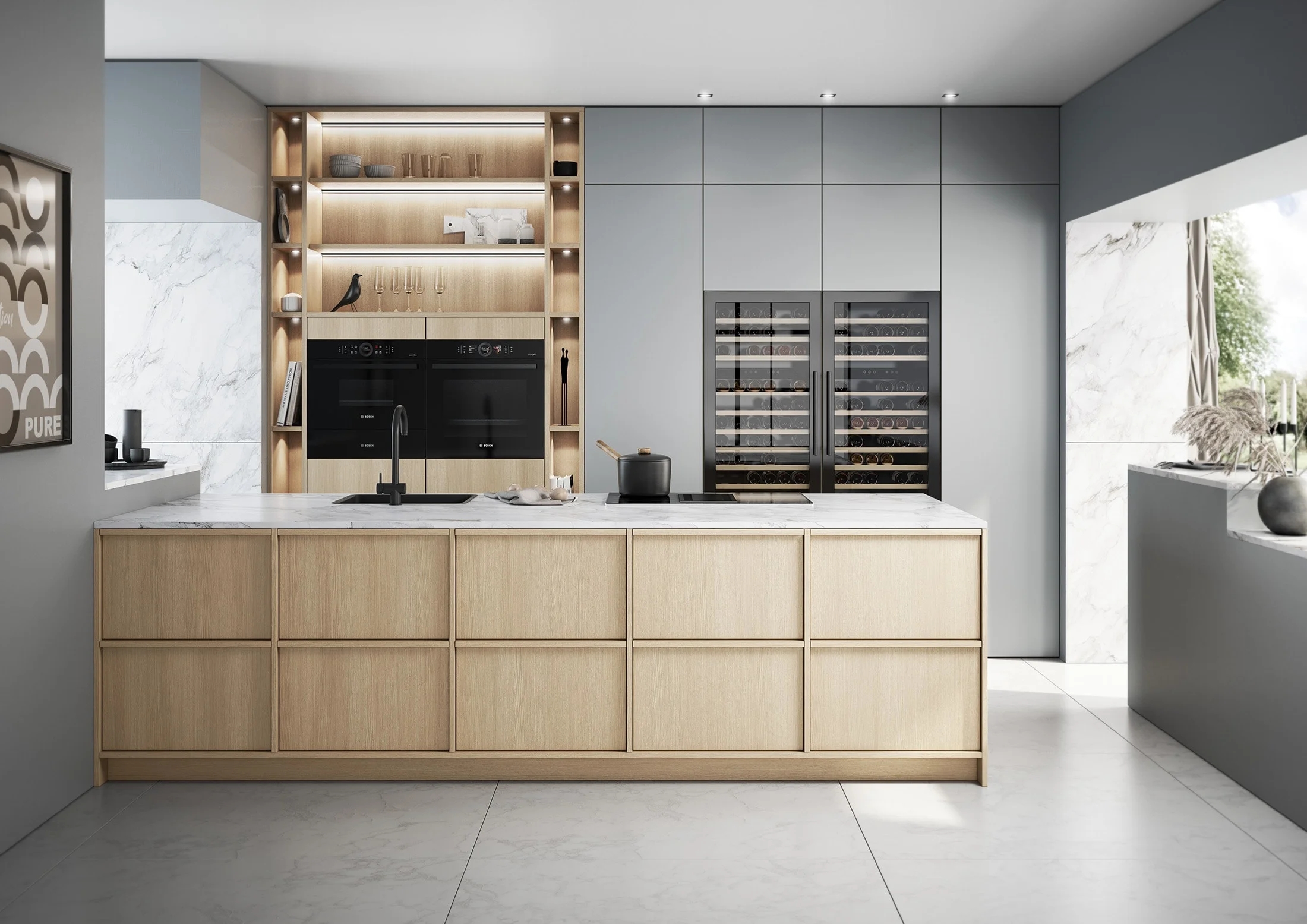
When floor space is tight, the answer is to build upward. A tall pull-out larder is a full-height cabinet whose entire interior rides out on heavy-duty runners, giving you access to every shelf from both sides at once. Instead of a deep pantry where back-row tins are forgotten for months, you get a slim tower of food that rolls out in one motion.
This is where smart storage and a small footprint meet. A larder only 30 to 45 centimetres wide can hold a startling amount of dry goods because it uses the full height of the room and lets you load both faces of each shelf. NKBA’s research points the same direction, with floor-to-ceiling cabinetry and concealed pantries named among the leading storage moves for the next few years (NKBA, 2026). For a condo without room for a walk-in pantry, a pull-out larder is the closest thing to one, tucked into the width of a single cabinet. Bauformat builds these on full-extension soft-close runners, so even a fully loaded larder glides out without a slam.
Drawer-Within-a-Drawer and Deep Pan Drawers
Drawers beat doors for one simple reason: a drawer brings its entire contents into the light, while a cupboard makes you bend and dig. Two variations do the heavy lifting here.
The drawer-within-a-drawer is exactly what it sounds like: a shallow inner drawer nested above a deeper one, sharing a single front. Open it and you get a top tray for cutlery, utensils, or wraps, plus the full lower drawer underneath, all from one pull. It roughly doubles the organized capacity of a standard drawer without taking another millimetre of cabinet space.
Deep pan drawers handle the bulky end of the kitchen: stockpots, mixing bowls, small appliances, stacks of plates. Because they extend fully, you can pull the whole drawer out and lift items straight up rather than wrestling them past a cabinet frame. Pair them with adjustable dividers and a deep drawer becomes a tidy, sortable space instead of a clattering pile. For renovators weighing the spend, the payback is real: the 2025 Cost vs. Value Report puts a minor kitchen remodel at roughly 96 per cent cost recouped, among the highest of any home project (Remodeling, 2025).
Pull-Down Wall Units
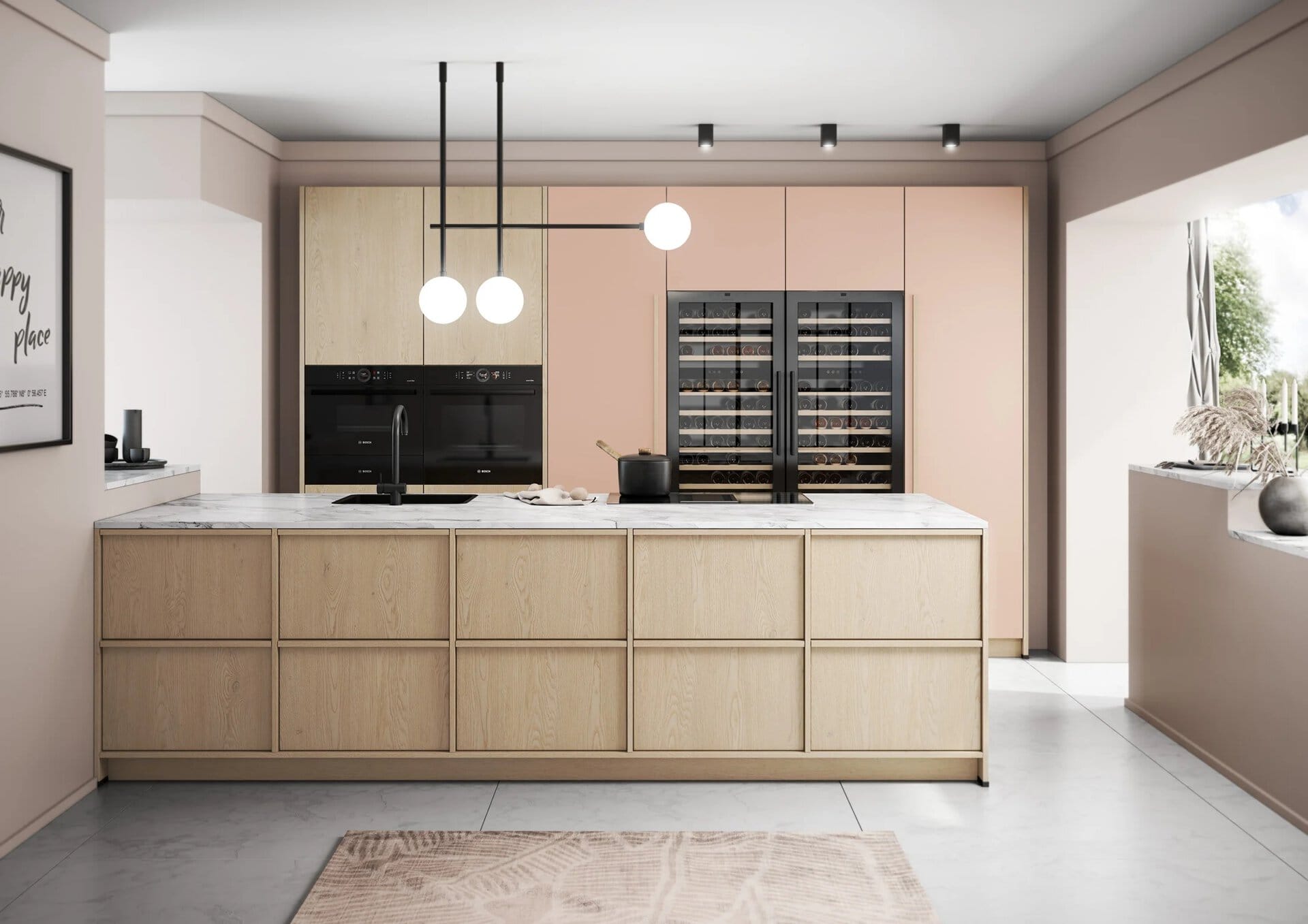
Upper cabinets have a built-in problem. The top shelves are out of comfortable reach for most people, so they become a graveyard for things used once a year. A pull-down wall unit solves this with a spring-assisted frame that lowers the shelf contents down and out toward you, then lifts them back up when you are done.
This matters most for anyone who is shorter, who would rather not keep a step stool in a tight kitchen, or who simply wants the everyday glasses and spices within easy reach. In a condo where the upper cabinets often run right up to a lower-than-average ceiling line, a pull-down mechanism turns previously dead high shelving into usable, daily storage. It is one of those solutions you do not appreciate until you have lived without the daily reach-and-stretch.
Integrated Bin Systems
Recycling and organics sorting is not optional in Metro Vancouver, where curbside programs separate garbage, recycling, and food scraps. The trouble is that loose bins eat floor space and look like clutter. An integrated bin system hides the whole operation inside a cabinet, usually under the sink or beside it, on a pull-out frame that carries two, three, or four sorted containers out together.
Everything stays concealed behind a regular cabinet front, lids and all, which keeps sightlines clean and smells contained. This lines up neatly with what designers are reporting: NKBA’s 2025 survey found 87 per cent of professionals said homeowners want storage concealed behind cabinet doors or panels for a clean, uninterrupted look (NKBA, 2025). A built-in bin system gives you proper multi-stream sorting without surrendering a corner of the kitchen to a row of standing cans.
Slim Filler Pull-Outs and Toe-Kick Drawers
The best space-saving solutions often live in the spaces you stopped noticing. Two of them are easy wins in a small kitchen.
A slim filler pull-out claims the narrow gap that would otherwise be closed off with a blank filler panel, the awkward few inches beside an appliance or at the end of a run. A pull-out as narrow as 10 to 15 centimetres becomes a vertical rack for spices, oils, baking trays, or bottles, all on full-extension runners so you see the back row as clearly as the front. In a condo kitchen, that reclaimed sliver is genuinely useful storage rather than a sealed-off void.
Toe-kick drawers go after the empty band beneath your base cabinets, the recessed strip your feet tuck under. That space normally holds nothing at all. A shallow toe-kick drawer turns it into a home for flat items: serving platters, baking sheets, table linens, pet bowls, even seldom-used tools. It adds a whole tier of storage to the kitchen without touching the footprint or the sightline, which is why it has become a quiet favourite in compact builds.
Built-In Appliance Garages
Countertop appliances are the enemy of a small kitchen. The kettle, toaster, blender, and coffee machine creep across the limited counter you have until there is nowhere left to actually work. An appliance garage is a built-in cabinet, often with a roll-up or lift door, that parks those appliances on the counter but out of sight, frequently with power inside so you can use them in place or pull them out as needed.
The result is a clear, calm counter and appliances that are still right where you use them. This is the concealment trend in action: NKBA’s reporting shows homeowners consistently choosing hidden, panelled, and built-in storage to keep the working kitchen looking uncluttered (NKBA, 2025). In a Yaletown condo where the kitchen is often open to the living area, an appliance garage also keeps the cooking zone from spilling visually into the rest of the home.
Frequently Asked Questions
Which space-saving solution gives the most storage for a small condo kitchen?
For raw capacity in a tight footprint, a tall pull-out larder is hard to beat, since it uses the full height of the room within the width of a single cabinet. If your pain point is a specific dead zone instead, target it directly: a corner unit for a blind L-shaped cabinet, or deep pan drawers to replace hard-to-reach lower cupboards. The right answer depends on where your particular kitchen is losing space.
Can these built-in storage mechanisms be added to an existing kitchen?
Many can be retrofitted, but they perform best when planned into the cabinetry from the start, because the mechanism, the runners, and the cabinet box are designed to work as one. Magic corners, larders, and pull-down units in particular rely on precise cabinet dimensions and proper hardware. The cleanest, most reliable results come from specifying these solutions during a renovation rather than forcing them into cabinets built for fixed shelves.
Are space-saving storage upgrades worth the cost?
For a small kitchen, the value is both daily and financial. Day to day, you reclaim counter and floor space that a Metro Vancouver condo charges a premium for. On resale, kitchen work consistently returns strong value, with the 2025 Cost vs. Value Report placing a minor kitchen remodel near 96 per cent cost recouped (Remodeling, 2025). Smart storage is also exactly what current buyers are looking for.
What is the difference between a magic corner and a swing-out corner unit?
Both empty a blind corner, but they move differently. A magic corner has two sets of shelves: the front trays swing out with the door, then the rear set slides forward to follow. A swing-out unit rotates a connected shelf assembly out of the cabinet on a pivoting arm. Magic corners tend to suit wider corner cabinets, while swing-outs can be a good fit where the opening or layout is more constrained.
Space-saving kitchen storage is not about cramming more in. It is about reaching everything you already have without the dead corners, the dark back rows, and the appliance creep across the counter. Built into the cabinetry from the start, mechanisms like these make a small kitchen feel measured and calm rather than crowded. Made in Germany since 1917 and measured, planned, and installed by the local Vancouver team, Bauformat kitchens carry this smart interior storage across the Baulux, Bauformat, and Burger collections, so a compact Metro Vancouver kitchen can work as hard as a much larger one.
Explore more from Bauformat BC
- Designing for Kitchen Efficiency: Zones, Storage, and Flow
- Uncover Eight Ingenious Ways to Optimize and Declutter Your Kitchen Space
- Mastering the Art of Kitchen Space Optimization
German cabinetry, planned and built for Metro Vancouver
The kitchen is one of the highest-return rooms in a home: the 2025 Cost vs. Value Report found a minor kitchen remodel recoups roughly 96% of its cost at resale. Choosing cabinetry that lasts is central to that return, which is where German engineering earns its place. Every Bauformat kitchen is manufactured in Germany, then measured, planned, and installed by our Vancouver team, built to fit your room to the millimetre.
See the Baulux, Bauformat, and Burger collections in person at our Yaletown showroom at 1420 Marine Drive, learn more about the manufacturer at bauformat.de, and meet our local team at The Bau Team.
Book a 30-minute consultation with our Metro Vancouver kitchen designers to plan a kitchen built to last.
