
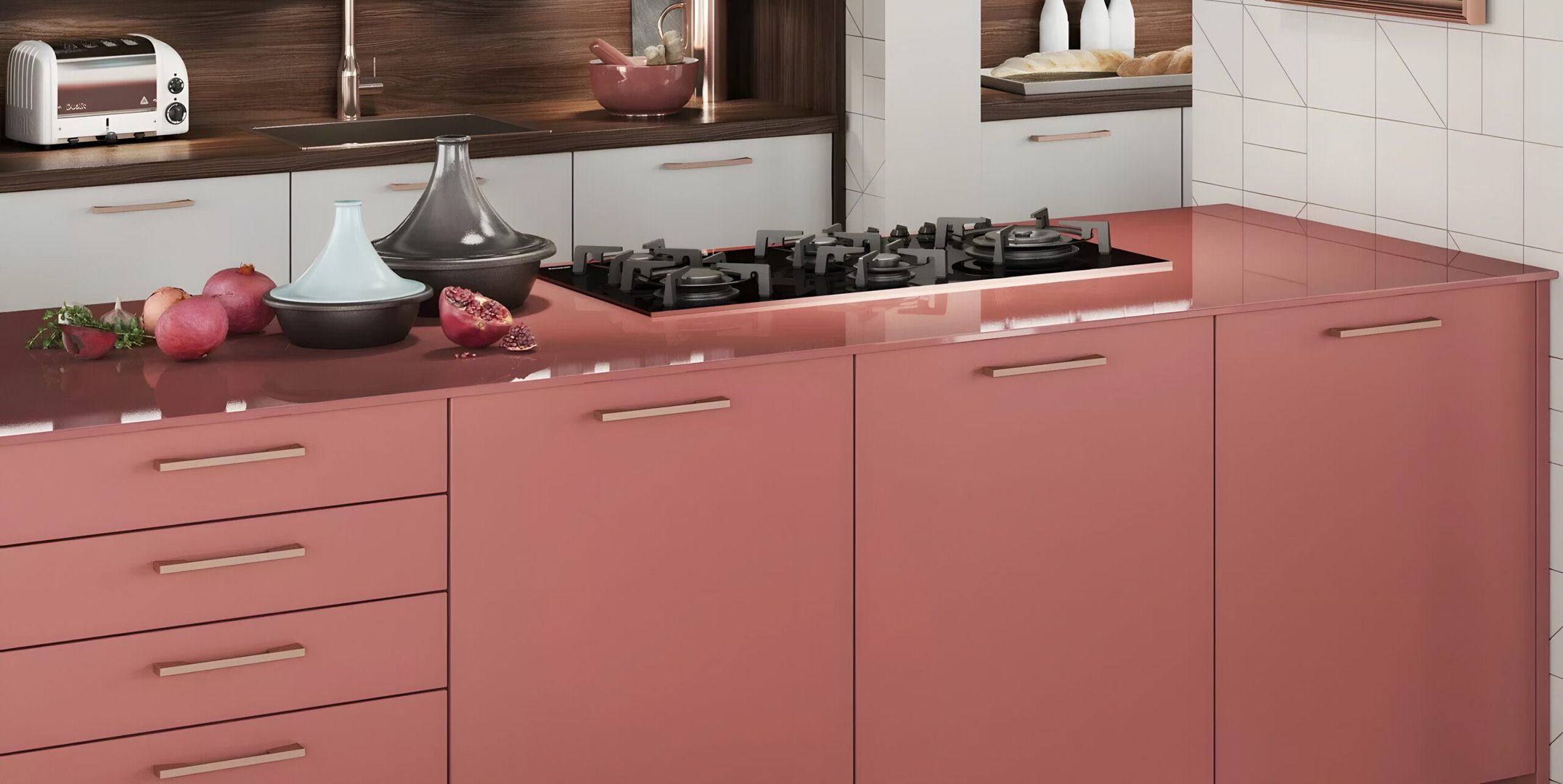
A small kitchen does not have to mean giving up the island you have always wanted. Some of the smartest kitchens we plan in Metro Vancouver are the tight ones, the Yaletown one-bedrooms and the East Van character suites where every inch has to earn its keep. The trick is not squeezing a full-size island into a space that cannot hold it. The trick is rethinking what an island needs to be.
A compact kitchen island can give you prep space, a spot to perch with coffee, and a surprising amount of storage, all without choking the walkways around it. Below we walk through the real numbers, the clearances that keep a kitchen comfortable, and the slim, mobile, and double-duty designs that work beautifully in condo-sized rooms. No guesswork, just the measurements and tactics we use every week.
Key Takeaways
- Clearance comes first. The National Kitchen and Bath Association recommends at least 42 inches of work-aisle space for a single cook and 48 inches where two people cook, so the room dictates the island, not the other way around.
- Small is normal here. New Metro Vancouver condos keep getting tighter, which makes slim, mobile, and multi-function islands the practical choice rather than the compromise.
- Seating is the most-wanted feature. Seating ranked as the number one feature homeowners want on an island in the 2025 U.S. Houzz Kitchen Trends Study, and a slim overhang can deliver it.
- A peninsula often beats an island. When clearances are tight, an attached peninsula gives you the same counter and storage without needing aisles on all four sides.
- German drawer systems multiply storage. Full-extension soft-close runners and smart interior fittings turn a small footprint into real, usable capacity.
Do You Actually Have Room? Clearances and Sizing
Before you fall for a beautiful island, measure the floor around it. This is the step people skip, and it is the one that makes or breaks a small kitchen. An island that looks great on paper can turn a galley into an obstacle course if the aisles around it are too narrow.
The widely used industry benchmark comes from the National Kitchen and Bath Association: work aisles should be at least 42 inches wide for a one-cook kitchen and 48 inches where two people cook together. Walkways that pass through but are not work zones can drop to about 36 inches. These are not arbitrary numbers. They account for an open dishwasher door, a bent knee while loading the oven, and two people passing without a shuffle.
The simple math for a condo kitchen
- Measure the clear floor distance from your main run of cabinets to the opposite wall or counter.
- Subtract 84 inches if you want comfortable 42-inch aisles on two sides. Whatever is left is the maximum width your island can be.
- If that leaves you under roughly 24 inches of island depth, an island will feel cramped. That is your cue to look at a slim model, a mobile cart, or a peninsula instead.
In a lot of Metro Vancouver condos the honest answer is that a traditional island does not fit, and that is fine. New condos here keep shrinking. One analysis of Metro Vancouver found the median new condo size had dropped to 769 square feet, roughly 16 percent smaller than units built between 1971 and 1990 (Business in Vancouver). When the whole suite is that compact, the kitchen footprint is proportionally smaller, so the goal shifts from a big centrepiece to a smart, scaled piece that does several jobs at once.
Slim Islands: Big Function, Small Footprint
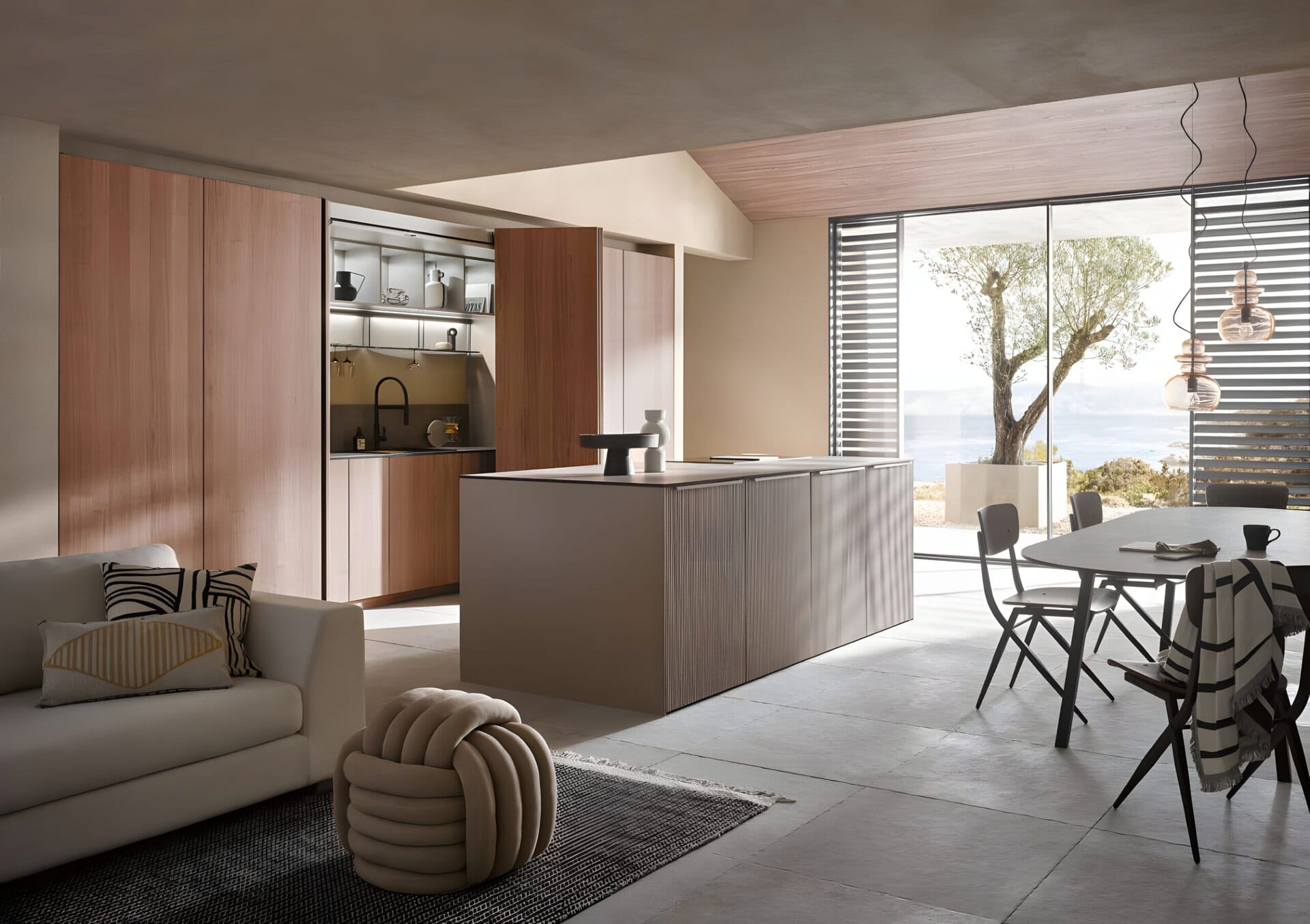
A slim island is the workhorse of the small kitchen. Instead of the typical 36 to 42 inch depth, a slim island runs around 18 to 24 inches deep. That is enough for a genuine prep surface and a single run of drawers or cabinets, while preserving the aisle space that keeps the room livable.
What makes a slim island work is what goes inside it. With full-extension soft-close runners, every drawer pulls all the way out so you can reach the back without digging. Pair a deep pot drawer with a shallow cutlery tray above it and you have replaced a full base cabinet in a fraction of the floor space. We build these across the Bauformat range, and the Burger collection in particular is a smart way to get this kind of engineered storage at the best value.
Where slim islands shine
- Galley condos: a slim island down the centre adds a landing zone without blocking the corridor.
- Open-plan suites: a low, narrow island quietly separates the kitchen from the living area without walling it off.
- Single-cook kitchens: when one person does most of the cooking, you rarely need the depth of a double-sided island.
Mobile Islands and Carts: Flexibility on Wheels
When the floor truly cannot spare a permanent footprint, a mobile island earns its place. A piece on locking castors can roll to the counter for prep, slide against a wall when you need the floor, and even tuck partly under an overhang when it is not in use. For renters and for owners who entertain in waves, this flexibility is the whole point.
A few things make a mobile island feel like furniture rather than a workaround:
- Lockable wheels so it stays put while you chop or roll out dough.
- A solid, sealed work surface that can take heat and knife work.
- A lower shelf or basket for the bulky items you do not want eating up cabinet space.
The honest trade-off is capacity. A rolling cart will never hold as much as a built-in, and the surface sits higher than a custom counter. But in a 600 to 700 square foot suite, the ability to clear the floor in seconds is often worth more than a few extra drawers.
The Peninsula Alternative
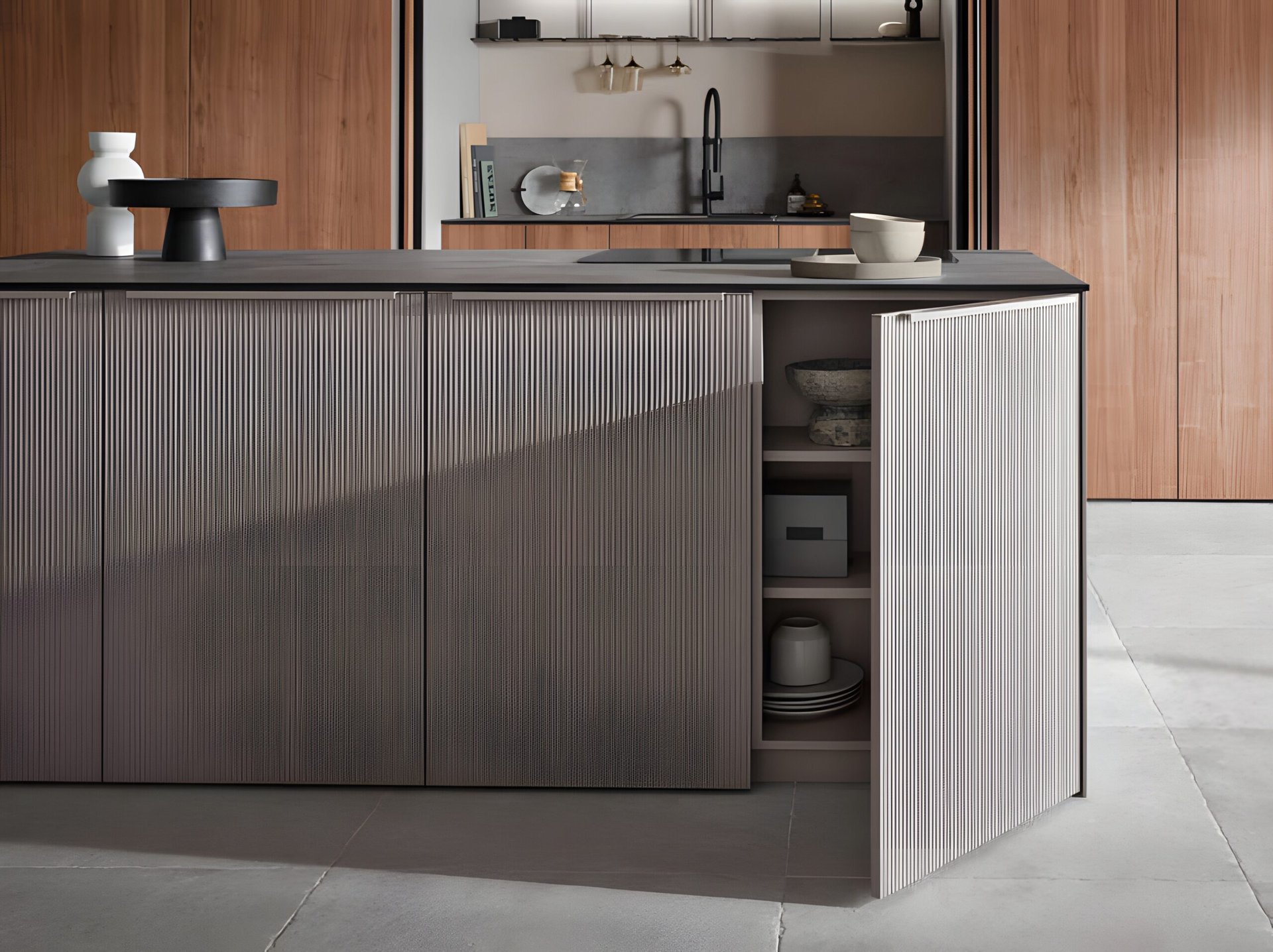
If an island cannot meet the clearance numbers, a peninsula usually can. A peninsula is essentially an island attached at one end to a wall or a run of cabinets, so it only needs aisle space on three sides instead of four. That single connection is what makes it the quiet hero of compact Vancouver kitchens.
Why a peninsula fits a small kitchen so well
- It reclaims an aisle. Because one end is anchored, you free up the floor that an island would have needed behind it.
- It defines the space. In an open-plan condo, a peninsula draws a natural line between cooking and lounging without a wall.
- It seats people. Extend the counter past the cabinets and you have an instant breakfast bar on the living-room side.
- It still stores plenty. The base can hold the same drawers and cabinets as an island, often more, because it borrows structure from the existing run.
An L-shaped or U-shaped layout with a peninsula across the open end is one of the most space-efficient kitchens you can build in a condo. You get the wraparound counter and the social counter seating, without surrendering the walkways.
Islands That Double as Seating
Seating is the feature people ask for most. In the 2025 U.S. Houzz Kitchen Trends Study, seating ranked as the number one feature homeowners wanted their island to include. In a small home that doubles as a dining spot, a casual workspace, and the place guests gather, so it is worth getting the dimensions right.
The seating measurements that matter
- Overhang: allow about 12 inches of counter overhang for comfortable knee room. On a very slim island, even a 9 to 10 inch overhang with a supportive bracket can work for casual perching.
- Width per stool: plan roughly 24 inches of counter per person so elbows do not collide.
- Height: a standard 36-inch counter pairs with counter-height stools around 24 inches; a raised 42-inch bar pairs with 30-inch stools.
- Backless stools tuck fully under the overhang, which keeps the floor clear and the room feeling open. This is the detail that makes seating disappear when you are not using it.
For a compact kitchen, two stools on the long side of a slim island, or two to three along a peninsula, give you a real eat-in kitchen in a suite that has no room for a separate table. That is genuine square footage reclaimed, not a styling trick.
Packing Storage Into a Small Island
Here is where German cabinetry quietly does the heavy lifting. The footprint of a compact island is fixed, so the only way to win is to make every cubic inch of the inside work. That is engineering, not magic, and it is what Bauformat has been refining since 1917 in Lohne, Germany.
Interior fittings that change what a small island can hold
- Full-extension soft-close runners: the drawer opens completely, so the back is as usable as the front. In a deep island drawer that can mean an extra third of accessible storage.
- Drawer-in-drawer systems: a shallow inner drawer rides above a deep one, doubling the use of a single tall drawer for utensils, wraps, and small tools.
- Custom dividers and pegboard inserts: these keep plates, pots, and lids upright and in place so nothing slides into dead space.
- 3D-adjustable concealed hinges: on the cabinet portions, these let doors sit with tight, even gaps and stay aligned for years, which matters when an island is brushed past constantly.
- Toe-kick and end-panel storage: a shallow toe-kick drawer captures the few inches under the cabinet, and open end shelves hold cookbooks or a basket without adding bulk.
The point is that two islands of the exact same size can hold wildly different amounts depending on what is inside them. A compact island with smart interior storage routinely out-performs a larger one fitted with basic shelving. Across the Bauformat collection you get the widest choice of these configurations, while Baulux brings a more refined, minimalist line for owners who want the storage hidden behind clean, handleless fronts.
Multi-Function Islands: Prep, Eat, Work
In a small home, the island that earns its footprint is the one that does more than one job. The most successful compact islands we plan are quietly multi-purpose, shifting from breakfast bar to prep station to laptop desk over the course of a day.
Ways to layer functions into one small piece
- Prep plus eat: a durable work surface on the kitchen side, a seated overhang on the other. The classic combination, and the most useful.
- Prep plus work: a single deep drawer fitted as a charging and supply drawer turns the counter into a part-time desk, which matters in condos where there is no spare room for an office.
- Hidden tech: a flip-up or recessed outlet keeps a phone, blender, or laptop powered without a permanent cord across the counter.
- Bin and recycling integration: a pull-out waste-and-recycling drawer inside the island clears the floor of bins, which is a real win in a tight kitchen.
This flexibility is exactly why islands remain popular even as homes shrink. A minor kitchen remodel returned an estimated 96 percent of its cost at resale in the 2025 Zonda Cost vs. Value Report, the highest-returning interior project on the list, and a well-planned island is often the centrepiece of that update. When square footage is precious, a piece that prepares dinner, seats friends, and stores half the kitchen is space well spent.
Frequently Asked Questions
What is the smallest a kitchen island can be?
There is no single legal minimum, but a practical floor is around 24 inches deep by 40 inches long to give you a usable surface and one bank of storage. Below that, a mobile cart or a peninsula tends to serve you better. The more important number is the clearance around it: keep at least 42 inches of work-aisle space, per National Kitchen and Bath Association guidance, or the island will make the kitchen harder to use, not easier.
Can I have an island in a small condo kitchen?
Often yes, as long as the clearances work. If a freestanding island leaves you under 42 inches of aisle on the working sides, a slim island, a mobile cart, or an attached peninsula will usually give you the same benefits without crowding the room. We measure the suite first and let the floor decide which option fits, which is the reliable way to avoid a beautiful island that nobody can walk around.
Is a peninsula better than an island for a compact kitchen?
Frequently, yes. A peninsula only needs aisle space on three sides because one end attaches to your cabinets or a wall, so it fits where an island will not. You still get the extra counter, the storage, and a spot for two or three stools. In open-plan condos it also draws a soft boundary between the kitchen and living area without closing the space in.
How do I get more storage into a small island?
Focus on the interior, not the size. Full-extension soft-close runners make the whole drawer reachable, drawer-in-drawer systems double a single tall drawer, and custom dividers stop items from sliding into dead space. A pull-out waste drawer and a shallow toe-kick drawer capture room most islands waste entirely. These German systems are the difference between an island that looks like storage and one that genuinely holds your kitchen.
A compact kitchen rewards planning more than a large one does, because there is no slack to absorb a mistake. Get the clearances right, choose the form that suits your floor, and let well-engineered drawers do the work inside, and a small island will pull more than its weight every single day. For Metro Vancouver homeowners working with condo-sized rooms, that is not a consolation prize. It is often the smartest kitchen in the building, measured, planned, and installed to fit the space you actually have.
Explore more from Bauformat BC
- Mastering the Art of Kitchen Space Optimization
- Modern Kitchen Design
- Unveiling the Top 10 Most Resilient Materials for Your Bauformat Kitchen Countertop!
German cabinetry, planned and built for Metro Vancouver
The kitchen is one of the highest-return rooms in a home: the 2025 Cost vs. Value Report found a minor kitchen remodel recoups roughly 96% of its cost at resale. Choosing cabinetry that lasts is central to that return, which is where German engineering earns its place. Every Bauformat kitchen is manufactured in Germany, then measured, planned, and installed by our Vancouver team, built to fit your room to the millimetre.
See the Baulux, Bauformat, and Burger collections in person at our North Vancouver showroom at 1410 Marine Dr Unit 205, learn more about the manufacturer at bauformat.de, and meet our local team at The Bau Team.
Book a 30-minute consultation with our Metro Vancouver kitchen designers to plan a kitchen built to last.
