

Pick the cabinets first and the counter will follow. That is the usual order of a kitchen project, and it makes sense. Cabinetry sets the lines, the storage, and the feel of the room. But the countertop is the surface you actually live on. It catches the dropped pan, the spilled red wine, the morning coffee rings, and the cutting board that slips out from under a busy knife. A counter that looks gorgeous in a showroom and then etches, stains, or chips two winters in is a quiet daily disappointment.
So the smarter question is not which material is prettiest. It is which one stays beautiful after a decade of real cooking. Below is an honest look at the most durable kitchen countertop materials, what resilience really means once you break it into heat, scratch, stain, and moisture, and how to match the right surface to the way you cook and to German cabinetry built to last. Quartz still leads the pack: 78 percent of industry professionals named it their top countertop choice, with natural quartzite right behind at 62 percent, according to a National Kitchen and Bath Association survey reported in 2026.
Key Takeaways
- No single material wins every category. Engineered quartz resists stains and needs no sealing but dislikes high heat. Quartzite and porcelain shrug off heat far better. Choose for your weak spot, not the brochure.
- Hardness is measurable. Quartzite sits around 7 to 8 on the Mohs scale, granite around 6 to 7, and porcelain around 7, which is why these surfaces resist everyday knife and cookware scratches.
- Porcelain and sintered stone (the ultra-compact, Dekton-style category) are the most heat and UV stable surfaces in common use, and the same family of materials shows up on modern cabinet fronts.
- Care drives lifespan. Sealing schedules, cutting boards, and trivets matter more than the price tag in deciding how a counter ages.
- Counters and cabinetry are one decision. A square, well-engineered cabinet run gives the slab a flat, supported base, which protects the seams and the overhang for years.
What Resilient Actually Means
Durability is not one property. It is four, and a material can be excellent at one and only fair at another. Before you fall for a colour, it helps to score a surface honestly across all four.
Heat resistance
This is the ability to take a hot pan or a baking tray straight from the oven without scorching, discolouring, or cracking. Natural stone and fired surfaces handle heat well. Anything bound with resin, including engineered quartz and solid surface, is far more sensitive and can mark or even crack from thermal shock.
Scratch resistance
Measured roughly by the Mohs hardness scale, where higher numbers resist scratching better. A typical steel knife sits around 5.5, so a surface above that will not scratch from normal cutting. That said, no countertop is a cutting board, and using one is the single easiest way to protect any surface.
Stain resistance
This comes down to porosity. A non-porous surface gives wine, oil, turmeric, and coffee nowhere to soak in. Porous natural stones need sealing to keep liquids on top long enough to wipe away. Quartz and porcelain are non-porous from the start.
Moisture resistance
In a coastal climate like Metro Vancouver, where damp shoulder seasons run long, this matters more than people expect. A non-porous, low-absorption surface will not harbour moisture at seams or around the sink cutout, which keeps the counter and the cabinet below it healthier over time.
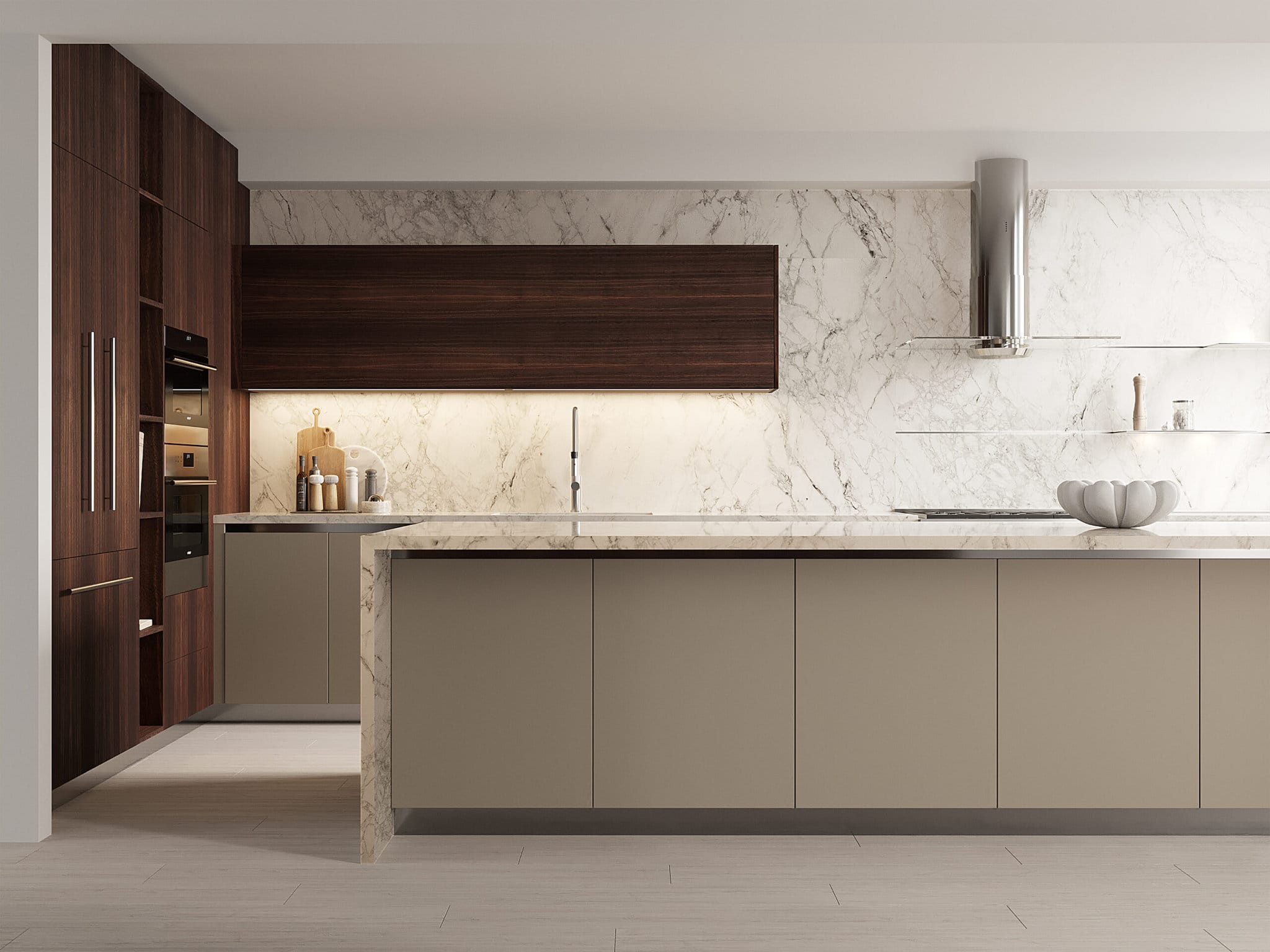
The Most Durable Countertop Materials, Compared Honestly
Engineered quartz
Quartz is crushed natural quartz bound with resin and pigment, which makes it non-porous, consistent in pattern, and very low maintenance. It never needs sealing, resists stains and bacteria, and comes in a huge range of looks. The honest catch is heat. Because of the resin, a hot pan can leave a mark or, with thermal shock, a crack, so trivets are not optional. Prolonged direct sun can also fade some quartz over time, worth noting for a counter near a bright south window.
- Best for: busy family kitchens that want a wipe-and-go surface.
- Watch for: heat damage and UV fading.
Natural quartzite
Not to be confused with quartz, quartzite is a natural stone formed when sandstone is transformed under heat and pressure. It is one of the hardest surfaces you can put in a kitchen, ranking around 7 to 8 on the Mohs scale, which puts it above granite and well above marble, according to stone-industry hardness guides published in 2025. It is also genuinely heat resistant and carries beautiful natural movement, which is why designers keep reaching for warm-toned varieties as the trend moves toward organic, natural patterning. The trade-off is that quartzite is porous and needs periodic sealing to stay stain resistant.
- Best for: those who want real stone with serious toughness.
- Watch for: sealing schedule and a higher price.
Granite
The long-time workhorse. Granite is a natural stone around 6 to 7 on the Mohs scale, very scratch resistant, and quite heat tolerant. Every slab is one of a kind. Like quartzite, it is porous and needs sealing, typically once a year depending on the stone, to keep it stain resistant. It fell out of fashion for a while but remains one of the most resilient and best-value natural options available.
- Best for: durability on a sensible budget.
- Watch for: annual sealing and busier natural patterns.
Porcelain and sintered stone (the Dekton-style category)
This is the ultra-compact surface family, made by firing or sintering mineral particles under extreme pressure and heat. The result is one of the most resilient surfaces in any kitchen: non-porous, around 7 on the Mohs scale, highly resistant to scratches, stains, and very high heat, and stable under UV so it can even run outdoors. It is often available in large-format slabs with thin profiles. The honest cons are that the harder, denser surface can chip at an exposed edge if struck hard, and skilled fabrication matters. This is also the material family Bauformat works with on the Baulux collection, where ceramic and Dekton-style ultra-matte surfaces appear on the cabinet fronts themselves, so the same understanding of these surfaces carries through the whole kitchen.
- Best for: maximum all-round resilience and a clean, modern look.
- Watch for: edge chipping and the need for an experienced fabricator.
Solid surface
An acrylic-based engineered material with one real superpower: it is non-porous and can be joined with invisible seams, then sanded to repair scratches and minor damage. That repairability is genuinely useful. The weakness is heat. It is the most heat-sensitive of the group and will scorch or melt without trivets. It also scratches more easily than stone, though those scratches buff out.
- Best for: seamless looks, integrated sinks, and easy repairs.
- Watch for: heat and surface scratching.
A fair word on marble and butcher block
Neither is the most durable choice, and that is fine if you go in with eyes open. Marble is soft, porous, and acid-sensitive, so it etches from lemon juice and wine and stains readily. People who love it accept that patina as character. Butcher block is warm and repairable but needs regular oiling, dents, and does not love standing water, which is a real consideration in a damp climate. Both reward maintenance and forgiveness rather than neglect.
How to Choose for Your Kitchen
Start with how you actually cook, not how you imagine cooking. A few honest questions sort most of this out:
- Do you put hot pans straight down? If you cannot promise to always grab a trivet, lean toward quartzite, granite, or porcelain and away from quartz and solid surface.
- Do you want zero maintenance? Engineered quartz and porcelain never need sealing. Natural stone does.
- Do you cook with bold, staining ingredients? Non-porous quartz and porcelain forgive turmeric and red wine most easily.
- How bright is the room? For a counter in strong, direct Vancouver sun, UV-stable porcelain or quartzite ages more gracefully than some quartz.
- What is your budget, honestly? Granite often delivers the most durability per dollar, while quartzite and porcelain sit at the premium end.
Context helps here. With the average Metro Vancouver kitchen renovation running roughly 45,000 to 75,000 dollars in 2026, and engineered stone counters commonly landing in the 5,000 to 9,000 dollar range, the countertop is a meaningful but not dominant slice of the budget, according to 2026 Vancouver renovation cost guides. Spending a little more on a surface that survives 15 years of family cooking is usually money well placed, especially since cabinetry and countertops are the two upgrades that most define how modern a kitchen looks and tend to drive the strongest resale return, with quality Vancouver kitchen renovations returning roughly 65 to 85 percent of their cost, per 2025 Canadian renovation ROI reporting.
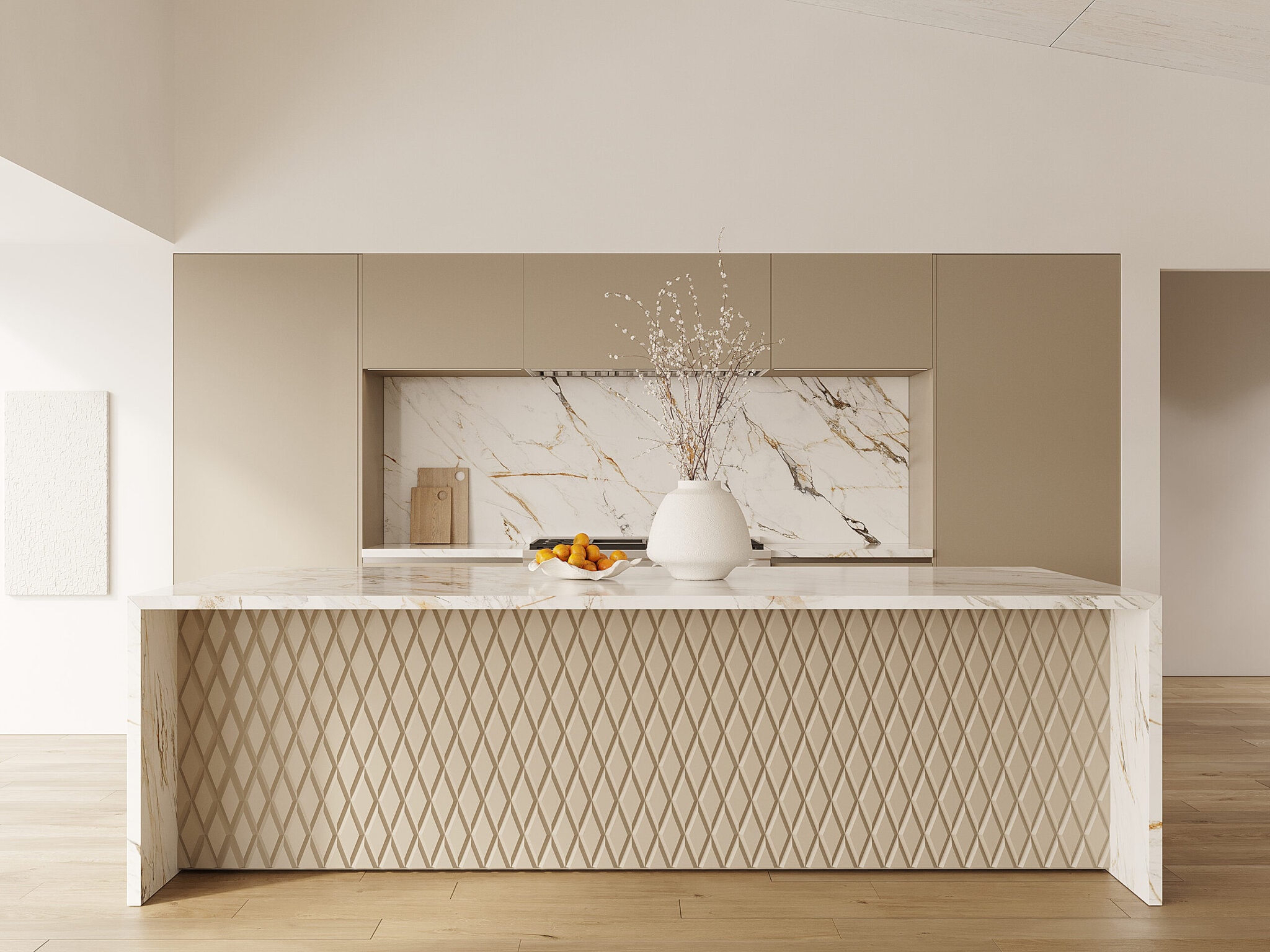
Pairing the Counter With German Cabinetry
A countertop is only as flat and stable as the boxes it sits on. This is where the cabinetry choice quietly protects your investment in stone. Bauformat cabinets, made in Germany since 1917 and measured, planned, and installed by the local Vancouver team, are built to tight tolerances, which gives a heavy slab a dead-level, fully supported base. That matters for the long, unsupported overhang at an island and for the seam at a sink, two of the spots where a poorly supported counter eventually telegraphs stress.
The hardware plays a part too. Full-extension soft-close runners and 3D-adjustable concealed hinges keep drawers and doors closing gently for years, which means the cabinet faces stay square under the counter rather than slowly racking out of alignment. And because the Baulux collection uses ceramic and Dekton-style ultra-matte fronts, there is real, hands-on familiarity with how these ultra-compact surfaces behave, cut, and wear. Choosing the cabinetry and the counter as one decision, rather than two, is how the whole kitchen ends up feeling considered instead of assembled.
- Match the matte: ultra-matte porcelain or quartz pairs beautifully with Dekton-style matte fronts for a low-glare, modern room.
- Mind the overhang: heavier stones at an island want proper support designed in from the start.
- Plan the seams: place joins away from the sink and high-traffic prep zones wherever the slab allows.
Caring for Your Counter So It Lasts
Most countertop failures are care failures, not material failures. The habits are simple.
- Use a cutting board, always. Even on the hardest stone, it protects both the surface and your knives.
- Keep trivets within reach. Non-negotiable for quartz and solid surface, smart for everything else.
- Wipe spills promptly, especially acids like citrus and wine on marble, granite, or quartzite.
- Seal natural stone on schedule. Granite and quartzite usually want sealing once a year or so. A quick water-bead test tells you when it is due.
- Skip harsh chemicals. Warm water and mild dish soap handle daily cleaning. Avoid abrasive pads and bleach on stone.
Frequently Asked Questions
What is the most durable kitchen countertop material overall?
For all-round resilience, porcelain and sintered stone (the Dekton-style category) and natural quartzite are the toughest common choices, combining high hardness around 7 to 8 on the Mohs scale with strong heat resistance. Engineered quartz is close behind and easier to maintain, with its main weakness being heat. The best material is the one that covers your specific weak spot, whether that is hot pans, staining foods, or sealing fatigue.
Is quartz the same as quartzite?
No, and the names cause endless confusion. Quartz is an engineered, resin-bound material that is non-porous and needs no sealing. Quartzite is a natural stone that is harder and more heat resistant but porous, so it needs periodic sealing. Quartz wins on maintenance, quartzite wins on heat and natural beauty.
Which countertops never need sealing?
Engineered quartz, porcelain, sintered stone, and solid surface are all non-porous and never need sealing. Natural stones, including granite, quartzite, and marble, are porous to varying degrees and should be sealed on a regular schedule to stay stain resistant.
What countertop works best in a damp coastal climate like Vancouver?
Non-porous, low-absorption surfaces handle Metro Vancouver’s long damp seasons best, since they will not hold moisture at seams or around the sink. Quartz and porcelain are excellent here. Natural stone is fine too, as long as you keep up with sealing. Butcher block is the one to think twice about if standing water is a regular event.
There is no perfect countertop, only the right one for how you cook, the light in your room, and the upkeep you will realistically keep up with. Score your options honestly across heat, scratch, stain, and moisture, plan the surface and the cabinetry as a single decision, and treat the counter with a cutting board and a trivet. Do that, and the surface you choose today will still be looking after your kitchen long after the trends that inspired it have moved on.
Explore more from Bauformat BC
- Why Choose Long-Lasting Materials for Your Kitchen Cabinets
- Modern Kitchen Design
- How to Mix and Match Bauformat’s High Gloss Kitchen Cabinets with Other Kitchen Elements for a Contemporary Look
German cabinetry, planned and built for Metro Vancouver
The kitchen is one of the highest-return rooms in a home: the 2025 Cost vs. Value Report found a minor kitchen remodel recoups roughly 96% of its cost at resale. Choosing cabinetry that lasts is central to that return, which is where German engineering earns its place. Every Bauformat kitchen is manufactured in Germany, then measured, planned, and installed by our Vancouver team, built to fit your room to the millimetre.
See the Baulux, Bauformat, and Burger collections in person at our North Vancouver showroom at 1410 Marine Dr Unit 205, learn more about the manufacturer at bauformat.de.
Book a 30-minute consultation with our Metro Vancouver kitchen designers to plan a kitchen built to last.
