

Few decisions shape the daily feel of a kitchen more than the countertop. It is the surface you wipe down every morning, the spot where groceries land, where dough gets rolled and homework gets done. In a region where many of us cook, gather, and work from the same open-plan room, that surface earns its keep. Quartz has become the answer a growing number of Metro Vancouver homeowners reach for, and the reasons go well beyond looks.
Engineered quartz now leads the countertop conversation. Industry tracking shows quartz has overtaken granite as the surface of choice, with quartz at roughly 36 percent of the market against granite’s 24 percent by 2026, a reversal from a decade earlier when granite led (SlabWise, 2026). This guide walks through what quartz actually is, where it shines, where it asks for care, and how a quartz top works alongside German-engineered cabinetry to finish a room.
Key Takeaways
- Quartz is an engineered stone, roughly 90 to 95 percent ground natural quartz bound with resins and pigments, which makes it non-porous and consistent.
- Because it is non-porous, quartz never needs sealing and resists stains, scratches, and bacteria better than most natural stone.
- The look range is wide: convincing marble-style veining, calm solid colours, and both matte and polished finishes.
- Quartz handles heat well but is not heatproof, so trivets remain a good habit.
- Installed cost in Canada generally runs from about 90 to 200 dollars per square foot depending on colour, thickness, and edge detail (Bhumi Calculator, 2026).
- A quartz top and well-built cabinetry are a system; planning them together gives the cleanest result.
What Quartz Countertops Actually Are
Quartz countertops are an engineered surface, and that word matters. Natural quartz is one of the hardest minerals found in the earth. To make a countertop slab, manufacturers grind that quartz down, then blend it with a small percentage of resins, polymers, and pigments under intense heat and pressure. The result is typically around 90 to 95 percent stone by content, formed into a dense, uniform slab.
This is the key difference from natural stone like granite or marble, which is quarried in solid blocks and cut into slabs as nature made them. A granite slab is a snapshot of geology, beautiful and unpredictable. A quartz slab is designed. Because the colour and pattern are introduced during manufacturing, you get tight consistency from one slab to the next, and a sample in a showroom genuinely reflects what arrives in your kitchen. For anyone matching a long run of counter or a kitchen island to a perimeter, that predictability removes a lot of guesswork.
The engineering also closes off the tiny pores that natural stone carries. That single trait, being non-porous, drives most of the practical benefits below.
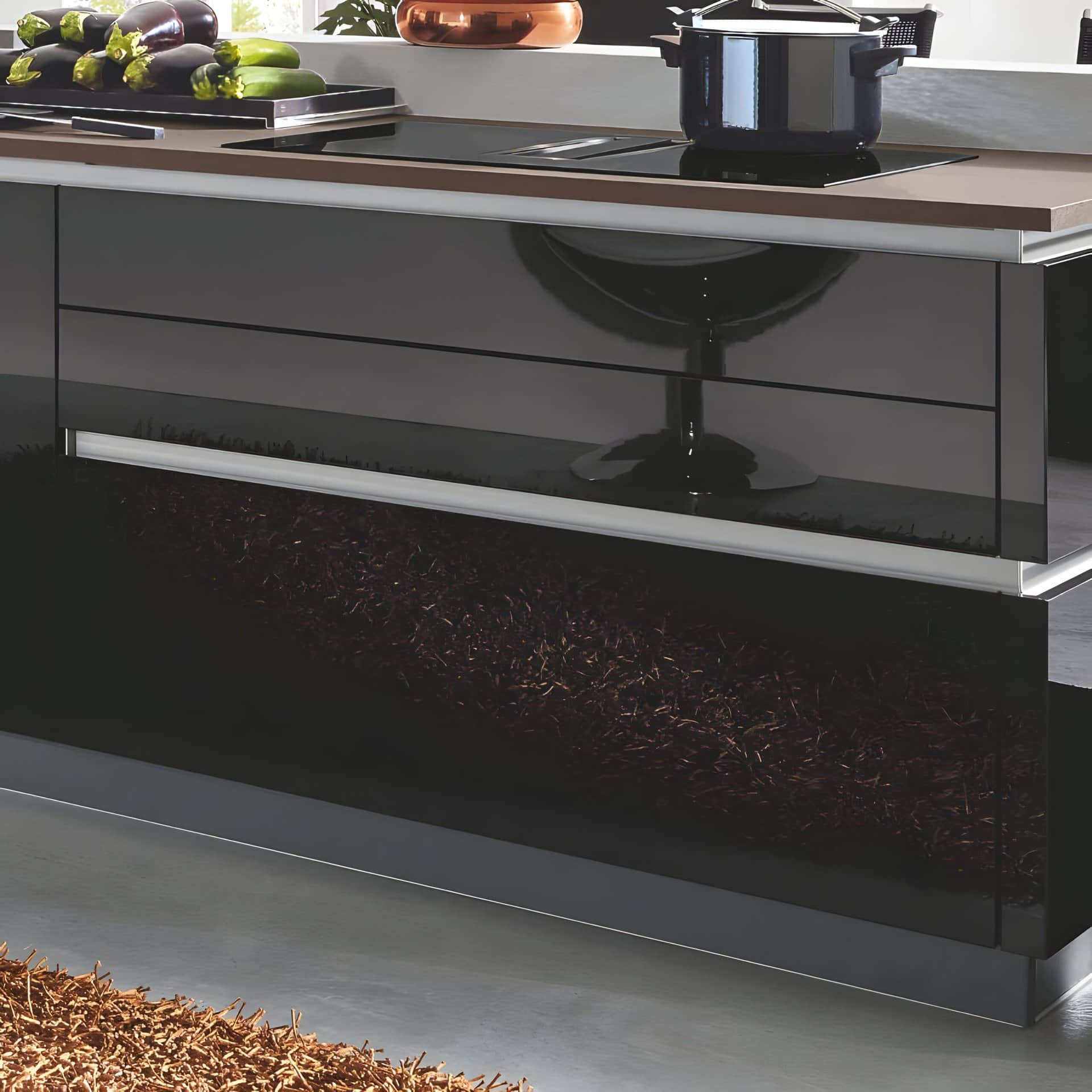
The Benefits That Win People Over
Start with maintenance, because it is where quartz separates itself. Natural stone needs periodic sealing to keep liquids from soaking in. Quartz never does. The surface does not absorb water, wine, oil, or coffee, so a spill sits on top until you wipe it away rather than working its way into the stone. For a busy household, that is one less chore on the calendar and far less worry about the red-wine ring or the turmeric splash.
Non-porous also means hygienic. With nowhere for moisture and food residue to seep, bacteria have little to cling to, which is reassuring on a food-prep surface. Quartz resists stains and shrugs off everyday scratches thanks to its hardness, though no countertop is truly scratch-proof, so a cutting board is still wise.
Then there is the colour and pattern range, which is broader than natural stone can offer. Because the look is engineered, you can choose anything from a quiet warm white to deep charcoal to a dramatic veined pattern, all with reliable consistency. This combination of durability, low upkeep, and design freedom is exactly why surveys show quartz sitting as the first choice for the majority of buyers shopping for new countertops (SlabWise, 2026).
Quartz Compared With Granite, Marble, and Other Surfaces
Against granite, the trade is character for control. Granite gives you a one-of-a-kind natural slab and excellent heat tolerance, but it needs sealing and its pattern can vary from the sample you fell for. Quartz gives you sealing-free maintenance and dependable consistency, at the cost of that wild natural variation some people love. Both are hard-wearing. The choice usually comes down to whether you want nature’s randomness or a designed, repeatable look.
Against marble, the contrast is sharper. Marble is stunning and prized for its soft veining, but it is porous, relatively soft, and reactive to acids, so lemon juice or vinegar can etch it and spills can stain. This is why so many people who love the marble aesthetic choose a marble-look quartz instead: they get the veined elegance without the babysitting. Marble rewards owners who treat it as a living surface that develops a patina; quartz suits those who want the look to stay put.
Compared with solid surface acrylic, laminate, or butcher block, quartz generally outlasts and outperforms on durability and stain resistance, which is part of why kitchens, the largest application by far, keep driving quartz demand (Grand View Research, 2025). Each material has its place, but for a hard-working kitchen counter, quartz tends to be the balanced pick.
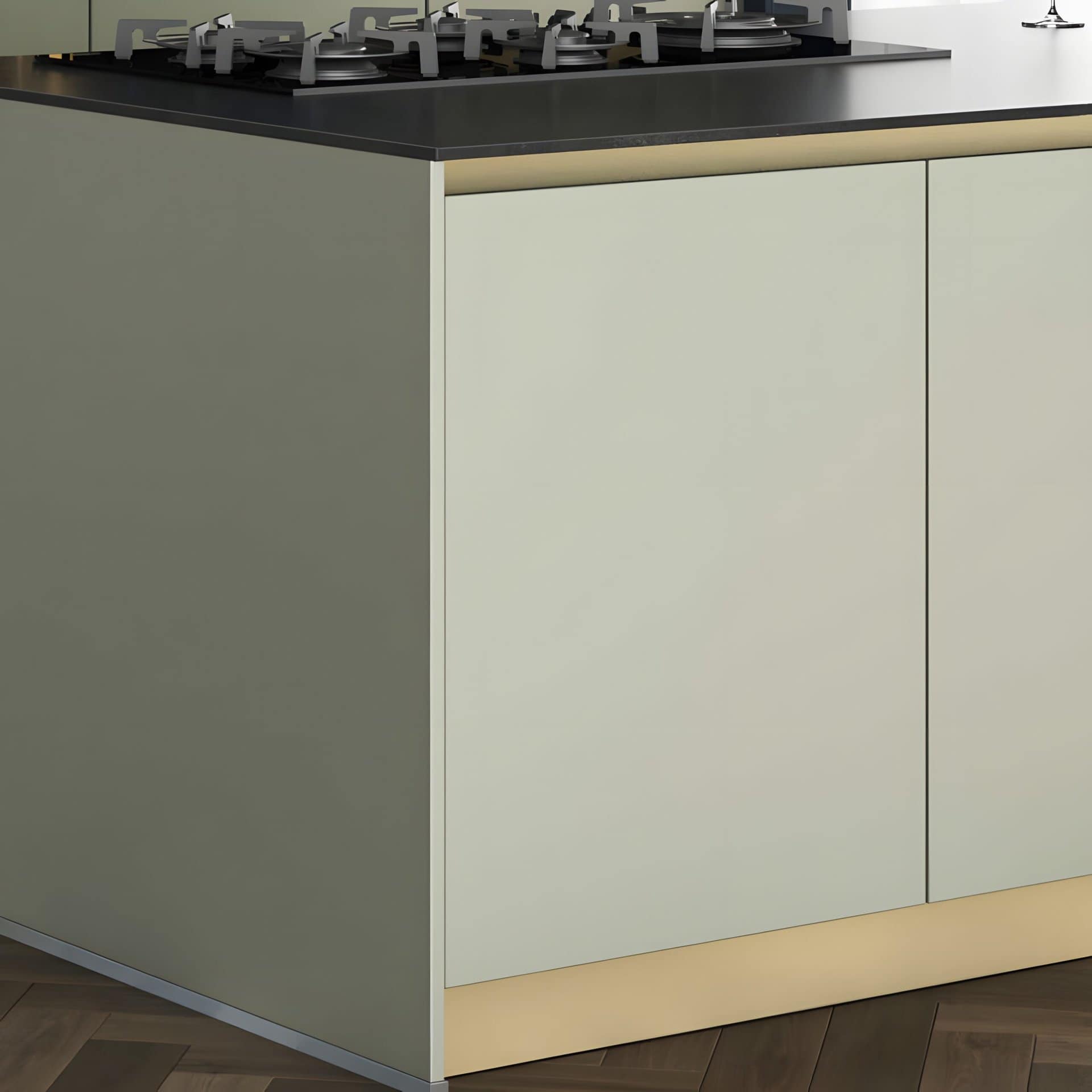
The Look Options: Veining, Colour, and Finish
Choosing quartz is really two decisions: the pattern and the finish. On pattern, the most popular direction right now is marble-look veining, where soft grey or warm gold veins drift across a pale background. Modern manufacturing has made these veins run through the depth of the slab rather than sitting only on the surface, so an exposed edge or a mitred corner reads as natural. If you want something calmer, solid and near-solid colours, from crisp whites to greiges to inky blacks, give a clean, architectural backdrop that lets cabinetry and hardware take the lead.
On finish, the main choice is polished versus matte. A polished surface has a light reflective sheen that brightens a room, a real advantage during the long grey stretches of a Vancouver winter when natural light is scarce. A matte or honed finish reads softer and more contemporary, hides fingerprints and water spots well, and has been gaining ground in current design. Many showrooms will let you see the same colour in both finishes side by side, which is the easiest way to feel the difference. There are also lightly textured finishes that add a tactile, stone-like quality if you want to move further from the high-gloss look.
Edges, Waterfall Ends, and Detailing
The edge profile is a small detail that changes the whole character of a counter. A square or eased edge with a crisp top line suits clean, modern kitchens and pairs naturally with flat-panel cabinet doors. Softer profiles, where the edge is rounded or chamfered, feel a touch more traditional and are gentle on hips and elbows in a tight galley. A thicker, built-up edge gives a substantial, anchored look, while a thin profile feels light and current.
The waterfall end has become a signature move, especially on islands. Instead of stopping the countertop at the cabinet and showing a side panel, the quartz turns ninety degrees and runs down to the floor, so the slab appears to pour over the edge. With a veined quartz, a well-executed waterfall carries the pattern down the side in a continuous flow, which is striking in an open-plan space where the island is on full view from the living room. It uses more material and careful fabrication, so it adds cost, but as a focal point it is hard to beat. Mitred edges, integrated drainboards, and matching backsplashes are other ways quartz can be detailed to feel custom rather than off the shelf.
Heat, Care, and Living With Quartz
Quartz is low-maintenance, not no-maintenance, and one honest caveat is heat. The natural quartz itself is highly heat tolerant, but the resins that bind it are not. A pot straight off the burner or a baking sheet out of the oven can scorch or discolour the surface or cause a thermal shock crack. The fix is simple: keep trivets and hot pads within reach and use them every time. It is the single habit that protects the surface for decades.
Daily care could not be easier. Warm water, a little mild dish soap, and a soft cloth handle almost everything, and because the surface is non-porous there is no sealing schedule to remember. Avoid harsh abrasive pads and strong chemicals like oven cleaner or bleach-heavy products, which can dull the finish over time. Wipe acidic spills when you see them as good practice, even though quartz resists them far better than marble. Use a cutting board to protect both your knives and the polish. Treated this way, a quartz counter looks the same in year fifteen as it did on install day, which is a large part of its appeal in a long-term family home.
Pairing Quartz With Cabinetry, and What It Costs
A countertop never works alone. It sits on cabinetry, meets a backsplash, and frames the hardware, and the most satisfying kitchens are the ones where those elements were planned as a whole. This is where the surface and the cabinets become a true system. A veined marble-look quartz brings movement and warmth, so it tends to pair beautifully with calm, handleless cabinet fronts that let the stone speak. A solid, quiet quartz does the opposite, giving you room to choose expressive wood-grain or richly coloured doors without the room feeling busy.
German-engineered Bauformat cabinetry is built to make that pairing clean. The collections give you range to match almost any quartz direction: Baulux for a refined modern look, Bauformat for the widest choice of fronts and finishes, and Burger for the best value without giving up the engineering. The mechanics matter here too, because full-extension soft-close runners let drawers glide fully open and close quietly under a heavy stone top, and 3D-adjustable concealed hinges allow the doors to be dialled in so the lines under your countertop stay even and precise. Made in Germany since 1917 in Lohne, the cabinets are measured, planned, and installed by the local Vancouver team, so the fit between cabinet and counter is handled on the ground rather than left to chance.
On budget, quartz sits in the mid-to-upper range and the spread is wide. In Canada, installed quartz generally runs from roughly 90 to 200 dollars per square foot, depending on the colour, the slab thickness, and the complexity of edges and details like a waterfall (Bhumi Calculator, 2026). It is an investment, but kitchens are also one of the strongest places to put renovation dollars: a well-executed kitchen update typically returns in the range of 60 to 80 percent of its cost at resale and ranks among the top home improvements for return in Canada (RE/MAX Canada, 2025). In a Metro Vancouver market where buyers scrutinize kitchens closely, a durable quartz surface paired with precise cabinetry reads as quality that holds.
Frequently Asked Questions
Do quartz countertops ever need to be sealed?
No. Because quartz is engineered to be non-porous, it does not absorb liquid the way natural stone does, so there is no sealing step at install and none to repeat over the years. This is one of the main practical reasons people choose it over granite or marble. Routine cleaning with warm water and mild soap is all the upkeep the surface asks for.
Can I put a hot pan directly on quartz?
It is best not to. The natural quartz withstands heat well, but the resins binding the slab can scorch, discolour, or crack under sudden high heat from a pot or a baking sheet. Always set hot cookware on a trivet or pad. It is a small habit that keeps the surface looking new for the long run.
Is quartz a good choice for a busy family kitchen in Vancouver?
It is one of the best. The non-porous surface resists stains and bacteria, holds up to daily wear, and needs no sealing, which suits homes where the kitchen is in constant use. Quartz now holds the largest share of new countertop choices, driven largely by kitchen demand (SlabWise, 2026). Paired with soft-close, fully adjustable cabinetry, it makes for a kitchen that stays calm and tidy under real life.
Will a quartz countertop look the same as the showroom sample?
Closely, yes, and that is a quartz advantage. Because the pattern is engineered rather than quarried, slabs are highly consistent, so the sample you choose reflects what gets installed. Natural stone can vary noticeably from a small sample to a full slab; quartz removes most of that uncertainty, which makes planning a coordinated kitchen far easier.
A quartz countertop is a long-term decision that quietly pays off every single day, in the wipe that takes seconds, the spill that never stains, and the surface that still looks right years on. Choose the pattern and finish that suit how your light falls and how your household lives, plan the edge and any waterfall with intent, and treat it to the few simple habits it asks for. Paired with cabinetry that was measured and built to meet it precisely, a quartz top is the surface that ties a Metro Vancouver kitchen together and keeps it looking that way.
Explore more from Bauformat BC
- Fresh Takes: The Five Hottest Innovations in Kitchen Backsplash Design
- Unveiling the Secrets of Kitchen Sinks: an Indispensable Guide
- Unearth the Secrets of Bauformat’s Heat-Defying Kitchen Countertops
German cabinetry, planned and built for Metro Vancouver
The kitchen is one of the highest-return rooms in a home: the 2025 Cost vs. Value Report found a minor kitchen remodel recoups roughly 96% of its cost at resale. Choosing cabinetry that lasts is central to that return, which is where German engineering earns its place. Every Bauformat kitchen is manufactured in Germany, then measured, planned, and installed by our Vancouver team, built to fit your room to the millimetre.
See the Baulux, Bauformat, and Burger collections in person at 1410 Marine Dr Unit 205, North Vancouver, learn more about the manufacturer at bauformat.de.
Book a 30-minute consultation with our Metro Vancouver kitchen designers to plan a kitchen built to last.
