
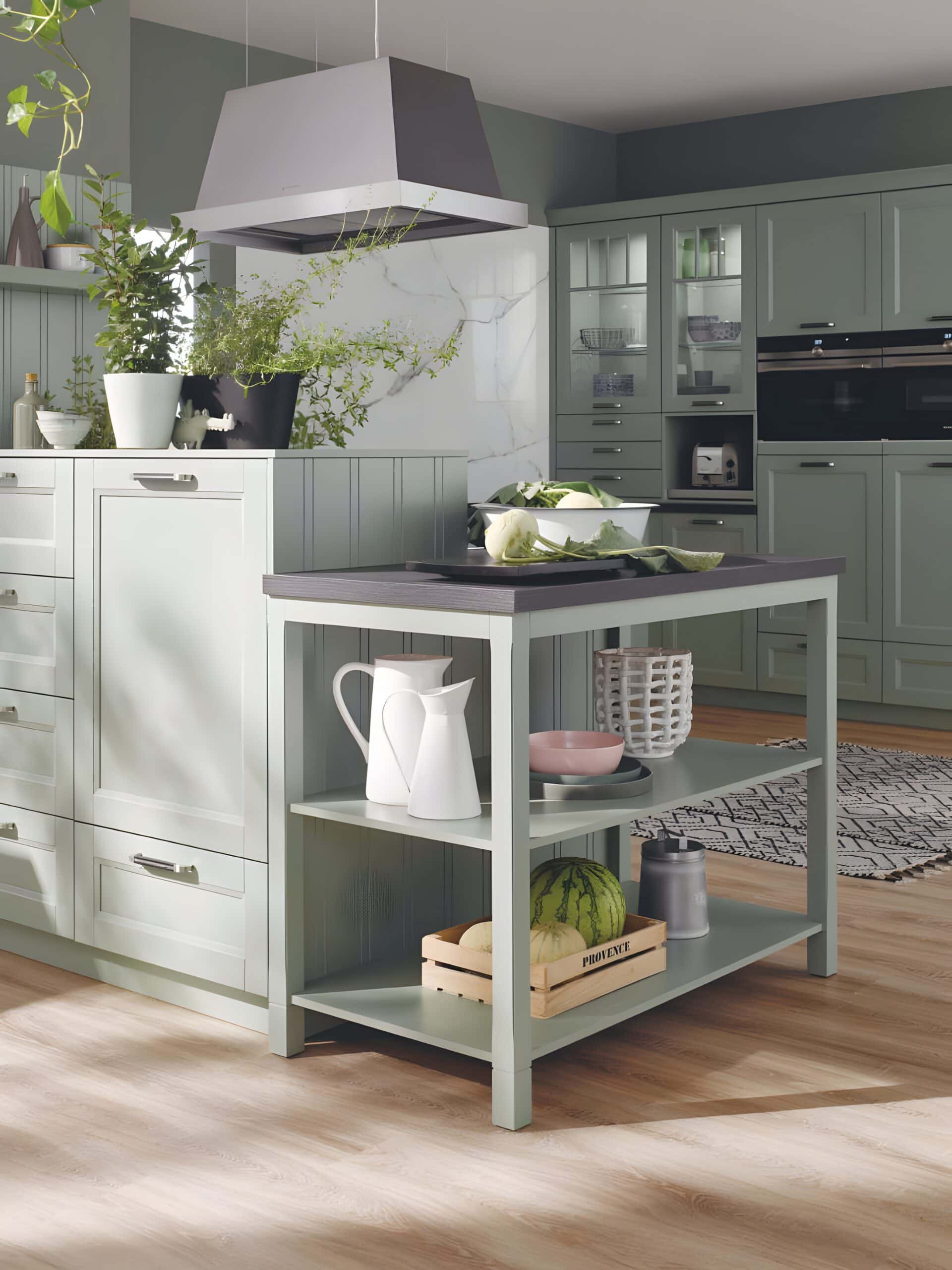
A backsplash used to be an afterthought, a thin band of tile chosen at the very end of a kitchen project. That has changed. In 2026 the backsplash has become one of the most expressive surfaces in the room, the place where a kitchen decides whether it wants to whisper or sing. Across Metro Vancouver, from Yaletown condos to North Shore family homes, we are watching homeowners treat this wall as a design moment rather than a splash guard.
The shift is partly about materials and partly about confidence. People are running stone to the ceiling, matching the wall to the counter, and reaching for handmade tile with real character. Below are the five backsplash directions shaping kitchens this year, what each look is really about, and how to keep it practical in a coastal climate. We have also added a short note on how any of these ideas should sit alongside German cabinetry so the whole room stays balanced.
Key Takeaways
- Full-height slab backsplashes that run from counter to ceiling are the dominant kitchen trend of 2026, prized for their clean, grout-free look.
- Matching the backsplash to the countertop creates a quiet, architectural effect that lets cabinetry and hardware take centre stage.
- Large-format porcelain delivers the drama of natural stone with far less upkeep, a real advantage in Metro Vancouver’s damp climate.
- Handmade zellige and bold coloured tile are back, adding warmth and personality after years of all-white and grey kitchens.
- Fluted and three-dimensional panels bring texture and shadow play, and 3D tiles are projected to hold over 10 percent of the tile market by 2026 (Accio, 2026).
- A well-planned kitchen remains one of the highest-return renovations in Canada, with returns of roughly 75 to 100 percent (Appraisal Institute of Canada, cited 2025).
1. Full-Height Slab Backsplashes That Run to the Ceiling
The single biggest backsplash story of 2026 is the full-height slab, where a continuous piece of stone or porcelain travels from the countertop all the way up to the ceiling or the underside of the upper cabinets. There is no four-inch lip, no busy field of small tiles, just one calm sweep of material. Designers describe countertop-to-ceiling surfaces that flow up the wall as the look defining the year, and full-height backsplashes have been named the top kitchen trend of 2026 (Hard Rock Stone Works, 2026).
Part of the appeal is purely visual. A tall slab makes a galley or a compact condo kitchen feel grander, drawing the eye upward. The other part is practical. With few or no grout lines, there is almost nothing to scrub behind the range, which matters in a working family kitchen. For care, seal natural stone such as marble or quartzite on the schedule your fabricator recommends, and wipe spills promptly near the cooktop. If you love the marble look but cook a lot, a porcelain slab in a marble pattern gives you the same effect with far less worry.
2. Matching the Backsplash to the Countertop
Closely tied to the slab trend is the idea of carrying the exact countertop material up the wall, sometimes called a continuous or wrapped surface. The counter and the backsplash read as one piece, and the join almost disappears. The result is restrained and architectural, the kind of detail you notice without quite knowing why a kitchen feels so resolved.
This look is rising because the broader 2026 palette has turned quieter, leaning into soft creams, warm whites and chalky neutrals rather than high contrast (Homes and Gardens, 2026). When the wall and the worktop share a tone, the room reads as composed, and your cabinetry becomes the star. Care is simple because you are maintaining a single material rather than two, though you should still seal porous stone and avoid abrasive cleaners that dull the finish. This is also a forgiving choice for resale, since neutral, cohesive surfaces appeal to the widest range of Metro Vancouver buyers.
3. Large-Format Porcelain and Continuous Surfaces
Large-format porcelain is the workhorse behind much of what is happening this year. These big panels can cover an entire wall with minimal grout lines, and they come in finishes that convincingly mimic marble, concrete and travertine. The category is growing quickly, with the global decorative tiles market estimated at 35.32 billion US dollars in 2025 and projected to reach 44.37 billion by 2030, driven in part by technology that enables ever larger formats (IndexBox, 2025).
For a rainy coastal city, porcelain is hard to beat. It is dense, water-resistant and almost impervious to staining, which suits a region where kitchens see a lot of steam and damp days. You get the visual depth of natural stone without the sealing routine, and fewer grout lines mean fewer places for grime to settle. Day-to-day care is genuinely easy, just warm water and a soft cloth, with the occasional pH-neutral cleaner. Because the panels are large and heavy, this is one trend where professional measuring and installation truly pays off.
4. Handmade Zellige and Textured Tile
After years of flat, uniform tile, handmade texture is having a real moment. Zellige, the glazed Moroccan tile fired and finished by hand, is trending strongly for 2026 in both soft neutrals and richer colours (Tasting Table, 2026). Each piece carries slight variations in tone and surface, and the wavy, glossy glaze catches and scatters light so the wall shifts gently through the day. It is the antidote to anything that looks mass-produced.
Zellige rewards a relaxed eye. The irregular edges and uneven faces are the point, so it pairs beautifully with the warm wood tones and creamy neutrals leading kitchen design this year. On care, the handmade glaze can show watermarks, so wipe it down after cooking and use a gentle cleaner rather than anything harsh. Grout choice matters too. A tone close to the tile keeps the look soft, while a contrasting grout makes the pattern crisp and graphic. Either way, this is a backsplash with genuine soul.
5. Bold Colour and Fluted, Three-Dimensional Panels
The last direction is really two related ideas, and both signal a move away from the all-white kitchen. Colour is returning, with terracotta, sage green, creamy ivory and dusty ocean blue showing up as the trend replacing endless white and grey (Homes and Gardens, 2026). These tones feel current without shouting, and they sit happily against natural wood and warm metals.
Alongside colour, fluted, ribbed and sculpted surfaces are surging. These three-dimensional panels create a play of light and shadow that a flat wall simply cannot, adding quiet drama behind a range or sink. The momentum is measurable, with 3D tiles projected to account for more than 10 percent of the total tile market by 2026 (Accio, 2026). For care, dust can settle in the grooves of fluted tile, so an occasional pass with a soft brush keeps it sharp. Metal panels, another textured option, should be matched to your climate and cleaned with products suited to the specific finish so they do not spot or dull.
Letting the Backsplash and Your Cabinets Work Together
Whatever you choose, the backsplash should be in conversation with your cabinetry, not competing with it. Our general rule is that one surface leads and the others support. If you want a bold zellige or a coloured tile, let the cabinets stay calm and architectural. A handleless German kitchen in an ultra-matte Baulux finish, or a warm woodgrain from the broad Bauformat range, gives a busy backsplash room to breathe. If instead you go for a dramatic full-height slab, simpler cabinet fronts keep the eye on that one beautiful wall.
This balance is easier to achieve when the cabinetry is precise. Bauformat kitchens have been made in Germany since 1917, and details like full-extension soft-close runners and 3D-adjustable concealed hinges mean fronts sit in true, even alignment. Crisp, consistent cabinet lines act as a quiet frame for whatever backsplash you fall for. It also helps to make these decisions together rather than in sequence, since the local Vancouver team measures, plans and installs as one project, so the slab, the counter and the cabinet fronts are coordinated before anything is cut.
Frequently Asked Questions
Is a full-height backsplash worth it in a small Vancouver kitchen?
Often yes. In compact Yaletown condos and townhomes, a continuous full-height surface can actually make the room feel taller and more open, because the unbroken material draws the eye upward and removes visual clutter. It also eliminates the grout lines that collect grime in a hard-working kitchen. The main consideration is material cost and installation, since large slabs need careful measuring and professional fitting.
Does a new backsplash add resale value in Metro Vancouver?
A backsplash on its own is a finishing touch, but as part of a thoughtful kitchen update it contributes to one of the highest-return renovations in the country. A well-planned kitchen renovation in Canada can return roughly 75 to 100 percent of its cost (Appraisal Institute of Canada, cited 2025). Neutral, cohesive surfaces such as a matched counter and backsplash tend to appeal to the broadest pool of local buyers.
Is porcelain or natural stone better for a backsplash here?
Both are excellent, and the right answer depends on how you live. Natural stone such as marble offers unmatched depth and character but needs periodic sealing and a gentle touch. Large-format porcelain gives a very similar look with almost no maintenance and strong resistance to water and stains, which suits Metro Vancouver’s damp climate and busy households. Many people choose porcelain behind the range and stone elsewhere to get the best of both.
How do I keep a bold backsplash from overwhelming the kitchen?
Let it be the one loud element. Pair a coloured or heavily textured backsplash with calm, simple cabinet fronts and restrained hardware so the eye has somewhere to rest. Repeating a single tone from the backsplash elsewhere in the room, perhaps in an accent or a worktop edge, ties everything together without adding noise.
The exciting thing about backsplashes in 2026 is how much room there is to express yourself, whether you lean into a serene full-height slab or a hand-glazed tile full of character. The trends share one quiet principle, which is that the wall and the cabinetry should feel like they were planned together from the start. Get that relationship right and the backsplash stops being an afterthought and becomes the detail that makes the whole Metro Vancouver kitchen feel considered.
Explore more from Bauformat BC
- Unveiling the Secrets of Kitchen Sinks: an Indispensable Guide
- Exploring the Timeless Elegance of Quartz Countertops with Bauformat
- Unearth the Secrets of Bauformat’s Heat-Defying Kitchen Countertops
German cabinetry, planned and built for Metro Vancouver
The kitchen is one of the highest-return rooms in a home: the 2025 Cost vs. Value Report found a minor kitchen remodel recoups roughly 96% of its cost at resale. Choosing cabinetry that lasts is central to that return, which is where German engineering earns its place. Every Bauformat kitchen is manufactured in Germany, then measured, planned, and installed by our Vancouver team, built to fit your room to the millimetre.
See the Baulux, Bauformat, and Burger collections in person at 1410 Marine Dr Unit 205, North Vancouver, learn more about the manufacturer at bauformat.de.
Book a 30-minute consultation with our Metro Vancouver kitchen designers to plan a kitchen built to last.
