
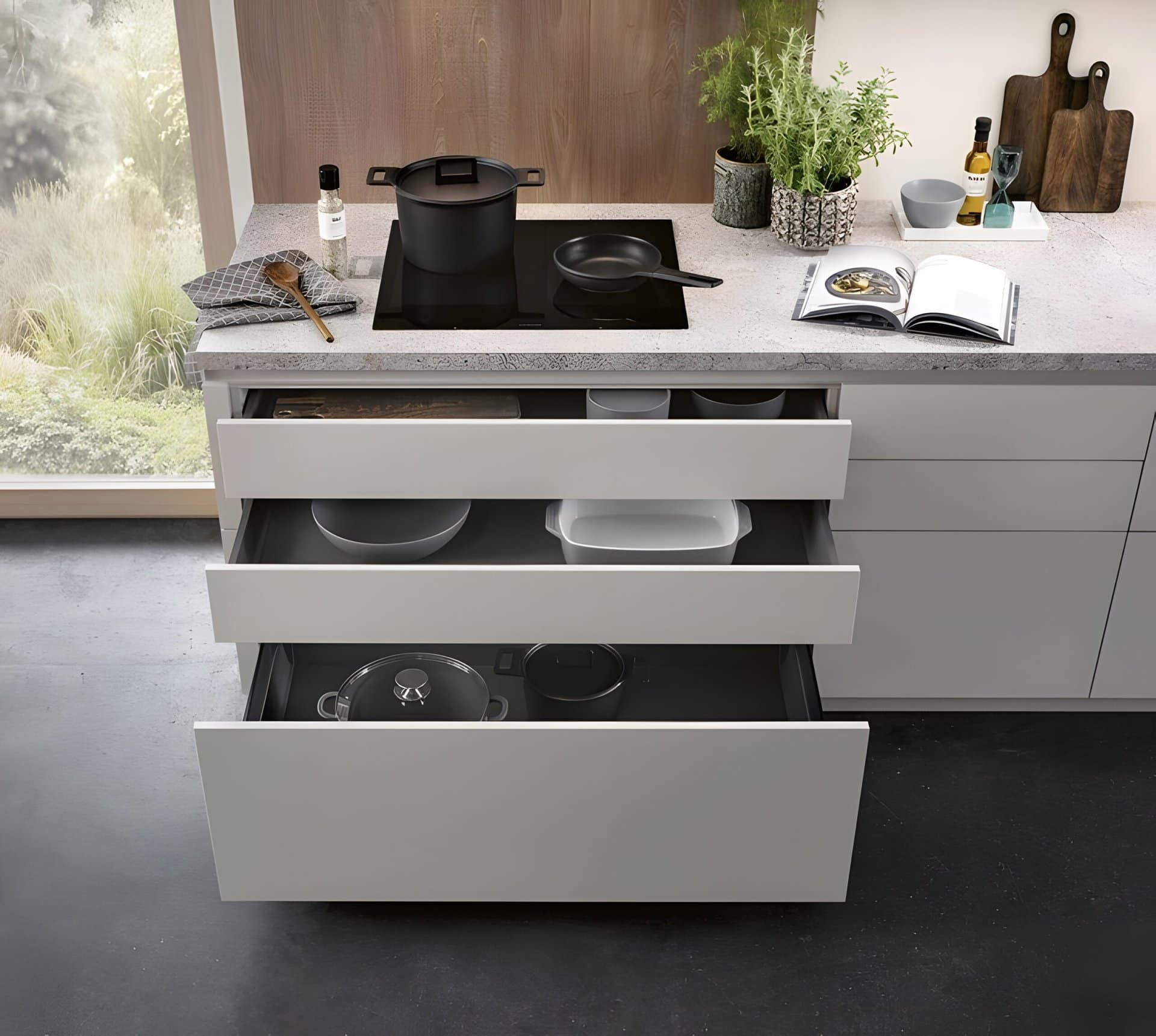
Anyone who has cooked in a downtown Vancouver condo knows the particular feeling of standing in the kitchen, holding a colander, and having nowhere to put it. The counter is already covered. The cabinet above is jammed. The drawer sticks halfway. In a city where space costs more per square foot than almost anywhere in Canada, that small daily friction adds up to real frustration.
The good news is that a compact kitchen does not have to feel cramped or chaotic. The difference between a kitchen that fights you and one that works with you usually comes down to what is happening inside the cabinets, not the size of the room. That is the heart of kitchen space optimization, and it is something German-engineered cabinetry was built to solve.
Key Takeaways
- Kitchen space optimization is mostly about cabinet interiors, not floor area. Full-extension pull-outs and smart organizers can reclaim the dead space hidden inside ordinary cabinets.
- Metro Vancouver condos are getting smaller, which makes every reclaimed inch more valuable for the people living in high-density neighbourhoods like Yaletown.
- Zoning your kitchen into prep, cook, clean, and store areas reduces wasted steps and makes a small footprint feel larger.
- Tall pull-out pantries, deep pan drawers, corner units, and drawer-in-drawer systems are the workhorses of small-space storage.
- A well-planned kitchen renovation is also one of the strongest returns you can make on a home, which matters in an expensive market.
Why Space Optimization Matters More in Metro Vancouver
Vancouver is the most densely populated city in Canada, with roughly 5,750 people per square kilometre, more than any other Canadian municipality with a population above 5,000 (Statistics Canada census data, 2025). Metro Vancouver as a whole passed three million residents in early 2025 and is projected to reach 3.8 million by 2046 (Metro Vancouver Regional District, 2025). More people on the same land base means more vertical living, and more vertical living means smaller kitchens.
The numbers bear this out. The median size of newer Metro Vancouver condos has been shrinking, with units built in the mid-2010s running about 16 percent smaller than those built between 1971 and 1990 (Business in Vancouver, 2025). When the room itself is getting tighter, the only way to gain usable storage is to be smarter about the space you already have. That is exactly where interior engineering earns its keep.
Start With Zoning and Workflow
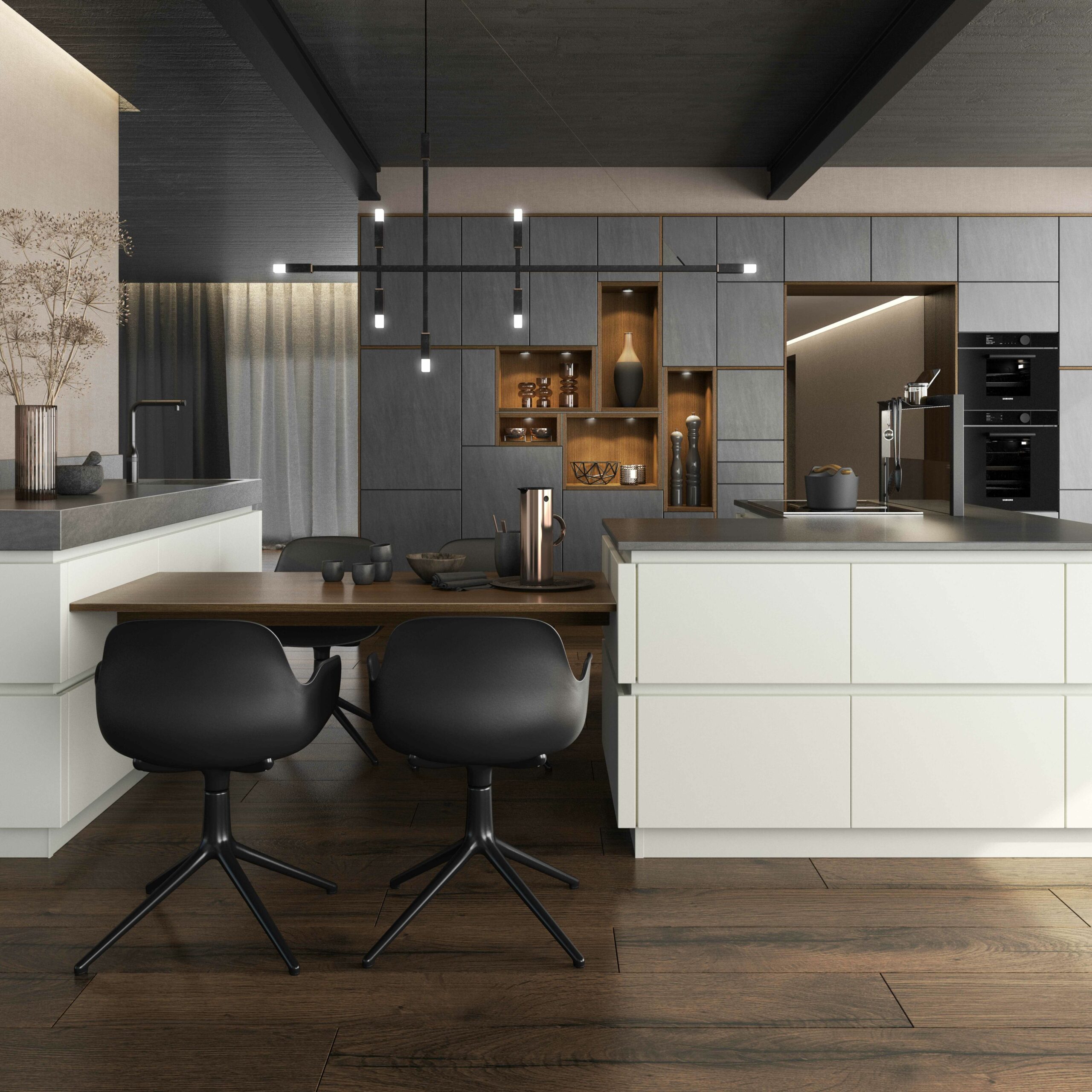
Before you think about any single cabinet, think about how you actually move through your kitchen. Professional designers organize a kitchen into zones, and the principle works just as well in a 600 square foot condo as it does in a sprawling home.
The five working zones
- Consumables: dry goods, canned items, and snacks, ideally grouped in one tall pantry pull-out.
- Non-consumables: dishes, glasses, and everyday tableware, stored close to the dishwasher.
- Cleaning: the sink, dishwasher, recycling, and the cabinet underneath for cloths and cleaners.
- Preparation: your main run of counter, with knives, boards, and bowls in the drawers directly below.
- Cooking: the cooktop and oven, with pots, pans, and utensils within arm’s reach.
When each item lives in the zone where you use it, you stop crossing the room for a colander. In a galley or single-wall condo kitchen, good zoning is the single biggest thing that makes a tight layout feel calm rather than cluttered. It costs nothing extra. It just requires planning the interiors around how you cook, which is the part of the process our Vancouver team works through with every client.
Tall Pull-Out Pantries: The Vertical Win
In a small kitchen, a traditional pantry cupboard is often a poor use of space. You can see the front row of items, but everything behind disappears into the dark. A tall pull-out pantry flips this. The entire unit glides out toward you on full-extension soft-close runners, so the back of the cabinet becomes as reachable as the front.
For a condo with limited cabinet runs, this is one of the most efficient things you can install. A single narrow column, sometimes as little as 30 centimetres wide, can hold an astonishing amount when it pulls out and gives you access from both sides. Shelves stay visible, nothing gets lost behind a forgotten can, and you reclaim the deep dead zone that ordinary pantries waste. Across the Bauformat, Baulux, and Burger collections, these tall units are designed to use the full height of the cabinet, floor to top.

Deep Drawers Beat Deep Cupboards
If there is one upgrade that changes how a small kitchen feels every single day, it is replacing lower door cabinets with deep drawers. A standard base cabinet with a door and a shelf forces you to crouch, reach into the dark, and shuffle pots to find the one at the back. A deep pan drawer brings everything to you.
Why drawers win in tight kitchens
- Full visibility: open the drawer and every pot, lid, and pan is in plain sight.
- Full-extension access: the drawer pulls all the way out, so nothing hides at the back.
- Soft-close runners: drawers glide shut quietly, which matters in an open-plan condo where the kitchen shares the room.
- Heavy-load capacity: well-built runners carry stacked cookware and full dish sets without sagging.
For tableware and utensils, a drawer-in-drawer system adds a shallow second tier inside a deep drawer, so cutlery and small tools sit above your pots without claiming a separate cabinet. In a kitchen with only a handful of base units, that hidden second layer can be the difference between a tidy drawer and a junk pile.
Conquering the Corner
Every kitchen with an L-shaped or U-shaped layout has a corner, and the corner is where storage usually goes to die. A blind corner cabinet swallows your stockpot into a void you can only reach by lying half inside it. In a small kitchen, you cannot afford to lose that volume.
Engineered corner solutions fix this completely. Swing-out and pull-out corner units bring the contents into the open with a single motion, so the back of the corner travels out to meet you. Curved shelving systems rotate, and articulated trays fold forward as the door opens. Whichever style suits your layout, the goal is the same. The corner stops being wasted cubic footage and starts pulling its weight, which in a compact condo kitchen can mean an extra cabinet’s worth of usable storage you already paid for.
Going Vertical: Full-Height Cabinetry
When floor space is fixed, the only direction left is up. Many older kitchens stop the upper cabinets short and leave a strip of dead space, often a dust-collecting gap, between the cabinet top and the ceiling. Full-height cabinetry runs all the way up, turning that wasted band into real storage.
The top shelves are perfect for the things you reach for a few times a year, like seasonal serving platters, the big roasting pan, or holiday dishware. Keeping those items up high frees the prime, eye-level and waist-level zones for everyday essentials. In a condo with tall ceilings, which many newer Vancouver buildings have, going full-height can add a surprising amount of capacity without claiming a single extra centimetre of floor. Tall units paired with concealed, 3D-adjustable hinges keep the doors aligned and the lines clean, even on a long vertical run.
Other vertical tricks worth using
- Lift-up upper doors: hinged to swing up and out of the way, ideal when the kitchen opens onto a living area and a swinging door would be awkward.
- Interior dividers: vertical slots that store baking sheets and cutting boards upright instead of stacked flat.
- Toe-kick drawers: the strip of space beneath your base cabinets, reclaimed for flat items like trays and linens.
Islands, Peninsulas, and Small-Space Tactics
Not every condo has room for a full island, but many can fit a peninsula or a compact island that does double duty. The secret is to treat it as storage first and surface second. A peninsula can hold deep drawers on the kitchen side and open shelving or seating on the living side, giving you a prep surface, a casual eating spot, and a wall of storage in one piece of cabinetry.
For the smallest layouts, a few targeted moves go a long way:
- Carry one wall up to full height rather than spreading short cabinets around the whole room.
- Choose drawers over doors on every base cabinet you can.
- Use the inside of cabinet doors for slim organizers that hold wraps, lids, or spices.
- Keep counters clear by giving small appliances a dedicated home behind a cabinet door, so the working surface stays open for actual cooking.
This kind of planning is also a sound investment. A 2025 national report found that a minor kitchen remodel returned roughly 96 percent of its cost at resale, among the strongest returns of any home project (Remodeling Cost vs. Value Report, 2025). In a market as expensive as Vancouver, a kitchen that stores more and works better is rarely money spent. It is money parked somewhere it tends to come back.
Frequently Asked Questions
How do I get more storage in a small condo kitchen without renovating the whole space?
Focus on the interiors. Swapping lower door cabinets for deep pull-out drawers, adding a tall pantry pull-out, and fitting a corner solution can roughly double the usable storage of the cabinets you already have, all without moving a single wall. Going full-height on at least one cabinet run captures the dead space near the ceiling too.
Are deep drawers really better than cupboards for pots and pans?
For most people, yes. A deep drawer pulls fully out so you can see and reach everything at once, while a cupboard hides the back row behind whatever is in front. Drawers also spare you the daily crouch-and-dig. With heavy-duty soft-close runners, they handle stacked cookware easily and close quietly, which is a real benefit in open-plan condos where the kitchen is part of the living space.
What is the smartest fix for a blind corner cabinet?
A dedicated pull-out or swing-out corner unit. Instead of reaching blindly into a void, you pull a mechanism that brings the entire contents forward into the light. In a compact kitchen, recovering that corner can give you back the equivalent of a whole extra cabinet that was previously unusable.
Does German-engineered cabinetry actually fit smaller kitchens?
It tends to suit them especially well. Because the interior hardware, pull-outs, and organizers are designed to extract every usable inch, the value is highest exactly where space is tightest. Cabinetry made in Germany since 1917 is measured, planned, and installed by a local Vancouver team, so the layout is built around your specific room rather than forced to fit a generic box.
A small kitchen is not a limitation so much as a design problem with good answers. Once the corners stop swallowing your cookware, the pantry pulls out instead of hiding things in the dark, and every base cabinet works as a drawer, even a modest Yaletown condo kitchen can hold more and feel calmer than rooms twice its size. The space was always there. It just needed to be engineered to give it back.
Explore more from Bauformat BC
- Modern Kitchen Design
- Kitchen Cabinet Hardware
- Unveiling the Top 5 Compact Kitchen Island Designs from Bauformat, You Can’t Ignore
German cabinetry, planned and built for Metro Vancouver
The kitchen is one of the highest-return rooms in a home: the 2025 Cost vs. Value Report found a minor kitchen remodel recoups roughly 96% of its cost at resale. Choosing cabinetry that lasts is central to that return, which is where German engineering earns its place. Every Bauformat kitchen is manufactured in Germany, then measured, planned, and installed by our Vancouver team, built to fit your room to the millimetre.
See the Baulux, Bauformat, and Burger collections in person at our North Vancouver showroom at 1410 Marine Dr Unit 205, learn more about the manufacturer at bauformat.de.
Book a 30-minute consultation with our Metro Vancouver kitchen designers to plan a kitchen built to last.
