
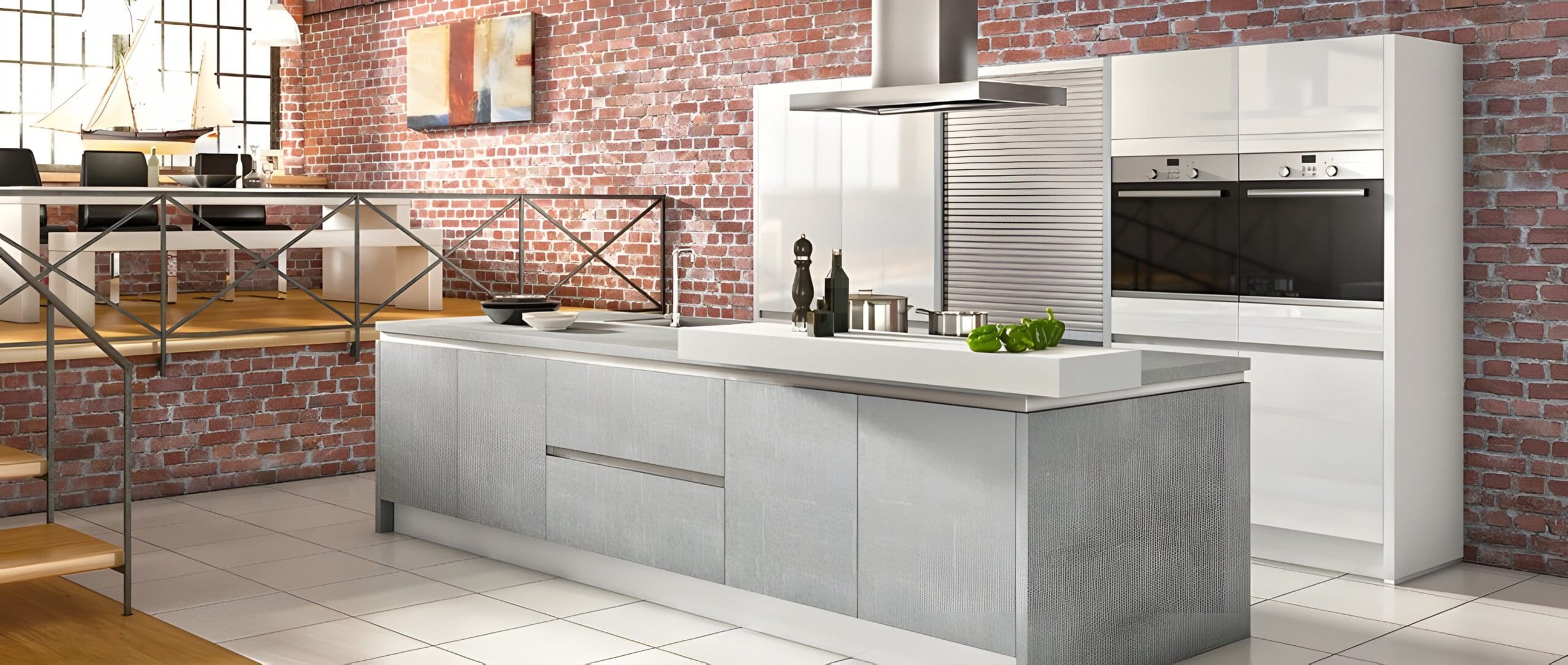
The kitchen is one of the hardest-working rooms in any Metro Vancouver home, and the lights tend to stay on longer here than almost anywhere else. Morning coffee, after-school homework, late dinners that run past nine: all of it happens under kitchen lighting. So the question of how efficient those fixtures are is not a small one. Over a year, the difference between a smart lighting setup and a wasteful one shows up clearly on your BC Hydro bill.
The good news is that efficient kitchen lighting no longer asks you to choose between savings and good light. Today’s LED systems are brighter, warmer, and more controllable than the bulbs many of us grew up with, and they sip electricity by comparison. This guide focuses squarely on efficiency and running cost: which technology wins, how to read the numbers that matter, and how controls like dimmers, sensors, and daylight strategies cut waste in a real Vancouver kitchen.
Key Takeaways
- LED lighting uses at least 75 percent less energy than incandescent bulbs, and ENERGY STAR rated LEDs last up to 25 times longer (ENERGY STAR, 2025).
- Lighting makes up roughly 10 to 15 percent of an average home’s electricity use, so efficient fixtures add up over a year (U.S. Department of Energy, 2025).
- BC Hydro residential rates sit at about 11.72 cents per kWh on the first tier and 14.08 cents on the second (BC Hydro, 2025), which is why cutting waste pays off here.
- Lumens measure brightness, watts measure energy draw; shop by lumens to get the light you want for the lowest cost.
- Dimmers, motion or occupancy sensors, and daylight harvesting reduce how long lights run at full power.
- Bauformat kitchens offer integrated, under-cabinet, and in-cabinet LED options, so efficient task light is built into the design rather than added on.
Why LED Lighting Saves the Most Money
If you do only one thing for kitchen efficiency, switch every fixture to LED. The reason is physics. An old incandescent bulb releases roughly 90 percent of its energy as heat and only a small fraction as light, which is why those bulbs got hot to the touch. LEDs flip that ratio and turn most of their energy into light instead. Residential LEDs, especially ENERGY STAR certified ones, use at least 75 percent less energy than incandescent lighting, and some achieve closer to 90 percent savings (ENERGY STAR, 2025).
Lifespan is the other half of the value. ENERGY STAR rated LEDs are built to last up to 25 times longer than incandescent bulbs, with rated lives around 25,000 hours or more (ENERGY STAR, 2025). In a kitchen where the lights might run four or five hours a day, that is years of service before anything needs changing. You buy fewer bulbs, climb fewer ladders, and replace fewer fixtures over the life of the kitchen.
Put dollars to it. The average household saves about 225 dollars a year in energy costs by using LED lighting (ENERGY STAR, 2025). The kitchen is where a big share of that saving lives, because it is the room that gets lit the longest. Multiply that across a Metro Vancouver home with several rooms, and the case for LED is settled.

Lumens vs Watts: Shop for Brightness, Not Power
For decades we bought bulbs by wattage, asking for a 60-watt or a 100-watt. That habit measures the wrong thing. Watts tell you how much electricity a bulb draws, not how bright it is. With LEDs, you can get the same brightness for a fraction of the watts, so wattage is now a poor guide to the light you will actually get.
The number that matters is lumens, the measure of brightness. As a rough guide, a traditional 60-watt incandescent puts out about 800 lumens, and an LED can deliver that same 800 lumens while drawing roughly 8 to 10 watts. So when you shop, decide how much light a counter or island needs in lumens, then choose the LED that hits that figure at the lowest wattage. A higher lumens-per-watt rating means a more efficient fixture.
Colour temperature matters too, even though it is not an efficiency number. For kitchen work surfaces, many Vancouver homeowners prefer a neutral white around 3000 to 4000 Kelvin, which reads clean for food prep without feeling clinical. The efficiency lesson stands either way: pick your lumens and your colour, then let the watts fall as low as the technology allows.
Choosing Efficient Under-Cabinet LED
Under-cabinet lighting is where efficiency and good design meet most clearly in a kitchen. A continuous LED strip or bar tucked beneath the upper cabinets throws light straight onto the counter, which is exactly where you need it for chopping, reading a recipe, or measuring. Because the light lands on the task instead of scattering across the room, you get the brightness you need at a far lower energy cost than flooding the whole kitchen from the ceiling.
When you choose under-cabinet LED, look at lumens per watt and at the quality of the light, measured by the colour rendering index, or CRI. A CRI of 90 or higher makes vegetables, meat, and finishes look true to colour, which matters when you are cooking. Integrated systems, where the LED is built into the cabinetry rather than clipped on afterward, also tend to run cooler and last longer because they are designed as part of the unit.
This is one of the areas where Bauformat kitchens, made in Germany since 1917 and measured, planned, and installed by the local Vancouver team, have a built-in advantage. Integrated and under-cabinet LED options are part of the cabinetry design, along with in-cabinet lighting for pantries and glass-front units. That means efficient task light is engineered into the kitchen from the start, across the Baulux, Bauformat, and Burger collections, rather than retrofitted with mismatched strips later.
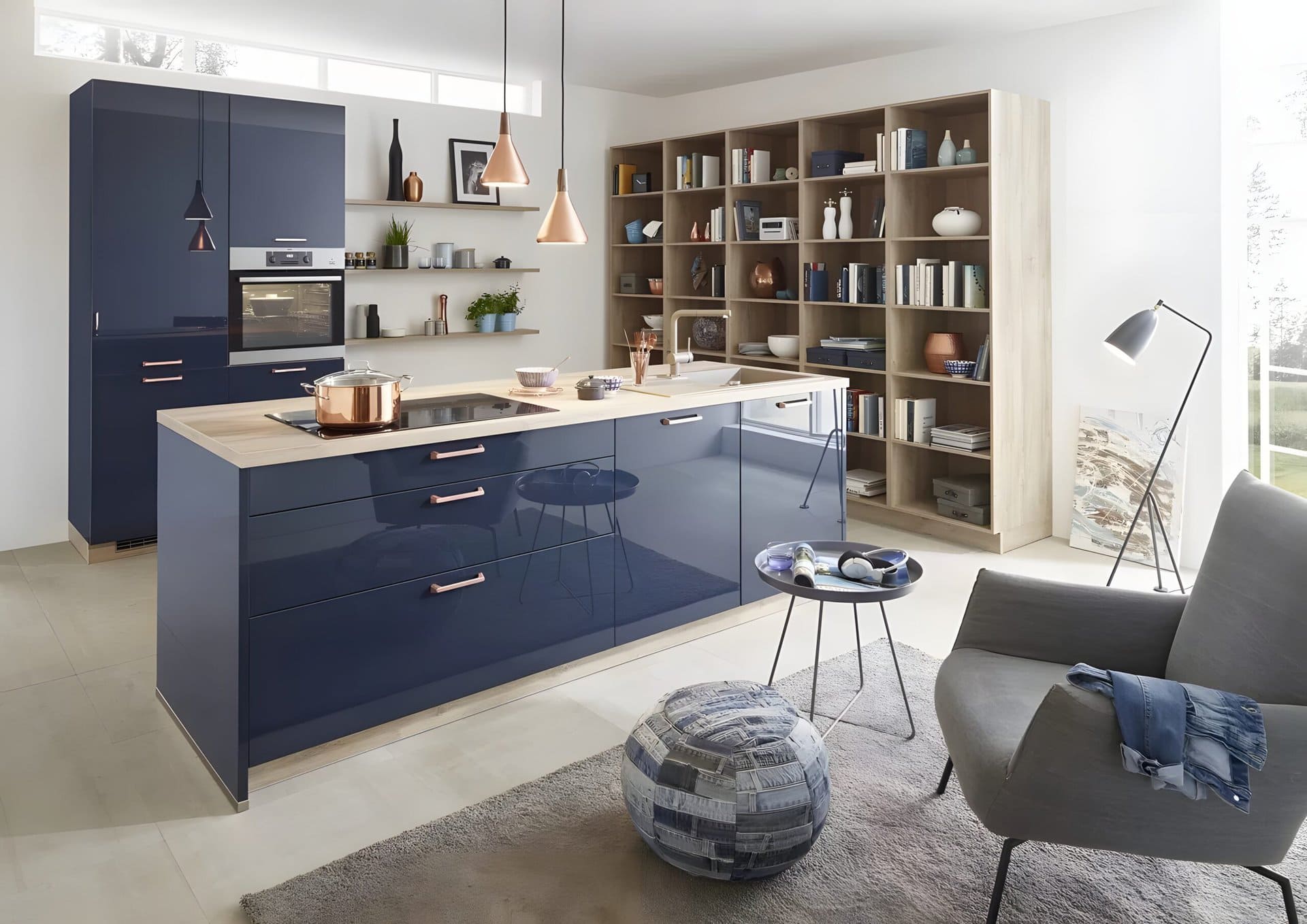
Dimmers and Sensors: Cut Waste Without Thinking About It
Even the most efficient LED wastes energy when it burns at full brightness in an empty room. Controls solve that, and they are some of the cheapest upgrades you can make. A dimmer lets you run lights at, say, 60 percent for an evening glass of wine instead of full output, which lowers the draw and extends the life of the fixture at the same time. Make sure you pair LEDs with dimmers rated for LED, since older dimmers can cause flicker or buzz.
Motion and occupancy sensors take the decision out of your hands entirely. A pantry, a walk-in, or a hallway off the kitchen are perfect candidates: the light comes on when you walk in and shuts off a few minutes after you leave. For households where someone always forgets to flip the switch, sensors quietly recover energy that would otherwise leak away every single day. Occupancy sensors that turn lights on automatically and vacancy sensors that only turn them off are both worth considering depending on the space.
The payoff scales with your local rate. With BC Hydro charging roughly 11.72 cents per kWh on the first tier and 14.08 cents on the second (BC Hydro, 2025), and a net residential bill increase of 3.75 percent that took effect in April 2026 (BC Hydro, 2026), every hour of light you do not waste is money kept. For homes on BC Hydro’s optional time-of-day pricing, shifting heavy lighting use out of the 4 to 9 PM peak window adds another small saving on top.
Making the Most of Daylight
The most efficient kitchen light is the one you do not have to pay for. Metro Vancouver gets long, bright summer days and plenty of soft daylight even through grey winters, and a kitchen designed to use that daylight runs its electric lights for fewer hours. This idea, called daylight harvesting, simply means letting natural light do as much of the work as possible and topping it up with LEDs only when needed.
In practice, that starts with the room. Keep sightlines to windows open, choose lighter cabinet finishes and reflective counter surfaces where it suits your style, and avoid blocking a window with tall upper cabinets if you can plan around it. Glossy and light-toned surfaces bounce daylight deeper into the room, which means you reach for the switch later in the day.
Controls close the loop. Daylight sensors, sometimes called photosensors, can dim or switch off fixtures automatically when there is enough natural light coming through the windows. Near a sunny eating nook or a window over the sink, that keeps the LEDs from running pointlessly on a bright afternoon. Even without sensors, simply putting your brightest task lighting on its own switch lets you light only the counter you are working at while the rest of the room coasts on daylight.
Smart Controls and ENERGY STAR Fixtures
Smart lighting controls turn good habits into automatic ones. Scheduling lets you set the kitchen to dim in the evening and switch off overnight. Scenes let one tap shift from bright prep light to a low, warm setting for dinner. Remote control through an app means the lights someone left on after the morning rush get shut off from your phone on the way to work. None of this changes how the LED works, but it removes the human forgetfulness that quietly drives bills up.
When you buy fixtures or bulbs, look for the ENERGY STAR label. It is a useful shortcut because certified products have been tested for both efficiency and quality, including minimum lifespan, light output, and colour consistency. Choosing ENERGY STAR rated LEDs means you get the deep energy savings without ending up with a bulb that dims early or shifts colour over time.
It is worth knowing how much room lighting leaves for improvement. Lighting accounts for roughly 10 to 15 percent of an average home’s electricity use (U.S. Department of Energy, 2025), and the kitchen carries more than its share because of how long the lights stay on. Tightening up that slice with efficient fixtures and smart controls is one of the easier wins in a home, and it pairs naturally with other efficiency moves you might already be making as a BC Hydro customer.
Frequently Asked Questions
How much can switching my kitchen to LED actually save?
LEDs use at least 75 percent less energy than incandescent bulbs, and the average household saves about 225 dollars a year by switching to LED across the home (ENERGY STAR, 2025). The kitchen carries a large part of that saving because it is usually the most-used room. At BC Hydro’s residential rates of roughly 11.72 to 14.08 cents per kWh (BC Hydro, 2025), the long hours a kitchen runs make it the best room to start with.
Are integrated LED systems more efficient than add-on strips?
They tend to perform better over time. Integrated and under-cabinet LED that is built into the cabinetry, as in a Bauformat kitchen, is designed to manage heat and direct light onto the counter, which keeps it efficient and long-lasting. Add-on strips can work well, but quality varies widely, and a poorly cooled strip can dim or fail earlier. Built-in systems also look cleaner because the wiring and fixtures are concealed within the design.
Do dimmers really save energy, or just lower the brightness?
They do both, as long as you use a dimmer rated for LED. Running an LED at a lower level reduces its power draw and tends to extend its life. The catch is that some older dimmers were built for incandescent loads and can cause LEDs to flicker or hum, so it is worth confirming the dimmer is LED-compatible when you upgrade.
What should I look for on a fixture to know it is efficient?
Check three things. First, the ENERGY STAR label, which signals tested efficiency and quality. Second, the lumens-per-watt figure, where a higher number means more light for less energy. Third, the colour rendering index, or CRI, ideally 90 or above for a kitchen so food and finishes look true. Together those tell you far more than the wattage alone ever did.
Efficient kitchen lighting is one of those upgrades that quietly keeps paying back, month after month, on a Metro Vancouver power bill. Lead with LED, shop by lumens, let daylight do its part, and add dimmers and sensors to trim the waste you would never notice otherwise. When that efficient lighting is engineered into the cabinetry from the start, as it is across the Baulux, Bauformat, and Burger collections, you get a kitchen that looks considered and runs lean for the long haul.
Explore more from Bauformat BC
- Illuminating Brilliance: Choosing Bauformat’s Cutting-Edge Kitchen Lighting Designs
- Modern Kitchen Design
- Mastering the Art of Kitchen Space Optimization
German cabinetry, planned and built for Metro Vancouver
The kitchen is one of the highest-return rooms in a home: the 2025 Cost vs. Value Report found a minor kitchen remodel recoups roughly 96% of its cost at resale. Choosing cabinetry that lasts is central to that return, which is where German engineering earns its place. Every Bauformat kitchen is manufactured in Germany, then measured, planned, and installed by our Vancouver team, built to fit your room to the millimetre.
See the Baulux, Bauformat, and Burger collections in person at our Yaletown showroom at 1420 Marine Drive, learn more about the manufacturer at bauformat.de, and meet our local team at The Bau Team.
Book a 30-minute consultation with our Metro Vancouver kitchen designers to plan a kitchen built to last.
