
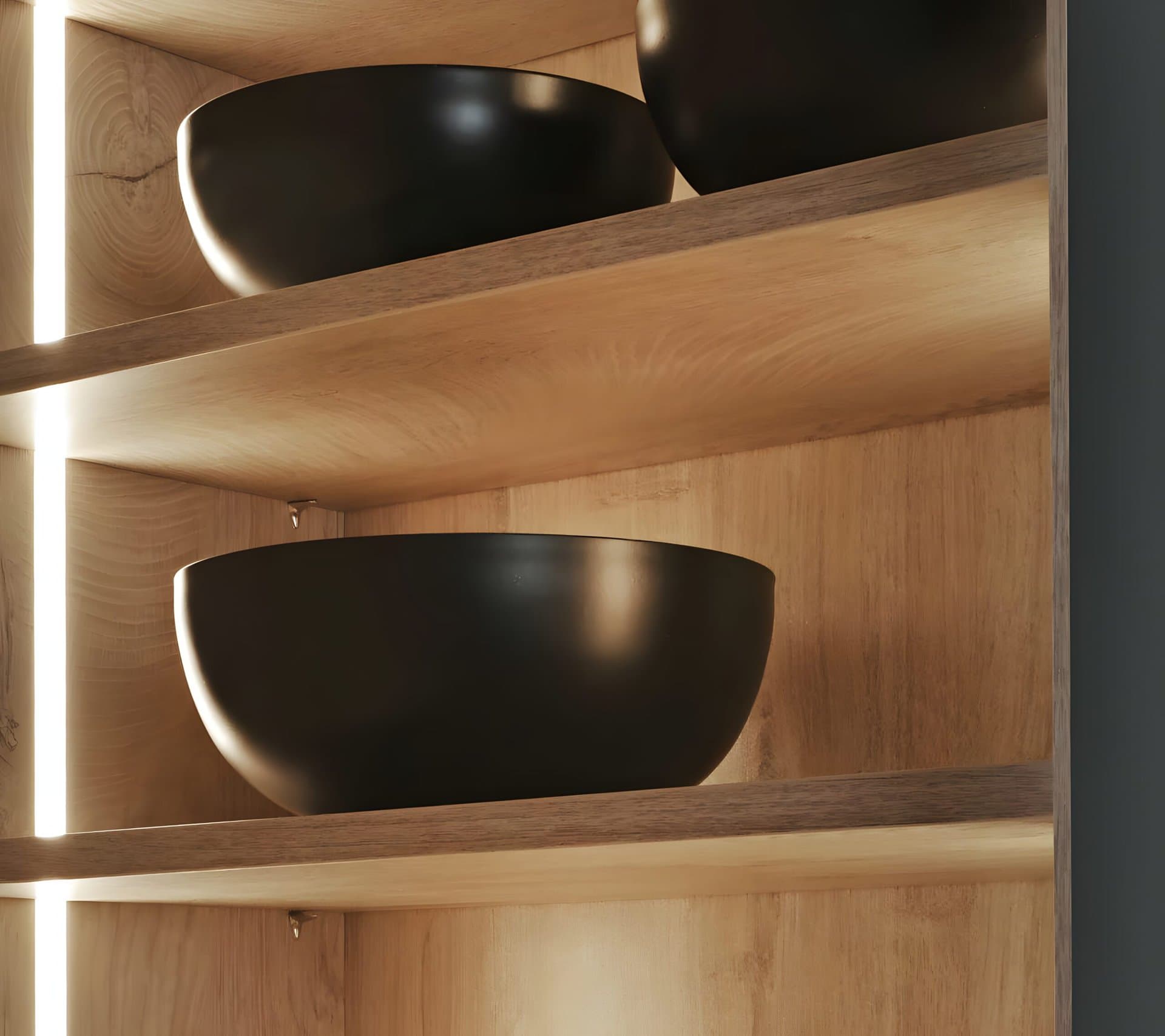
Walk through a hundred kitchens in Metro Vancouver and you will lose count of the shaker doors. They turn up in a 1912 Grandview character home, in a glassy Yaletown condo, in a Surrey new-build, and in a North Shore renovation that cost more than the house did when it was first bought. The same simple framed door, doing very different jobs, and looking right in every one of them.
That kind of range is rare. Most door styles belong to a moment or a mood. The shaker belongs to none of them, which is exactly why it has outlasted every fashion that came and went around it. Below is a closer look at where the shaker came from, why it refuses to date, and what separates a shaker front that lasts twenty years from one that looks tired in three.
Key Takeaways
- The shaker is a five-piece framed door with a flat recessed centre panel and clean square edges, with origins in 19th-century Shaker furniture built on the principle that usefulness is its own kind of beauty.
- It remains the most requested cabinet door in the market. Houzz’s 2026 Kitchen Trends Study put shaker at 58 percent of renovating homeowners, well ahead of flat-panel at 22 percent.
- Its plain frame is a neutral background, so it carries almost any colour, finish, and hardware without a fight.
- The slim or micro shaker, with a narrower frame, is the current refinement of the style and reads more contemporary while keeping the same bones.
- A well-made shaker front comes down to material stability, joinery, finish, and the hardware behind the door, which is where German-built Bauformat construction earns its keep.
What a Shaker Door Actually Is, and Where It Came From
A shaker door is built from five pieces: two vertical stiles, two horizontal rails, and a flat panel set into the middle. The frame sits slightly proud, the centre panel sits recessed, and the inside edges are usually square or very lightly eased. No raised centre, no applied moulding, no carving. That is the whole vocabulary, and the restraint is the point.
The name traces back to the Shakers, a religious community that settled in the northeastern United States in the late 1700s and built furniture for their own use through the 1800s. Their craft followed a plain rule: a thing should be honest about what it is and good at its job, and ornament that served no purpose was vanity. So their cabinets, chairs, and built-ins were stripped to function. Flat panels, clean joints, proportions that felt calm rather than grand. They were not chasing a look. The look is what is left when you take everything decorative away.
That history matters because it explains the durability. The shaker was never tied to a trend, so no trend has ever been able to take it down with it. A door designed around function instead of fashion has nothing to go out of style.
Why It Works in Almost Any Kitchen
The shaker’s real trick is that it sits in the middle of the design spectrum. Paint it a soft off-white, add a bin pull and a piece of trim, and it reads traditional, at home in an East Van character house with original fir floors. Take the same door, run it floor to ceiling in a deep matte green with a long bar pull, and it reads transitional. Strip it down further, narrow the frame, lose the visible hardware, and it reads modern enough for a downtown tower.
This is why designers reach for it when a kitchen has to do more than one thing at once, which in Metro Vancouver is most of the time. A lot of homes here mix eras: a heritage exterior with an open contemporary interior, or a condo with warm wood floors and cool concrete columns. The shaker bridges that gap instead of forcing the room to pick a side. It is the rare door that flatters both the old and the new in the same building.
The market reflects this flexibility. Shaker remains the most frequently requested door style across the industry and across every price point, and it accounted for roughly half of the cabinet designs shown at KBIS 2026, the largest kitchen and bath industry event in North America (Woodworking Network, 2026). A style does not hold that position by accident. It holds it by fitting more kitchens than anything else on the shelf.
It Suits Almost Any Colour and Any Hardware
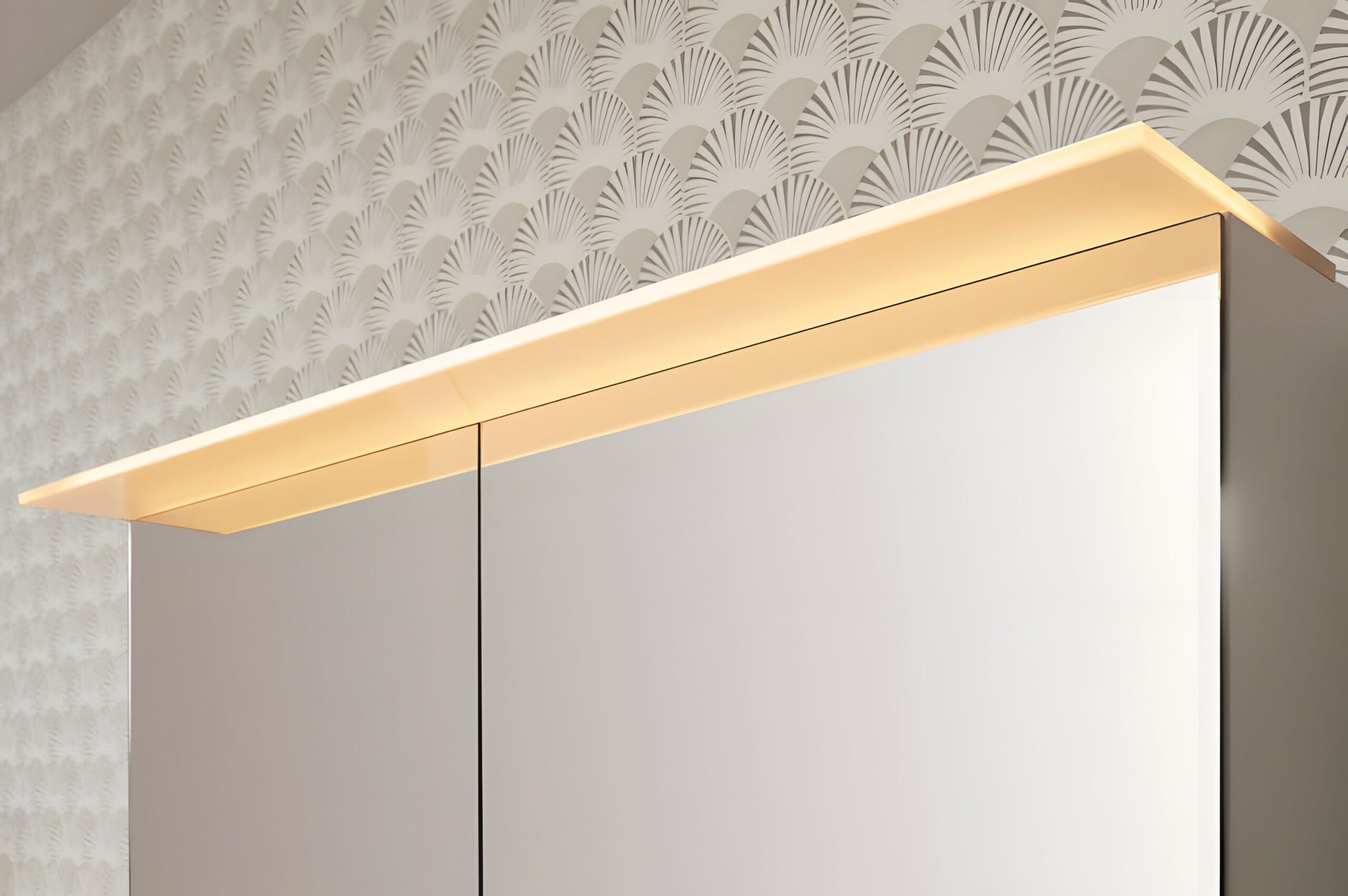
Because the shaker face is flat and the frame is plain, the door behaves like a blank canvas. There is no fussy profile competing with the finish, so colour lands cleanly. That is one reason it is the door most often shown in the warm, earthy tones designers are moving toward now, away from the all-white kitchen that defined the last decade.
Consider how many finishes the shaker carries without complaint:
- Painted neutrals: off-whites, greiges, soft clays that suit bright West Coast light and the grey months alike.
- Deep saturated colours: forest green, navy, charcoal, oxblood, often on a lower run or island.
- Natural and matte wood: oak and walnut tones, back in demand as warmth returns to the kitchen.
- Two-tone layouts: a darker base with lighter uppers, which the simple frame handles cleanly.
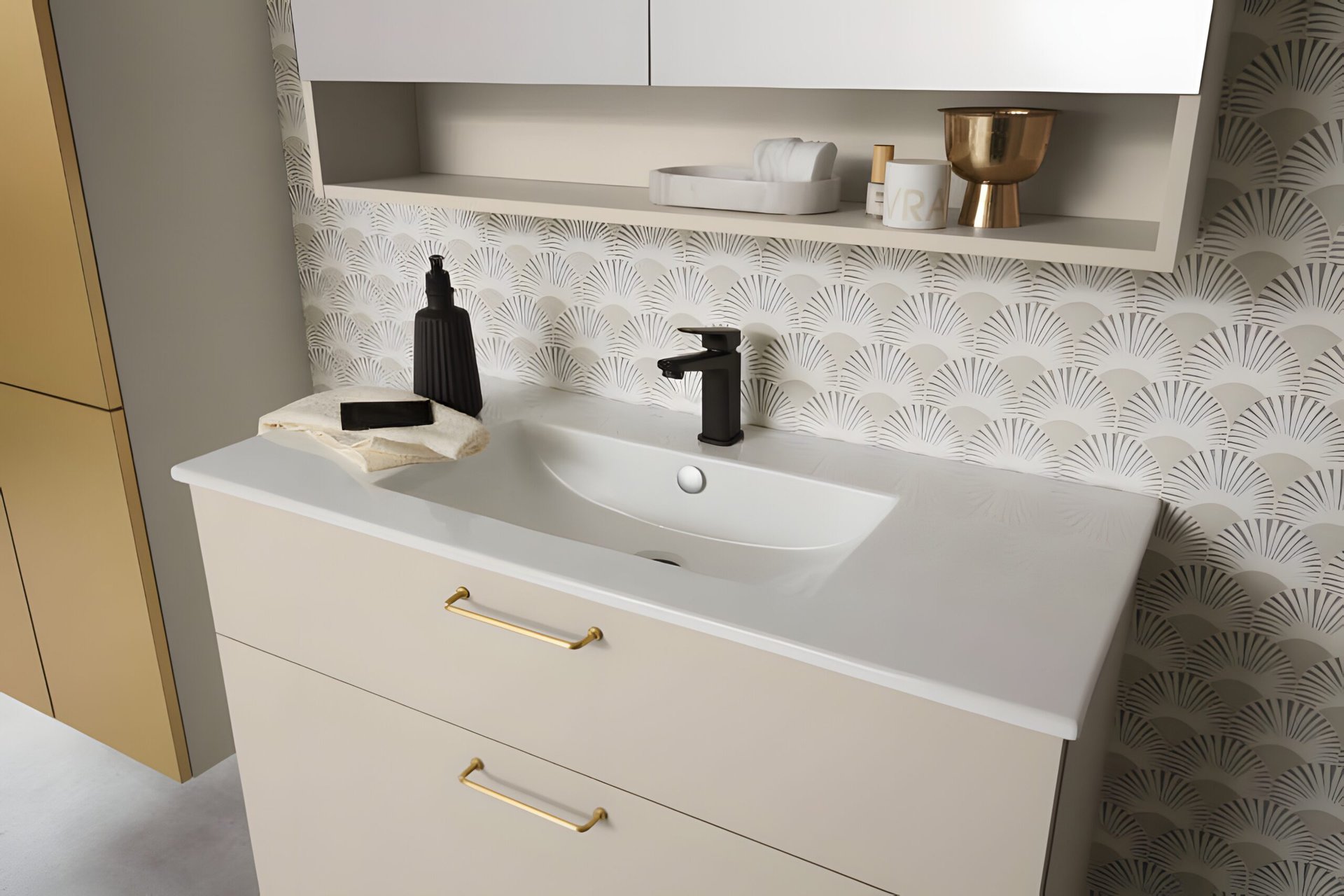
Hardware is just as forgiving. A shaker takes a small knob, a cup pull, a long modern bar, or no visible hardware at all. The frame does not dictate a period, so the pull you choose sets the tone rather than fighting one. You can shift a shaker kitchen from country to contemporary by changing the handles and nothing else, which is a kind of future-proofing most door styles cannot offer.
Why It Has Stayed Popular for So Long
Trends in kitchens move quickly. Glossy slab fronts, heavily moulded raised panels, distressed finishes, each had its run and each thinned out. The shaker kept its share through all of it, and the current data shows the gap is not narrowing. Houzz’s 2026 Kitchen Trends Study, drawn from more than 1,700 renovating homeowners, found shaker doors at 58 percent, flat-panel at 22 percent, and raised-panel at 12 percent (Houzz, 2026). More than half of people redoing a kitchen still choose the shaker over everything else combined.
There is a practical reason beyond looks. A kitchen is the part of a home that does the most for resale, and a door style that appeals to the widest pool of future buyers protects that value. Minor kitchen remodels were among the strongest performers in the most recent national cost-versus-value data, recouping roughly 96 percent of their cost at resale (Remodeling, 2025 Cost vs. Value Report). A neutral, broadly liked door like the shaker is a quieter way of saying you did not gamble. For a Vancouver homeowner, where the kitchen often carries a meaningful share of the home’s value, that matters.
The other reason is simpler. The shaker is easy to live with. It does not shout, it does not date the room to the year it was installed, and it gets out of the way so the counter, the floor, and the light can do their part. Timeless is an overused word, but it earns it here. The shaker reads as current in 2026 for the same reasons it read as right in 1956.
The Modern Slim Shaker
The most interesting movement in the style is not a new shape but a tighter one. The slim shaker, sometimes called a micro shaker, keeps the recessed panel and the square frame but narrows the rails and stiles dramatically. The effect is subtle and significant: the door looks lighter, more architectural, more in step with a downtown condo, while still carrying that familiar framed shadow line that a true slab door lacks.
This is the shaker’s evolution, not its replacement. Designers describe the shift as refinement rather than a break, and a growing number of homeowners are choosing the slim profile to bridge traditional and contemporary in one door (Houzz, 2026). The NKBA’s outlook backs the direction of travel: roughly 60 percent of designers expect minimalism to gain ground over the next three years, and the slim shaker is how minimalism enters a kitchen without going fully flat (NKBA, 2025). For a Yaletown loft or a Coal Harbour tower, the slim shaker often hits the sweet spot, clean enough for the space but warmer than a plain slab.
What Makes a Well-Made Shaker Front
Here is the part that gets overlooked. Every cabinet line sells a shaker, and from across the room they look alike. The difference shows up over years, and it lives in four places.
Material stability. A flat centre panel and a square frame have nowhere to hide movement. If the substrate swells, shrinks, or telegraphs through the finish, the door shows it. The best shaker fronts are built on engineered cores that stay flat through humidity swings, which matters in a coastal climate that runs damp for half the year.
Joinery and edges. Look at where the frame meets the panel and at the corners of the door. Tight, consistent joints and clean square edges are the signature of a well-built front. Loose joints and soft, rounded corners are where a cheaper door gives itself away.
Finish. A flat face is honest to a fault. Brush marks, orange peel, and uneven sheen all read clearly on a plain panel. A properly applied factory finish, evenly cured, is what lets a painted shaker still look crisp years later.
The hardware you do not see. A door is only as good as what carries it. This is where Bauformat’s German engineering shows: full-extension soft-close runners that let a drawer glide out completely and shut without a bang, and 3D-adjustable concealed hinges that let the installer dial each door into a perfect, even reveal and keep it there. Those even gaps around a shaker are not luck. They are adjustment, and they are what makes a row of doors look like one considered surface instead of a set of separate parts.
Bauformat has built cabinetry in Lohne, Germany since 1917, and the shaker fronts sit within the wider Bauformat collection, the broadest of the three ranges the brand offers alongside Baulux and the value-focused Burger. In Metro Vancouver the cabinets are measured, planned, and installed by the local team, so the precision built into the door survives the trip from the factory to your kitchen. A shaker is a simple door. Keeping it looking simple and exact for twenty years is the hard part, and that is the part that is engineered.
Frequently Asked Questions
Are shaker cabinets going out of style?
There is no sign of it. The most recent industry data shows the shaker still leading every other door style by a wide margin, at 58 percent of renovating homeowners in the Houzz 2026 study. Its appeal is built on function rather than fashion, which is why it has held its position through decades of changing trends rather than peaking and fading.
What is the difference between a standard shaker and a slim shaker?
Both share the same recessed flat panel and square frame. The slim or micro shaker simply uses much narrower rails and stiles, so the door reads lighter and more contemporary. A standard shaker leans traditional or transitional, while a slim shaker suits modern condos and minimalist kitchens without losing the framed shadow line that distinguishes a shaker from a plain slab door.
Do shaker cabinets work in a small Vancouver condo kitchen?
They do, and they often work better than busier styles. The clean frame keeps a small kitchen from feeling cluttered, and a slim shaker in a light or warm neutral can make a compact Yaletown or Mount Pleasant kitchen feel calm and considered. Paired with full-extension drawers, you also get full access to the back of every cabinet, which matters most when space is tight.
What colour shaker cabinets are most popular right now?
The market is moving away from all-white toward warmth. Soft off-whites and greiges remain a safe, broadly liked choice, but earthy greens, natural and matte wood tones, and deep colours on islands and lower runs are all gaining ground for 2026. The shaker’s plain face carries any of these cleanly, which is part of why it stays flexible.
The shaker endures because it never tried to be impressive. It tried to be useful, and that turned out to be the more lasting goal. Whether your kitchen sits in a hundred-year-old house or a brand-new tower, a well-built shaker front gives you a door that looks right today, will still look right in twenty years, and lets the rest of the room be the star. The simplest answer is usually the one that lasts.
Explore more from Bauformat BC
- Uncover the appeal of top traditional small kitchen styles perfect for petite spaces!
- Ultimate Guide to Elevating Your Kitchen Layout with Timeless & Classic Design Ideas
- Traditional Kitchen Cabinet Styles: Three Essential Tips by Bauformat
German cabinetry, planned and built for Metro Vancouver
The kitchen is one of the highest-return rooms in a home: the 2025 Cost vs. Value Report found a minor kitchen remodel recoups roughly 96% of its cost at resale. Choosing cabinetry that lasts is central to that return, which is where German engineering earns its place. Every Bauformat kitchen is manufactured in Germany, then measured, planned, and installed by our Vancouver team, built to fit your room to the millimetre.
See the Baulux, Bauformat, and Burger collections in person at our Yaletown showroom at 1420 Marine Drive, learn more about the manufacturer at bauformat.de, and meet our local team at The Bau Team.
Book a 30-minute consultation with our Metro Vancouver kitchen designers to plan a kitchen built to last.
