
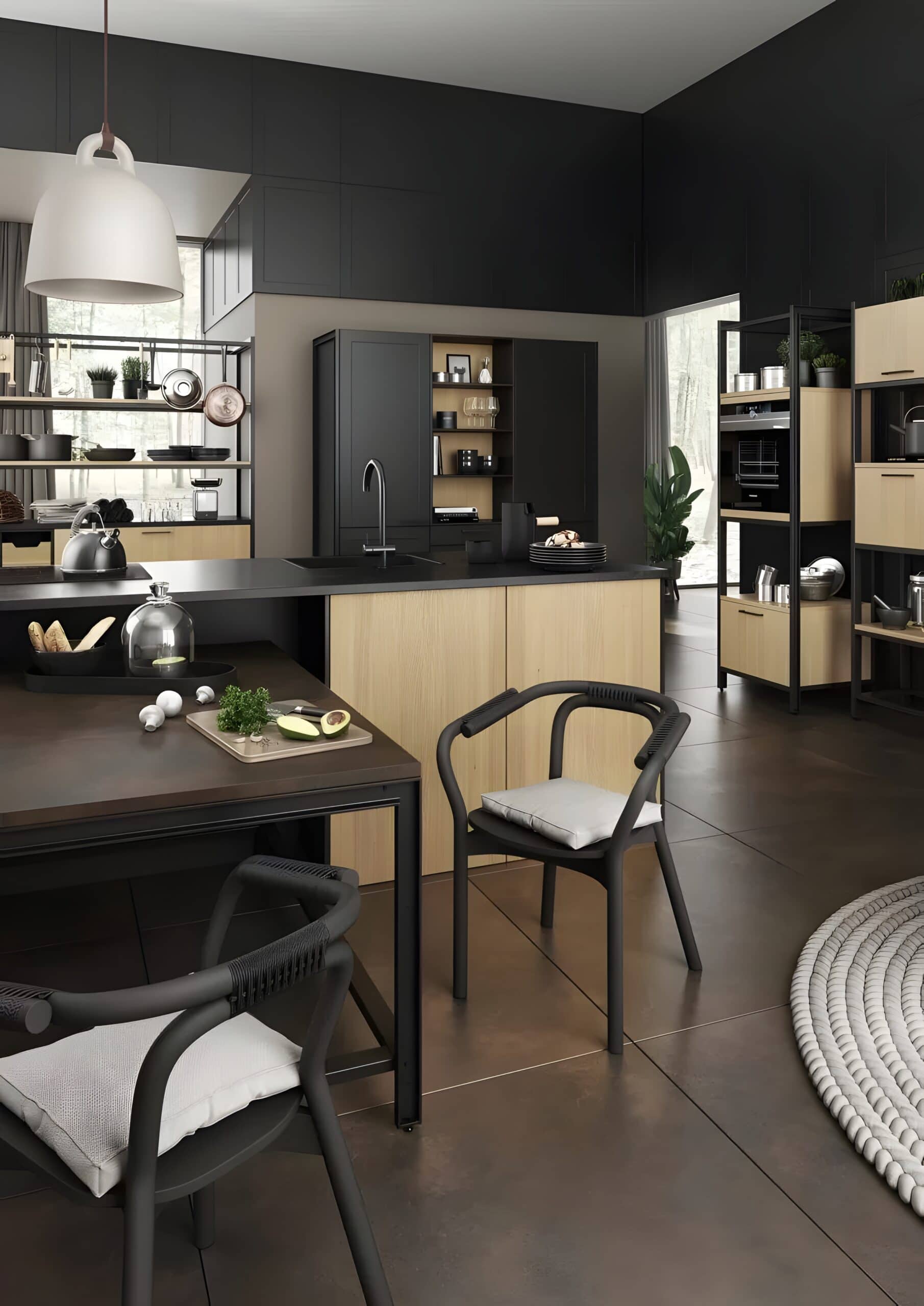
There is a particular kind of kitchen that stops you in your tracks. Rough-sawn wood that looks like it has a story, black iron that grounds the room, a glow from filament bulbs that feels more like a workshop at golden hour than a showroom. This is the rustic industrial kitchen, and it is the warmer, more lived-in cousin of the sleek factory look. Where pure urban industrial leans cool and hard-edged, rustic industrial pulls the temperature up: farmhouse meets factory, aged texture meets honest material.
In Metro Vancouver, that combination feels right at home. Our heritage warehouse conversions in Yaletown and Gastown already come with timber columns, exposed brick and tall industrial windows, and our older character houses carry plenty of patina of their own. The trick is balancing all that ruggedness so the room stays liveable rather than looking like a half-finished renovation. Below are seven tips for getting the rustic industrial kitchen right, from material choices to lighting, with cabinetry that holds the whole composition together.
Key Takeaways
- Rustic industrial is warmer than pure industrial: lead with reclaimed and rough-sawn wood, then layer in black metal and iron.
- Warm, earthy tones now dominate kitchen design, and wood grain has overtaken painted fronts, so the look is firmly in step with current trends.
- Aged and vintage elements add soul, but they need a clean counterpoint to keep the room from feeling cluttered.
- Smart, precise cabinetry grounds the rough textures and makes the whole mix read as intentional.
- Warm industrial lighting, filament bulbs and aged brass, does as much work as any finish in setting the mood.
- Metro Vancouver lofts and character homes give you a head start with brick, beams and big windows already in place.
1. Lead With Warm Reclaimed and Rough-Sawn Wood
Wood is the heart of this style, and not the polished, uniform kind. Reclaimed boards, rough-sawn planks and timber with visible saw marks and old nail holes give a rustic industrial kitchen its warmth and its narrative. The grain is what separates this look from the cold, all-metal version of industrial design.
You are working with the grain of the market here, too. The NKBA 2026 Kitchen Trends Report found that wood grain has outpaced painted cabinets for the first time in years, with white oak leading at 51 percent popularity, and designers favouring mid-to-dark finishes that bring depth and authenticity (NKBA 2026 Kitchen Trends Report, 2026). Reclaimed wood in particular has become a defining material of the year, prized for its patina and the instant warmth it lends a space (Smithers of Stamford, 2026).
You do not have to source salvaged beams to get the effect. Bauformat offers a wide range of wood-grain fronts across the Bauformat collection, which carries the widest choice of finishes including wood-grain and matte options. A textured wood-grain front in a warm oak or walnut tone reads as rustic without the splinters, the warping or the maintenance that genuine salvage can demand.
2. Mix Wood With Black Metal and Iron
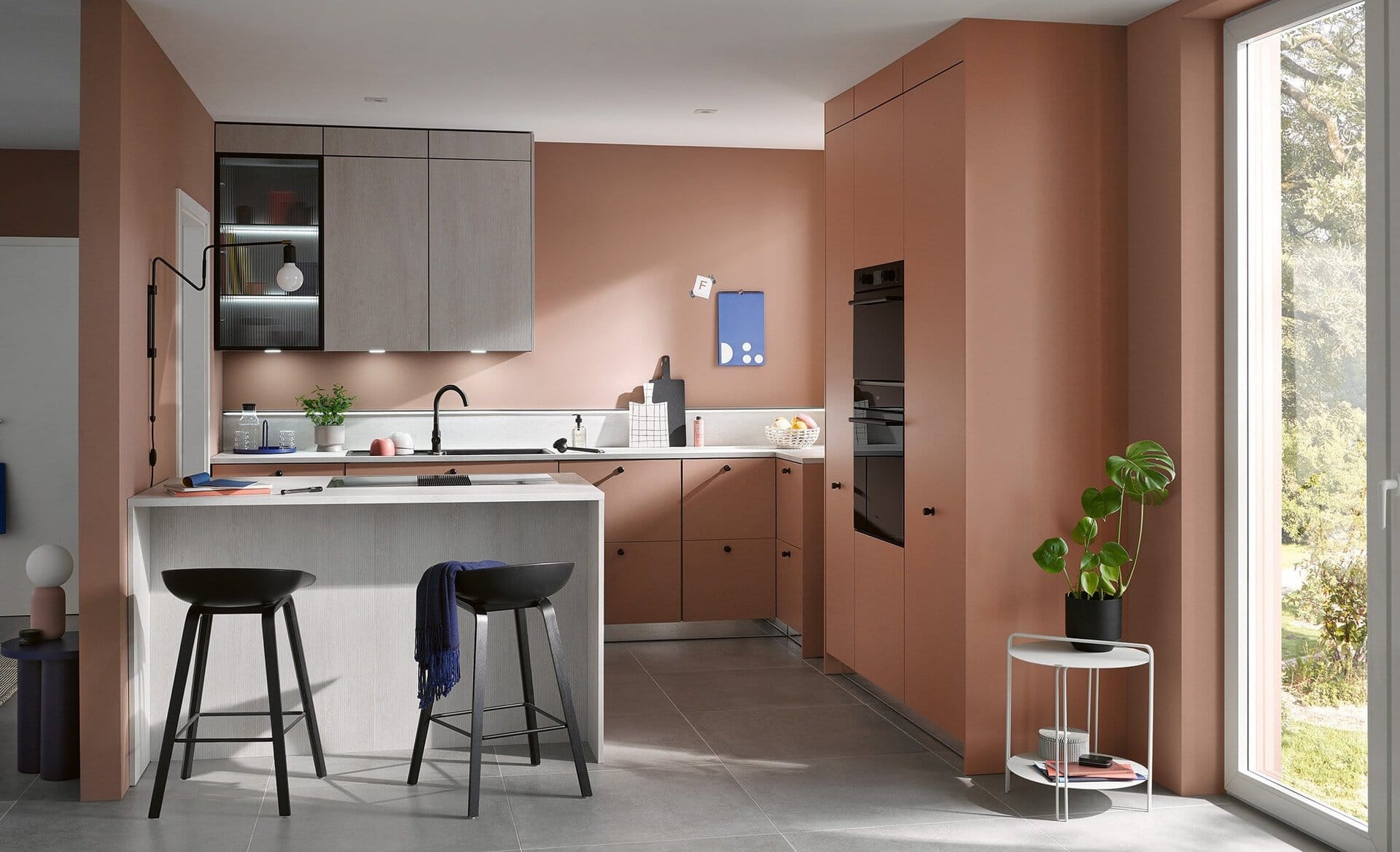
Once the wood is in place, the industrial half of the equation comes from metal. Black iron, dark steel and blackened brackets create the structural, factory-floor backbone that keeps the room from drifting into pure farmhouse territory. Think open shelving on iron supports, black-framed glass, a steel range hood, or matte black hardware against a wood-grain front.
A word on restraint. Matte black is still very much in play, but the guidance has shifted: industry professionals now treat it as a secondary or accent finish rather than the default across every cabinet, with warmer metals gaining ground alongside it (Inspire Hardware, 2026). For a rustic industrial scheme, that is good news. Let black iron handle the structure and accents, then warm the room with aged brass elsewhere, and the metal reads as deliberate rather than relentless.
3. Choose Warm, Earthy Tones
The colour story for rustic industrial is grounded in nature. Chocolate browns, muddy greens, clay, mushroom, rust and sand all pull their weight, echoing the wood and the aged metal rather than fighting them. This is a kitchen that should feel like it belongs to the earth, not a laboratory.
The wider design world has moved decisively this way. The NKBA 2026 report found that 96 percent of industry professionals now name warm neutrals as the most popular kitchen colour direction, with greens leading the natural palette at 86 percent, followed by blues at 78 percent and browns at 67 percent (NKBA 2026 Kitchen Trends Report, 2026). For a Metro Vancouver home, where so much of the year is spent under grey skies, those warm, saturated earth tones do real work in making a kitchen feel comforting from October through to spring.
4. Add Aged and Vintage Elements
Patina is the soul of this style. A reclaimed butcher block, an old factory cart repurposed as an island, vintage stools with worn leather, a salvaged sign or a length of weathered shelving all add the sense of history that makes rustic industrial feel collected rather than bought in a single afternoon.
The appeal of these aged pieces is partly about sustainability and partly about character. Reclaimed materials are increasingly used to add gravity and soul to modern and industrial spaces, not just farmhouse ones, precisely because their unique wear cannot be faked by a factory (Smithers of Stamford, 2026). One caution: vintage finds carry visual weight, so a few strong pieces will always beat a roomful of competing curiosities. Choose the items that genuinely speak to you and give them space to be seen.
5. Balance Rough Textures With Smart, Precise Cabinetry
Here is the tip that separates a polished rustic industrial kitchen from a chaotic one. All that rough wood, raw metal and visible patina needs a clean, precise counterpoint to keep the room legible. That counterpoint is the cabinetry. When the boxes are crisp, the lines are true and the doors close with a quiet, even action, the rugged elements around them suddenly look intentional.
This is where German engineering earns its place in a rustic room. Bauformat has been made in Germany since 1917 in Lohne, and every kitchen is measured, planned and installed by the local Vancouver team, so the cabinetry sits true even in an older home where walls are rarely square. Full-extension soft-close runners and 3D-adjustable concealed hinges mean drawers glide all the way out and doors line up perfectly, giving you the precise frame that lets the rough textures sing. There is a budget-conscious path, too: the Burger collection delivers that same engineering as the best-value option, while Baulux offers a refined, pared-back alternative.
It is worth remembering that this kind of considered cabinetry pays you back. The latest cost vs. value data shows minor kitchen remodels returning an ROI of up to 113 percent, up from the prior year, with cabinet replacement and refacing among the core projects driving that figure (Kitchen Cabinet Kings 2026 Kitchen ROI Report, 2026). Quality cabinetry is rarely money lost.
6. Use Warm Industrial Lighting
Lighting is where a rustic industrial kitchen either glows or goes cold. Skip the crisp, clinical white light and reach for warmth: exposed filament bulbs, caged pendants, aged brass and dark bronze fixtures, and the kind of amber tone that flatters wood and softens metal. A row of filament pendants over an island is practically the signature move of the style.
Aged brass and other warm metals are having a genuine moment, gaining favour because they bring depth and comfort to interiors in a way that cooler finishes cannot (Inspire Hardware, 2026). Layer your lighting so you have task light where you chop and prep, then a warmer, lower glow for the rest of the room. In a Yaletown loft with tall windows, that layering also lets you transition gracefully from bright winter mornings to long, dim evenings.
7. Keep It Cosy and Liveable
For all its rugged materials, a rustic industrial kitchen should feel like a place you want to linger, not a stage set. The whole point of the rustic half of the equation is warmth, so resist the urge to make the room read as a museum of raw materials. Soften the hard surfaces with textiles, a runner underfoot, open shelving styled with everyday objects you actually use, and a generous spot to sit.
This is also where Metro Vancouver homeowners have an advantage. Our heritage warehouse conversions along Hamilton, Mainland and Homer streets already come with exposed timber columns, soaring ceilings and historic character built in, which means much of the rustic industrial groundwork is already poured. Your job becomes editing rather than manufacturing: let the building’s bones carry the rugged load, then warm them with wood-grain cabinetry, earthy colour and soft light until the room feels like home.
Frequently Asked Questions
How is a rustic industrial kitchen different from a regular industrial one?
Pure industrial leans cool and minimal, all concrete, steel and stark lines. Rustic industrial keeps the metal but turns up the warmth: reclaimed and rough-sawn wood takes the lead, the palette shifts to earthy browns and greens, and aged, vintage pieces add a sense of history. It is the farmhouse-meets-factory version, softer and more lived-in than its sleek cousin.
Will a rustic industrial look feel dated in a few years?
It is well positioned to age gracefully. The look is built on natural materials and warm, earthy tones, which is exactly where current design is heading, with warm neutrals named the most popular kitchen colour direction by 96 percent of industry professionals (NKBA 2026 Kitchen Trends Report, 2026). Reclaimed wood and honest metal also wear in rather than wear out, so a little extra patina only improves the look over time.
Does German cabinetry suit a rustic kitchen, or is it too modern?
It suits it well, and arguably makes the style work. The precise lines and quiet, even action of well-engineered cabinetry give all the rough textures around them a clean frame, so the room reads as intentional. Bauformat’s wide range of wood-grain fronts means you can get the warm, textured rustic look on the surface while keeping the precision engineering, full-extension soft-close runners and adjustable hinges behind it.
I live in an older Vancouver character home with uneven walls. Is that a problem?
It is common and entirely manageable. Pre-war homes rarely have square walls, which is exactly why having the kitchen measured, planned and installed by a local team matters. The cabinetry is adjusted to the realities of the room rather than the other way around, so the finished result sits true even where the original structure does not.
A rustic industrial kitchen is, at its core, a balancing act between rough and refined. Lead with warm reclaimed wood, ground it with black iron, layer in earthy colour, aged finds and the amber glow of filament light, then let smart, precise cabinetry hold it all in place. Get that balance right, and you end up with a room that feels both rugged and welcoming, perfectly suited to the character homes and converted lofts that give Metro Vancouver so much of its texture.
Explore more from Bauformat BC
- Master the Art of Kitchen Renovation: Must-Know Tricks for a DIY Industrial Kitchen Remodelling
- How would Bauformat Matte Black Cabinets Change the Mood of a Kitchen?
- Why Choose Rustic Styles for Your Kitchen Cabinets?
German cabinetry, planned and built for Metro Vancouver
The kitchen is one of the highest-return rooms in a home: the 2025 Cost vs. Value Report found a minor kitchen remodel recoups roughly 96% of its cost at resale. Choosing cabinetry that lasts is central to that return, which is where German engineering earns its place. Every Bauformat kitchen is manufactured in Germany, then measured, planned, and installed by our Vancouver team, built to fit your room to the millimetre.
See the Baulux, Bauformat, and Burger collections in person at 1410 Marine Dr Unit 205, North Vancouver, learn more about the manufacturer at bauformat.de.
Book a 30-minute consultation with our Metro Vancouver kitchen designers to plan a kitchen built to last.
