
A kitchen renovation is one of the bigger projects most homeowners ever take on, and in Metro Vancouver it carries a few extra wrinkles: high labour costs, strata rules in condo buildings, and older homes that hide surprises behind the drywall. The good news is that almost every renovation that goes sideways went sideways in the planning, not the building. Get the front end right and the rest tends to follow.
This is the whole-project view, from setting goals and a realistic budget through layout, selections, sequencing, permits, trades, and living through the dust. Think of it as the map you draw before anyone picks up a pry bar. We make German-engineered cabinetry here at Bauformat BC, and we plan and install kitchens across the region, so much of this comes straight from watching what works and what trips people up.
Key Takeaways
- Decide what problem you are solving before you spend a dollar, then build a budget with a 10 to 20 percent contingency on top.
- Most full mid-range kitchen renovations in Metro Vancouver land between roughly 45,000 and 75,000 dollars, with condos often running a little lower (Vancouver General Contractors, 2026).
- Cabinets are usually the single largest line item, often 30 to 40 percent of the total, so they deserve early attention (Zoocasa, 2025).
- Plan for 8 to 14 weeks from demolition to finishing, longer once permits, strata approval, and custom lead times are added (Quay Construction, 2026).
- Condo owners need strata approval on top of city permits, so start that conversation early.
- A well-done kitchen can return a meaningful share of its cost and lift a home’s value by up to 20 percent (Royal LePage via Morningstar Canada, 2025).
Start With Goals, Then Build a Realistic Budget
Before layouts and finishes, write down what you are actually trying to fix. More counter space? A kitchen that works for two cooks? Better storage so the island stops collecting clutter? Hosting that does not feel cramped? Your honest answers decide where the money goes and keep you from spending on things that look nice in a showroom but do not solve your problem.
Once goals are clear, set a number you are comfortable with and treat it as real. A reliable budget has three parts: the work itself, a contingency, and the soft costs people forget. Set aside 10 to 20 percent for surprises, because older Vancouver homes in particular tend to reveal knob-and-tube wiring, out-of-level floors, or plumbing that was never meant to last this long. Soft costs include permits, strata fees, design time, appliance delivery, and eating out while your kitchen is offline. A budget that ignores these is a budget that breaks.
It also helps to think about return. A kitchen renovation has the potential to increase a home’s value by up to 20 percent according to a Royal LePage national survey of agents (via Morningstar Canada, 2025), and kitchen projects commonly return between 75 and 100 percent of their cost (HomeStars, 2025). The pattern worth knowing: the more you spend, the lower your percentage return tends to be, so spend where it genuinely improves your daily life rather than chasing resale alone.

Understand Where Metro Vancouver Money Goes
Local costs run higher than national averages, mostly because of labour. Across Canada the average kitchen renovation sits around 30,944 dollars, with most projects between roughly 16,400 and 45,600 dollars (HomeStars, 2025). In Metro Vancouver the same work costs more: most homeowners spend between 25,000 and 80,000 dollars, and a full mid-range remodel commonly lands between 45,000 and 75,000 dollars for a detached home or townhouse, while condo kitchens often run a little lower at 28,000 to 55,000 dollars (Vancouver General Contractors, 2026).
Knowing where the dollars land helps you make trade-offs with eyes open. Cabinets are typically the largest single category, often 30 to 40 percent of the total, followed by countertops, appliances, and labour (Zoocasa, 2025). A general contractor managing the whole project usually charges 15 to 20 percent of the total for coordination (Vancouver General Contractors, 2026). When you see those proportions, it becomes clear why cabinetry is worth getting right the first time. Quality boxes, drawers, and hardware are the bones of the room, and they are the hardest thing to change later.
Plan the Layout and Make Your Selections
Layout is where a kitchen becomes either a pleasure or a daily annoyance. The classic working triangle between sink, stove, and fridge still matters, but modern kitchens are really about zones: prep, cooking, cleanup, and storage. Walk through how you actually cook and entertain, then design around that. In Vancouver condos, layout is often constrained by where the plumbing stack and venting already sit, so moving a sink or range can add real cost. Working with the existing services rather than against them keeps the budget sane.
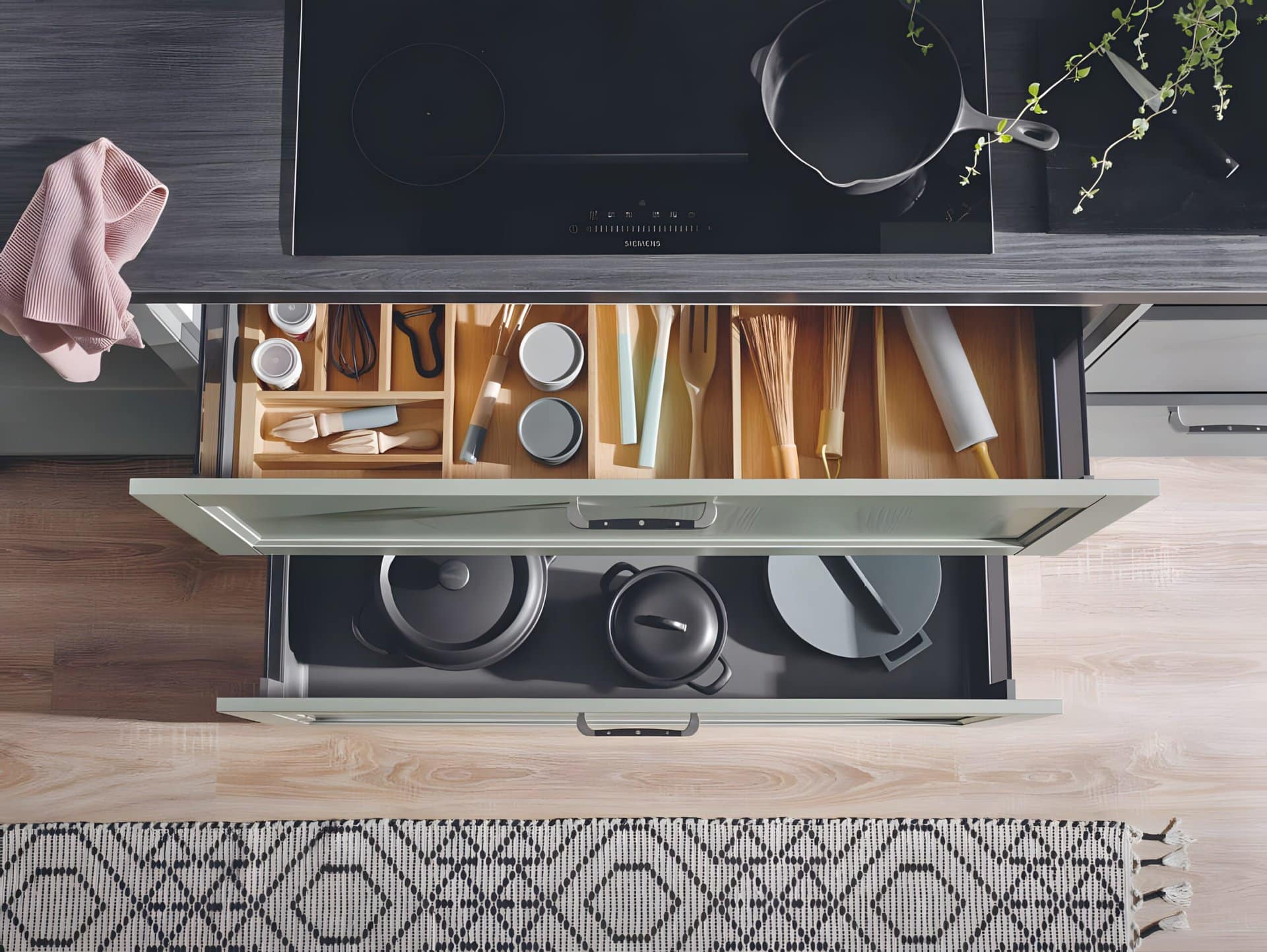
Selections come next, and they are easier when you choose in the right order: cabinets, then counters, then appliances, then the finishing details. Cabinets set the tone and the dimensions everything else fits into. This is where our collections give you room to match the budget to the goal. Baulux leans contemporary and refined, the Bauformat line offers the widest range of doors and finishes, and Burger is built for best value without giving up the engineering. All of them use full-extension soft-close runners and 3D-adjustable concealed hinges, which means drawers that glide fully open and doors you can fine-tune perfectly square even in an older home where nothing is quite level.
For counters and appliances, decide what you will genuinely use. A second oven or a built-in coffee unit is wonderful if it earns its space, and dead weight on the budget if it does not. Order appliances early so cabinetry can be planned around exact dimensions, not assumptions.
Sequence the Work and Set a Realistic Timeline
Renovations have a natural order, and skipping ahead is how schedules collapse. The rough sequence is: design and selections locked, permits and approvals secured, demolition, rough-in for plumbing and electrical, inspections, drywall and paint, flooring, cabinet install, counter templating and install, then appliances, fixtures, and finishing.
On timing, plan for 8 to 14 weeks total once work begins, depending on permit complexity and material lead times (Quay Construction, 2026). Condo projects can run 6 to 16 weeks (YVR Construction, 2026). The hidden schedule-killer is lead time on materials: custom cabinets, specialty tile, and imported fixtures can take 8 to 16 weeks from order to delivery (Quay Construction, 2026). The lesson is simple. Order your long-lead items before demolition, not after, so trades are never standing around waiting for boxes to arrive. A kitchen torn out and waiting on backordered cabinets is the most expensive kind of empty room.
Permits and Strata Approval
Most cosmetic refreshes, such as new cabinets in the same footprint, do not need a building permit, but anything touching plumbing, electrical, gas, or walls usually does. In 2025 the City of Vancouver processed over 12,000 residential building permits, with standard renovation approvals averaging 6 to 10 weeks (Vancouver General Contractors, 2026). That is not a step to leave until the last minute. Build it into the front of your timeline.
If you live in a condo or townhouse, you have a second gate: strata approval, which is required on top of any city permits. Most Vancouver buildings need sign-off before work begins, and the process can add days or weeks depending on the building’s rules (CAS Vancouver, 2026). Stratas often dictate work hours, elevator booking for material delivery, floor soundproofing requirements, and proof of contractor insurance. Read your bylaws early, submit your request with drawings, and assume it will take longer than you hope. Starting demolition before strata signs off is a mistake that can stop a project cold.
Hire and Coordinate Your Trades
A kitchen pulls in several trades: a general contractor or project lead, plumber, electrician, sometimes a gas fitter, plus tile, paint, flooring, and cabinet installers. You can manage them yourself, but most people are better served by a contractor who sequences the crew and owns the schedule. That coordination fee, the 15 to 20 percent noted earlier, buys you someone whose job is making sure the electrician is not booked the same day the drywallers need the room.
When you hire, get detailed written quotes that spell out scope, materials, and what is excluded. Ask for proof of WorkSafeBC coverage and liability insurance, check references on recent local projects, and be wary of any bid that comes in far below the others, because that gap usually reappears later as a change order. One quiet advantage of buying cabinetry from a team that also measures and installs is that there is no finger-pointing between the supplier and the installer when something needs adjusting. Our local Vancouver crew measures, plans, and installs the cabinets we make, so the people who set your kitchen are accountable for how it fits.
Living Through the Reno and Avoiding Common Mistakes
For a few weeks your kitchen will be gone, so plan a temporary one. A microwave, kettle, toaster oven, and a sink in the bathroom or laundry will carry you further than you would think. Box up what you do not need, keep a small set of dishes accessible, and budget realistically for takeout. If you are in a condo, confirm where the crew can store materials and how debris leaves the building, because strata rules on this catch people off guard.
The common mistakes are predictable, which means they are avoidable. Changing your mind mid-project is the costliest one: every change after construction starts triggers delays and change orders. Decide everything you can on paper first. Other frequent traps are skipping the contingency fund, underestimating lead times, ignoring lighting and ventilation until it is too late to wire properly, and choosing finishes for looks alone without thinking about how they wear. In older Vancouver homes, the biggest surprises hide behind walls, so a contractor who opens things up early and flags issues before they snowball is worth their weight. Patience in planning is what buys you calm during the build.
Frequently Asked Questions
How much should I budget for a kitchen renovation in Metro Vancouver?
Most homeowners spend between 25,000 and 80,000 dollars, with a full mid-range remodel commonly landing between 45,000 and 75,000 dollars for a detached home or townhouse, and condos often a little lower at 28,000 to 55,000 dollars (Vancouver General Contractors, 2026). Add a 10 to 20 percent contingency on top, since local labour costs and older homes both push prices up.
How long does a kitchen renovation take?
Plan for roughly 8 to 14 weeks from demolition to finishing, with condo projects running 6 to 16 weeks (Quay Construction and YVR Construction, 2026). Permits add 6 to 10 weeks on average (Vancouver General Contractors, 2026), and custom materials can take 8 to 16 weeks to arrive, so order long-lead items before demolition begins.
Do I need a permit and strata approval for my condo kitchen?
Cosmetic work in the same footprint often does not need a city permit, but anything affecting plumbing, electrical, gas, or walls usually does. If you are in a strata building, you also need strata approval before starting, and most Vancouver buildings require it (CAS Vancouver, 2026). Read your bylaws and submit your request early.
Is a kitchen renovation worth it for resale?
Generally yes. A kitchen renovation can lift a home’s value by up to 20 percent (Royal LePage via Morningstar Canada, 2025), and kitchen projects commonly return 75 to 100 percent of their cost (HomeStars, 2025). Keep in mind that bigger budgets tend to return a smaller percentage, so spend where it improves daily life as well as resale.
A successful kitchen renovation rarely comes down to luck. It comes from clear goals, an honest budget with room for surprises, smart sequencing, and the patience to settle decisions before the work starts. Get those right, and the build becomes the calm, satisfying part: watching a well-planned room come together exactly the way you pictured it.
Explore more from Bauformat BC
- Bauformat Guide: How to Make Your Kitchen Makeover Both Affordable and Easy
- Budget-Friendly Guide to Achieving a Streamlined Kitchen Makeover
- Bauformat: Germany’s Elite Kitchen Cabinet Craftsmen
German cabinetry, planned and built for Metro Vancouver
The kitchen is one of the highest-return rooms in a home: the 2025 Cost vs. Value Report found a minor kitchen remodel recoups roughly 96% of its cost at resale. Choosing cabinetry that lasts is central to that return, which is where German engineering earns its place. Every Bauformat kitchen is manufactured in Germany, then measured, planned, and installed by our Vancouver team, built to fit your room to the millimetre.
See the Baulux, Bauformat, and Burger collections in person at our Yaletown showroom at 1420 Marine Drive, learn more about the manufacturer at bauformat.de, and meet our local team at The Bau Team.
Book a 30-minute consultation with our Metro Vancouver kitchen designers to plan a kitchen built to last.
